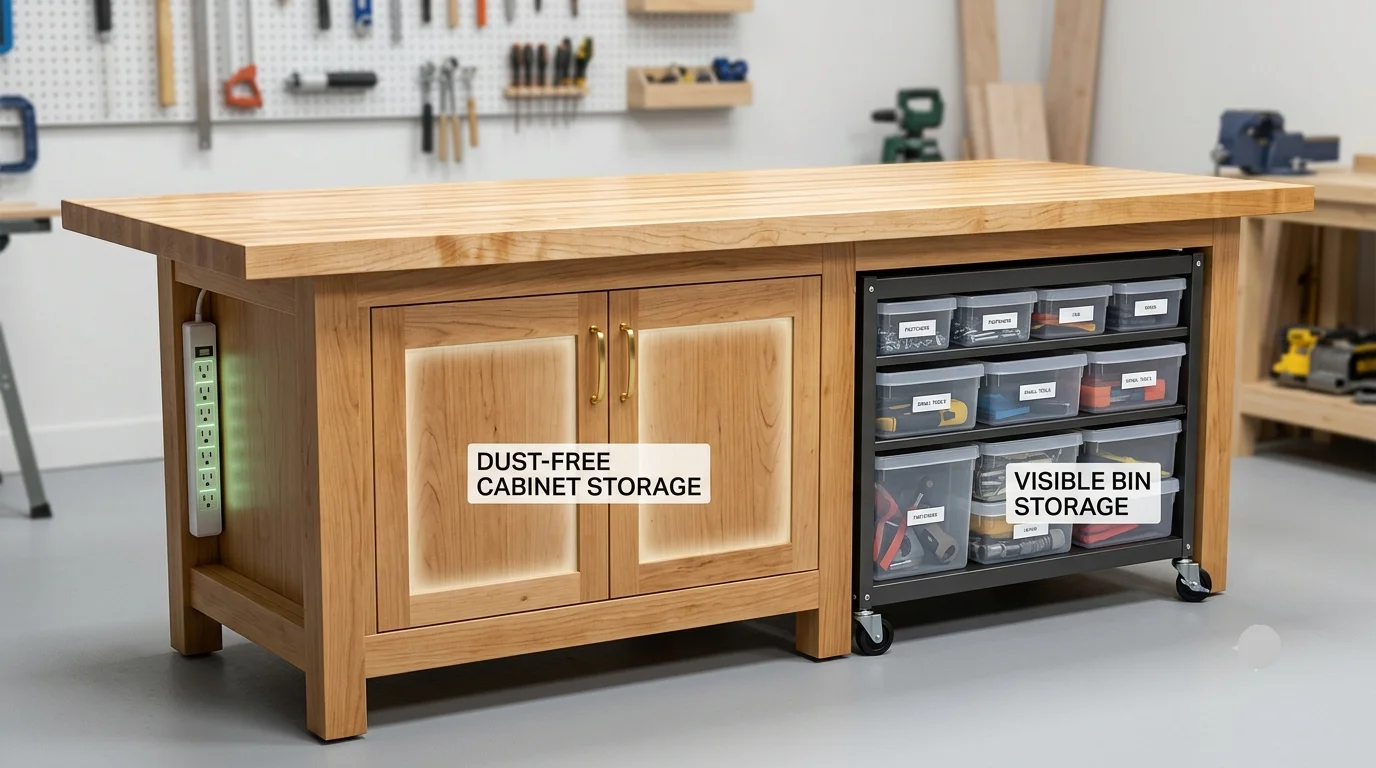
When it comes to woodworking projects, having a well-designed workbench is essential. A workbench that maximizes functionality while providing ample storage can make your tasks lighter and more efficient. Let’s dive into how you can create effective Workbench Plans with Storage with Measurements, focusing on key measurements and features that will enhance your woodworking experience.
Understanding Workspace Needs
Before you start drafting your workbench plans, it’s vital to analyze your workspace. Ask yourself:
- What tools will you store?
- Do you need space for large projects?
- How often do you use specific tools?
This evaluation helps in determining not only the size of your workbench but also the type of storage solutions you need.
Essential Measurements for Your Workbench
Measurements are crucial when designing effective workbench plans. Here are some standard dimensions you should consider:
| Dimension | Typical Measurement (inches) |
|---|---|
| Height | 34-38 |
| Width | 24-36 |
| Length | 48-72 |
While these values are common, adjust them based on your personal comfort and specific tasks. A raised workbench can be beneficial for those who prefer working while standing, while a lower bench is more suitable for those working on detailed projects.
Choosing the Right Storage Solutions
Efficient storage will keep your workspace organized. Here are some ideas to incorporate into your workbench plans:
- Drawer Storage: deep drawers can store larger tools and materials while keeping them easily accessible.
- Shelving Units: Open shelves allow you to showcase frequently used items. It helps in visibility while utilizing vertical space.
- Compartmentalized Tool Storage: Consider using small boxes or cabinets for small tools, screws, and nails to avoid clutter.
When creating storage solutions, aim for a balance between accessibility and workspace efficiency. You want tools within easy reach but also want to maintain a clear area for projects.
Design Features to Incorporate
In addition to measurements and storage solutions, focus on including key design features that enhance the usability of your workbench:
- Vise: Installing a vise can make clamping projects easier, providing stability while you work.
- Power Strips: Having built-in power outlets on your workbench can be a game-changer, allowing easy access to electricity without the clutter of cords.
- Adjustable Legs: If you want to customize the height of your workbench, consider using adjustable legs to accommodate different tasks.
Personal Touches
Don’t forget to infuse your personality into the design! Custom features like a specific wood finish, color, or unique hardware can make your workbench feel like your own. Customization adds to the aesthetics and can elevate your creativity when working on projects.
Essential Materials for Building a Functional Workbench with Storage
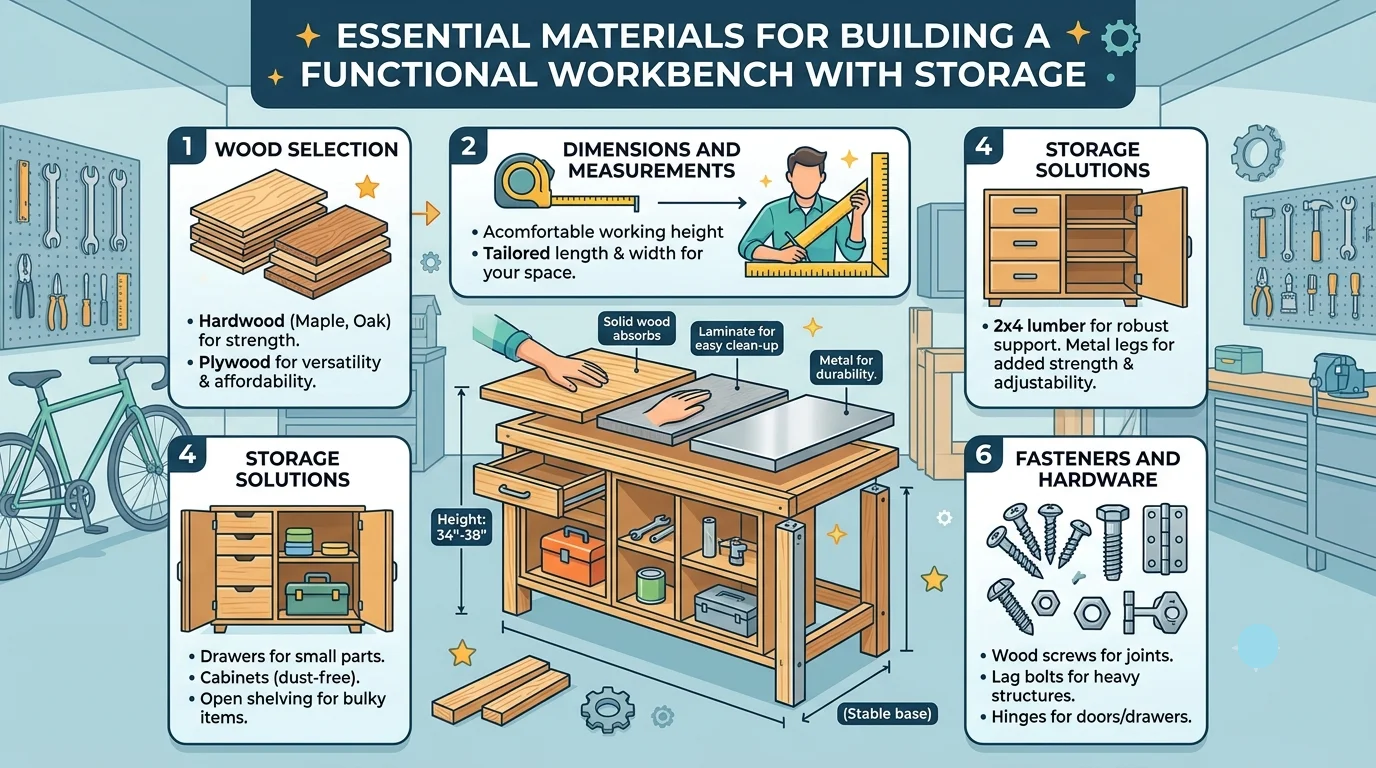
Creating a functional workbench with storage involves selecting the right materials to ensure sturdiness, utility, and longevity. Whether you’re a DIY enthusiast or simply want a dedicated space for your projects, knowing the essential materials is crucial. This guide outlines what you need to build an effective workbench with storage.
Wood Selection
The first material to consider is wood. The type of wood you choose affects both the aesthetic and functional qualities of your workbench. Common options include:
- Plywood: Affordable and versatile, plywood is an ideal choice for DIY projects. It’s stable and resistant to warping.
- Hardwood: Options like maple or oak provide durability. They can withstand heavy use and offer a beautiful finish, making them a great choice for visible surfaces.
Dimensions and Measurements
When constructing your workbench, the dimensions are paramount. A standard height ranges from 28 to 36 inches, depending on your needs and whether you’ll be working while standing or sitting. The width can vary between 24 and 36 inches, while the length typically starts at 48 inches. Remember to tailor the measurements according to your available space and intended use.
Workbench Top
The surface of your workbench is crucial for your projects. Consider the following materials:
- Laminate: Offers a smooth surface that is easy to clean and resistant to stains. Laminate is best for general use.
- Solid wood: Provides a strong surface that can absorb impact, making it perfect for heavy-duty tasks.
- Metal: A metal top may be ideal for tasks that involve metalworking or require high durability.
Storage Solutions
To maximize the functionality of your workbench, thorough planning for storage is necessary. Here are popular solutions:
- Drawer units: Drawers can hold tools and small items, keeping your workspace organized.
- Open shelving: Adds easy-to-access space for larger tools and containers.
- Cabinets: Enclosed cabinets prevent dust accumulation and keep your tools safe.
Legs and Frame Material
The stability of your workbench heavily depends on the legs and frame. The materials you can use include:
- 2×4 lumber: A cost-effective choice, providing strong support. Create a frame with 2x4s for a stable base.
- Metal brackets: If you’re looking for added strength, opt for metal brackets. These can bolster the workbench’s stability, especially if you plan to place heavy tools on it.
Fasteners and Hardware
Don’t forget the fasteners and hardware needed to assemble your workbench. Consider using:
- Screws: For securing wood pieces together.
- Bolts and nuts: Ideal for metal components or creating a more robust connection.
- Hinges: Necessary if you choose to incorporate doors in any storage solutions.
Maximizing Space: Creative Storage Solutions for Your Workbench
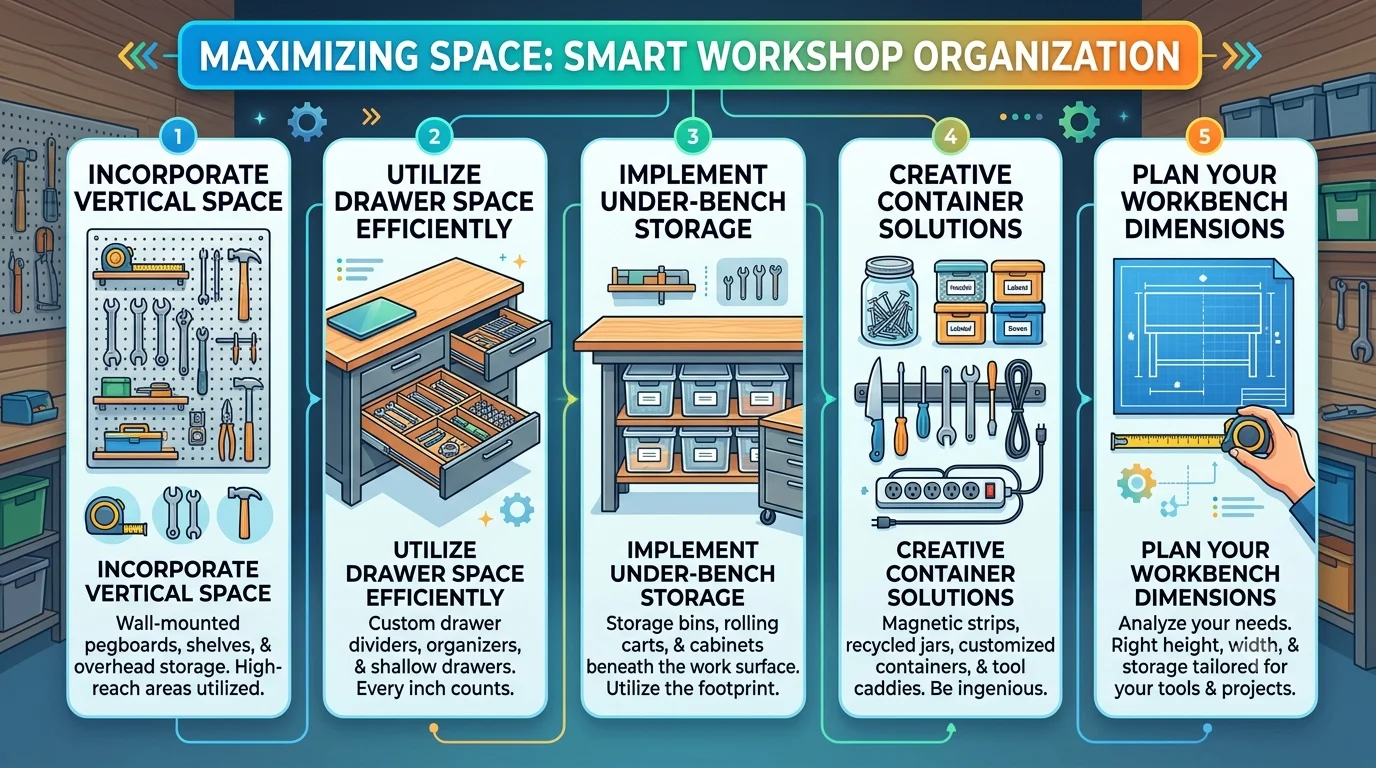
Creating a functional workspace requires not only a sturdy workbench but also effective storage solutions. A well-organized workspace helps you maximize efficiency and can significantly reduce clutter. When planning your workbench, consider clever storage options that fit your specific needs. Here are several creative storage solutions to help you make the most of your workbench space.
Incorporate Vertical Space
One of the best ways to maximize storage is to take advantage of vertical space. Here are some ideas:
- Wall-mounted Shelves: Install shelves above your workbench to store tools, supplies, and materials. This keeps them within reach while allowing you to free up valuable work surface area.
- Pegboards: Using a pegboard on the wall behind the workbench gives you customizable storage for tools. You can hang wrenches, hammers, and screwdrivers, making them easy to access.
- Magnetic Strips: Attach magnetic strips to the wall or the side of your workbench to hold metal tools. This keeps them visible and accessible while maximizing your workspace.
Utilize Drawer Space Efficiently
Drawers are excellent for keeping smaller items organized. Here are strategies to optimize drawer storage:
- Drawer Dividers: Use dividers to create different sections in your drawers. This method prevents items from mixing and makes it easy to find what you need quickly.
- Deep Drawers: Consider building slightly deeper drawers for larger tools and equipment. This allows you to utilize the full height of the drawer space effectively.
- Label Your Drawers: Labeling drawers helps everyone know where things belong, which is essential if you share your workspace.
Implement Under-Bench Storage
The area beneath your workbench can become a significant storage space if utilized correctly:
- Rolling Carts: A rolling cart can fit under the workbench and can be moved easily for access. Use it for frequently used tools or materials.
- Storage Bins: Clear storage bins allow you to see what’s inside while keeping items organized. Store seasonal items or less frequently used tools here.
- Built-in Cabinets: If you’re handy, consider adding built-in cabinets beneath your workbench. This provides a clean look, preventing dust from accumulating on tools.
Creative Container Solutions
Using various containers can greatly enhance your organizational efforts:
- Jars and Containers: Recycle glass jars for small screws, nails, and other fasteners. Label them for quick identification.
- Caddies: A handheld caddy can keep smaller tools together when you’re working away from your bench.
- Magnetic Tool Holder: A magnetic tool holder mounted on the side of your bench can keep essential tools close at hand.
Plan Your Workbench Dimensions
When designing your workbench, proper measurements are vital to create an efficient workspace with ample storage options:
| Workbench Width | Workbench Depth | Workbench Height |
|---|---|---|
| 48 inches | 24 inches | 36 inches |
| 60 inches | 30 inches | 36 inches |
| 72 inches | 36 inches | 36 inches |
Maximizing storage for your workbench does not merely enhance your work efficiency but also saves you time and reduces stress. By implementing these clever storage solutions, you can create a workspace tailored to your specific needs and preferences. Embrace creativity in your organization, and enjoy the benefits of a well-structured work environment.
Tips for Customizing Your Workbench Plans to Fit Specific Needs
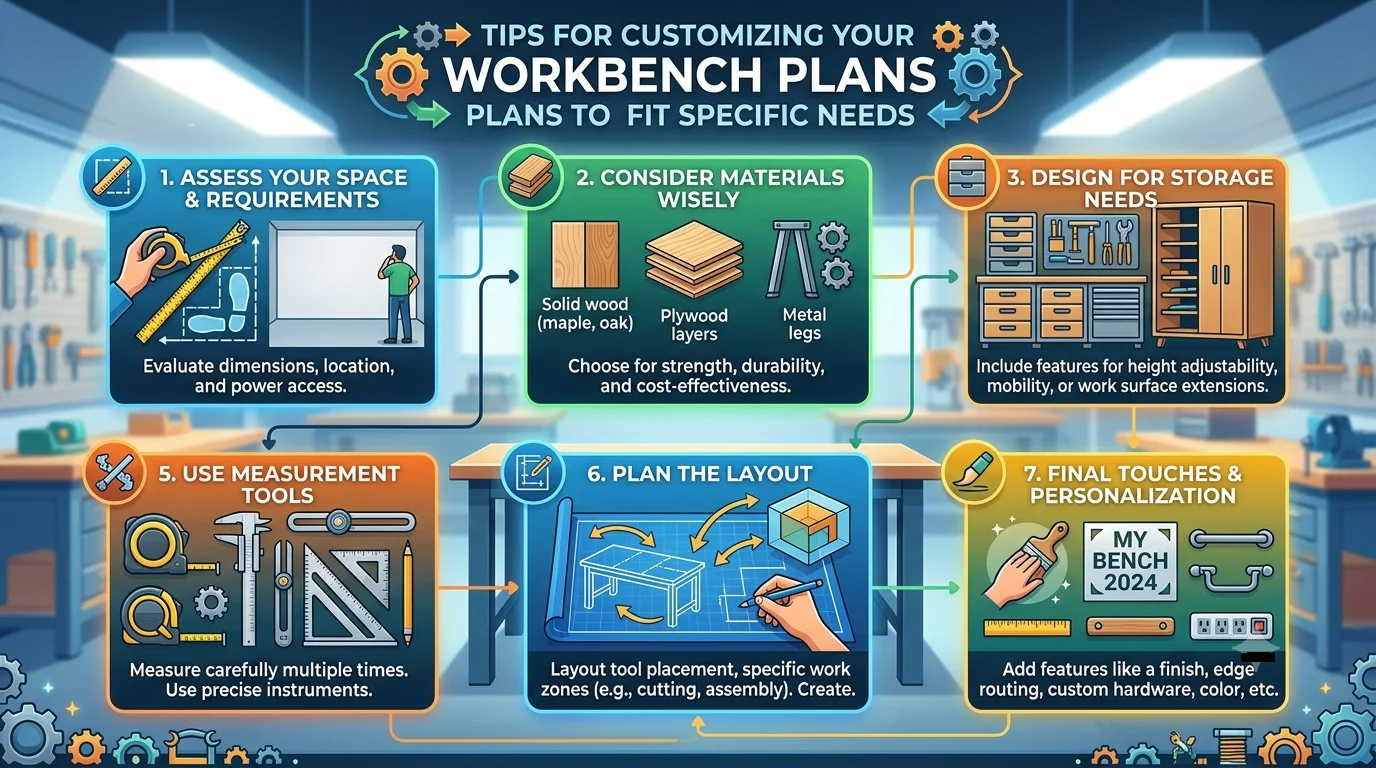
Creating a workbench that suits your specific needs is a rewarding process. Customizing your workbench plans can help you optimize space and enhance functionality. Here are some tips that will guide you through tailoring your workbench to fit your unique requirements.
Assess Your Space and Requirements
The first step is to evaluate the area where your workbench will reside. Measure the dimensions of the space and consider any obstacles like windows, doors, or electrical outlets. You’ll also want to think about what tasks you’ll be performing on your workbench. Will it primarily be used for woodworking, electronics, or general repairs?
Consider Materials Wisely
The materials you choose for your workbench affect its usefulness and longevity. Here are a few options:
- Wood: A classic choice for durability and aesthetics.
- Metal: Excellent for heavy-duty tasks but may add weight.
- Particleboard: Cost-effective but less durable; good for light usage.
Choose materials based on the type of work you plan to do. For instance, solid wood is excellent for woodworking, while metal may serve better for automotive repair.
Design for Storage Needs
Storage is essential for a functional workbench. Evaluate what tools and materials you need to store. Here are some storage ideas to consider:
- Drawers: For smaller tools and parts.
- Shelves: Ideal for larger items like power tools.
- Hooks and Pegboards: Great for organizing frequently used tools.
Ensure your storage solutions are easily accessible. This setup will maximize your workspace and keep you organized.
Incorporate Adjustable Elements
Adjustability in your workbench can enhance its functionality. Consider the following:
- Height Adjustment: A bench that can change heights allows for both sitting and standing work.
- Modular Parts: Design a workbench with removable or movable components to rearrange as needed.
These features will not only improve comfort but also increase your efficiency while working.
Use Measurement Tools
Accurate measurements are crucial in the design process. Using a variety of measurement tools can make the steps easier:
- Tape Measure: Essential for general dimensions.
- Square: For ensuring right angles.
- Caliper: Useful for precise measurement of small components.
Having the right tools on hand can save time and frustration as you build your workbench.
Plan the Layout
Create a detailed layout of your workbench. Drawing out your design will help clarify dimensions and placements. For example, consider having an area for power tools separate from delicate workspaces to minimize disruption. Using software can help visualize the design. Programs like SketchUp allow you to create 3D models to see how everything will fit together.
Final Touches and Personalization
After building your workbench, don’t forget to add personal touches. Whether it’s a customized finish or personalized tool arrangements, make it your own. This final step can enhance both the functionality and the aesthetics of your workstation.
Common Mistakes to Avoid When Creating Workbench Plans with Storage
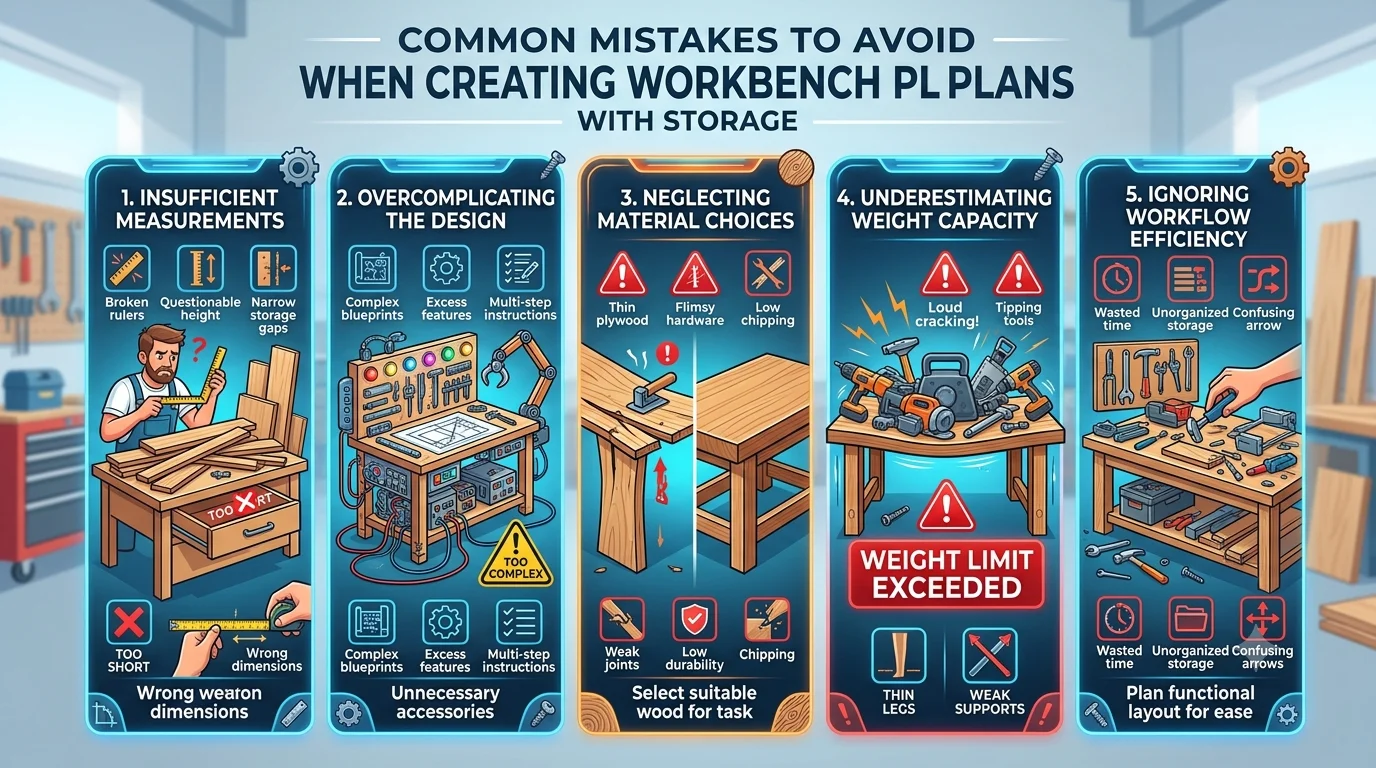
Creating workbench plans with storage can enhance your workspace efficiency and help keep tools organized. However, there are some common mistakes that many people make when drafting these plans. Avoiding these pitfalls can save you time and ensure that your workbench is both functional and sturdy.
Insufficient Measurements
One of the most critical aspects of building a workbench is getting your measurements right. Many people either overlook this step or rush through it without proper attention. Here are some issues to watch for:
- Not measuring the space: Ensure you have an accurate understanding of the available space in your workshop. Measure the width and height of the area to make sure your workbench fits comfortably.
- Ignoring tool sizes: Consider the specific tools you will store in your workbench. Creating storage that accommodates your tools will make your workspace function better.
- Neglecting workspace ergonomics: The height of your workbench should be comfortable for you to work at. Aim for a height that allows you to work without straining your back or arms.
Overcomplicating the Design
While it’s tempting to create an elaborate workbench with multiple features, complexity can often lead to more problems than solutions. Focus on simplicity and functionality. Here are some tips:
- Limit storage types: Instead of mixing cabinets with open shelves, choose one system that promotes easy access.
- Reduce excess features: Stick to essential features like drawers, shelves, and pegboards. Each addition should have a purpose.
- Start with a basic layout: Use a straightforward design as a launching point. You can always add to it later if you discover new needs in your workflow.
Neglecting Material Choices
Picking the right materials for your workbench is a vital consideration. Various factors can affect durability and strength:
- Choosing low-quality wood: If you select cheap lumber, it may warp or buckle under heavy loads. Opt for quality hardwood like oak or maple for the top.
- Ignoring storage material: If you’re using metal for storage, ensure it stands up to rust over time, particularly in a workshop environment.
- Overlooking surface finish: Consider sealing your workbench surface properly to protect against scratches and moisture.
Underestimating Weight Capacity
When designing your workbench plans, pay attention to how much weight it can bear. Underestimating this can lead to serious safety hazards. To accurately calculate weight capacity:
- Assess your needs: Think about what you’ll place on the workbench. For heavy machinery, a sturdier structure is necessary.
- Reinforce your design: Use strong supports like cross bracing and thicker legs to distribute weight evenly.
Ignoring Workflow Efficiency
Creating a functional workspace is more than just building a workbench; it’s about workflow efficiency. Consider these points to avoid mistakes:
- Placement of tools: Position tools and materials close to the workbench for easy access.
- Workflow layout: Plan your workbench in relation to other stations in your workspace to promote an efficient flow.
By keeping these common mistakes in mind, you’ll create a workbench that not only meets your storage needs but also improves your overall efficiency. For further inspiration and detailed plans, check out Wood Magazine or Woodsmith.
Building your workbench doesn’t have to be complicated. Remember to prioritize simplicity, efficiency, and quality materials. Use this advice to craft a workspace that suits your needs perfectly!
Conclusion
Creating a workbench that incorporates effective storage solutions is a vital step toward enhancing your workspace. By understanding key measurements and features, you set the foundation for a practical and efficient setup. Selecting the right materials ensures that your workbench will withstand the demands of your projects, while also providing robust storage to keep your tools organized and easily accessible.
Moreover, maximizing space with innovative storage options can transform your workbench from a simple surface into a multifunctional workspace. Consider incorporating shelves, pegboards, or drawers that suit your style and needs. Customizing your workbench plans enables you to design a solution that fits your unique requirements, whether you’re an amateur DIYer or a seasoned woodworker.
However, common mistakes can derail even the best plans. Pay careful attention to measurements and layout, as improper planning can lead to wasted space or inaccessible tools. By avoiding these pitfalls, you can ensure that your workbench not only looks impressive but also functions seamlessly.
Ultimately, by focusing on effective design, choosing appropriate materials, and thinking creatively about storage, you can craft a workbench that elevates your productivity and improves your workflow. With these insights, you’re well-equipped to embark on your workbench project and create a productive haven tailored to your needs. Embrace the journey, and enjoy the satisfaction of building a workspace that’s both functional and inspiring.