
In the woodworking business, upselling is a technique that can significantly impact your bottom line. When you upsell, you increase your sales and enhance your clients’ satisfaction by offering products that truly meet their needs. Here are some effective Woodworking Upselling Strategies for Clients that can help you succeed.
Understand Your Client’s Needs
To effectively upsell, begin by understanding your client’s specific needs. Ask questions that reveal how they plan to use the woodworking item. For instance:
- What is the primary purpose of the item you’re purchasing?
- Who will use this product?
- How long do you expect it to last?
With this information, you can recommend additional products or higher-quality alternatives that better suit their expectations.
Showcase Complementary Items
Highlighting complementary items is an excellent upselling strategy. When a client buys a piece of furniture, suggest matching accessories or maintenance kits. For example:
- When selling a dining table, propose matching chairs or a table runner.
- If a client buys wood for construction, suggest finishes or tools compatible with the project.
By showcasing these items, you create a full spectrum of solutions for your clients, enhancing their overall experience.
Utilize Bundling Strategies
Bundling products can be an effective upselling tactic. Offer packages that combine popular items at a slight discount. This strategy increases the perceived value and encourages clients to make a larger purchase. For instance, you can offer:
- A woodworking kit that includes wood, glue, and essential tools.
- Decorative items paired with furniture for a complete look.
Clients appreciate the convenience of purchasing a bundle rather than individual items, making them more likely to buy.
Educate Your Clients
Knowledge empowers clients to make informed decisions. Provide details about the benefits of higher-quality wood or exotic species versus standard options. When clients understand why a particular choice is better, they are more inclined to invest in it.
Use materials like brochures or digital content that illustrate these benefits. You can also link to informative resources, such as Wood Magazine, for more detailed guides.
Focus on Customization
Customization is a powerful motivator. Many clients crave one-of-a-kind pieces that reflect their personal style. Present them with upsell options like custom finishes, sizes, or designs. By offering personalization, you not only increase the sale value but also deepen the client’s emotional connection to the piece.
Follow Up Post-Sale
Don’t overlook the power of post-sale follow-ups. Reach out to clients after their purchase to see if they have any questions or need further assistance. During this interaction, you can offer additional products or services related to their initial purchase. For example:
- If they purchased a wooden desk, follow up with an offer for a matching bookshelf.
- Send recommendations for wood care products if they bought untreated wood items.
This keep-the-conversation-going approach can lead to more sales down the line.
Leverage Online Presence
Utilize your online presence to promote upselling. Your website can serve as a catalog where you highlight products in contexts that encourage upselling. Ensure that your product pages connect to related items and bundles seamlessly. This approach enables clients to discover complementary products during their shopping experience.
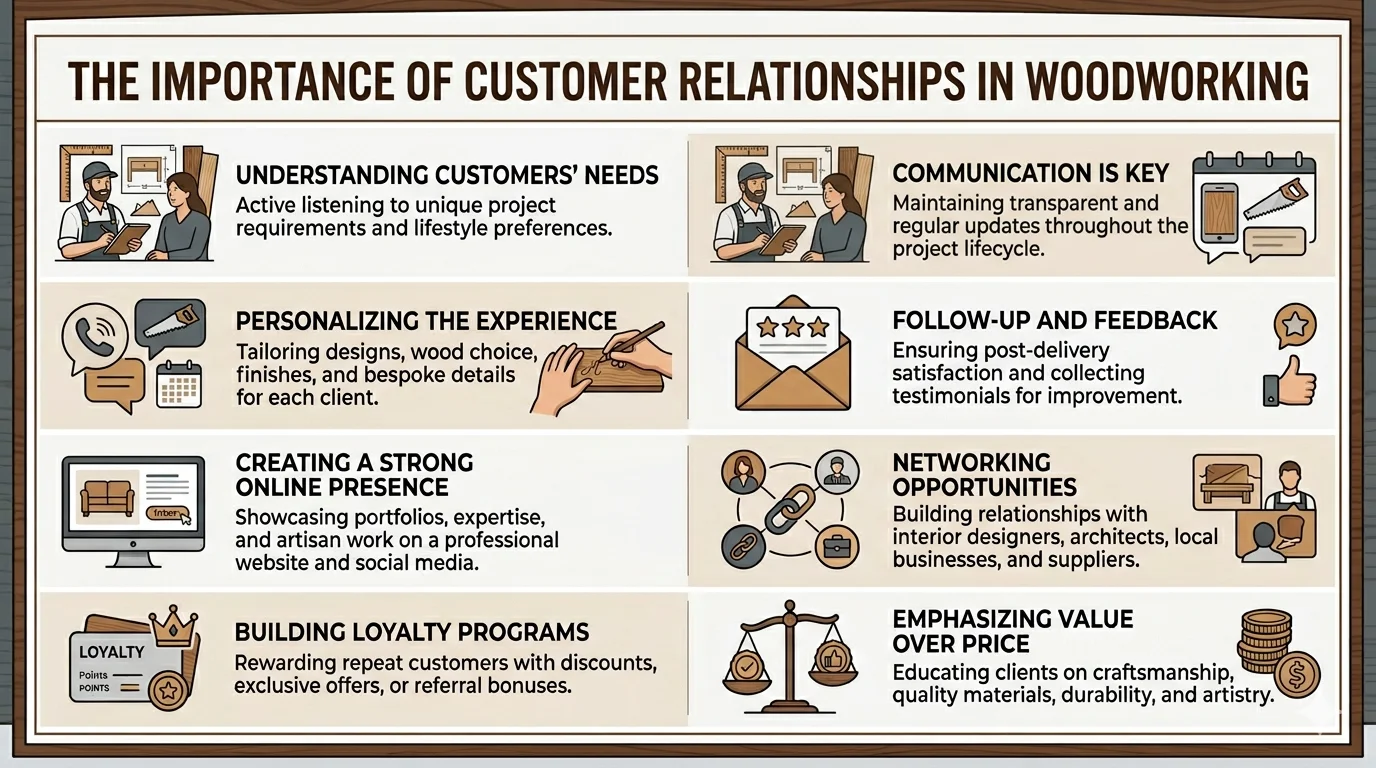
Building strong customer relationships is critical in woodworking, much like the craftsmanship that goes into creating each piece. Whether you’re a seasoned professional or just starting, nurturing these relationships can set you apart from the competition and ensure repeat business.
Understanding Customers’ Needs
Every client has unique preferences and requirements. Taking the time to understand these needs can lead to high-quality craftsmanship that resonates with them. Asking questions about their vision, sharing ideas, and being open to feedback is crucial. This is how you demonstrate that you value their input and are committed to bringing their ideas to life.
Personalizing the Experience
Woodworking is an art form, and customers appreciate a personal touch. Tailor your offerings based on each client’s style and desires. Here are ways to personalize the experience:
- Use their preferred wood types and finishes.
- Incorporate custom designs or engravings.
- Provide individual consultation sessions.
By personalizing the experience, you not only enhance customer satisfaction but also foster loyalty that can result in referrals and repeat business.
Communication is Key
Open and honest communication lays a solid foundation for any business relationship. Keep clients updated on their projects, including any changes in timelines or potential issues. This transparency builds trust. For instance, if a certain type of wood is unavailable, inform them and offer alternative options. Your proactive approach will be appreciated and can enhance their overall experience.
Follow-Up and Feedback
After completing a project, take time to reach out to your clients. A simple follow-up can go a long way. Ask about their satisfaction with the finished product and how they feel about the service. This shows that you care and gives you valuable feedback to improve your services. Here are ways to gather feedback effectively:
- Send a brief survey via email.
- Request testimonials for your website.
- Encourage reviews on platforms like Yelp or Google.
Creating a Strong Online Presence
In today’s digital age, having a strong online presence is crucial to cultivating relationships with potential customers. A well-designed website can showcase your portfolio, highlight your craftsmanship, and provide valuable resources. Consider featuring:
- A blog with tips on woodworking and maintenance.
- Client testimonials to build credibility.
- A gallery showcasing past projects.
Social media platforms like Instagram and Facebook can also be used to connect with customers, share updates, and engage with the community. Platforms such as Wood Magazine and Woodworkers Source provide additional resources that can enhance your knowledge and customer interactions.
Networking Opportunities
Participating in woodworking fairs or trade shows can help you meet prospective clients and build relationships within the woodworking community. By demonstrating your work and sharing your expertise, you’ll find new customers and establish valuable connections with industry peers. Remember, each interaction could lead to a potential project.
Building Loyalty Programs
Loyalty programs are an excellent strategy to reward repeat customers. You might consider offering:
- Discounts on future purchases.
- Free upgrades for loyal clients.
- Referral bonuses for bringing new clients to your woodworking business.
These incentives can help ensure your clients return for future projects and keep you top of mind for their woodworking needs.
Emphasizing Value Over Price
In woodworking, emphasizing the value of your craftsmanship can help you build long-term relationships. When potential clients understand the quality and effort behind your work, they may be willing to invest more. Make it clear why your services are worth the cost through transparent pricing, detailed quotes, and showcasing the quality of materials used.
Nurturing strong customer relationships in woodworking is about understanding their needs, communicating openly, and personalizing every interaction. By focusing on these aspects, you enhance customer satisfaction and establish a loyal client base that can beneficially impact your woodworking business for years to come.
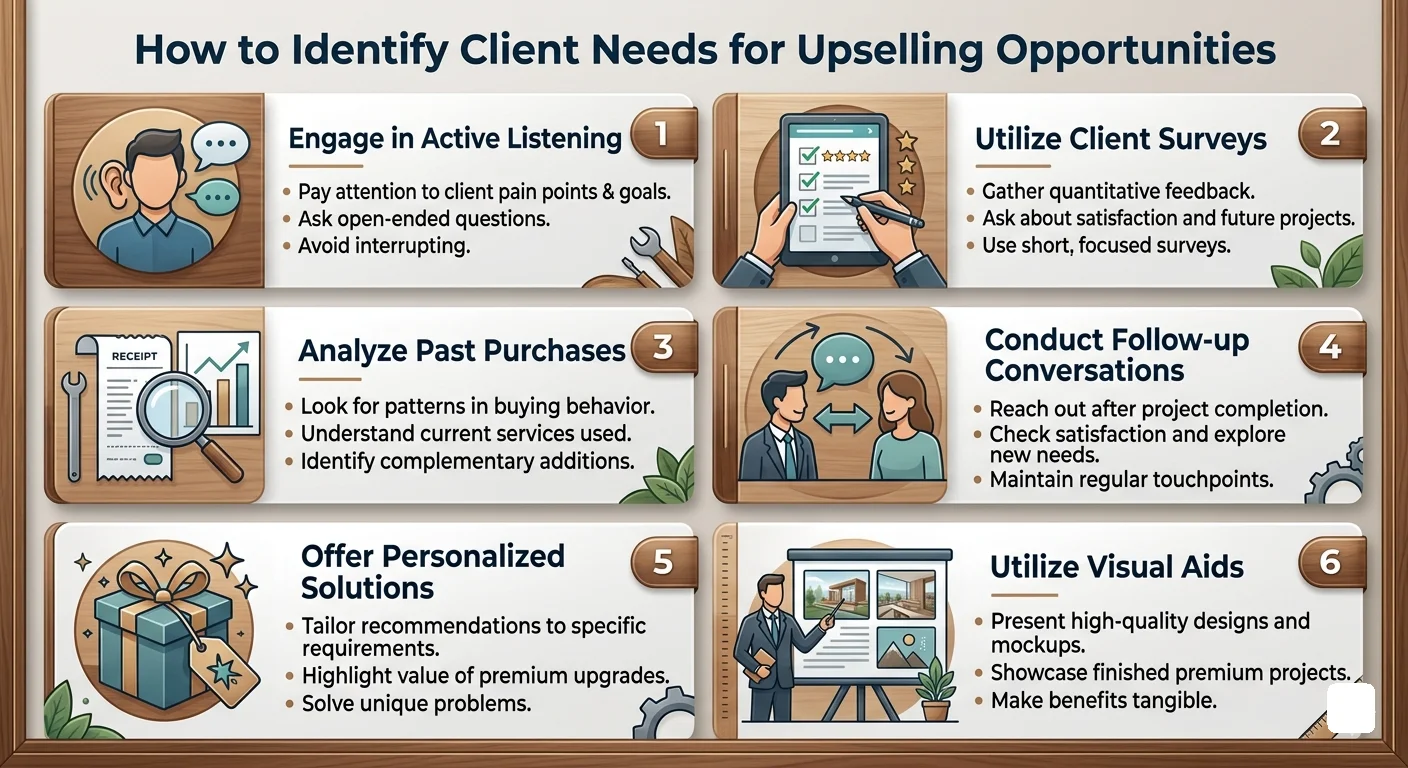
Understanding client needs is crucial for successful upselling in woodworking. By recognizing specific requirements and desires, you can create tailored offers that resonate with your clients. When you’re attentive to these needs, you enhance customer satisfaction and increase the chances of a higher sale value. Here are some effective strategies to identify client needs for upselling opportunities.
Engage in Active Listening
Active listening is essential in any conversation with clients. This means paying close attention to what they say and asking clarifying questions. Here’s how to implement active listening:
- Maintain Eye Contact: This shows you are focused and engaged.
- Avoid Interrupting: Let them finish their thoughts before responding.
- Paraphrase: Repeat back what they have said to ensure understanding.
- Ask Open-Ended Questions: Encourage them to share more about their needs.
By employing these techniques, you can uncover deeper insights into what your clients truly want.
Utilize Client Surveys
Surveys are proven tools for gathering information directly from clients. Consider these approaches to maximize their effectiveness:
- Keep It Short: Clients are likely to complete shorter surveys.
- Ask Specific Questions: Focus on aspects like their experience, preferences, and future projects.
- Offer Incentives: Encourage participation by offering discounts or coupons for future purchases.
For further inspiration on crafting effective surveys, check out SurveyMonkey.
Analyze Past Purchases
Reviewing the history of your client’s past purchases can provide valuable clues about their preferences. Consider these factors:
- Purchase Frequency: Regular buyers might be more open to additional products.
- Product Combinations: Notice if clients often buy certain products together.
- Price Range: Identify the types of products they generally prefer, whether higher-end or budget-friendly.
This analysis can help tailor your upselling approach to match what clients are already interested in.
Conduct Follow-up Conversations
Following up with clients after a purchase is key to identifying upselling opportunities. A few steps to consider include:
- Express Gratitude: Thank them for their purchase, which strengthens the relationship.
- Inquire About Their Satisfaction: Ask if they are happy with their purchase and if there’s anything additional they need.
- Suggest Related Products: Based on their feedback, recommend complementary items.
For tips on effective follow-up methods, visit Mailchimp.
Offer Personalized Solutions
Creating customized offerings can significantly enhance your upselling strategy. Here’s how to do it:
- Understand their Projects: Ask about current or upcoming projects to tailor your suggestions.
- Showcase Versatility: Highlight how your products can adapt to their specific needs.
- Provide Expert Advice: Share your expertise and let them know the best solutions for their unique situations.
Personalization increases chances of sales and builds long-lasting client relationships.
Utilize Visual Aids
Visual tools like mood boards, catalogs, or online galleries can help clients visualize potential upsells. Here’s how they can be advantageous:
- Inspiration: Provide examples of completed projects to spark ideas.
- Comparison: Display options side-by-side for better understanding.
- Emphasize Quality: High-quality images depict the craftsmanship you offer.
Consider using platforms like Canva to create visually appealing marketing materials.
By actively engaging with your clients, conducting surveys, analyzing past purchases, following up, offering personalized solutions, and utilizing visual aids, you can effectively identify upselling opportunities in woodworking. Ultimately, the better you understand your clients’ needs, the more successful your upselling efforts will be. Make every interaction count to grow both your business and client relationships.
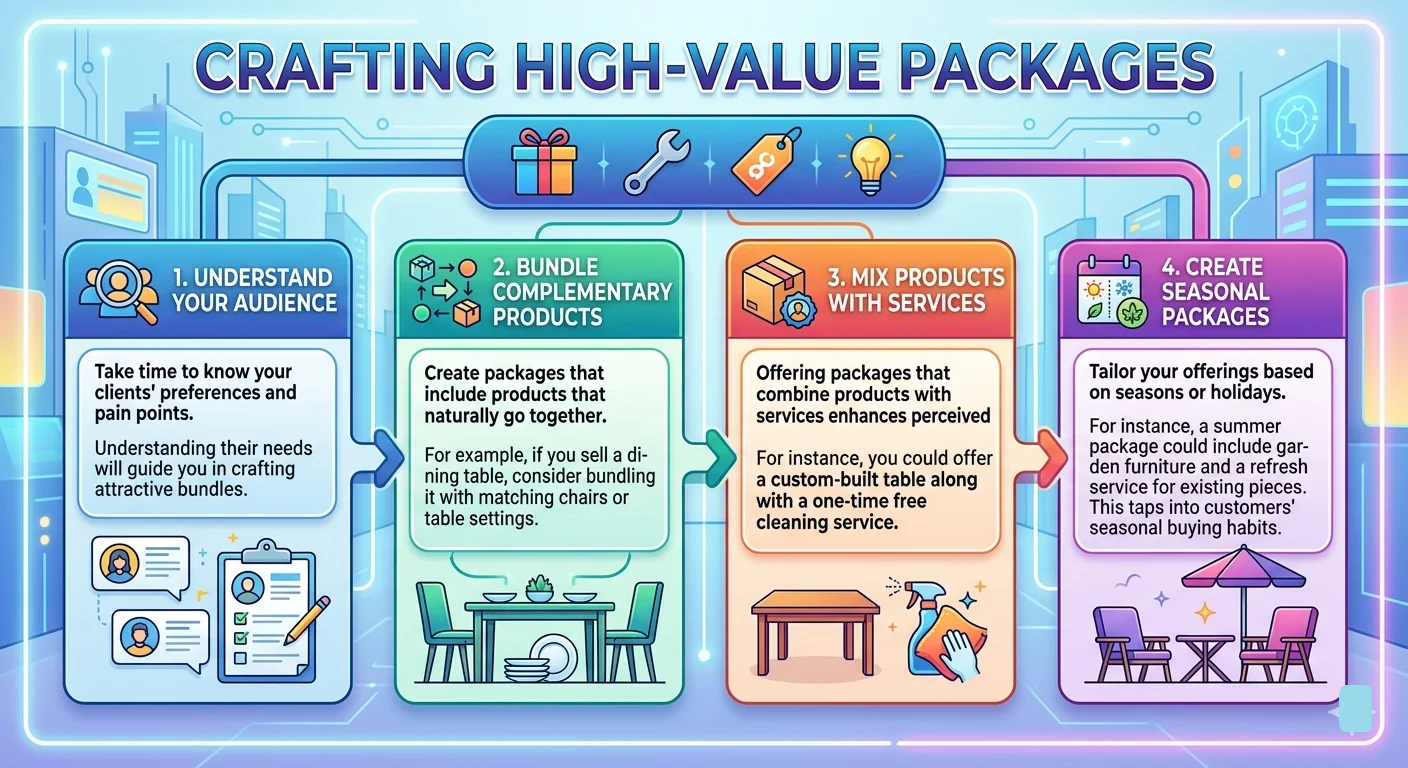
In the realm of woodworking, finding ways to enhance customer value is crucial for long-term success. One effective strategy is to craft high-value packages by combining products and services. This approach increases your sales potential and builds stronger relationships with clients. By offering tailored solutions that address various customer needs, you can elevate your woodworking business to new heights.
Start by identifying the core offerings in your woodworking business. This could range from custom furniture pieces to woodworking tools and accessories. Next, consider the services that complement these products. Services might include installation, refinishing, or even woodworking classes. Here are steps to help you create enticing packages that resonate with your clients:
- Understand Your Audience: Take time to know your clients’ preferences and pain points. Understanding their needs will guide you in crafting attractive bundles.
- Bundle Complementary Products: Create packages that include products that naturally go together. For example, if you sell a dining table, consider bundling it with matching chairs or table settings.
- Mix Products with Services: Offering packages that combine products with services enhances perceived value. For instance, you could offer a custom-built table along with a one-time free cleaning service.
- Create Seasonal Packages: Tailor your offerings based on seasons or holidays. For instance, a summer package could include garden furniture and a refresh service for existing pieces. This taps into customers’ seasonal buying habits.
It’s beneficial to analyze other successful woodworking businesses for inspiration. Many woodworking companies have adopted this model and have seen their sales flourish. For example, Wood Magazine provides insights into woodworking techniques and trends which can help shape your offerings.
To further entice customers, consider providing exclusivity. This can create a sense of urgency and desirability around your packages. Limited-time offers or exclusive products are excellent ways to encourage immediate purchases. Also, ensure your pricing reflects the high value your package provides. Transparency is key; clearly outline what customers receive and how they benefit.
Another effective strategy is to leverage customer testimonials and case studies in your marketing efforts. By showcasing successful projects where your packages made a significant impact, potential clients can envision similar experiences for themselves. Craft an online portfolio that highlights before-and-after images of your work paired with customer feedback.
Online marketing strategies can also play a vital role. Use your social media channels to promote your product-service packages, sharing vibrant images and engaging stories. Popular platforms like Instagram and Pinterest are great for showcasing visually appealing woodworking projects.
The significance of training your staff cannot be overstated in this approach. Employees should be well-versed in the benefits of your packages so they can effectively communicate these advantages to customers. A well-informed team can make all the difference during a sales conversation.
Make sure your website is optimized for these packages. This means having user-friendly navigation so clients can find relevant information easily. Showcasing your high-value packages through an attractive layout can significantly enhance user experience. Customers should readily see the benefits of the packages, encouraging them to make a purchase.
To keep your clients engaged long-term, you might consider implementing a loyalty program. Reward returning customers with discounts on future package purchases or exclusive access to new offerings. This strategy not only drives repeat business but also builds a community around your woodworking brand.
Don’t underestimate the power of follow-up communication. After a purchase, reach out to clients to thank them and check on their satisfaction with their new addition. This engagement keeps the relationship alive and can lead to future upselling opportunities. Tools like Mailchimp can help manage your email outreach effectively.
Combining products and services through high-value packages is a strategic approach that can elevate your woodworking business. It not only increases sales but also fosters client loyalty and satisfaction. By understanding customer needs, offering complementary options, and engaging through effective marketing, you can craft packages that resonate deeply and forge lasting relationships.
Utilizing Social Proof to Boost Woodworking Sales
Engaging customers in woodworking can be a challenge, but utilizing social proof is an effective way to enhance your sales. Social proof refers to the influence that the actions and opinions of others have on an individual’s decision-making process. By integrating various forms of social proof, woodworkers can showcase their craftsmanship and build trust with potential clients. Here’s how to leverage social proof effectively to boost woodworking sales.
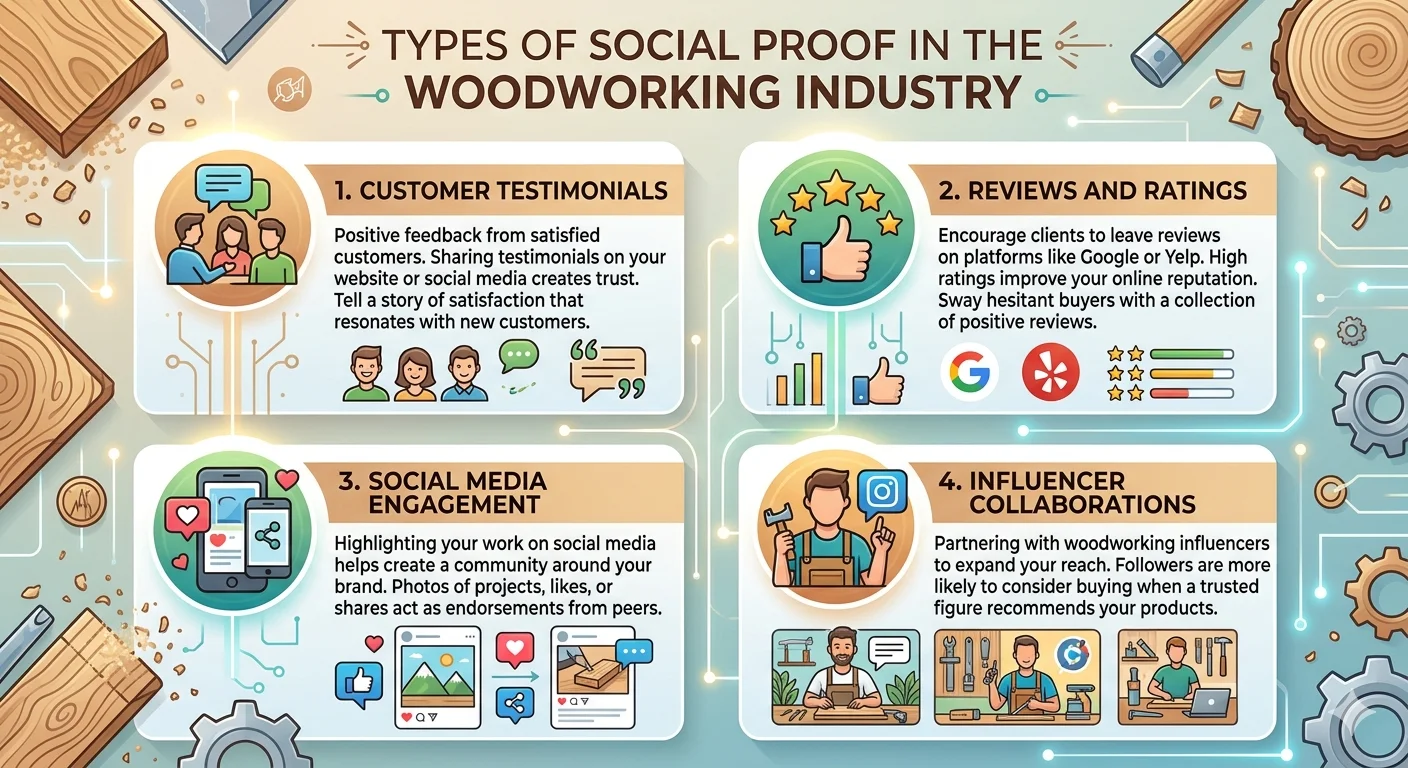
In the woodworking industry, several types of social proof can be used:
- Customer Testimonials: Positive feedback from satisfied customers can significantly impact potential buyers. Sharing testimonials on your website or social media creates trust. They don’t just praise your work; they tell a story of satisfaction that resonates with new customers.
- Reviews and Ratings: Encourage clients to leave reviews on platforms like Google or Yelp. High ratings improve your online reputation. A collection of positive reviews can sway a hesitant buyer to make a purchase.
- Social Media Engagement: Highlighting your work on social media helps to create a community around your brand. Sharing photos of projects and receiving likes or shares acts as an endorsement from peers.
- Influencer Collaborations: Partnering with woodworking influencers can expand your reach. When a trusted figure recommends your products, followers are more likely to consider buying.
Showcasing Customer Projects
One innovative approach to using social proof is showcasing customer projects. When a client purchases a custom piece from you, encourage them to send photos of their new item in their home. Creating a gallery on your website or social media dedicated to customer installations provides proof of quality craftsmanship. It also gives potential buyers ideas of how they can use your products in their own lives.
Using Social Proof in Marketing Strategies
There are several ways to incorporate social proof in your marketing efforts:
- Email Marketing: Share testimonials in your email newsletters or industry updates. Including success stories allows potential customers to envision themselves pleased with your work.
- Website Design: Incorporate a testimonials section on your website’s homepage. Feature a few of the best ones prominently to catch the visitor’s eye immediately.
- Social Media Posts: Regularly feature projects completed for clients. Tag them in your posts to enhance engagement and encourage them to share on their own platforms.
Building a Community
Creating a sense of community around your woodworking brand encourages customers to share their experiences. Use platforms like Facebook and Instagram to connect with your audience. Create groups where customers can discuss their projects, share tips, and post photos. Engaging in conversations with your audience fosters loyalty. When customers feel part of a community, they become more likely to recommend your work to others.
Tracking and Displaying Results
To measure the effectiveness of your social proof strategies, keep track of the following:
| Strategy | Metrics |
|---|---|
| Customer Testimonials | Number of testimonials received, engagement rate on testimonial posts |
| Online Reviews | Average rating, total number of reviews |
| Social Media Engagement | Likes, shares, comments on project posts |
| Influencer Collaborations | Increased followers, engagement rate after posts |
By consistently tracking and refining your methods, you can ensure your woodworking business leverages social proof successfully, leading to increased customer trust and sales.
For more insights on enhancing your woodworking business, consider visiting Woodworking Network and Wood Magazine. They offer valuable resources to help you grow your craft and business.
Conclusion
Implementing effective Woodworking Upselling Strategies for Clients boosts your revenue and enhances the customer experience. By building strong relationships with your clients, you create an environment of trust where they feel comfortable exploring additional options. Understanding their needs is crucial; taking the time to ask questions and listen can unveil opportunities for upselling that align with their projects.
Moreover, crafting high-value packages that combine products and services helps clients see the benefits of investing in more than just a single item. This approach increases your sales and simplifies their purchasing decisions, making it easier for them to envision the outcome of their woodworking projects.
Additionally, leveraging social proof, such as testimonials and previous client successes, can play a pivotal role in persuading hesitant customers. When potential buyers see how others have benefited from your offerings, they are more likely to trust your recommendations and consider upsells that complement their choices.
By focusing on these strategies—building relationships, identifying needs, creating value through packages, and utilizing social proof—you lay the groundwork for a thriving woodworking business. As you implement these techniques, remember that a satisfied client is a loyal one, leading to repeat business and referrals. Embrace these upselling strategies and watch your woodworking endeavors flourish as you meet and exceed your clients’ expectations.