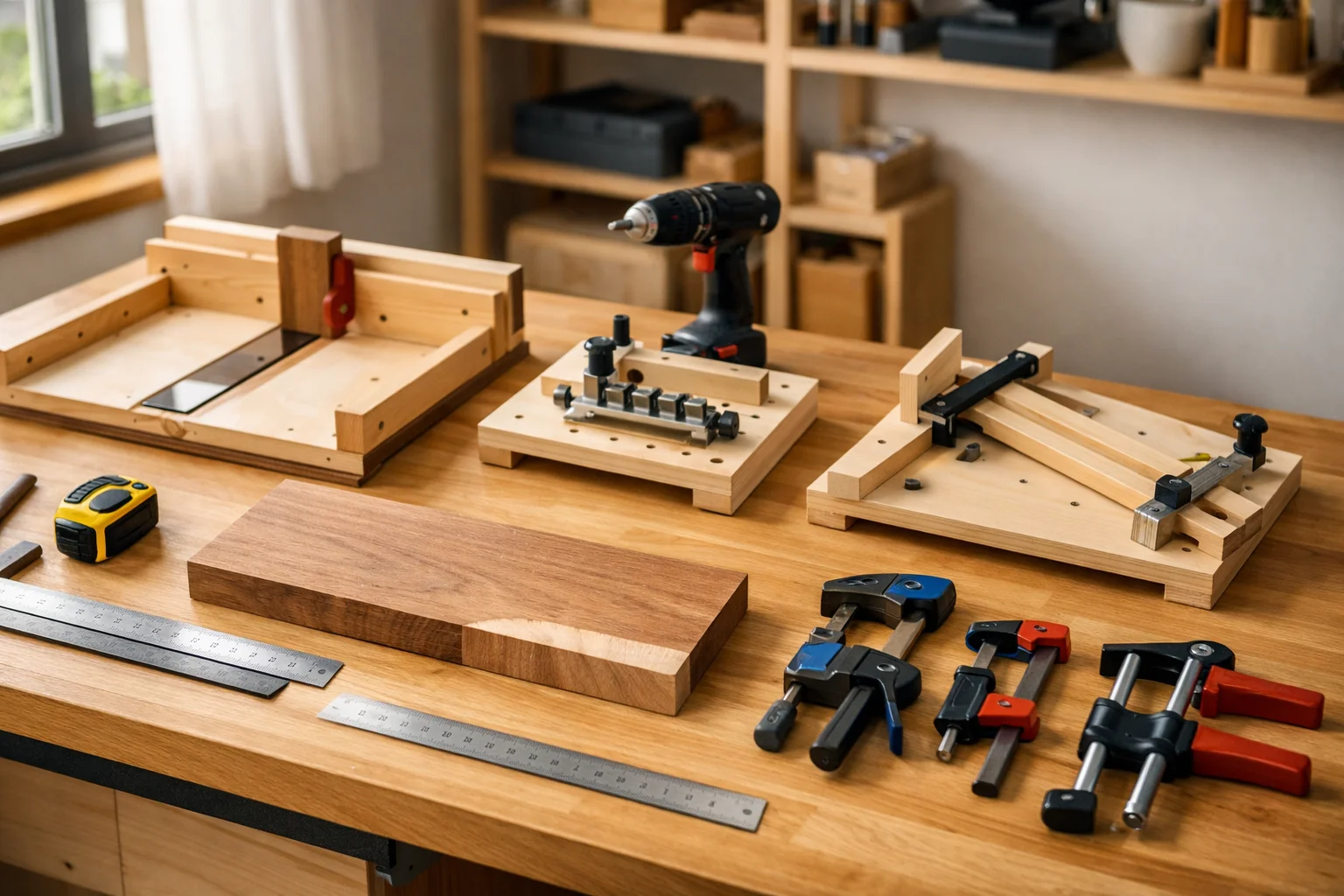
When working on woodworking projects that demand precision, many craftsmen rely on Woodworking Jigs and Fixtures. These tools help ensure accuracy, save time, and enhance the overall quality of your work. Whether you are a professional woodworker or a hobbyist, understanding their importance can elevate your craft significantly.
Understanding Woodworking Jigs and Fixtures
Woodworking jigs are specialized tools that aid in the repetitiveness and accuracy of specific tasks. They guide power tools or workpieces to achieve desired cuts and forms consistently. On the other hand, fixtures are devices used to hold workpieces in place during machining operations. Together, they streamline processes, minimize errors, and improve efficiency in woodworking.
Key Benefits of Using Jigs and Fixtures
- Increased Precision: Jigs and fixtures are designed to position work-pieces accurately, which results in tighter tolerances and precise cuts.
- Time-Saving: These tools allow for consistency in repetitive tasks, enabling faster project completion.
- Enhanced Safety: Properly used jigs and fixtures keep hands at a safe distance from cutting edges of tools.
- Improved Quality: The result of using jigs and fixtures is a cleaner finish and tighter joints, leading to better quality work.
Types of Woodworking Jigs
Different woodworking tasks require different jigs. Here are some common types:
- Crosscut Sled: This jig allows for precise crosscuts on a table saw, maintaining alignment and safety.
- Dado Jig: This tool helps create uniform dado cuts across your wood pieces.
- Tapering Jig: Ideal for producing angled cuts, this jig simplifies the tapering process.
- Drill Jigs: They help in aligning and drilling holes in consistent locations, which is crucial in assembly work.
Creating Your Own Jigs and Fixtures
Many woodworkers prefer to build custom jigs tailored to their specific needs. Here’s how you can approach this:
- Identify the task that requires precision.
- Plan the design of your jig, considering material, size, and complexity.
- Gather materials and tools, focusing on durability and sturdiness.
- Construct the jig, ensuring all dimensions align correctly.
- Test the jig with scrap wood to make adjustments before using it on your actual project.
Real-World Applications of Jigs and Fixtures
In high-precision projects, such as cabinet making or furniture assembly, the use of jigs and fixtures contributes significantly to the final product quality. For example, using a dedicated doweling jig ensures that dowels are aligned perfectly, which is crucial for strong joints. Similarly, a router table setup with a jig can lead to flawless panel glue-ups, eliminating gaps that detract from aesthetics.
Further Resources
To expand your understanding of jigs and fixtures, consider visiting professional woodworking sites such as Wood Magazine and Woodworker’s Journal. These platforms provide valuable insights, project plans, and tips that can assist you in mastering the art of Woodworking Jigs and Fixtures.
DIY Woodworking Jigs: Creating Custom Solutions for Your Workshop
Woodworking jigs are essential tools that can help you achieve precision and efficiency in your projects. If you’re passionate about woodworking, creating your own custom jigs can save you time and enhance the quality of your work. Let’s dive deeper into how you can make DIY woodworking jigs that will transform your workshop experience.
Understanding Woodworking Jigs
Woodworking jigs are devices that hold your workpiece in place while you cut, drill, or shape it. They help you maintain consistency and accuracy, particularly for repetitive tasks. By crafting your own jigs, you can tailor them to your specific needs and project requirements.
Common Types of Woodworking Jigs
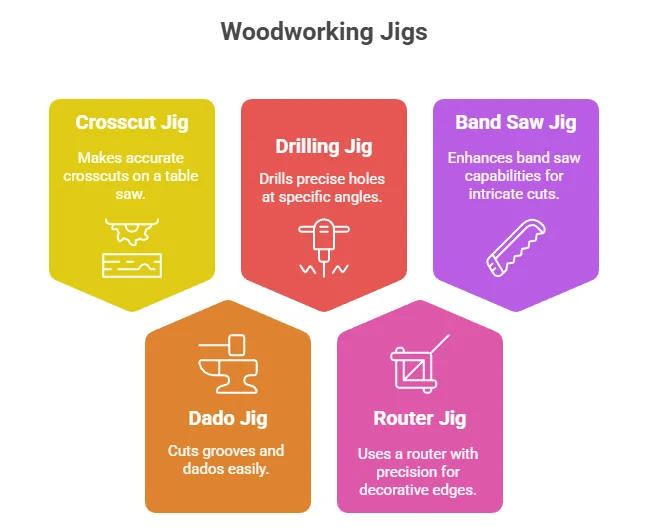
- Crosscut Jig: Helps you make accurate crosscuts on your table saw.
- Dado Jig: Enables you to cut grooves and dados easily.
- Drilling Jig: Useful for drilling precise holes at specific angles.
- Router Jig: Allows you to use a router with precision for decorative edges.
- Band Saw Jig: Enhances your band saw’s capabilities for intricate cuts.
Materials You Will Need
Getting started with woodworking jigs requires some basic materials and tools. Here’s a list of what you might need:
- Plywood or MDF for jig construction
- Clamps to hold everything in place
- Screws or bolts for assembly
- Measuring tape and square for accuracy
- Power tools like saws or drills
Steps to Build Your Own Jig
Creating a custom jig may seem daunting at first, but breaking it down into manageable steps can make it easier. Here’s a simplified approach:
- Identify Your Needs: Determine what specific task you want the jig to perform.
- Plan and Design: Sketch a basic design that outlines dimensions and features.
- Gather Materials: Collect all the necessary materials and tools.
- Cut and Assemble: Carefully cut your pieces according to your design and assemble them.
- Test and Adjust: Use your jig on a sample piece to check for accuracy, making adjustments as needed.
Tips for Successful Jig Creation
- Use Quality Materials: Good materials can enhance the durability and accuracy of your jigs.
- Focus on Precision: Measure accurately to ensure your jig functions as intended.
- Safety First: Always wear the necessary safety gear and follow safety protocols when using power tools.
- Document Your Designs: Keep track of your jig designs for future reference or improvements.
Resource Links for Further Learning
To further explore the world of woodworking jigs, check out the following resources:
Essential Types of Woodworking Fixtures Every Woodworker Should Know
When working with wood, precision and accuracy are key. This is where Woodworking Jigs and Fixtures come into play. These essential tools help you create exact cuts, repeated shapes, and uniform components. Understanding the different types of fixtures will elevate your woodworking projects to a professional level.
What Are Woodworking Fixtures?
Woodworking fixtures are devices designed to hold or support workpieces during machining operations. They are typically custom-made to suit specific tasks and enhance efficiency. By utilizing fixtures, you can ensure that each piece is handled uniformly, reducing the potential for error. Below, you’ll discover several essential types of woodworking fixtures that every woodworker should be familiar with.
Types of Woodworking Fixtures
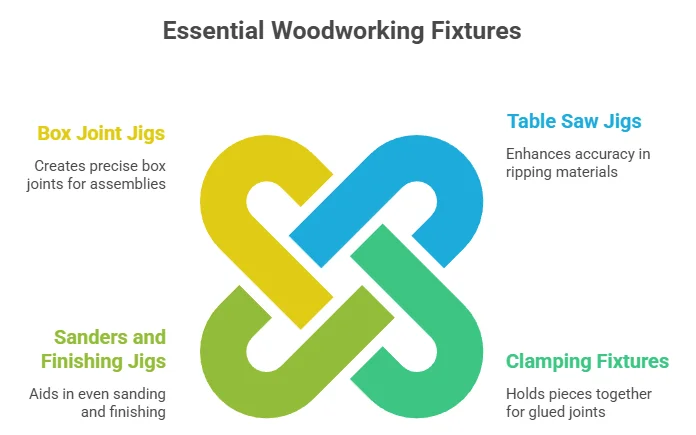
- Drill Jigs: These specialized jigs help you drill holes in just the right spot. You can create a drill jig for any specific size and spacing of holes, enabling repetitive tasks without the need for constant measuring.
- Router Jigs: Router jigs are perfect for making precise grooves and shapes. Whether you need to create decorative edges or cut out complex designs, a router jig guides your router for consistent results.
- Table Saw Jigs: Utilizing table saw jigs can enhance accuracy when ripping materials. Crosscut jigs and miter jigs are examples that help you make clean, straight cuts every time.
- Clamping Fixtures: For glued joints, clamping fixtures play a crucial role. They hold pieces together while the glue sets, ensuring the alignment and integrity of the joint are maintained.
- Sanders and Finishing Jigs: These jigs aid in the sanding process and applying finishes evenly across surfaces. They ensure minimal hand fatigue while providing an even finish.
- Box Joint Jigs: Box joint jigs are specifically designed for creating precise box joints. These joints are commonly used in drawers and box assemblies, and the jig helps in aligning and cutting them consistently.
Benefits of Using Woodworking Fixtures
- Increased Accuracy: Fixtures ensure that cuts are made uniformly, reducing mistakes and enhancing the overall quality of the work.
- Time Saving: Once set up, fixtures allow for quick, repeatable processes, significantly reducing time spent on tasks.
- Enhanced Safety: By securely holding materials in place, fixtures minimize the risk of accidents, ensuring safer operation of tools.
- Better Consistency: Whether you’re working on multiple pieces or a single item, using the same fixture leads to uniformity across all your workpieces.
Building Your Own Woodworking Fixtures
Many woodworkers enjoy the process of building their own jigs and fixtures tailored to their specific needs. When creating your own fixtures, consider the following tips:
- Start with easy projects to get familiar with the design and function of different fixtures.
- Use high-quality materials that can withstand the revisions and wear over time.
- Take detailed measurements to ensure that your jig fits a variety of materials or operations.
- Document your designs, so you can replicate them in the future.
Resources for Woodworkers
Learning about Woodworking Jigs and Fixtures can greatly enhance your skills. Here are some valuable resources: For comprehensive plans and ideas, you can visit Wood Magazine. Another great source for inspiration and tutorials is Lee Valley Tools, which offers a wide range of woodworking tools and tips.
How Woodworking Jigs Enhance Safety and Efficiency in Making Cuts
When it comes to woodworking, precision is key. One of the best ways to achieve accuracy in your cuts is by using Woodworking Jigs and Fixtures. These handy tools not only enhance the efficiency of your projects but also significantly increase safety while you work. Let’s explore how these devices can benefit your woodworking endeavors.
Woodworking jigs are specialized tools designed to guide your cutting and assembly processes. They come in various styles, including miter jigs, doweling jigs, and circle-cutting jigs. Each type serves a unique purpose, helping you achieve cleaner cuts with less effort. Fixtures, on the other hand, are devices that hold your work-pieces in place. Together, they create a controlled environment that promotes safety and accuracy.
Enhancing Safety in Woodworking

- Stabilization: Jigs and fixtures help keep your work-pieces firmly in place, reducing the risk of slipping while cutting. This stability decreases the chance of accidents caused by unexpected movements during cutting tasks.
- Best Practices: Many jigs encourage the use of proper cutting techniques, promoting safer handling of tools. For instance, using a miter jig for angled cuts ensures that you’re using the saw at the correct angle without having to awkwardly position your hands.
- Reduced Human Error: By guiding your cuts, jigs minimize the chances of making miscalculations. Cutting errors can often lead to dangerous situations, especially when working with powerful machinery.
Boosting Efficiency in Projects
- Consistency: One of the most significant advantages of using woodworking jigs is the ability to achieve consistent results. Repeated cuts become simpler, leading to a professional finish with every project.
- User-Friendliness: Many jigs can be easily operated by even novice woodworkers. This reduces the learning curve and allows you to complete tasks more quickly, enabling you to take on more challenging projects sooner.
- Time Savings: Jigs streamline processes. For example, if you are using a doweling jig, you can produce accurate holes in less time than manually marking and drilling them, freeing you up for other important tasks.
Types of Woodworking Jigs
There are various types of jigs available, each designed for specific applications. Consider the following:
| Type of Jig | Purpose |
|---|---|
| Miter Jig | Used for making precise angled cuts in wood. |
| Router Jig | Aids in hollowing out sections of wood, perfect for intricate designs. |
| Dado Jig | Helps cut grooves and trenches in wood for joinery. |
| Circle-Cutting Jig | Allows for making circular cuts with precision. |
By integrating various jigs into your woodworking toolbox, you can tackle a broader range of projects with confidence. Remember, the success of any woodworking task relies not only on your skills but also on the tools you choose to use. Investing in high-quality Woodworking Jigs and Fixtures can not only improve your accuracy but also make your working environment safer. For more detailed insights on specific jigs and their applications, check resources like Wood Magazine or Popular Woodworking.
Innovative Trends in Woodworking Jigs and Fixtures for Modern Craftsmen
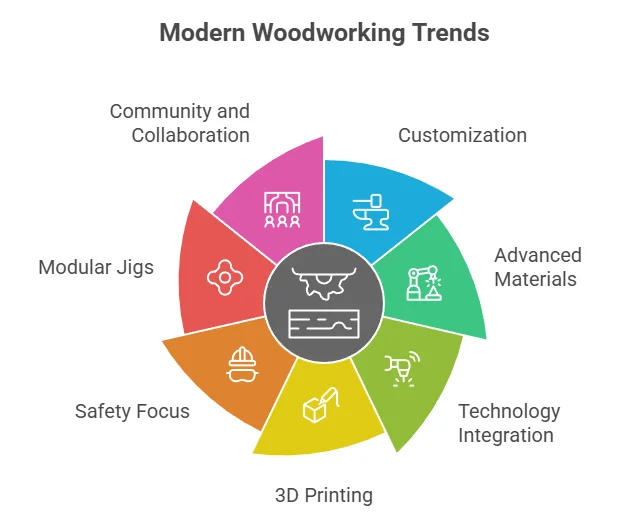
Woodworking is evolving, embracing innovative trends that enhance precision, efficiency, and creativity. For modern craftsmen, Woodworking Jigs and Fixtures are indispensable tools that transform ideas into tangible projects. These tools simplify processes, ensuring accuracy while saving time. Knowing the current trends can help you elevate your woodworking game.
Emphasis on Customization
One of the most significant trends in Woodworking Jigs and Fixtures is customization. Craftsmen today seek tools tailored to their specific needs. Custom jigs allow you to create unique projects more efficiently. For example, having a jig that matches the dimensions you frequently work with can save you from measuring repeatedly, reducing the chances of error.
Advanced Materials
Modern jigs and fixtures are made from advanced materials. Traditional wood and metal jigs are still popular, but materials like high-density plastics and aluminum are gaining favor. These materials offer excellent durability, lightweight properties, and resistance to wear. By using advanced materials, you not only create a long-lasting tool but also one that can withstand the demands of heavy use.
Integrating Technology
The infusion of technology into woodworking is another exciting trend. Digital jigs equipped with laser guides or electronic measuring devices provide unparalleled accuracy. These technological advancements ensure every cut, hole, or joint is precisely where it needs to be. For example, laser guides can help align joints precisely, reducing the time spent set up and increasing the quality of your work.
3D Printing in Jig Creation
Another innovative approach involves 3D printing. Craftsmen can design custom jigs using CAD software and print them with a 3D printer. This method allows for rapid prototyping of jigs, which fosters creativity. Imagine being able to tweak your designs on the fly and print new jigs when they’re needed. This flexibility is revolutionizing how woodworkers create their tools.
Focus on Safety
Safety remains a top priority in woodworking. Many new jigs and fixtures come designed with enhanced safety features. These may include shields to protect your hands or ergonomic designs that reduce strain during use. The focus on safety helps craftsmen work more confidently while focusing on their creative projects. Regular updates to guard designs make them more user-friendly without sacrificing effectiveness.
Modular Jigs
Modular jigs are gaining popularity among craftsmen for their versatility. These jigs can be altered or reorganized for different tasks, reducing the need to buy multiple specialized jigs. For instance, a modular jig for doweling can be adjusted for various sizes of dowels, saving space and money. This trend supports a more sustainable approach to woodworking by minimizing waste.
Community and Collaboration
Modern craftsmen are increasingly sharing their designs and experiences online. Communities have sprung up where woodworkers collaborate on developing new jigs and fixtures. Sharing these innovations helps everyone improve and learn. This sense of community fosters creativity and understanding of the craft. Platforms like Woodworking Talk allow you to engage with fellow woodworkers and learn about the latest trends.
Educational Resources
As more craftsmen explore woodworking, educational resources focused on jigs and fixtures are expanding. Online tutorials, workshops, and video content show how to create and use these tools. Websites such as Wood Magazine provide valuable insights. Whether you’re a beginner or a seasoned pro, diving into these resources can enhance your skills.
Staying current with innovative trends in Woodworking Jigs and Fixtures can greatly improve your craft. The emphasis on customization, technology integration, and safety are key aspects that every modern craftsman should consider. By embracing these trends, you can create high-quality pieces more efficiently and safely. Spend time exploring online resources, connecting with other woodworkers, and experimenting with new tools and techniques. Your woodworking journey will be more rewarding when you focus on these exciting developments.
Conclusion
Woodworking Jigs and Fixtures play a crucial role in achieving precision and consistency in your projects. By incorporating DIY jigs, you can create tailored solutions for your workshop, enhancing both your skill and creativity. Understanding the essential types of woodworking fixtures is key to ensuring that you have the right tools at your disposal, making every task simpler and faster.
Safety and efficiency are paramount in woodworking, and the right jigs can significantly reduce risks while streamlining your workflow. From making intricate cuts to assembling complex joints, these tools can elevate the quality of your work while keeping you safe. The advances in woodworking jig technology offer exciting possibilities for modern craftsmen, allowing for enhanced precision and versatility in every project.
As woodworking continues to evolve, staying updated on innovative trends will help you refine your techniques and expand your capabilities. Whether you’re a beginner or an experienced woodworker, embracing the use of jigs and fixtures can transform your approach to woodworking, allowing you to produce professional-quality results with ease. Investing time in understanding and utilizing these essential tools can lead to remarkable improvements in your projects. By integrating Woodworking Jigs and Fixtures into your toolkit, you’ll not only enhance your crafting experience but also encourage a deeper connection with your work. Now is the perfect time to explore these resources, unleash your creativity, and bring your woodworking visions to life.