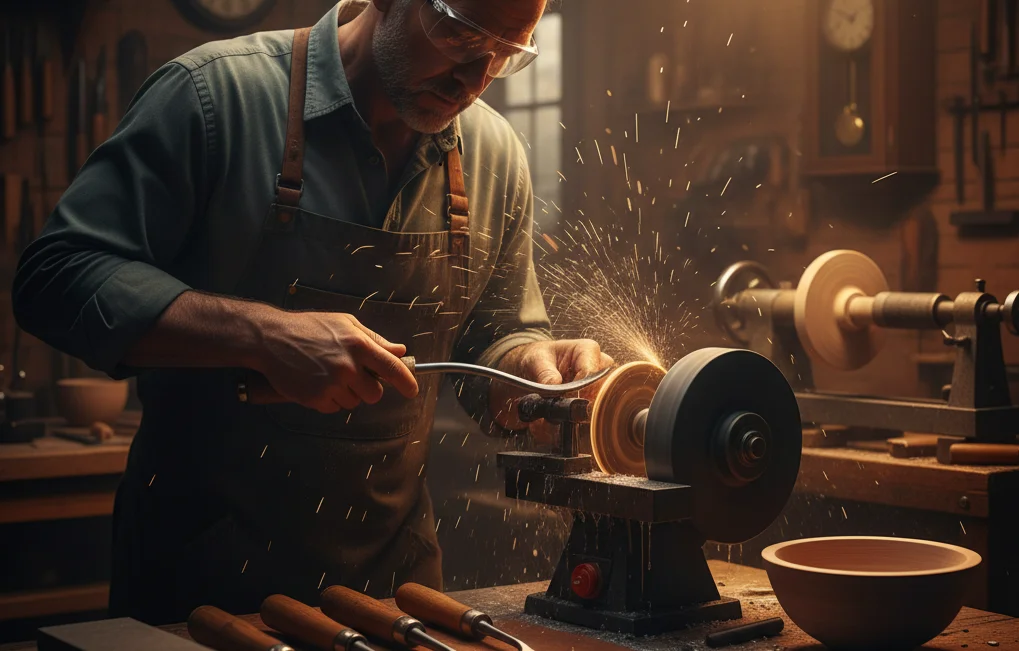
Sharpening your wood lathe tools is key to producing high-quality work. Whether you’re a novice or a seasoned woodturner, using the right techniques will enhance your efficiency and the finish of your projects. Here’s a Wood Lathe Tool Sharpening Guide to essential techniques for sharpening your wood lathe tools effectively.
Understanding Your Tools
Before diving into sharpening techniques, it’s vital to understand the different types of wood lathe tools you’ll commonly use:
- Gouges: These have a curved cutting edge and are perfect for hollowing and shaping.
- Chisels: Used for flat surfaces, these tools have a straight cutting edge.
- Parting Tools: These are narrow and ideal for creating grooves or separating parts.
Knowing your tools will help you choose the right sharpening techniques for each type in this Wood Lathe Tool Sharpening Guide.
Selecting the Right Equipment
When it comes to sharpening, having the right equipment is crucial. Here are some tools you may consider:
- Grinding Wheel: An essential tool that removes material quickly.
- Honing Guide: This helps maintain your angle and prevents mistakes.
- Sharpening Stones: These can be used for finer work and touch-ups.
- Strop: A leather strap often used to give tools a polished edge.
Investing in quality equipment will improve your sharpening process significantly as outlined in this Wood Lathe Tool Sharpening Guide.
Sharpening Techniques
Now let’s explore some techniques that can enhance your tool sharpening. Each method complements specific types of tools.
Using a Grinding Wheel
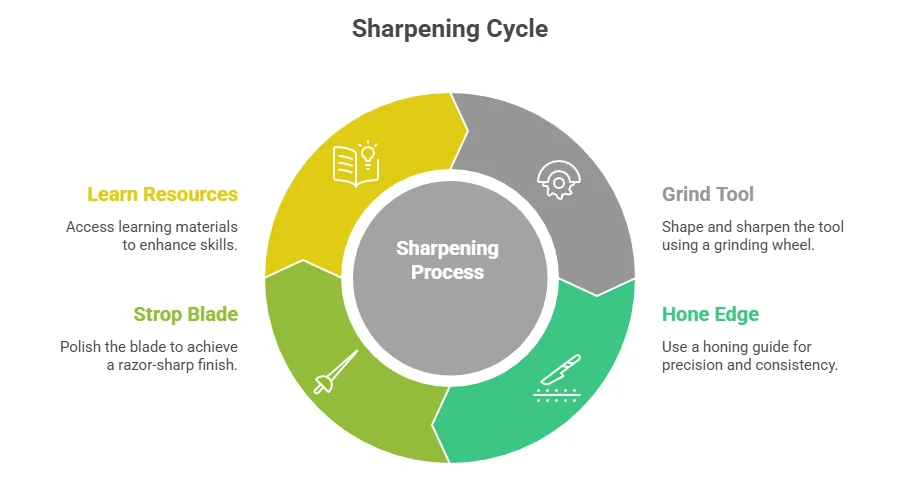
Grinding wheels are a fast way to sharpen your lathe tools. To effectively use a grinding wheel, follow these steps:
- Start with a coarse grit to reshape the edge.
- Control your tool’s angle carefully, aiming typically for 25 to 35 degrees.
- Keep the tool moving to prevent overheating, which can damage the edge.
- Once you have a fine edge, switch to a finer grit wheel for refinement.
Ensure you have protective eyewear, as sparks can fly during this process.
Employing a Honing Guide
A honing guide is very useful for maintaining proper angles. Here’s how to use it:
- Set your tool in the honing guide.
- Adjust it to the desired bevel angle, ensuring consistency.
- Run the tool across a sharpening stone or diamond plate until it reaches the desired sharpness.
This method offers precision, allowing you to keep your tools in optimal shape as per our Wood Lathe Tool Sharpening Guide.
Finishing with a Strop
After sharpening, using a strop is an excellent way to polish the edge. Here’s a quick way to use it:
- Apply a polishing compound to your strop.
- Hold the tool at a slight angle and draw it across the strop, alternating sides.
This process should be done gently to achieve a razor-sharp edge. Regularly strop your tools to maintain their sharpness and extend the time between more significant sharpening sessions.
Maintaining Your Sharpened Tools
Proper maintenance is essential to keep tools sharp longer. Here are some practical tips:
- Clean your tools after each use to prevent buildup.
- Store tools in a dry place to avoid rust.
- Inspect for wear and damage regularly and sharpen as needed.
Common Mistakes to Avoid When Sharpening Lathe Tools
Sharpening lathe tools is crucial for anyone involved in woodturning. However, many woodworkers fall into common traps that can hinder their results. By being aware of these mistakes, you can significantly improve your sharpening technique and the performance of your tools through this Wood Lathe Tool Sharpening Guide.
Neglecting Regular Maintenance
One of the most frequent errors made by woodturners is neglecting regular tool maintenance. Keeping tools sharp is vital, but many wait until a tool is dull before sharpening. This can lead to spending more time and effort than necessary on the sharpening process. Instead, develop a routine for checking and maintaining your tools after each use to keep them in prime condition.
Using the Wrong Attachment
Choosing an inappropriate sharpening attachment, such as a grinding wheel or stone, can impact your tools significantly. Each material requires a different kind of sharpening tool: Grindstones: Ideal for general sharpening; Ceramic or Diamond Stones: Excellent for fine-tuning sharpness; Wheels: Have different grits for various needs. Understanding which sharpening tool to use will enhance the sharpness and longevity of your lathe tools.
Improper Angles
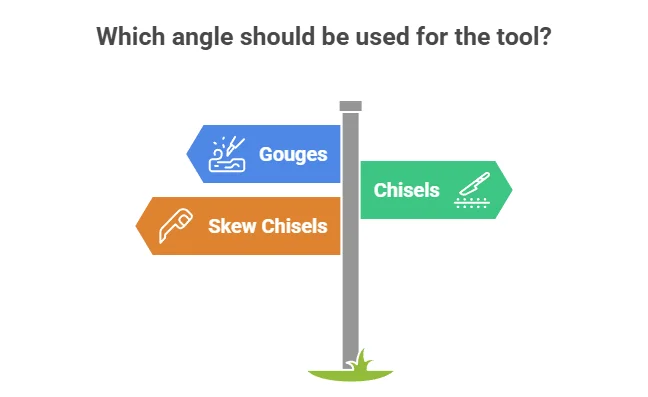
Another critical mistake is failing to maintain the proper angles while sharpening. Each lathe tool has specific angles that need to be adhered to for optimal performance. Incorrect angles can lead to ineffective cutting edges, causing frustration and increasing wear on your tools. Consider using jigs or guides to maintain consistent angles while sharpening.
| Tool Type | Recommended Angle |
|---|---|
| Gouges | 45°- 60° |
| Chisels | 20° – 25° |
| Skew Chisels | 30° – 40° |
Overheating the Edge
Overheating a lathe tool can ruin its temper and hardness. When following this Wood Lathe Tool Sharpening Guide, make sure to frequently cool down the tool to prevent damage. You can do this by: Using water to dunk the tool occasionally; Employing a slower sharpening speed; Allowing the tool to cool naturally before returning to the grinder. By maintaining a suitable temperature, you preserve the integrity of the tool’s edge, enhancing its cutting efficiency.
Inconsistent Pressure
Applying inconsistent pressure while sharpening can lead to uneven edges. Strive for a steady hand, applying the same amount of pressure throughout the sharpening process. This will ensure a uniform cutting edge across the length of the tool. Consider practicing on scrap tools or materials until you get comfortable with your grip and technique.
Ignoring the Importance of Honing
Some woodworkers skip honing, believing that sharpening is sufficient. However, honing is a crucial step that polishes the edge and locks in the sharpness. Use a finer abrasive to hone your tools after sharpening for the best results. A honing guide can help you maintain the right angle during this process, ensuring a perfect finish.
Failing to Test the Edge
Once you’ve sharpened a tool, it’s essential to test the edge before starting on a project. Failing to do so can lead to surprises when you begin turning. Try cutting into a scrap piece of wood to ensure the edge performs well. If the results aren’t satisfactory, revisit the sharpening process as needed.
Not Keeping a Sharpening Log
Many woodturners overlook the importance of tracking when and how they sharpen their tools. Keeping a sharpening log can help you notice patterns, understand tool wear, and refine your technique over time. Documenting the types of tools, the frequency of sharpening, and any observances can lead to enhanced skills and improved results. By being aware of these common mistakes and implementing better practices, you can sharpen your lathe tools effectively and maximize your woodworking efforts.
Tools and Equipment Needed for Effective Tool Sharpening

Effective tool sharpening is vital for anyone using wood lathe tools. Having the right tools and equipment ensures your sharpening process is efficient, effective, and safe. Here’s a comprehensive look at the necessary items you’ll need for effective tool sharpening in this Wood Lathe Tool Sharpening Guide.
Essential Sharpening Tools
To start sharpening your wood lathe tools, you will need certain fundamental tools that make the process easier and yield better results: Whetstone or Waterstone: These are traditional and effective methods for sharpening tools. A waterstone, soaked in water, provides a faster sharpening action. Bench Grinder: A bench grinder is powerful and allows for quick sharpening of tools. Using a slower-grinding speed can minimize heat damage to your tools. Sharpening Jig: This holds your tool at a precise angle for consistent sharpening, especially useful for beginners. Diamond Plate: A diamond plate is durable and requires no flattening, making it a convenient option. Oil Stone: These are good for honing and polishing the edge of the tool after sharpening them on a grinder.
Safety Gear
Keeping safety in mind is essential while sharpening tools. The following safety gear is recommended: Safety Glasses: Protect your eyes from metal shards and debris. Gloves: Wear protective gloves to avoid cuts and abrasions when handling sharp tools. Dust Mask: Prevent inhaling dust created during the sharpening process.
Additional Useful Tools
Besides the main sharpening tools, a few additional items can enhance your sharpening experience: Angle Finder: An angle finder can help determine the correct sharpening angle, ensuring precision. Leather Strop: After using abrasive sharpening tools, a leather strop can polish and refine the edge. File Set: Handy for minor adjustments and touch-ups on tool edges. Spray Bottle with Water: Keeps the stone wet and helps in controlling dust.
Choosing the Right Equipment
When selecting equipment for tool sharpening, consider the following factors: Type of Tool: Different tools require different sharpening techniques. Know what works best for your specific tools. Frequency of Use: If you sharpen tools often, investing in higher-quality equipment may save you time and effort in the long run. Budget: While quality is important, you also want to find tools within your budget. Compare options before making a decision.
Maintaining Your Equipment
Once you have your sharpening tools, proper maintenance is essential for ensuring they last and continue performing well. Here are some tips: Clean Tools Regularly: Remove any metal filings and debris after each use to prevent damage and prolong lifespan. Store Tools Properly: Store your sharpening tools in a dry environment to prevent rust and degradation. Sharpening Stones Maintenance: Flatten your sharpening stones regularly to maintain their effectiveness.
Investing in the right tools and equipment for sharpening your wood lathe tools not only enhances the quality of your work but also extends the life of your tools. For more detailed guidance, you might find resources from Wood Magazine and Woodworker’s Source beneficial. By ensuring you have the right equipment and using it properly, you’ll maintain your tools in peak condition, ultimately improving your craftsmanship and project outcomes.
The Importance of Regular Tool Maintenance in Woodworking
Woodworking is a craft that requires precision, creativity, and, most importantly, well-maintained tools. Regular tool maintenance cannot be overstated when it comes to achieving quality results in your woodworking projects. By taking the time to care for your tools, you ensure that they function optimally, which can greatly enhance the quality of your work as well as your overall woodworking experience. Properly maintained tools not only yield better results but are also safer to use. Dull or damaged tools can lead to accidents and injuries. Therefore, it’s crucial to incorporate tool maintenance into your routine to keep your workshop safe and efficient.
Sharpening
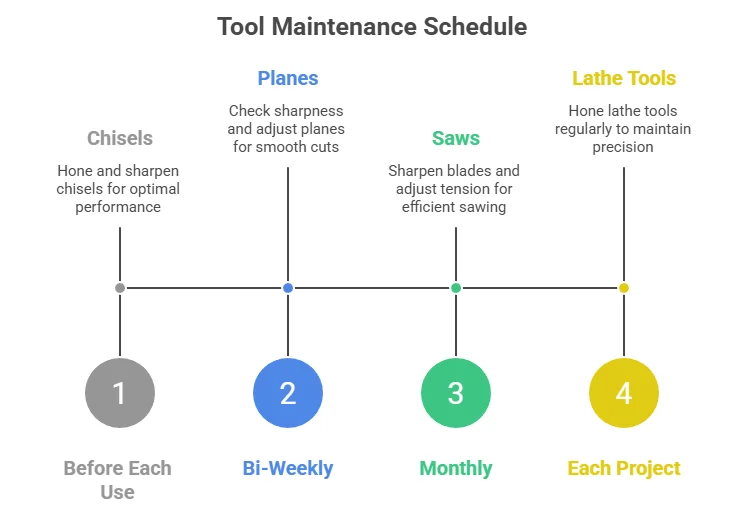
One of the first steps in tool maintenance is sharpening. Regular sharpening of blades, chisels, and lathe tools increases cutting efficiency. When woodworkers use sharp tools, they can cut smoothly and with less effort. This means less strain on your hands and body, allowing for more extended periods of focused work. Here is a brief overview of essential tools that require maintenance: Chisels: Keep the edges sharp for clean cuts; Saws: Ensure teeth are straight and sharp; Lathe tools: Regular honing is vital for smooth wood turning; Planes: Adjust for flatness and sharpness to avoid snags.
Cleaning
Another aspect of tool maintenance is cleaning. After each use, it’s best practice to clean your tools to remove any sawdust, resin, or sap. For metal tools, applying a light coat of oil can prevent rust and keep them in excellent condition. Keeping your tools clean not only extends their life but also improves your woodworking experience, enabling you to work without distractions. Moreover, you should inspect your tools regularly for any signs of wear or damage. Look for cracks, loose parts, or any other issues that may affect performance. If you identify any problems, you should either repair or replace the tool to ensure your safety and maintain efficiency.
Storing tools properly
Storing your tools properly is equally important. Each tool should have a designated place, whether it’s a toolbox or a mounted holder. This prevents damage caused by improper storage and makes it easier to access the tools when needed. Proper storage extends the lifespan of your tools and keeps your workspace tidy.
| Tool Type | Maintenance Task | Frequency |
|---|---|---|
| Chisels | Honing and sharpening | Before each use |
| Saws | Sharpen blades and adjust tension | Monthly |
| Lathe Tools | Regular honing | Each project |
| Planes | Check sharpness and adjust | Bi-weekly |
Using the right products for maintenance is crucial. For instance, products from Woodcraft offer a variety of sharpening stones, oils, and cleaning supplies tailored for woodworking tools. Investing in quality maintenance products helps ensure your tools remain in prime condition. In addition to physical maintenance, consider the mental aspect of maintaining your woodworking practice. Taking the time to regularly assess your tools can give you insights into your crafting habits and preferences. You can discover which tools you use the most and which ones may benefit from an upgrade or replacement. Regular tool maintenance in woodworking is not just a chore but an essential part of honing your craft directly impacting the quality of your projects and safety while working. By prioritizing maintenance, you invest in your craft, making woodworking a more enjoyable and productive experience.
Advanced Sharpening Methods for Professional Woodturners
When it comes to woodturning, the sharpness of your tools can significantly impact the quality of your work. As a professional woodturner, honing your sharpening techniques is essential for achieving precision and consistency. Use this Wood Lathe Tool Sharpening Guide for advanced methods.
Understanding Edge Geometry
The first step in sharpening wood lathe tools effectively is grasping the concept of edge geometry. A sharp tool doesn’t just mean a fine edge; it also involves maintaining the right angle for your specific task. For different applications, you may need: Flat bevels: Ideal for detailed cutting; Crowned edges: Useful for wide surfaces; Curved edges: Perfect for hollowing and shaping. Understanding these angles will help you sharpen your tools in a way that enhances their performance and durability.
Using Water Stones
Water stones are a fantastic choice for sharpening lathe tools. They offer a unique balance of cutting ability and finish. To use water stones effectively: Soak: Immerse the stone in water for about 10-15 minutes before use. Angle Maintenance: Hold your tool at the correct angle throughout the sharpening process. Progress Through Grits: Start with a coarse grit to shape the edge, followed by medium and finish with fine grit for a polished edge. Regularly Check Edge: Inspect the edge for consistency as you sharpen. This method gives a sharp, bur-free edge that’s desirable for fine woodturning works.
Employing Tormek Sharpening Systems
The Tormek sharpening system is tailored for woodturners who seek precision. With a unique water-cooled grindstone, it prevents overheating and maintains the temper of the tool steel. When using a Tormek system: Adjust the angle easily: The tool rests on a pivoting platform, allowing simple angle adjustments. Keep it hydrated: The water ensures your tool stays cool for optimal results. This system is especially good for those who want a one-size-fits-all solution for their sharpening needs.
Understanding Honing and Polishing
After you’ve sharpened your tool, honing and polishing are crucial for maintaining a razor-sharp edge. Honing aligns the edge, while polishing removes any microscopic burr. Here’s how you can do it: Leather Strop: Use a leather strop with honing paste to polish the edge. Angle Control: Maintain the same angle as during sharpening. Consistent Strokes: Apply light and even pressure. Honing and polishing extend the life of your tool and improve cut quality as part of this Wood Lathe Tool Sharpening Guide.
Experimenting with Jigs and Fixtures
For advanced sharpening techniques, consider investing in jigs and fixtures. These tools ensure repeated accuracy in sharpening by offering stable angles and guiding your tools effectively. Some advantages include: Repetition: Achieve consistent sharpening results with minimal effort. Stability: Reduces the risk of slipping and damaging the tool or yourself. You can create your own jigs or purchase pre-made ones tailored for specific tool types.
Regular Maintenance of Your Sharpening Equipment
You must also take care of your sharpening tools to ensure they perform at their best. Simple maintenance can include: Cleaning debris: Ensure no wood shavings or dirt clog your sharpening stones. Checking flatness: Regularly check your stones for flatness; flatten them as needed. Replacing worn components: Keep an eye on wear and tear, replacing any parts that affect performance.
Resources for Further Learning
For more information on wood lathe tool sharpening, check out these excellent resources: Wood Magazine, Tormek, and Rockler Woodworking and Hardware. By mastering these advanced sharpening methods, you can significantly improve your woodturning craft, ensuring each project turns out perfectly. With practice and the right techniques, you’ll achieve a level of sharpness that enhances both your efficiency and precision.
Conclusion
Sharpening your wood lathe tools is crucial for any woodworker, whether you’re a beginner or a seasoned professional. By mastering essential techniques, you set a solid foundation for creating beautiful pieces. Acknowledging common mistakes, such as neglecting the correct angle or applying too much pressure, ensures that you can sharpen your tools effectively without damaging them. Equipping yourself with the right tools, such as sharpening jigs and honing guides, makes the sharpening process smoother and more efficient. Regular maintenance of your lathe tools not only extends their lifespan but enhances the quality of your work. A dull tool leads to frustration and compromised artistry, while a well-sharpened tool transforms your visions into reality with ease.
For those looking to elevate their skills, exploring advanced sharpening methods can bring you closer to the artistry of professional woodturners. Techniques like hollow grinding or using water stones can yield razor-sharp edges that make all the difference in your projects. Prioritizing your tool sharpening routine will significantly impact your woodworking journey. By understanding and applying these principles in this Wood Lathe Tool Sharpening Guide, you pave the way for greater creativity and craftsmanship in your woodturning endeavors. Embrace a diligent sharpening practice, and you’ll enjoy more satisfying results with every turn.