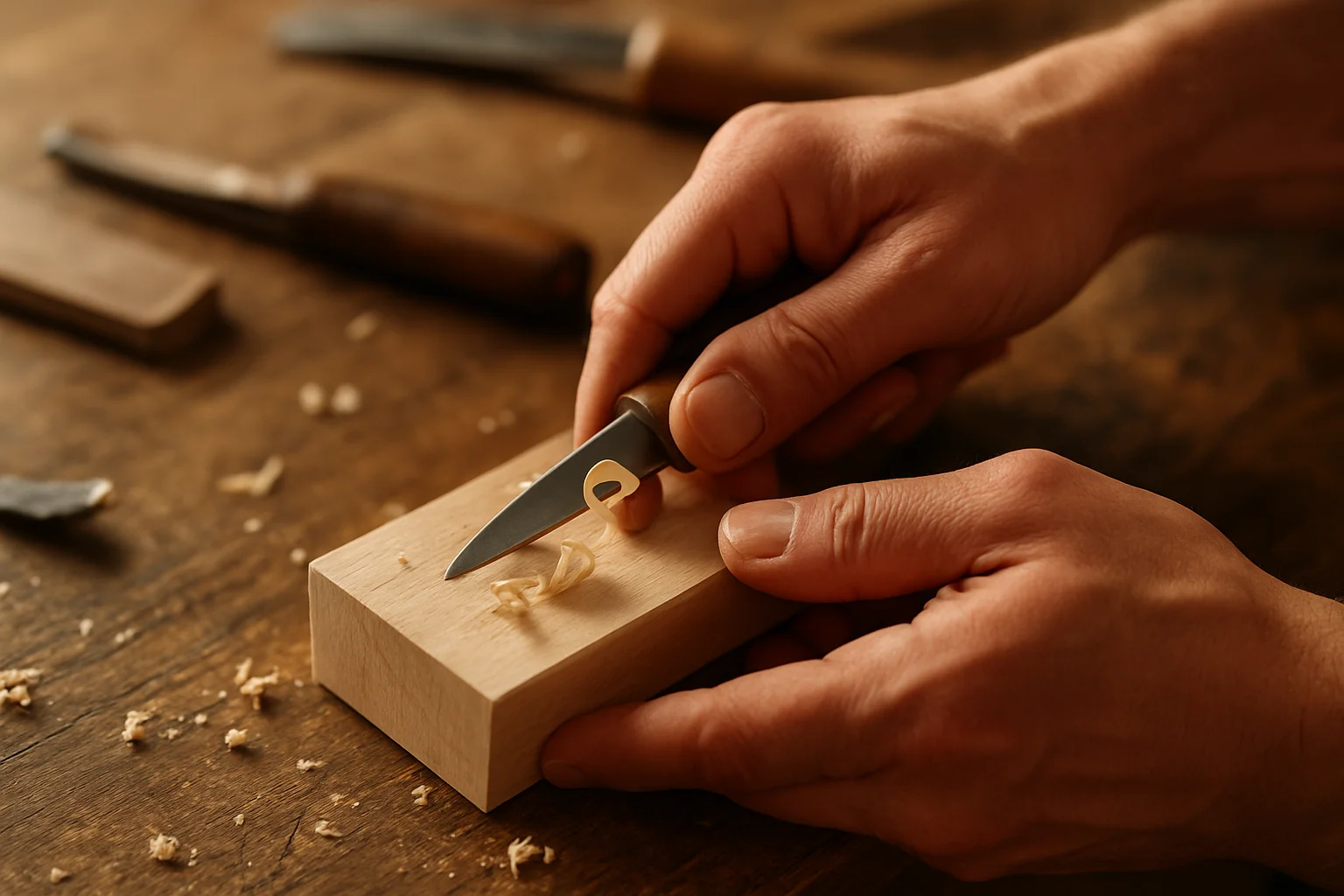
Wood carving can be a fulfilling hobby that offers an escape into creativity and craftsmanship. If you’re just starting out, knowing some essential Wood Carving Techniques for Beginners can help you develop your skills and build confidence. Here are several fundamental methods and tips you can use to get started on your wood carving journey.
Getting Started with Wood Carving: Essential Techniques
Choosing Your Tools
First and foremost, selecting the right tools is crucial for beginners engaging in Wood Carving Techniques for Beginners. Here are some common tools you might consider:
- Carving Knives: These are essential for basic cuts and shaping. A simple, straight-edged knife is a great starting point.
- Gouges: These come in various shapes and sizes. A #5 sweep gouge is ideal for beginners as it can help create curves and hollows.
- Chisels: Flat chisels can be used for more refined cuts and detailing.
- V-tools: These V-shaped tools are perfect for creating lines or textures.
Mastering Basic Techniques
When beginning your wood carving journey, mastering a few essential techniques can make a significant difference in your projects. Here are some foundational Wood Carving Techniques for Beginners to focus on:
1. Safety First
Before you even start carving, put safety at the forefront. Always cut away from your body and use clamps to secure your workpiece. A carving glove can also protect your hands from any accidental slips.
2. Relief Carving
This technique involves carving a design that stands out from the background. Relief carving is great for beginners as it allows you to practice depth without fully carving through the wood.
3. Whittling
Whittling is a simple technique that’s accessible for beginners. You can start with a stick and create simple shapes by removing thin slivers of wood. This method helps you get comfortable with your tools.
4. Chip Carving
Chip carving involves removing small chips of wood to create patterns and designs. You need a sharp knife and a steady hand. This technique is ideal for making beautiful, intricate designs on small projects.
Practicing Your Skills
The best way to improve your wood carving skills and learn more Wood Carving Techniques for Beginners is through practice. Here are some tips to help you along the way:
- Start Small: Begin with projects like spoons, simple animals, or decorative plaques. This allows you to master basic skills.
- Join a Wood Carving Class: Many local community centers offer classes. This will provide hands-on learning and the chance to ask questions.
- Use Quality Wood: Start with softer woods like basswood or butternut. They are easier to carve, making them ideal for beginners.
Resources for Further Learning
There are many resources available for beginners in wood carving. Here are some websites where you can find tutorials, tools, and community support to help you with Wood Carving Techniques for Beginners:
- Wood Carving Illustrated: A great resource for articles, tips, and ideas.
- Carving Magazine: Offers specialized magazines for ongoing learning.
- Woodworkers Source: Provides guides for various wood carving techniques.
Tips for Beginners
As you embark on your wood carving adventure, remember to be patient with yourself. Here are some quick reminders to enhance your learning experience with Wood Carving Techniques for Beginners:
- Document Your Progress: Keep a journal or a photo log to see how much you improve over time.
- Experiment: Don’t be afraid to try new techniques or projects. Mistakes often lead to learning.
- Ask for Feedback: Share your projects with friends or online groups to gain valuable insights.
With these essential Wood Carving Techniques for Beginners, you’re well on your way to becoming a skilled carver. Enjoy the process, stay safe, and let your creativity flow!
Tools Every Beginner Wood Carver Should Have
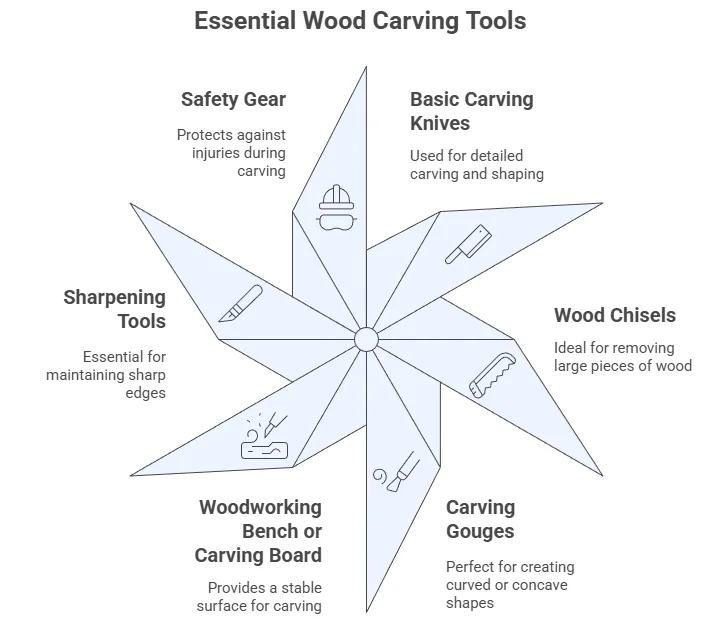
Beginning your journey into wood carving can be an exciting and rewarding experience. One of the most essential aspects of this craft is having the right tools in your toolkit. As a beginner, you want to ensure that you invest in quality tools that will help you develop your skills without overwhelming you. Below are some must-have tools that every beginner wood carver should consider for learning new Wood Carving Techniques for Beginners.
Basic Carving Knives
Carving knives are your primary tools in wood carving. As a beginner, you don’t need a complete set. A few versatile knives will do. Here are the types you should consider:
- Detail Knife: This knife is perfect for making precise cuts and fine details in your projects.
- Carving Knife: A wider blade is great for more substantial cuts and shaping your wood.
- Chip Carving Knife: This knife has a pointed tip for making small, intricate cuts, especially useful in decorative patterns.
Wood Chisels
Chisels are crucial for shaping wood and creating various textures. They come in different sizes and shapes. For beginners, here are some recommended chisels:
- Flat Chisel: Best for basic shaping and smoothing wood surfaces.
- U-Gouge: Ideal for carving out concave shapes.
- V-Gouge: This is useful for creating sharp lines and details.
Carving Gouges
Carving gouges have different curves and widths, making them excellent for creating shapes and incised designs. Aim for a few basic gouges:
- Small Sweep Gouges (like #1, #3): Suitable for tight curves and detailed work.
- Medium Sweep Gouges (like #5, #7): Great for larger, rounded areas.
- Large Sweep Gouges (like #11): Useful for removing material quickly.
Woodworking Bench or Carving Board
A stable surface is essential when working on your carvings. A woodworking bench or a dedicated carving board can make a significant difference. Here are some features to look for:
- Stability: Ensure that the surface doesn’t wobble.
- Clamps: Look for a workbench that allows you to secure your workpiece effectively.
- Space: You will want enough space for your tools and wood.
Sharpening Tools
Keeping your carving tools sharp is vital for effective carving. A dull knife can lead to frustration and accidents. Consider these sharpening tools:
- Whetstone: Use this for honing the edges of your knives and chisels.
- Strop: A leather strop helps maintain the sharpness and polish the edge.
- Honing Guide: This can help maintain the correct angle while sharpening your tools.
Safety Gear
Safety should always be a priority in any woodworking project. Here are a few items to keep in mind:
- Cut-Resistant Gloves: Protect your hands while handling sharp tools.
- Safety Glasses: Keep sawdust and debris out of your eyes.
- Dust Masks: Especially important for those who might be sensitive to dust inhalation.
Recommended Resources
As you start your wood carving journey and delve into more Wood Carving Techniques for Beginners, here are some valuable resources that can help you learn more about the tools and techniques:
- Woodcraft – A marketplace for all your woodworking needs.
- Chippendale – Great for finding quality carving tools.
- Carving Magazine – Provides tips and patterns for beginners.
By equipping yourself with these essential tools, you will be well on your way to creating beautiful wood carvings. Remember that practice is key in developing your skills, so take your time to get familiar with each tool. Happy carving!
Understanding Different Types of Wood for Carving
When starting your journey into wood carving, one of the first things you need to understand is the type of wood you will be working with. Different woods have distinct characteristics that can influence your carving experience and the final outcome of your project. Here, we’ll explore various wood types, highlighting their pros and cons, which will help you choose the right material for your carving endeavors and try new Wood Carving Techniques for Beginners.
Softwoods vs. Hardwoods
One of the primary classifications of wood is softwood and hardwood. Understanding the differences between these two can greatly affect your carving projects.
- Softwoods: These come from coniferous trees, which have needles and cones. Common types include pine, cedar, and spruce. Softwoods are generally easier to carve and are ideal for beginners because they have a finer grain and less density.
- Hardwoods: These come from deciduous trees, which lose their leaves in fall. Examples include oak, maple, and cherry. Hardwoods are denser and often more challenging to work with, but they can result in more detailed and durable carvings.
Popular Woods for Beginners
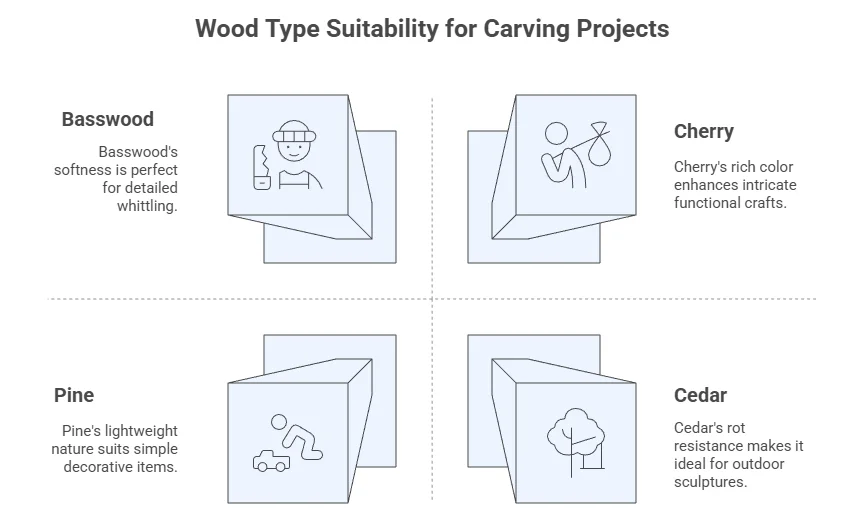
Whether you’re looking for easy-to-carve wood or aiming for something durable, here are some excellent choices for beginner wood carvers and learning Wood Carving Techniques for Beginners:
| Wood Type | Characteristics | Recommended Projects |
|---|---|---|
| Pine | Lightweight, affordable, with a straight grain. | Simple toys, decorative items. |
| Cedar | Resistant to rot, aromatic, relatively soft. | Outdoor carvings, small sculptures. |
| Butternut | Light tan in color and easy to carve; produces a fine finish. | Intricate designs, relief carving. |
| Basswood | Soft, with a fine, even grain; ideal for detailed work. | Whittling and intricate carvings. |
| Cherry | Rich color, smooth texture; becomes more beautiful with age. | Functional items, detailed crafts. |
Considerations When Choosing Wood
Selecting the right wood is crucial for a successful carving project. Here are some factors to keep in mind:
- Density: Denser woods can be more difficult to carve, so it’s best for beginners to stick with softer options until you build confidence.
- Grain: Consider the grain pattern for your design. A fine and even grain is more manageable and yields a nicer finish.
- Cost: Start with more affordable wood types to practice and develop your skills without breaking the bank.
- Availability: Choose wood that is readily available in your area to make sourcing easier.
Tools and Techniques
The choice of wood will also determine what tools you need. For softer woods like basswood, a simple whittling knife may suffice. Meanwhile, when you venture into harder woods, you might need chisels and power tools. Always match your tools to your chosen wood type for the best results. For additional insights on wood types and carving tips, you can visit Woodworker’s Source and Wood Magazine. Ultimately, the best way to find the right wood for your carving is to experiment. Try out different kinds, observe how they behave under your tools, and enjoy the process. Each piece of wood offers a unique experience, and learning about their characteristics will enhance your skills as a woodcarver.
Simple Projects to Enhance Your Wood Carving Skills
If you are looking to enhance your wood carving skills, engaging in simple yet rewarding projects can be a great way to go. These projects not only sharpen your techniques but also help build confidence in using Wood Carving Techniques for Beginners. Below are some easy ideas to get you started on your wood carving journey.
Whittling Basic Shapes
One of the best ways to start is with basic whittling. Begin by choosing a soft wood like basswood or pine. Here’s how you can get started:
- Select wood pieces that are easy to handle and carve.
- Use a sharp carving knife to create simple shapes such as spoons, fish, or small animals.
- Focus on control and technique. Practice peeling away shavings smoothly to achieve each shape.
Whittling is not only enjoyable but also a perfect way to develop precision skills.
Creating a Wooden Keychain
Keychains are practical items, and making one out of wood is a fantastic beginner project. Here’s how:
- Choose a small block of wood, around 3×1 inches.
- Sketch a simple design on one side; it could be your initials or a shape.
- Carve the design carefully using a detail knife, maintaining steady pressure.
- Add a drill hole for the keyring attachment once the carving is done.
This project helps you practice detail work while creating something useful!
Wooden Coasters
Wooden coasters are stylish and functional and can be personal gifts or home decor. To make these:
- Cut wooden circles or squares with a jigsaw or band saw, ideally around 4 inches in diameter.
- Use sandpaper to smooth the edges and surfaces.
- Attempt to carve simple patterns or designs on the surface.
- Finish with a wood sealant for durability.
This project allows you to explore textures and finishings, which are vital skills in wood carving.
Small Figurines
Once you’re comfortable with simpler projects and basic Wood Carving Techniques for Beginners, consider tackling small figurines. Here’s a brief approach:
- Pick a reference image of an animal or character you’d like to replicate.
- Start with a block of wood, and use a saw to outline the shape.
- Gradually carve away sections to give it form, focusing on proportions and details.
- Paint or stain your figurine to enhance its appearance after carving.
This project will push your creativity and help you learn about form and structure in carvings.
Wooden Signs
Creating personalized wooden signs can also be a fun way to practice your carving skills. Consider these steps:
- Choose a plank of wood and decide on the message or design.
- Transfer the design onto the wood.
- Use a carving tool to carve out the letters or imagery.
- Finish with an outdoor sealant if it will be placed outside.
This project not only helps you practice your lettering techniques but also results in a meaningful item you can display. As you embark on these wood carving projects, remember to prioritize safety. Always use protective gear, such as gloves and eyewear, when handling sharp tools. Websites such as Woodcraft and Rockler provide excellent resources, materials, and tools to assist you in your carving journey. With each project you undertake, you will build your skills and confidence in wood carving. Keep experimenting with new designs, and enjoy the process of creating unique wooden items!
Safety Tips and Best Practices for Beginner Wood Carvers

Wood carving can be an exciting and fulfilling hobby, but safety must always come first. As a beginner learning new Wood Carving Techniques for Beginners, you want to enjoy this craft while ensuring that you protect yourself and your workspace. Here are some essential safety tips and best practices to keep in mind as you embark on your wood carving journey.
Choose the Right Tools
Using appropriate tools greatly impacts your safety. Here are some tips on selecting your tools:
- Sharp Tools: Make sure your tools are sharp, as dull tools can slip and cause accidents.
- Quality Over Quantity: Invest in a few good-quality carving knives rather than a full set of cheap tools.
- Ergonomic Design: Choose tools that are comfortable to hold and use. Some models have padded grips, which can help reduce fatigue.
Work in a Safe Environment
Your workspace should be well-organized and free from hazards. Follow these guidelines to create a safe environment:
- Good Lighting: Ensure your workspace is brightly lit to help see details clearly.
- Stable Surface: Use a sturdy table or workbench to keep your work stable. A non-slip mat can help prevent accidents.
- Clear Clutter: Keep your work area tidy to avoid tripping or knocking tools over.
Proper Handling of Tools
How you handle your tools plays a vital role in your safety. Here are some best practices:
- Use a Cutting Board: A stable base prevents slips and helps maintain control when carving.
- Cut Away From Your Body: Position your work so that you always cut away from your hands and body.
- Never Force the Tool: Let the tool do the work; forcing can lead to slips and injuries.
Protect Yourself
Taking precautions to protect yourself while carving is essential. Follow these simple steps:
- Wear Protective Gear: Consider using cut-resistant gloves to protect your hands.
- Eye Protection: Safety glasses can shield your eyes from wood shavings and flying debris.
- Clothing Choice: Wear fitted clothing that won’t get caught in tools. Avoid loose sleeves or accessories.
Stay Focused
Concentration is vital while working with sharp tools. Here are some tips to help you stay focused:
- Avoid Distractions: Turn off your phone or keep it out of sight to minimize interruptions.
- Take Breaks: Don’t rush. Taking regular breaks can help maintain your focus and reduce fatigue.
- Listen to Your Body: If you feel tired, it’s best to stop and rest instead of pushing through.
Learn and Practice
Improving your skills and understanding the craft should be part of your routine. Consider the following:
- Study Techniques: There are many free resources available. Websites like Woodcarving Illustrated offer tutorials and tips specific to beginners.
- Join Groups: Consider local or online carving clubs to connect with experienced carvers. These relationships can lead to valuable advice and community support.
- Practice Regularly: The more you carve, the better you’ll become. Set aside time each week to practice different techniques.
Emergency Preparedness
Even with precautions, accidents can happen. Being prepared is crucial:
- First-Aid Kit: Keep a well-stocked first-aid kit handy, including band-aids, antiseptic wipes, and gauze.
- Know Your Limits: If your injury feels serious, seek medical attention.
- Stay Calm: In case of a cut, control the bleeding before attending to it.
Embracing the artistry of wood carving can be a rewarding experience. By implementing these safety tips and best practices, you can enhance your skills while minimizing risks. Remember, safety should always be your priority to enjoy every moment of your carving adventure. Happy carving!
Conclusion
To embark on your wood carving journey, it’s crucial to familiarize yourself with the essential Wood Carving Techniques for Beginners and the right tools. As a beginner, understanding the different types of wood is just as significant as honing your carving skills. Each wood variety brings its own character and challenges, making it important to choose the best one for your projects. Starting with simple projects can greatly enhance your capabilities while keeping the process enjoyable. The satisfaction of shaping wood into your desired design is unparalleled and will fuel your passion for this craft. Remember, practice is key—so don’t hesitate to take on new challenges as you grow.
Staying safe while carving should always be your priority. Implementing safety tips and best practices will protect you and ensure a positive experience as you learn. Remember to maintain your tools well, work in a comfortable environment, and always use protective gear. Ultimately, wood carving is a rewarding skill that allows you to express your creativity. As you develop these techniques and tools, you will gain confidence in your abilities. Embrace the process, and don’t forget to enjoy the journey of transforming raw wood into beautiful art. Happy carving!