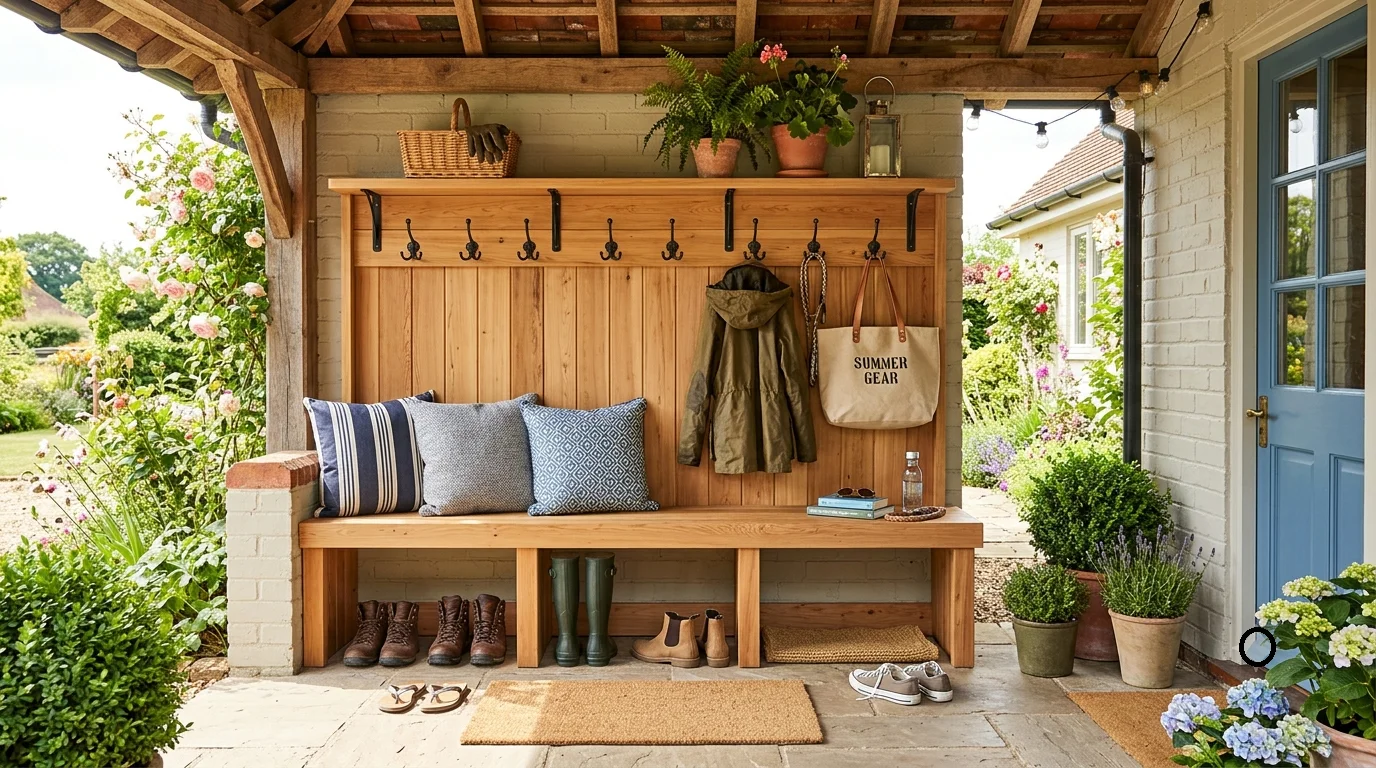
When it comes to creating a functional outdoor space, a mudroom bench can be a game changer. This piece of furniture is not just about style; it offers practical benefits for your home’s entryway. As you start your Mudroom Bench Plans for Outdoor Use, it’s important to consider various design elements that will make it both functional and attractive.
Determine the size of your bench
One of the first things to determine is the size of your bench. You want it to fit comfortably in your outdoor area without overwhelming the space. Measure the area where you plan to install the bench, taking into account other features like doors and windows. A typical mudroom bench can be about 4 to 6 feet long, but depending on your needs and available space, you may need to adjust these dimensions.
Choosing the right materials
Choosing the right materials is crucial for outdoor benches. Look for weather-resistant options like teak or cedar wood, which can endure the elements better than untreated wood. Reclaimed wood is also an eco-friendly choice and can add character to your bench. If you prefer metal, ensure it has a good protective coating to resist rust and wear.
Ventilation
Ventilation is another key consideration. Outdoor mudrooms can get damp, especially during rainy seasons. Incorporate slats or a gap in your bench design to allow for air circulation. This helps prevent mold and keeps the bench dry. A raised design can also aid ventilation and prevent moisture from pooling underneath.
Storage solutions
Storage solutions are essential for any mudroom. Consider building the bench with underneath compartments or drawers to hold shoes, outdoor gear, or cleaning supplies. You can even add a shelf above the bench for hats and gloves. A well-organized mudroom can save you time and keep your outdoor gear neatly stored away.
Hooks or a pegboard
Hooks or a pegboard above the bench can enhance its utility. This allows you to hang items like coats or bags conveniently after coming in from outdoors. Hooks come in various styles and finishes, so choose those that complement the overall look of your mudroom bench.
To further customize your Mudroom Bench Plans for Outdoor Use, think about aesthetics. Adding cushions can improve comfort, while outdoor-safe fabrics can withstand the weather. Choose colors and patterns that blend well with your home’s decor. This not only makes the space inviting but also adds a personal touch.
Don’t forget about the design style that suits your taste. Here are a few popular styles:
- Rustic: Emphasizes natural wood finishes and earthy tones.
- Modern: Features clean lines, metal accents, and a minimalist approach.
- Farmhouse: Combines vintage elements with a cozy feel, often using distressed wood.
- Contemporary: Focuses on sleek designs with bold colors and innovative materials.
Accessibility
Another essential factor is accessibility. Ensure that the bench is at a comfortable height for all family members. A standard bench height is around 18 inches, but you can adjust based on who will primarily use it. If you have children, consider slightly lower options or combine seating with storage for toys and outdoor play items.
Design tools or resource
Consult design tools or resources for inspiration and guidelines. Websites such as Houzz and Wood Magazine offer a wealth of ideas and detailed plans that cater to various styles and preferences. These resources can also help you assess whether to build your bench yourself or purchase a pre-made option that meets your needs.
Best Materials for Outdoor Mudroom Benches
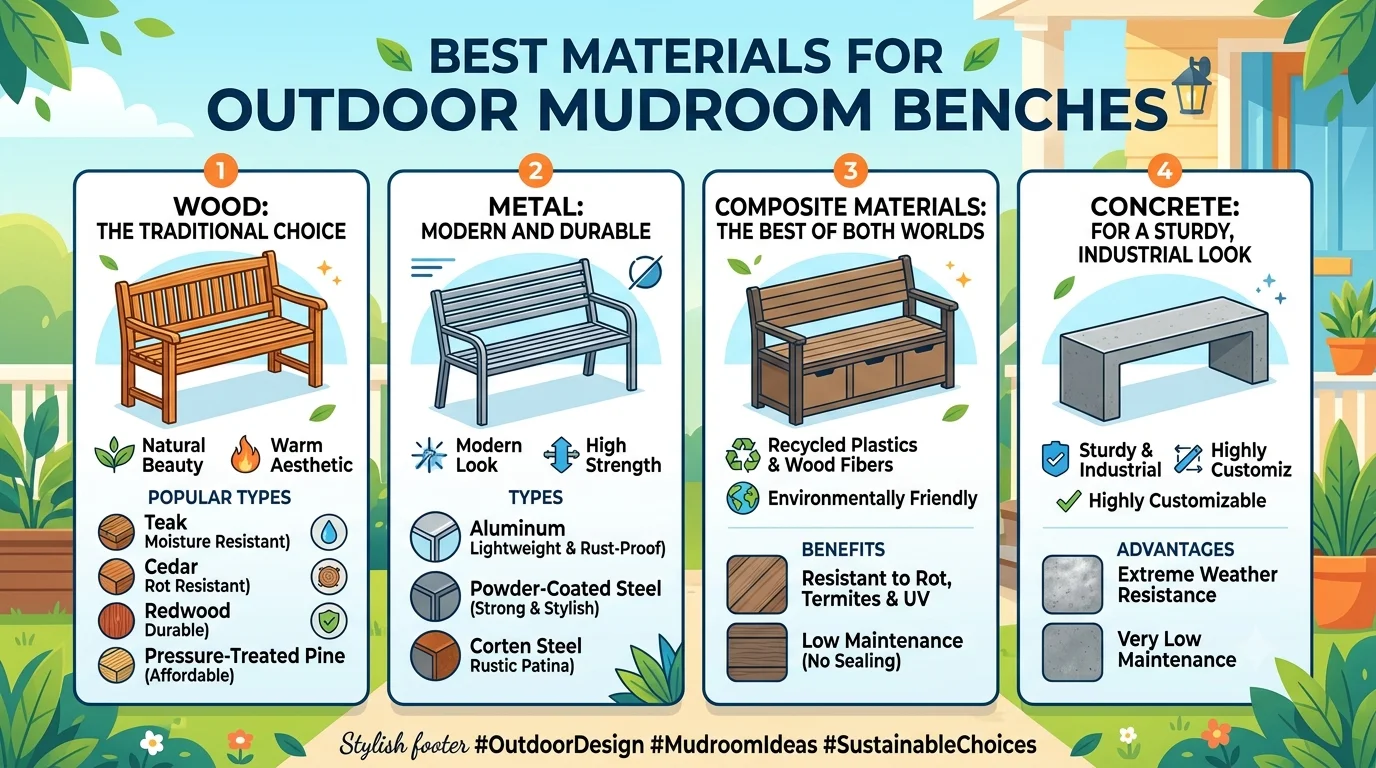
Create a functional and stylish outdoor mudroom bench by selecting the best materials that withstand the elements while offering comfort and durability. An outdoor mudroom bench becomes an essential part of your home, especially if you’re an active family or love spending time outside. Let’s explore the various materials suitable for constructing your outdoor mudroom bench.
Wood: The Traditional Choice
Wood is a classic choice for benches due to its natural beauty and versatility. However, not all wood types are created equal for outdoor use. Here are some wood options to consider:
- Teak: Highly resistant to moisture and insects. Teak benches require little maintenance and develop a lovely silver patina over time. You can learn more about teak furniture here.
- Redwood: Naturally resistant to decay, redwood is lightweight yet durable. It’s a fantastic choice if you want a striking appearance.
- Cedar: Another excellent option, cedar offers a pleasant scent and boasts natural resistance to rot and insects.
- Pressure-Treated Pine: This is the most affordable choice, treated for extra durability, but it requires regular maintenance to prevent weather damage.
Metal: Modern and Durable
If you prefer a modern look, metal may be the way to go. Metal benches can be incredibly strong and weather-resistant. Here are some popular metal materials:
- Aluminum: Lightweight and rust-proof, aluminum is perfect for areas that experience heavy rain.
- Steel: While heavier and prone to rust, powder-coated steel is an excellent option that offers strength and style.
- Corten Steel: This weathered steel develops a rustic patina, adding character to your outdoor space.
Composite Materials: The Best of Both Worlds
Composite materials combine wood fibers and recycled plastic, providing the look of wood without the significant maintenance. Benefits of composite materials include:
- Durability: Resistant to rot, termites, and UV damage.
- Low Maintenance: Easy to clean and does not require staining or sealing.
- Environmentally Friendly: Made from recycled materials, contributing to sustainability.
Companies like TimberTech offer a variety of composite options that are perfect for outdoor benches.
Concrete: For a Sturdy, Industrial Look
Concrete has gained popularity thanks to its durability and unique aesthetic. Here’s why you might consider it:
- Weather Resistant: Concrete can withstand extreme temperatures and heavy rain.
- Low Maintenance: A simple wash is generally all you need to keep it looking good.
- Customization: You can mold and color concrete to fit your desired style.
Many homeowners team concrete benches with wooden accents for a striking contrast.
Choosing the Right Material
When selecting materials for your outdoor mudroom bench, consider the following factors:
- Climate: If you live in a rainy area, opt for materials that resist moisture.
- Weight: Heavier materials offer sturdiness but may be difficult to move.
- Aesthetic: Choose a style that complements your outdoor space.
- Budget: Consider the costs associated with different materials as well as their longevity.
Creative Storage Solutions Integrated into Mudroom Bench Designs
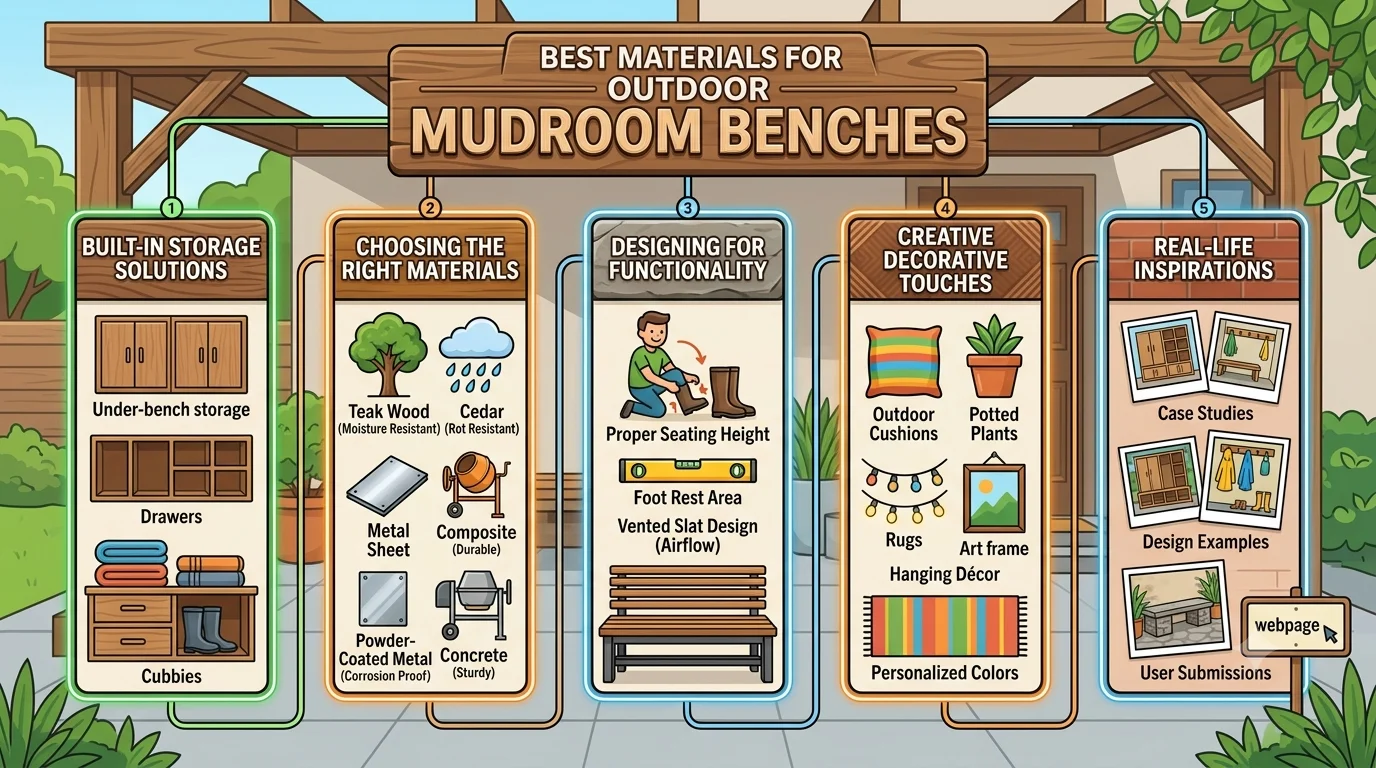
When planning your mudroom, a bench is more than just a place to sit. It can be the centerpiece of your creative storage solutions. A well-designed mudroom bench can transform how you organize your outdoor gear, footwear, and everyday items. Here are some innovative ideas to consider when integrating storage into your mudroom bench designs.
Maximize Vertical Space
Utilizing vertical space is a smart way to enhance the storage capacity of your mudroom bench. For instance, install shelves above the bench to hold baskets, shoes, or decorative boxes. This area can serve as both storage and a space to display plants or decorative items. Consider these options:
- Open Shelving: Easy access to everyday items.
- Cabinets: Hide away less attractive items for a clean look.
- Hooks and Pegs: Great for hanging jackets, hats, or bags.
Built-in Storage Solutions
Crafting a mudroom bench with built-in storage can be a game-changer. This setup ensures that every inch is used effectively. Here are a few designs to inspire you:
- Drawer Bench: Create a bench with several drawers underneath for storing shoes and accessories. The drawers can slide out easily, allowing quick access to stored items.
- Lift-top Storage: Design a bench that lifts to reveal spacious storage. This design is perfect for items like seasonal gear.
- Cubbies: Incorporate cubbies into the sides of the bench for storing shoes, hiking gear, or sports equipment.
Choosing the Right Materials
Durability is crucial for outdoor use. Selecting the right materials for your mudroom bench will ensure it withstands the elements, as well as daily wear and tear. Here are recommended materials:
- Pressure-Treated Wood: Resistant to moisture and insects, making it ideal for outdoor environments.
- Composite Materials: These materials are maintenance-free and come in various colors and finishes, perfect for matching your home décor.
Metal Frames: Combining wood seating with a sturdy metal frame can offer an industrial look while ensuring stability.
Designing for Functionality
A mudroom bench should be functional and fit the needs of your family or lifestyle. Consider these additional features:
- Sliding Doors: These can save space and provide a neat way to access your items without obstruction.
- Removable Cushions: Cushions make sitting more comfortable. Opt for removable covers for easy cleaning.
- Foldable Designs: If space is limited, a foldable bench can be a versatile solution, expanding storage when needed.
Creative Decorative Touches
A well-designed mudroom bench can also reflect your personal style. Incorporate decorative elements such as:
- Pillows and Throws: Adds a cozy touch and encourages use as a sitting area.
- Artwork or Photos: Personalizes the space and adds character.
- Plants: Bringing nature indoors can enhance the ambiance and add freshness.
Real-Life Inspirations
There are many successful mudroom bench designs that effectively incorporate creative storage ideas. Here are some resources to explore further:
- DIY Network offers a step-by-step guide on how to create a mudroom bench.
- House Beautiful features a variety of inspiring mudroom designs with great storage solutions.
- Better Homes & Gardens provides creative storage ideas tailored for mudrooms.
Integrating storage into your mudroom bench designs not only enhances functionality but also ensures your space looks organized and appealing. With thoughtful planning and creativity, your mudroom will become a harmonious blend of style and utility.
Styling Your Outdoor Mudroom: Aesthetic Tips and Ideas
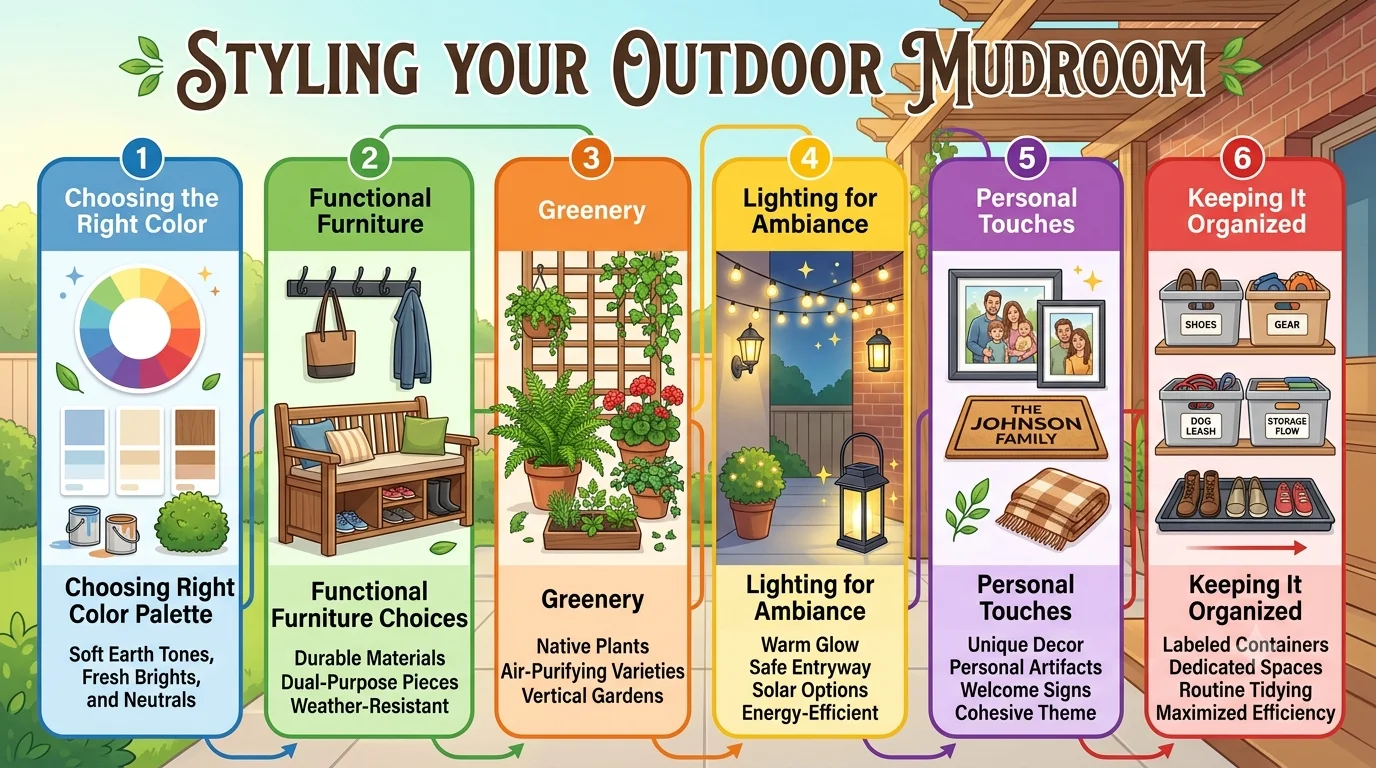
Transforming your outdoor mudroom into a stylish and functional space can greatly enhance your home’s appeal. An outdoor mudroom serves as a transition area, allowing you to manage the clutter of shoes, coat, and outdoor gear, all while making a great stylistic statement. Here are some aesthetic tips and ideas to help you create a stunning outdoor mudroom.
Choosing the Right Color Palette
The color palette you select for your outdoor mudroom can set the mood and tone of the space. Here are some options to consider:
- Earth Tones: Soft browns, greens, and beiges can blend your mudroom with nature.
- Bright Colors: A vibrant blue or cheerful yellow can add energy, making the space welcoming.
- Neutral Shades: Whites, grays, and creams create a clean and modern feel.
Functional Furniture Choices
Utilizing functional furniture can not only help with organization but can also enhance the beauty of your outdoor mudroom. Here are some suggested pieces:
- Mudroom Bench: Opt for a sturdy, weather-resistant bench that blends with your décor. Consider building a custom wooden bench with storage compartments.
- Hooks and Racks: Install decorative hooks or racks to hold coats and bags. Choose materials like wrought iron or reclaimed wood that offer durability and style.
- Storage Bins: Use aesthetically pleasing storage solutions such as wicker baskets or labeled bins. This keeps the area tidy while also looking chic.
Greenery
Adding plants not only brings life to your outdoor mudroom but also improves air quality. Here are some plant ideas:
- Hanging Plants: Consider trailing plants like string of pearls to hang over your entrance.
- Potted Plants: Use colorful pots with flowering plants like petunias or geraniums for a cheerful touch.
- Herbs: Consider installing a small herb garden, which can also be practical for outdoor cooking.
Lighting for Ambiance
Good lighting can dramatically alter the atmosphere of your outdoor mudroom. Here are some options to consider:
- String Lights: They can create a cozy and inviting ambiance.
- Wall Sconces: Install decorative wall sconces for a stylish touch that offers additional light.
- Solar Lanterns: These are eco-friendly and can add charm while lighting the path to your outdoor entrance.
Personal Touches
Adding personal touches enhances the aesthetics and makes the outdoor mudroom uniquely yours. Consider:
- Artwork: Outdoor-safe art pieces or decorative signs can bring personality to the space.
- Family Photos: Frame some family photos in weather-resistant frames and display them creatively.
- DIY Projects: Consider incorporating DIY elements that allow you to showcase your creativity, such as hand-painted signs or unique storage solutions.
Keeping It Organized
A well-organized mudroom not only looks great but is also crucial for functionality. Implementing the following strategies can keep your space neat:
- Assign specific spots for shoes, bags, and gear to minimize clutter.
- Use labeled storage bins to quickly identify where items belong.
- Regularly declutter and clear out unused items to keep the space fresh.
Maintenance Tips for Outdoor Mudroom Benches: Ensuring Longevity
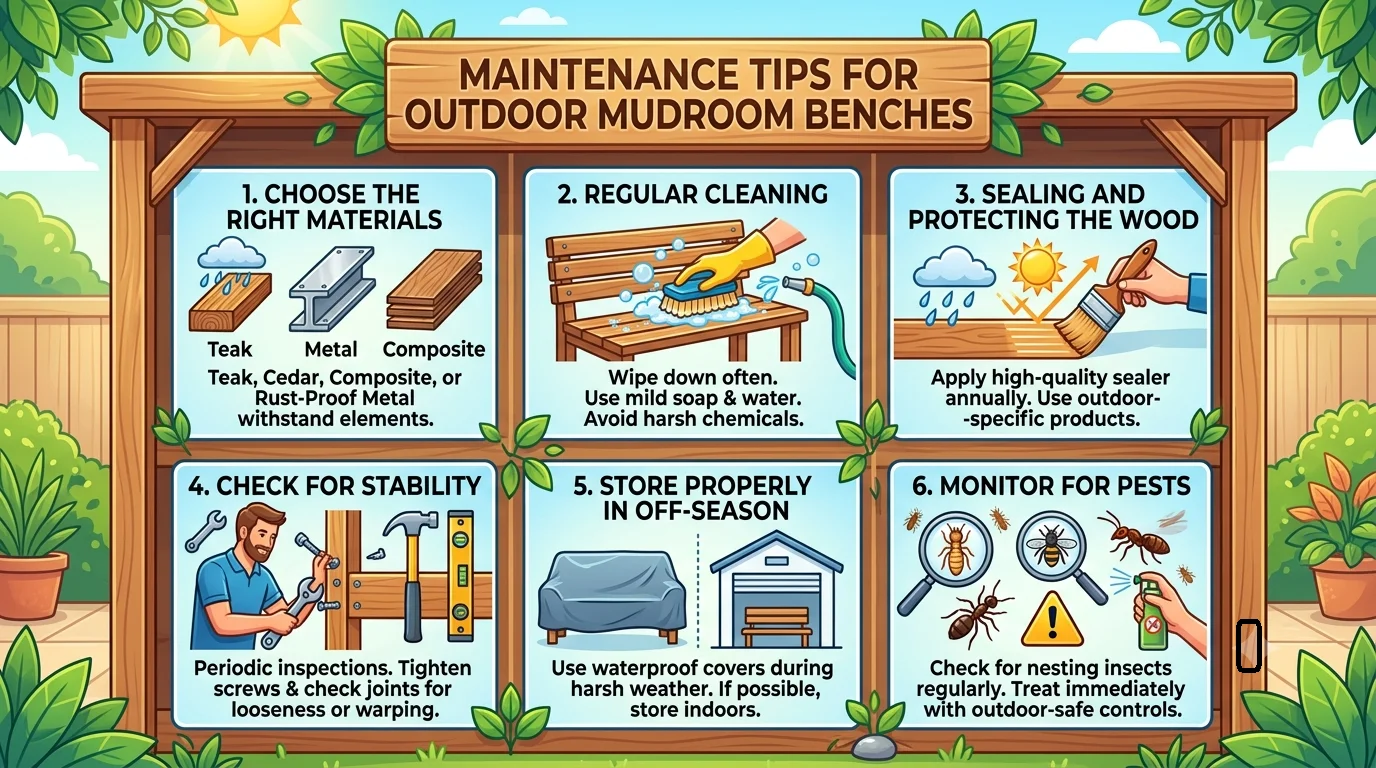
Outdoor mudroom benches are excellent additions to your home, providing a convenient spot for you to sit while removing shoes or storing gear. However, to maintain their functionality and appearance, regular care is necessary. Below are several practical maintenance tips to ensure your outdoor mudroom bench lasts for many seasons.
Choose the Right Materials
When selecting an outdoor mudroom bench, consider materials that withstand the elements:
- Teak or Cedar: These woods are naturally resistant to moisture and insects, making them ideal for outdoor settings.
- Composite Materials: These are made from recycled plastics and wood fibers, providing durability and minimal maintenance.
- Metal Frames: Aluminum or stainless steel can also be a great choice, as they resist rust and corrosion.
Regular Cleaning
To keep your outdoor mudroom bench looking its best, clean it regularly. Here’s how:
- Daily Maintenance: Wipe down the bench with a damp cloth to remove dirt and moisture, especially after rainy days.
- Monthly Deep Cleaning: Use mild soap and water to scrub the bench, followed by rinsing with a hose. Avoid harsh chemicals that could damage the finish.
- Seasonal Maintenance: Inspect the bench for dirt buildup, mold, or mildew. A mixture of vinegar and water can help alleviate these issues.
Sealing and Protecting the Wood
Wooden benches require specific care to prevent weather damage:
- Use a Good Sealer: Apply a high-quality outdoor wood sealer every year. This will create a protective barrier against moisture and UV rays.
- Sand When Necessary: If the wood appears rough or splintered, lightly sand it down before reapplying the sealer. This helps ensure even coverage.
- Consider Stain: A stain can enhance the color of the wood while adding another layer of protection. Choose a product specifically designed for outdoor use.
Check for Stability
As with any outdoor furniture, stability is essential:
- Inspect Connections: Periodically check screws and joints for rust or looseness. Tighten as necessary to maintain stability.
- Watch for Weather Damage: Look for signs of warping, cracking, or discoloration, and address issues immediately.
Store Properly in Off-Season
During harsh weather conditions or winter, take precautions:
- Outdoor Covers: Invest in waterproof covers that fit snugly over the bench to protect it from snow and rain.
- Indoor Storage: If possible, store your bench indoors or in a sheltered area like a garage or shed.
Monitor for Pests
Keep an eye out for unwanted visitors:
- Regular Inspections: Inspect your bench for signs of nesting insects or infestations.
- Pest Control Products: Use non-toxic pest control products, if necessary, to maintain the integrity of the wood.
By implementing these maintenance tips, you can ensure your outdoor mudroom bench remains functional and appealing for years to come. Regular upkeep not only enhances the longevity of your outdoor mudroom bench but also ensures it serves its purpose beautifully. You’ll find that with the right care, your bench can be a stylish and functional addition to your home for many years.
Conclusion
Creating a mudroom bench for outdoor use not only enhances your home’s functionality but also adds charm to your entryway. When planning your design, consider factors such as space, weather exposure, and how you intend to use the area. Choosing the right materials is essential; look for durable options like cedar, teak, or weather-resistant composites to withstand the elements while still presenting a polished look.
Integrating clever storage solutions into your bench design can maximize efficiency. From hooks for coats to hidden compartments for shoes, effective storage helps keep your space organized and inviting. Additionally, adding personal touches through styling can elevate your outdoor mudroom. Consider using decorative cushions, colorful paint, or planters to create a cohesive and welcoming aesthetic that mirrors your style.
Regular maintenance is crucial for ensuring the longevity of your outdoor mudroom bench. Simple tasks like cleaning and applying water-resistant finishes can protect your investment and keep it looking fresh. By following these guidelines, you’ll create a mudroom bench that is not only functional and stylish but also a lasting part of your home. Embrace the blend of practicality and beauty in your outdoor space, and enjoy the myriad benefits your carefully designed mudroom provides.