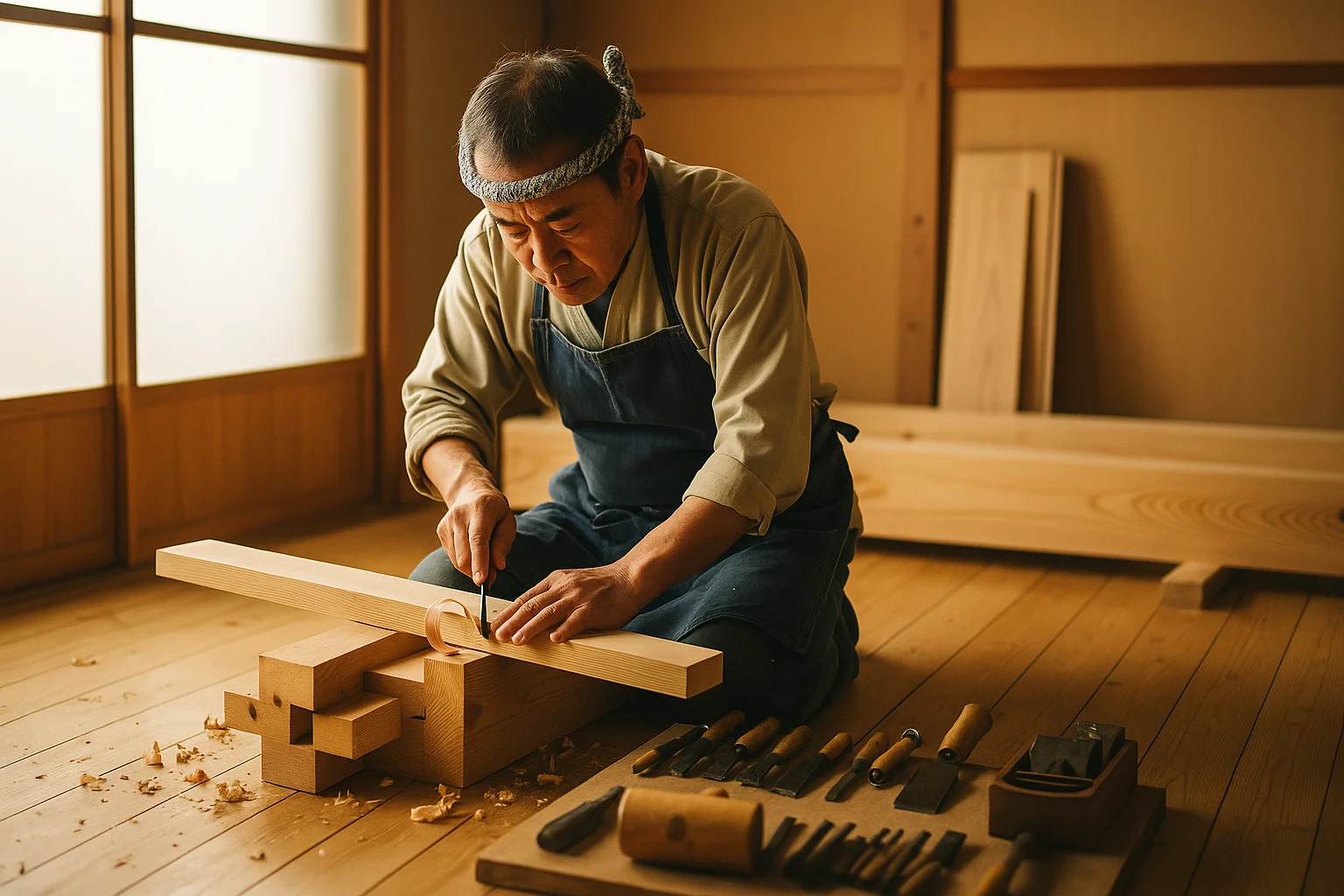
Understanding Traditional Japanese Woodworking Techniques
At the heart of Japanese woodworking are techniques that have been refined over centuries. Key methods include:
- Joinery: The art of joining wood without nails, utilizing techniques like mortise and tenon or dovetail joints. This provides strength and durability.
- Shaping and Trimming: Tools like the kanna (hand plane) and nomi (chisel) are essential for achieving precise shapes and smooth finishes.
- Finishing: Natural finishes, such as oil and wax, enhance the wood’s beauty while protecting it against damage.
Popular Japanese Woodworking Projects to Inspire You
Whether you are a beginner or an experienced woodworker, various Japanese woodworking projects can immerse you in the beauty of this craft:
- Kintsugi Art: This art of repairing ceramics with lacquer mixed with gold can also inspire woodworking. Consider using reclaimed wood to reflect the beauty of imperfections.
- Shaker Boxes: Traditional in both America and Japan, these simple, elegant boxes are excellent projects for practicing joinery and shaping techniques.
- Zen Garden Rakes: A functional project that combines utility and beauty. Create a rake using Japanese joinery for a serene addition to a zen garden.
- DIY Tatami Mats: While primarily a textile project, you can create supportive wooden frames for tatami mats, utilizing traditional designs.
- Japanese Lanterns: Design paper lanterns held in wooden frames, perfect for creating an inviting atmosphere in your outdoor space.
Essential Tools for Japanese Woodworking
To get started with your Japanese woodworking projects, equip yourself with the following essential tools:
| Tool | Purpose |
|---|---|
| Kanna | For smoothing and shaping wood surfaces |
| Nomi | For chiseling and creating joints |
| Saw (Ryoba) | For precise cutting with a crosscut and rip saw |
| Measuring Tools | Including a marking gauge and square for accuracy |
| Tape Measure | For ensuring exact measurements |

Learning Resources for Japanese Woodworking
As you explore the artistry of Japanese woodworking, various resources can aid in your journey:
- The Japanese Woodworker – A dedicated site for woodworking tools and supplies.
- Woodworking Network – Offers insights into trends and techniques in woodworking.
- Japan Woodworker YouTube Channel – Provides visual tutorials on Japanese woodworking techniques.
Essential Tools for Crafting Traditional Japanese Woodwork
Crafting traditional Japanese woodwork is a rewarding and intricate journey that requires dedication and skill. Whether you are a seasoned craftsman or a beginner, having the right tools is essential for achieving high-quality results. This article will guide you through the essential tools for traditional Japanese woodworking, making your Japanese woodworking projects more enjoyable and efficient.
The foundation of Japanese woodworking lies in its tools, many of which have been developed over centuries. Understanding these tools will enhance your crafting experience and help you appreciate the rich culture behind Japanese woodworking projects.
Basic Hand Tools
Start with these fundamental tools that every woodworker should have:
- Chisels – Available in various sizes, chisels are vital for shaping wood and creating detailed joinery. Look for Japan Woodworker for a variety of quality chisels.
- Saws – Japanese saws, such as the kataba and dōzuki, are known for their sharp blades and precision. They cut on the pull stroke, reducing the likelihood of breaking the blade.
- Planes – Kanna is a traditional Japanese hand plane that smooths wood and can create changes in thickness with exceptional accuracy. Collect various sizes for different jobs.
- Mallets – Used in conjunction with chisels and planes, mallets allow for controlled striking without damaging the tools. A wooden mallet provides the best balance.
- Ruler and Square – Essential for measuring and ensuring accuracy, a yazō (Japanese ruler) and a nōshō (square) are indispensable in any woodworking project.
Power Tools
While traditional woodworking often emphasizes hand tools, certain power tools can enhance efficiency and precision:
- Band Saw – Useful for resawing lumber, a band saw allows you to work with thicker wood and create intricate shapes with ease.
- Routers – Ideal for hollowing out wood or creating decorative edges. Routers can speed up many tasks that would otherwise take time with hand tools.
Specialized Tools
Some Japanese woodworking tools specialize in specific tasks:
- Bent Chisels – Perfect for carving curves or intricate designs, these chisels allow you to reach otherwise inaccessible areas of your wood piece.
- Tsugite (Joinery) Tools – These tools are used to create traditional Japanese joinery, with instruments designed specifically for dovetails and mortise-and-tenon joints.
Tool Maintenance
Proper maintenance of your tools is crucial for longevity and performance:
- Sharpening Stones – Invest in a good set of water stones to keep your chisels and saw blades sharp. A sharp edge provides cleaner cuts and reduces fatigue during use.
- Oil and Cleaning Supplies – Keep your tools rust-free and clean with the right oils and brushes. Regular care will enhance the performance of your tools.
Finding Quality Tools
It can be challenging to locate quality Japanese woodworking projects tools. Consider these trusted suppliers:
- Toolcraft – Specializes in high-quality Japanese woodworking tools with excellent customer service.
- Japan Woodworker – Here, you can find an extensive collection of traditional tools alongside helpful guides.
- Woodcraft – Offers a range of woodworking tools, including a selection of Japanese designs.
Arming yourself with the right tools can significantly enhance your experience in traditional Japanese woodworking. From chisels and planes to specialized joinery tools, each plays a vital role in achieving stunning results. Remember that taking care of your tools is equally important; maintenance ensures they remain reliable for years to come.
Step-by-Step Guide to Creating a Japanese-Inspired Joinery

Creating a Japanese-inspired joinery piece can be a rewarding woodworking project. The beauty of Japanese woodworking lies in its intricate techniques and the philosophy behind craftsmanship. Here, you will learn step-by-step how to create stunning joinery that pays homage to this art form. This guide will help you with your next Japanese woodworking projects.
Gathering Your Materials
Before you start, you need to collect your materials. Typical woods used in Japanese woodworking include cedar, cypress, or pine. Here’s a list of what you’ll need:
- Wood (choose your preferred type)
- Saw (hand saw or Japanese saw)
- Chisels of varying sizes
- Wood glue
- Square and measuring tape
- Pencil
- Sanding tools (sandpaper or a block sander)
- Finish (oil, varnish, or wax)
Understanding Japanese Joinery Techniques
Japanese joinery is unique and focuses on precision and tight-fitting joints without the use of nails. Here are some common techniques you might consider for your Japanese woodworking projects:
- Mortise and Tenon: This consists of a hole (mortise) cut into one piece of wood that fits a projecting piece (tenon) of another wood.
- Halved Joint: This joint is made by cutting each piece of wood halfway through its thickness to create a seamless connection.
- Dovetail Joint: This is a strong joint typically used in drawer construction, providing both strength and aesthetic appeal.
Measuring and Cutting Your Wood
Accurate measurements are crucial in this process. Start by measuring the dimensions of your project and marking the wood clearly. Following these steps will help ensure clean cuts:
- Measure twice, cut once. This old adage applies here. Double-check your dimensions before cutting.
- Using your saw, carefully cut along your marked lines. If you’re using a Japanese saw, remember to let the saw do the work. It should cut smoothly when positioned at the right angle.
Crafting Your Joints
Now that your pieces are cut, it’s time to make your joints. Depending on the type of joint you are creating, the following steps will vary:
- For Mortise and Tenon:
- Cut the tenon on one piece of wood. Ensure it fits snugly.
- Create the mortise in the corresponding piece using a chisel. Start with a smaller chisel to outline, then use larger ones to remove wood until you achieve the desired depth.
- For Halved Joint:
- Mark the midpoint of the thickness on both pieces.
- Using a chisel, carefully remove half of the thickness from both woods. Check for the fit.
- For Dovetail Joint:
- Mark dovetail shapes on the end of your joinery pieces.
- Carefully cut along the lines, then chop out the waste between the dovetails.
Joining and Finishing
Now that you’ve created your joints, it’s time to assemble your project:
- Dry-fit all the pieces together. This allows you to see how everything aligns before applying glue.
- Apply wood glue to the joints and fit them together tightly. Use clamps if necessary to hold everything in place as the glue dries.
- After the glue has dried, sand the project to remove any rough edges. Aim for a smooth finish.
- Apply your choice of finish to highlight the wood’s natural beauty.
The Role of Sustainable Practices in Japanese Woodworking
Sustainable practices play a crucial role in Japanese woodworking, echoing the harmonious relationship between nature and craftsmanship. Japanese artisans have a long history of integrating sustainable methods that respect the environment and promote longevity in their creations. This is a vital aspect of all Japanese woodworking projects.
Use of Local Materials
One of the foremost sustainable practices in Japanese woodworking is the use of local materials. Traditional Japanese woodworkers often source timber from nearby forests. This practice not only reduces transportation emissions but also supports local ecosystems. The most common trees used include cedar, cypress, and pine, which are abundant in Japan’s diverse landscapes. These woods are favored not just for their durability but also for their ability to fit seamlessly into the natural environment.
Sustainability
Another essential aspect of sustainability in Japanese woodworking is the philosophy of Miyawaki. This approach emphasizes growing forests that are diverse and closely mimic natural ecosystems. Woodworkers using this method help rejuvenate degraded areas, fostering a biodiverse habitat. By planting native species, artisans ensure that the forests can sustain themselves and provide timber for generations to come.
Craftsmanship and Repairability
Japanese woodworking is also marked by its focus on craftsmanship and repairability. Rather than discarding broken items, craftsmen often find ways to restore and rehabilitate them. This approach aligns with the cultural value of wabi-sabi, which appreciates the beauty found in imperfection. By valuing repairability, Japanese artisans extend the life of their products, thereby reducing waste and encouraging a sustainable cycle of use.
Sustainability
Furthermore, the techniques employed in Japanese woodworking contribute to sustainability. Traditional methods, such as joinery, do not rely on metal fasteners. Instead, artisans skillfully create interlocking joints that hold the structure together. This not only enhances the aesthetic appeal but also reduces the need for materials that may pollute the environment.
Use of Recycled Wood
Another inspiring trend in sustainable Japanese woodworking is the increasing use of recycled wood. Many contemporary artisans repurpose timber from old buildings or reclaimed sources. This practice not only gives new life to wood that might be discarded but also adds character and history to new creations. Recycled wood often has unique colors and textures, allowing for one-of-a-kind pieces that tell a story.
Eco-friendly
Moreover, the respectful treatment of natural resources extends beyond materials. Japanese woodworkers often adopt eco-friendly finishes for their products. Many use natural oils, waxes, and lacquers that are free from toxic chemicals. These finishes not only enhance the wood’s beauty but are also safer for the environment and the health of the users.
Educating the next generation about sustainable practices is paramount to the future of Japanese woodworking. Workshops and schools that focus on traditional woodworking techniques are emphasizing the importance of sustainability. Young artisans are being taught the value of ecological balance and the significance of using sustainable methods in their work. This cultural transmission fosters a generation of craftsmen who can carry forward the legacy of sustainable Japanese woodworking projects.
To summarize, the integration of sustainable practices in Japanese woodworking is multi-dimensional, encompassing local material usage, eco-friendly techniques, and a values-based approach to craftsmanship. Emphasizing conservation, artisans not only contribute to a healthier environment but also create timeless pieces that celebrate a legacy of beauty and sustainability.
| Practice | Impact |
|---|---|
| Use of Local Materials | Reduces transportation emissions and supports local ecosystems. |
| Miyawaki Method | Restores biodiversity and healthy forest ecosystems. |
| Repairability | Extends product life and reduces overall waste. |
| Joinery Techniques | Minimizes the use of metal fasteners and enhances design aesthetics. |
| Recycled Wood | Provides unique characteristics and reduces wood waste
For more insights on Japanese woodworking and sustainability, you may explore resources like Japanese Woodworking and their various practices. |

Learning from the Masters: Influential Japanese Woodworkers and Their Techniques
Japanese woodworking is a revered craft that showcases both functionality and artistry. The techniques and philosophies of influential Japanese woodworkers have shaped this discipline, making it a fascinating area to explore. When you delve into their work, you’re not just looking at finished Japanese woodworking projects; you’re also witnessing stories, traditions, and a deep respect for nature.
One of the most celebrated figures in the realm of Japanese woodworking is Toshio Odate. He is known for his books and workshops that educate a new generation about traditional Japanese techniques. Odate emphasizes the importance of hand tools, which play a vital role in achieving precision and intricate detail in woodwork. He believes that every cut tells a story and infuses pieces with a sense of life and purpose. Adopting his method allows you to connect with the material, transforming a block of wood into something beautiful and meaningful.
Another master worth noting is Kawai Gyuji, famous for his exquisite joinery. His craftsmanship highlights the beauty of wood grain and the skill required to create joints that are not only strong but also visually appealing. Kawai’s design philosophy revolves around the balance between form and function, teaching aspiring woodworkers the importance of aesthetic harmony. His techniques, from dovetails to mortise and tenon joints, can elevate your Japanese woodworking projects, making them not only sturdy but also works of art.
Traditional practice into modern woodworking creates a unique blend that resonates with both old-world charm and contemporary style. Here are some key techniques from influential Japanese woodworkers:

- Shuji: This is the art of using a hand plane to create smooth surfaces. A properly crafted shoji screen exemplifies this technique, showcasing delicate details while allowing light to filter through.
- Tsugite: A method of joining pieces of wood at an angle, popular in the construction of intricate supports. This technique can be seen in many traditional Japanese structures where stability and beauty coexist.
- Hikiari: This technique stresses the importance of balance and symmetry, ensuring that each piece of furniture or accessory holds its weight while providing a soft, natural look.
Furthermore, the significance of the tools cannot be overstated. Traditional hand tools such as Japanese chisels and hand planes are expertly crafted for performance. These tools have been refined over centuries, allowing for precision and finesse in every cut. Learning to use these tools effectively will enhance your woodworking skills, enabling you to produce remarkable results.
Japanese woodworking also emphasizes a connection with nature. Each piece is often designed to highlight the natural beauty of the wood, showcasing its unique texture and color. This approach encourages woodworkers to select their materials thoughtfully, often sourcing locally to minimize environmental impact.
The philosophy of “Wabi-sabi” infuses Japanese woodworking with a sense of beauty found in imperfection. Embracing flaws as part of the experience adds character to each project. This mindset can lead to more creative designs and a deeper appreciation for the craft.
| Woodworker | Key Technique | Resource |
|---|---|---|
| Toshio Odate | Hand Tools | Japanese Tools |
| Kawai Gyuji | Joinery | Paulownia Trees |

As you start your journey in Japanese woodworking, consider the teachings of these masters. Their techniques are not just skills to learn but philosophies to adopt. Each time you cut, join, or finish wood, remember the legacy of craftsmanship that precedes you. Engaging with these techniques can transform standard woodworking projects into remarkable pieces that reflect not just your skill, but also a rich cultural heritage.
By learning from these influential Japanese woodworkers, you can enrich your knowledge and skills profoundly. Whether you’re a beginner or a seasoned craftsman, the wisdom offered through their techniques will resonate in each Japanese woodworking projects you undertake.
Conclusion
Engaging in Japanese woodworking projects offers a remarkable journey into a world where artistry and functionality blend beautifully. As you explore the intricate designs and the philosophy behind each piece, you not only learn a skill but also appreciate a deep cultural heritage. The essential tools highlighted throughout your journey serve as a reminder that quality craftsmanship requires both the right instruments and a respect for tradition.
By following a step-by-step guide to creating Japanese-style joinery, you can develop an understanding of the precision and patience required in this woodworking style. These techniques allow you to connect with the essence of Japanese craftsmanship, symbolizing a marriage of nature and skill.
Furthermore, incorporating sustainable practices is not just a modern trend in woodworking but an age-old principle deeply rooted in Japanese culture. This commitment to the environment encourages a more mindful approach to selecting materials and methods.
As you learn from the masters of Japanese woodworking, you gain insights that transcend mere technique. You discover their unique philosophies and techniques, inspiring you to cultivate your own style. Their reverence for their craft can motivate you to honor the art of woodworking in your Japanese woodworking projects.
Whether you are a beginner or an experienced woodworker, embracing the principles of Japanese woodworking will elevate your creations and deepen your appreciation for this timeless craft. By embarking on this path, you not only create stunning works of art but also embrace the spirit of the artisans who came before you. Now, it’s time for you to start your own journey into the captivating world of Japanese woodworking projects!