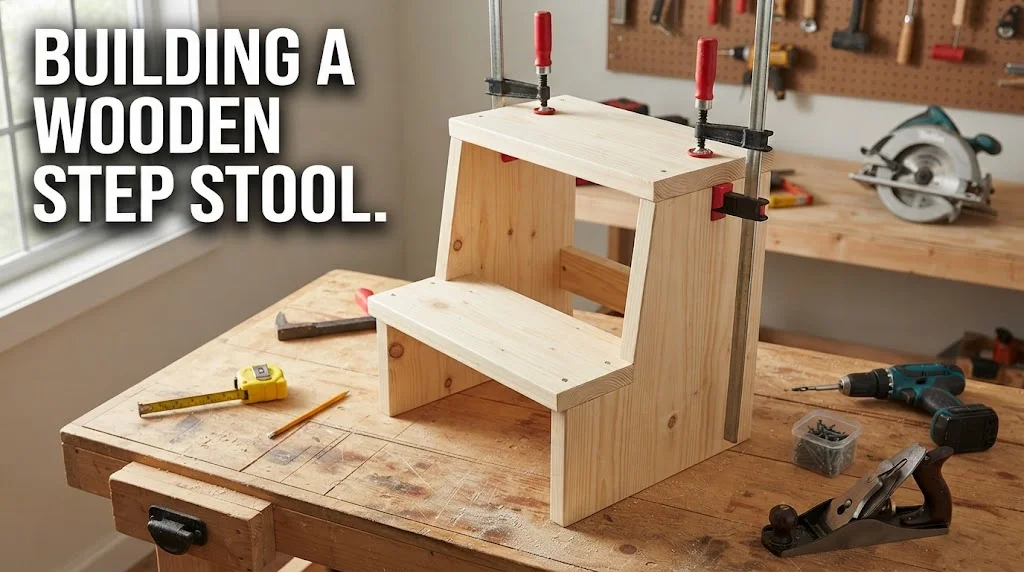
Building A Wooden Step Stool project is a rewarding endeavor that can be completed over a weekend. Whether you need more reach in your kitchen or want a handy seat for kids, crafting your own wooden stool can save you money while providing a functional piece for your home. Follow this easy guide to create your own durable wooden step stool.
Materials Needed
- 1” x 6” boards (for the top and steps)
- 1” x 4” boards (for the sides and supports)
- Wood screws (1 ¼” or 1 ½”)
- Wood glue
- Sandpaper (120 and 220 grit)
- Wood finish or paint (optional)
- Wood clamps
- Measuring tape
- Wood saw
- Drill with drill bits
Steps to Make a Wooden Step Stool
1. Measure and Cut the Wood
Begin by measuring the pieces of wood you’ll need. For a typical step stool, you will need:
- 1 piece of wood for the top (24” x 16”)
- 2 pieces for the steps (24” x 8”)
- 4 pieces for the sides (height can vary, about 18” to 24”)
Use a wood saw to cut the boards according to the measurements. Make sure your cuts are straight for a better fit.
2. Assemble the Sides
Take the two side pieces and attach the bottom step. You should use wood glue and wood screws for added strength. Place the step about 8-12 inches from the bottom of the side pieces. Ensure your screws are countersunk for a smooth finish.
3. Add the Top Step
Now, attach the second step above the first one. Ensure there’s enough space for your foot to fit comfortably. A recommended height for this step is about 12-16 inches above the first step.
4. Attach the Top
Position the top piece of wood on the sides. Secure it with wood glue and screws. The top should be flush with the sides for a neat appearance.
5. Sand the Edges
Once everything is assembled, use sandpaper to smooth out any rough edges or surface areas. Start with a rough grit (120) and finish with a finer grit (220) for a polished look.
6. Finish Your Stool
Decide whether you want to paint or stain your wooden stool. A wood finish can protect it from wear and tear while enhancing its appearance. Allow it to dry completely before using.
Tips for a Successful Build
- Always wear safety gear when cutting wood and using power tools.
- Make sure all screws are tight to ensure durability.
- Choose a wood type that suits your decor and is strong enough for your intended use (maple and oak are great choices).
Essential Tools and Materials Needed for Crafting Your Stool
If you’re planning to build A Wooden Step Stool item, you’ll need a set of essential tools and materials to get started. Crafting your own stool can be a rewarding project, but having the right equipment is key to ensuring success. Here’s a detailed look at what you’ll need, ensuring you’re well-prepared to tackle your project. With the proper tools, you can create a sturdy and functional step stool that meets your needs.
Wood Types
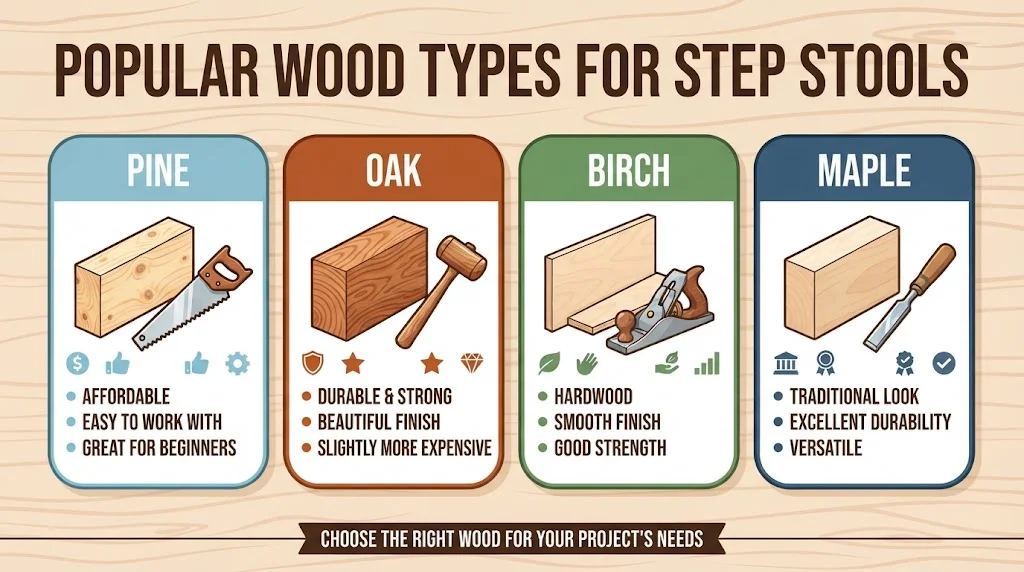
Your choice of wood plays a crucial role in the quality of your step stool. Here are some popular types to consider:
- Pine: Affordable and easy to work with, pine is a great choice for beginners.
- Oak: Known for its durability and strength, oak offers a beautiful finish but is a bit more expensive.
- Birch: A hardwood that provides a smooth finish and good strength.
- Maple: Offers a traditional look with excellent durability.
Think about the appearance you want and the strength required for your project when selecting wood.
Essential Tools
Having the right tools will streamline your stool-making process. Here’s a list of essential tools you should have:
- Circular Saw: This tool will help you make clean cuts on your wood pieces. Ensure you have a sharp blade for the best results.
- Jigsaw: Contrary to popular belief, a jigsaw is also beneficial for intricate cuts, especially for more complex designs.
- Sander: Sanding is crucial to achieve a smooth finish. An electric sander is recommended for efficiency.
- Drill: A drill is needed for making pilot holes for screws, ensuring your joints are secure.
- Measuring Tape: Accurate measurements are vital. A measuring tape helps you get exact dimensions.
- Square: Use a square to ensure your cuts are straight and your angles are accurate.
- Clamps: These help hold pieces together while you assemble and glue.
- Screwdriver: You’ll need this to drive screws and secure joints.
Materials You’ll Need
Beyond tools, you’ll need specific materials to build your step stool. Here’s a list of necessary materials:
- Wood: As mentioned, choose the type of wood based on your preference and durability needs.
- Wood Glue: This is essential for ensuring your joints are tight and secure.
- Screws: Select screws that are suitable for wood. Typically, 1.25 to 1.5-inch wood screws work well.
- Finish: A varnish, paint, or wood stain will help protect your stool and give it a finished appearance.
- Sandpaper: Various grits (80, 120, and 220) will help you smooth the surface of your wood.
Where to Find Your Supplies
You can source your tools and materials from various places:
- Local hardware stores often have a good selection of both tools and wood.
- Online retailers like Home Depot and Lowe’s provide everything you need.
- For specialized wood types, consider local lumber yards or woodworking supply stores.
When purchasing supplies, look for deals or discounts. Many businesses offer seasonal promotions that can stretch your budget further.
Safety Equipment
Don’t forget about safety. Working with wood involves power tools that can be dangerous if not used properly. Here’s what you should have:
- Safety Glasses: Protect your eyes from dust and debris.
- Ear Protection: If you’re using loud equipment, protect your hearing.
- Dust Mask: This will help you avoid inhaling sawdust, which can be harmful over time.
By equipping yourself with these tools and materials, you’re well on your way to crafting a beautiful wooden step stool. Enjoy the process, and take pride in creating something you can use and showcase in your home!
Design Ideas: Different Styles of Wooden Step Stools
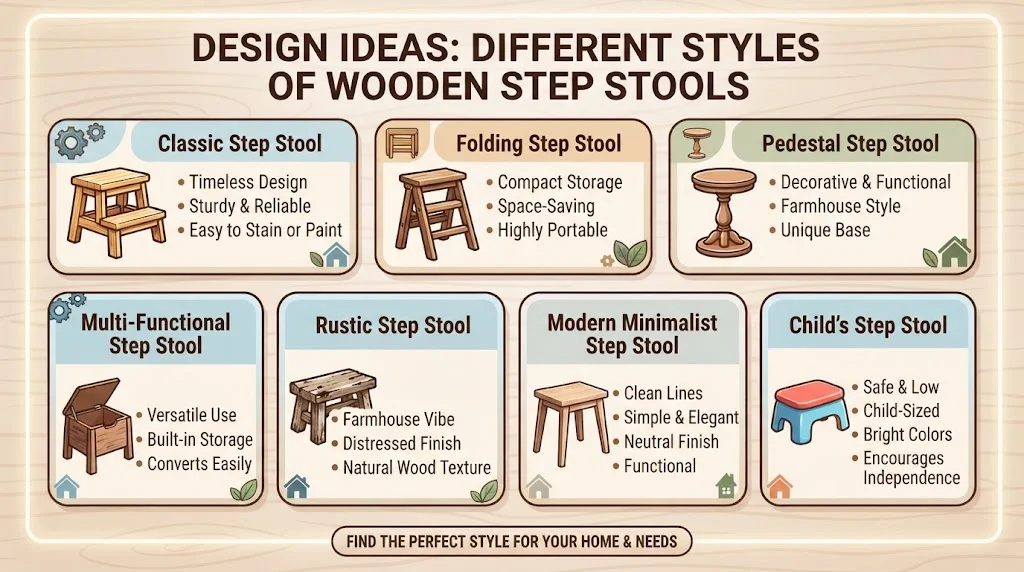
Wooden step stools are a practical addition to any home, not just for their utility but also for their charming aesthetics. They offer various designs that can enhance the look and feel of your space while providing a functional purpose. Here are some popular styles of wooden step stools to consider, each bringing its unique flair to your home.
Classic Step Stool
The classic wooden step stool is a timeless choice. Usually made of solid wood, it features a sturdy design with a simple finish. These stools often have two steps, making them perfect for reaching high cabinets or shelves.
Advantages:
- Sturdy and reliable
- Fits with traditional home decor styles
- Can be stained or painted to match your interior
Folding Step Stool
If space is a concern, a folding wooden step stool is an excellent option. These stools can be easily stored away when not in use, making them perfect for smaller living areas.
Key Features:
- Compact design
- Easy to carry
- Available in various wood finishes and colors
Pedestal Step Stool
Pedestal stools offer a bit of flair. With a circular base and a higher design, they serve as both a functional stool and a decorative piece. This style adds a unique touch to living spaces, particularly in farmhouse or rustic settings.
What to Look For:
- Quality craftsmanship
- A design that complements your home decor
- Non-slip feet for safety
Multi-Functional Step Stool
This design serves more than one purpose. Often, multi-functional stools come with storage underneath or can convert into a small table when not in use. This versatility makes them a smart choice for any home.
Benefits:
- Space-saving design
- Ideal for small apartments
- Offers additional storage options
Rustic Step Stool
Wooden step stools with a rustic or distressed finish bring a cozy, vintage vibe. Perfect for country-style homes, these stools often highlight natural wood grains and textures. They can serve as excellent accent pieces in kitchens, bathrooms, or entryways.
Characteristics:
- Natural wood finishes
- Character-rich imperfections
- Works well with other rustic home decor
Modern Minimalist Step Stool
If your style leans towards modern minimalism, consider a sleek wooden step stool with clean lines and a smooth finish. This style typically emphasizes functionality while fitting seamlessly into contemporary interiors.
Features Include:
- Simple and elegant design
- Neutral color palette
- Durable materials that last
Child’s Step Stool
Investing in a wooden step stool designed for children is a great way to encourage independence. These stools are often lower to the ground and designed with safety features like rounded edges and non-slip surfaces.
Considerations:
- Height appropriate for children
- Bright, fun colors or themes
- Lightweight for easy maneuverability
Choosing the right wooden step stool requires assessing your needs and the overall style of your home. Whether you prefer something classic, modern, or rustic, there’s a wooden stool that fits your vision.
For more expert tips and design ideas, explore resources available on Wood Magazine and HGTV. These sites offer a wealth of information about woodworking, home design, and furniture styling that can spark your creativity.
Safety Tips and Best Practices When Using a Wooden Step Stool
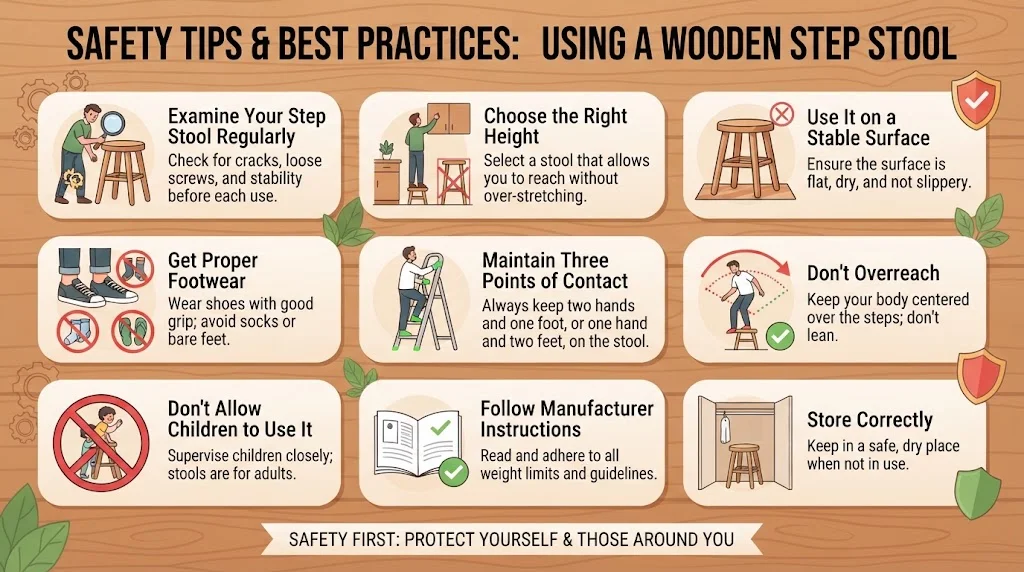
Using a wooden step stool can be a practical solution for reaching high places in your home, whether you’re putting books on a shelf or changing a light bulb. However, safety should always be your top priority when using this piece of equipment. Here are some essential safety tips and best practices to ensure you use your Wooden Step Stool project safely.
Examine Your Step Stool Regularly
Before you use your wooden step stool, it’s vital to perform a quick inspection. Look for any signs of damage or wear, such as:
- Cracks or splinters in the wood
- Loose joints or screws
- Wobbly legs that may affect stability
- Rough edges that could cause cuts
If you notice any issues, it’s best to repair or replace the stool before using it.
Choose the Right Height
Make sure your stool is the right height for the task at hand. A step stool should not be so tall that you have to reach too far. As a rule of thumb, your body weight should not exceed the step stool’s maximum load capacity. Always check the manufacturer’s specifications before use.
Use It on a Stable Surface
Placing your wooden step stool on an uneven or slippery surface increases the risk of accidents. Always ensure that:
- The surface is flat and dry.
- You avoid using it on carpets or rugs that may slide.
- You position it against a wall or stable furniture for added support, if possible.
Get Proper Footwear
Your footwear also plays a critical role in step stool safety. Wear shoes with non-slip soles. Avoid wearing slippery socks or sandals, as these can lead to falls while you’re on the stool.
Maintain Three Points of Contact
When climbing up or down the wooden step stool, always maintain three points of contact. This practice can help you avoid falls by keeping one hand on the stool while keeping your feet on the steps as you move. Here’s how you can do this:
- Step up with one foot while holding onto the top rail with one hand.
- Then, bring up your other foot and hold onto the edge or the frame to stabilize yourself.
Don’t Overreach
It’s tempting to try to reach a little further while on the step stool, but this can lead to dangerous situations. Always keep your body centered on the stool, and avoid leaning too far. If something is just out of reach, get down safely and move the stool closer.
Don’t Allow Children to Use It
Wooden step stools can be unsafe for children, especially if they try to climb or use it unsupervised. Ensure that children understand that they should not use the stool unless an adult is present. If they need to reach high places, find safer alternatives, like helping them access what they need from the ground.
Follow Manufacturer Instructions
Every wooden step stool comes with a set of instructions for safe usage. Familiarize yourself with these guidelines to ensure that you’re using it correctly. If you’ve misplaced the manual, many manufacturers provide digital versions on their websites—for example, Rubbermaid or Little Giant may have helpful resources.
Store Correctly
After use, store the wooden step stool in a safe place where it won’t tip over or become damaged. Keep it away from moisture to prevent warping and mold growth. A dedicated storage space also prevents accidental trips and falls.
Maintenance and Care for Your Handmade Wooden Step Stool
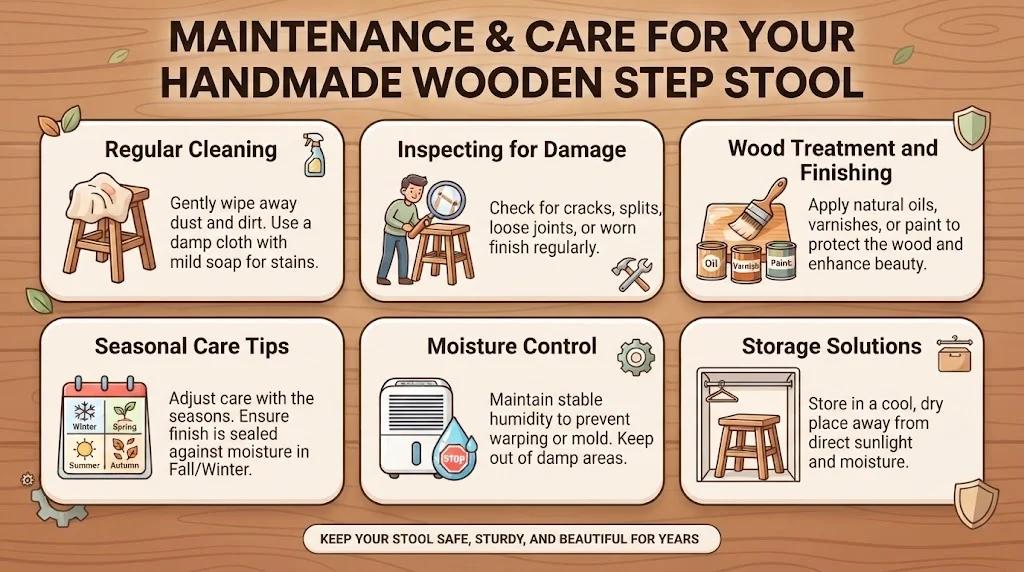
Taking good care of your handmade wooden step stool is important not only for its aesthetics but also for its longevity and safety. Proper maintenance ensures that your stool remains sturdy and beautiful, allowing you to use it safely for years to come. Here’s how you can keep it in tip-top shape.
Regular Cleaning
Dust and dirt can accumulate on your wooden step stool over time. To clean it effectively, follow these steps:
- Use a soft, dry cloth to gently wipe away surface dust.
- If your stool has stains, dampen the cloth slightly with warm water and a small amount of mild soap.
- Wipe with the cloth, ensuring it’s not too wet to avoid water damage.
- Dry the surface immediately with a separate dry cloth.
Inspecting for Damage
Regular inspection helps catch potential issues early, preventing bigger problems later. Here’s what to look for:
- Check for any cracks or splits in the wood.
- Look for loose joints or screws that may need tightening.
- Examine the finish for any signs of wear or chipping.
Wood Treatment and Finishing
Applying a finish to your wooden step stool not only enhances its beauty but also protects it from moisture and wear. Consider these options:
- Natural Oils: Mineral oil or food-safe wood oils can nourish the wood and preserve its natural luster.
- Varnishes: Clear varnishes provide a hard protective layer, ideal for high-use stools.
- Paint: If you prefer color, a good-quality paint can provide protection; however, it may require more frequent touch-ups.
Seasonal Care Tips
The care of your wooden step stool may vary slightly by season. Here are some seasonal tips to remember:
| Season | Care Task |
|---|---|
| Spring | Inspect for any winter damage and clean thoroughly. |
| Summer | Keep it out of direct sunlight to prevent fading and drying out. |
| Fall | Apply a fresh coat of finish if needed; ensure it’s sealed against moisture. |
| Winter | Store in a dry, warm area to avoid humidity-related issues. |
Moisture Control
Wood is sensitive to changes in humidity. To prevent warping or mold, consider the following:
- Use a Dehumidifier: If you live in a humid area, keeping the humidity levels in check helps maintain wood integrity.
- Keep it Dry: Avoid placing your stool in damp areas like bathrooms or basements.
- Wipe Spills Immediately: Attending to spills quickly prevents water damage and mold growth.
Storage Solutions
If you rarely use your wooden step stool, consider the best way to store it:
- Store in a dry, sheltered area away from direct sunlight.
- Using a protective cloth can shield it from dust and scratches.
- A vertical storage position may help you save space and reduce wear on the legs.
Proper maintenance of your handmade wooden step stool is essential for keeping it reliable and beautiful. Regular care routines, seasonal tips, and attentive storage will extend the life of your stool. For more detailed information about woodworking and maintenance, visit Wood Magazine or Woodworker’s Source. With a little effort, your wooden step stool will serve you well for many years.
Conclusion
Creating your own How To Make A Wooden Step Stool project can be a rewarding endeavor that combines practicality with creativity. By following the step-by-step guide, you can transform simple materials into a valuable piece of furniture that meets your needs. With the essential tools and materials listed, you’ll be set to craft a sturdy and stylish stool that contributes to your home’s aesthetics.
Whether you opt for a traditional design or something more modern, the design ideas discussed allow you to personalize your stool to reflect your style. Just remember, safety comes first. By adhering to the safety tips provided, you can minimize risks while using your stool. It’s important to always check for stability and ensure it’s placed on a flat surface.
Once your wooden step stool is complete, maintaining its appearance and functionality will keep it looking good for years to come. Regular care, such as cleaning and occasional refinishing, will help preserve the wood and enhance its durability.
Embrace the satisfaction of crafting your own wooden step stool, knowing it is not only a functional item but also a reflection of your hard work and creativity. As you use and admire your handiwork, you’ll appreciate the blend of design and utility in your home, making everyday tasks a little easier and more enjoyable. Happy crafting!