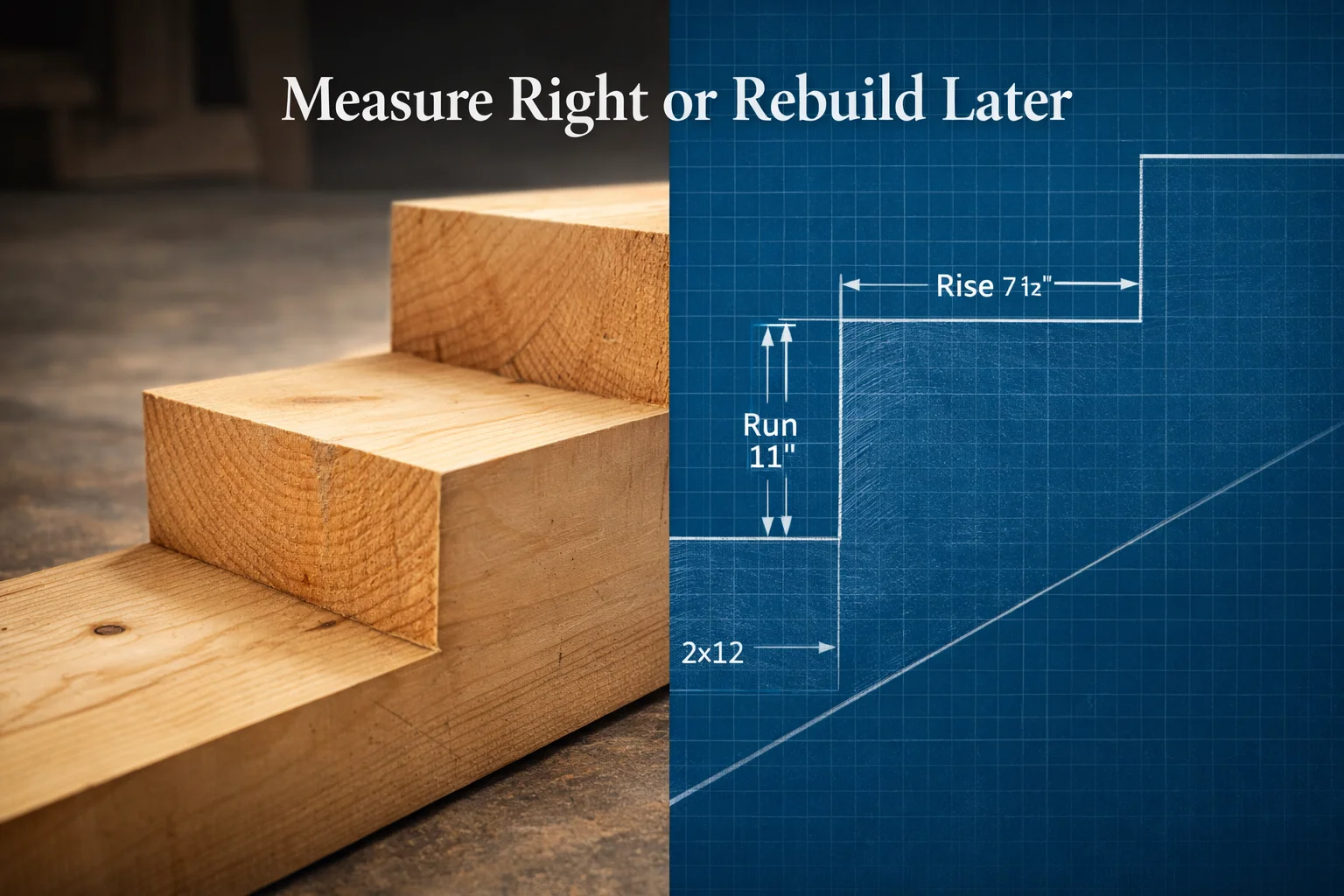
Building wooden stairs can greatly enhance your home’s interior or exterior appearance, improve functionality, and provide a sense of accomplishment. By following a step-by-step guide, you can create sturdy and attractive wooden stairs. This guide will walk you through each part of the process, ensuring that your stairs are not only beautiful but also safe and durable. The first step in How To Build Wooden Stairs is to understand the design and layout you want. Consider factors like the space available, the angle of the stairs, and the overall aesthetic you aim for. A standard stair has a rise and run ratio of about 7 inches for rise and 11 inches for run.
Materials Needed
- 2×12 inch boards for stringers
- 1×12 inch boards for treads
- Wood screws
- Wood glue
- Tools: Circular saw, tape measure, level, drill, and saw horses
Measuring and Cutting Stringers
Stringers are the backbone of your stairs. Start by measuring the total rise of your stairs. This means measuring from the ground to the top of the stairs. For each stringer, you’ll want to cut at a comfortable angle (usually 30 to 35 degrees). Here’s how to do it:
- Use a framing square to mark the rise and run on the 2×12 board.
- Cut along the marked lines with a circular saw.
- Repeat for additional stringers, typically two to three for stability.
Positioning the Stringers
Once you have your stringers cut, it’s time to attach them. Attach the stringers to your landing site and ensure they are leveled. This is crucial, as any misalignment can lead to safety issues later on. Use lag screws or nails to secure the stringers to the upper landing and the bottom of the staircase. Make sure they are firmly in place and can support the weight of the stairs.
Adding Treads
After securing your stringers, the next step is to install the treads. Treads should be placed on top of the stringers, ensuring the front edges overhang slightly for safety and design. To install the treads:
- Cut the 1×12 boards to the width of the stairs.
- Secure each tread to the stringers using wood screws and wood glue.
- Use a level to make sure each tread is even.
Finishing Touches
Now that your stairs are installed, it’s time to give them a finished look. Sand down any rough edges and apply a protective wood finish or color to suit your home design. This will not only enhance the appearance but also protect your stairs from wear and weather. Consider adding a railing for safety, particularly if your stairs have a significant rise. A railing can be made using similar materials and can be easily attached to the walls or posts on either side of the stairs.
Essential Safety Tips
When building wooden stairs, keep these safety points in mind:
- Always wear safety gear, such as goggles and ear protection.
- Check local building codes to ensure compliance for safety requirements.
- Use proper lifting techniques when moving heavy materials.
For visual aids and other resources, you can visit Family Handyman or Lowe’s for tutorials and further information. Building wooden stairs can be a rewarding project, both practically and aesthetically. Not only do wooden stairs enhance the beauty of your space, but knowing How To Build Wooden Stairs yourself can also save you money. Take your time, follow each step carefully, and soon you’ll have beautiful stairs that suit your home perfectly!
Essential Tools and Materials for Building Wooden Stairs
Building wooden stairs is a rewarding project that combines creativity with functionality. Before you start, having the right tools and materials is crucial to ensure a smooth woodworking experience. In this guide, we’ll outline the essential items needed for constructing sturdy and beautiful wooden stairs.
Tools You Will Need
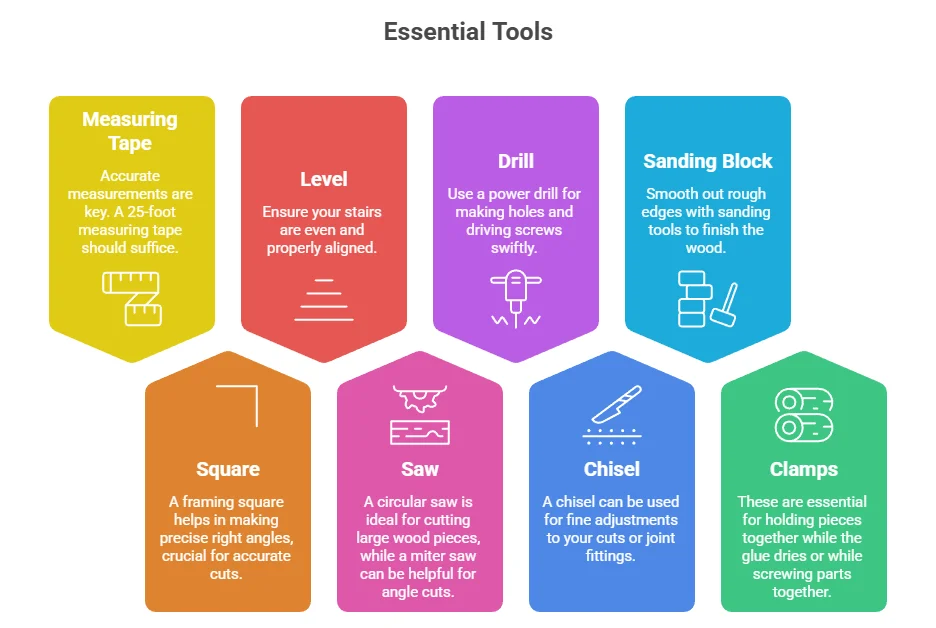
It’s important to gather all necessary tools before beginning your project. Here’s a list of essential tools:
- Measuring Tape: Accurate measurements are key. A 25-foot measuring tape should suffice.
- Square: A framing square helps in making precise right angles, crucial for accurate cuts.
- Level: Ensure your stairs are even and properly aligned.
- Saw: A circular saw is ideal for cutting large wood pieces, while a miter saw can be helpful for angle cuts.
- Drill: Use a power drill for making holes and driving screws swiftly.
- Chisel: A chisel can be used for fine adjustments to your cuts or joint fittings.
- Sanding Block: Smooth out rough edges with sanding tools to finish the wood.
- Clamps: These are essential for holding pieces together while the glue dries or while screwing parts together.
Materials to Consider
Choosing the right materials is just as important as having the right tools. Here’s what you’ll need:
- Wood: Popular options include oak, pine, or maple. Each offers different aesthetics and durability levels, with oak being particularly robust.
- Stair Treads and Risers: These can be purchased pre-cut or can be made from the same wood as your structure for a uniform look.
- Glue: Wood glue is essential for securing joints and enhancing stability.
- Screws: Use wood screws that are appropriate for the type of wood you are working with.
- Finish: Sealants or paint can help protect your stairs from wear and tear and enhance their appearance.
Additional Accessories
Don’t overlook these helpful accessories to make your stair-building process easier:
- Safety Gear: Eye protection and dust masks are essential for personal safety while cutting and sanding wood.
- Step Ladder: A sturdy step ladder can help you reach higher areas safely while constructing your stairs.
- Wood Stain: If you want to add color to your wooden stairs, consider stains that complement your decor.
Now, let’s summarize essential tools and materials for your project:
| Category | Item | Purpose |
|---|---|---|
| Tools | Measuring Tape | For accurate measurements |
| Tools | Saw | For cutting wood |
| Materials | Wood | The main structural element |
| Materials | Glue | To secure joints |
When planning your wooden staircase, it’s also beneficial to reference reputable resources for guidance. Websites such as Wood Magazine and Ana White can provide you with additional tips and designs that might inspire your project. Equipped with the right tools and materials, you are set for a successful staircase build. Remember to take your time, double-check measurements, and enjoy the process of creating something functional and visually appealing.
Common Mistakes to Avoid When Constructing Wooden Stairs
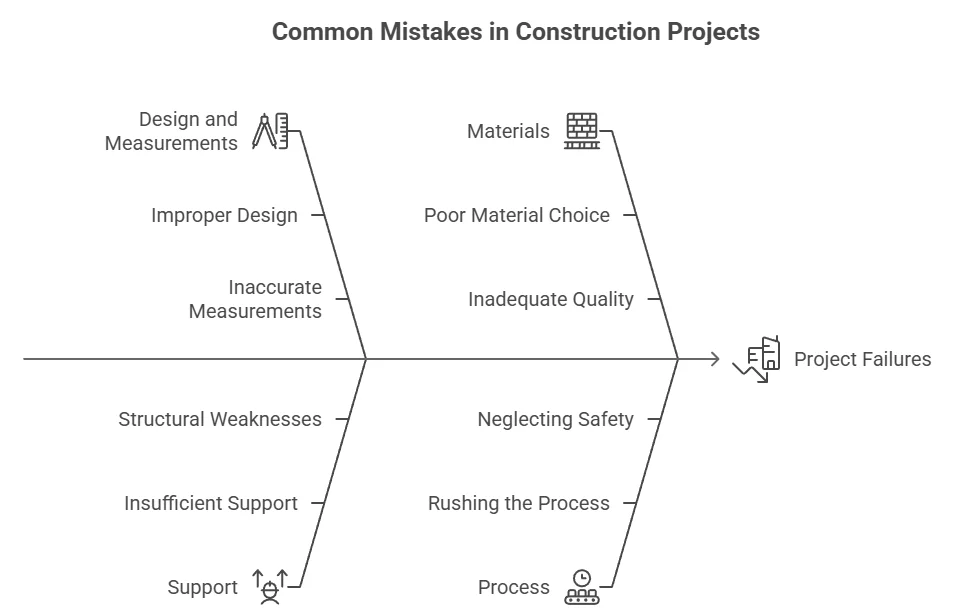
Building wooden stairs is a rewarding project that can greatly enhance the value and functionality of your home. However, there are common mistakes that many DIY enthusiasts make when constructing wooden stairs. Avoiding these missteps will save you time, money, and frustration. Here are some key points to consider.
Improper Design and Measurements
One of the most critical stages in constructing wooden stairs is planning. Many builders fail to properly design their stairs or miscalculate the measurements.
- Check Local Building Codes: Ensure your stair design complies with local regulations. Different areas have specific rules regarding the height and width of stairs.
- Calculate the Rise and Run: The rise is the vertical part of a step, while the run is the horizontal. A standard rise is between 7-8 inches and a run of 10-11 inches.
Insufficient Support
When constructing wooden stairs, many overlook the need for proper support. Weak stairs can lead to safety hazards.
- Use Appropriate Beams: Make sure to install beams and treads that can handle the weight and traffic.
- Install Stringers Properly: Stringers are the structural components that support the treads and risers. Three stringers are typically needed for stability.
Poor Material Choice
Choosing the wrong materials can compromise the durability and aesthetics of your stairs. Here’s what to consider:
- Wood Type: Softwoods like pine are cheaper but may not hold up under heavy use. Hardwoods like oak or maple are more durable.
- Moisture Resistance: If your stairs will be exposed to moisture, consider using treated wood or moisture-resistant materials.
Ignoring the Finish
The finish not only enhances the look of your stairs but also protects them. Skipping this step can lead to quick wear and tear.
- Sealants: Use a good sealant to protect against scratches and spills.
- Regular Maintenance: Regularly check for wear and reapply finishes as needed to keep the wood in good condition.
Failing to Consider Safety Features
Safety should always be a top priority when building stairs. Neglecting safety features can lead to accidents.
- Handrails: Install handrails at a comfortable height for users. This is especially important for outdoor stairs.
- Non-slip Treads: Use non-slip materials or treatments to help prevent accidents, especially in wet conditions.
Each mistake can have significant consequences, ranging from an unattractive staircase to one that is unsafe. To learn more about stair design and safety, visit National Association of Home Builders for guidelines and tips.
Neglecting to Seek Professional Advice
If you’re unsure about any aspect of your project, don’t hesitate to seek expert advice. Professional carpenters can offer valuable insights and help you avoid pitfalls.
- Consult a Carpenter: If you’re unsure about your design or construction techniques, consider hiring a professional at least for consultation.
- Workshops and Online Resources: Take advantage of local workshops or online resources from credible sites like Houzz that provide detailed guidance and tutorials.
Rushing the Process
One of the major mistakes in building wooden stairs is rushing the process. Take your time to measure, cut, and assemble correctly. Hasty work can lead to a host of problems including misaligned steps. Constructing wooden stairs is an enjoyable project that adds great value to your home when done correctly. By avoiding the common mistakes mentioned above, you can ensure that your stairs are safe, sturdy, and visually appealing. For further reading and tips on construction, visit Wood Magazine, which offers various articles and resources related to woodworking projects.
Safety Tips for Building and Using Wooden Stairs
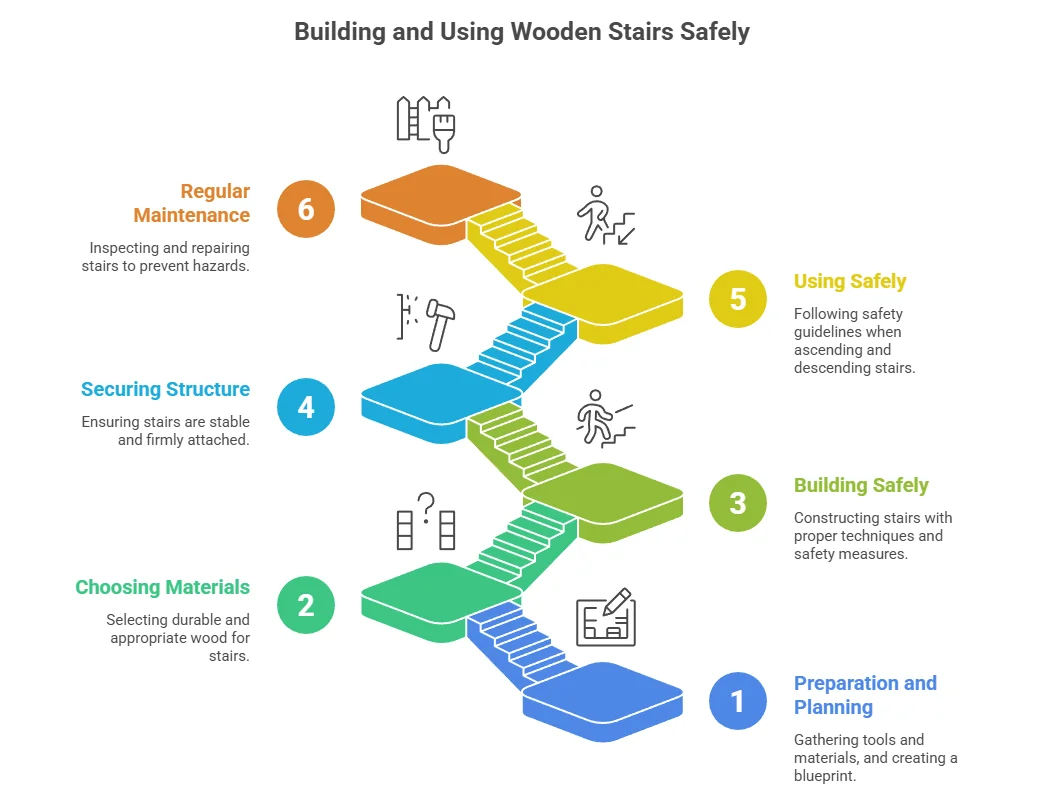
Building wooden stairs is a fulfilling project that enhances your home’s functionality and aesthetic appeal. However, safety should always be a top priority during construction and use. Following some key safety tips can prevent accidents and make the process smoother.
Preparation and Planning
Before starting your project, it’s essential to plan carefully. Measure the height for your stairs accurately to determine how many steps you need. Use the right tools, and ensure you have all materials, including lumber, screws, and a saw. Here are some important points to consider:
- Wear safety goggles to protect your eyes from sawdust and debris.
- Use ear protection if you’re working with loud tools.
- Wear gloves to avoid splinters and protect your hands.
Choosing the Right Materials
Your choice of wood affects the durability and safety of your stairs. Common woods include oak, maple, or fir. Always choose high-quality lumber that is free of defects. Inspect the wood for knots or cracks that could compromise safety. Additionally:
- Consider treated lumber for outdoor stairs to resist weather damage.
- Ensure your wood is smooth to prevent splinters.
- If using reclaimed wood, check its integrity before use.
Building the Stairs Safely
When constructing the stairs, follow a systematic approach. Here are essential tips to keep in mind:
- Utilize a sturdy ladder or scaffolding when working at height.
- Always double-check your measurements before cutting wood to avoid waste and ensure accuracy.
- Total width of the stairs should accommodate foot traffic comfortably. Aim for at least 36 inches in width.
- Each step should have uniform riser heights (typically 7 to 8 inches) and tread depths (at least 10 inches) for safe ascension and descent.
Securing the Structure
To ensure stability, a secure structure is fundamental. Use the following methods to increase safety:
- Install a solid railing to provide grip and prevent falls.
- Use brackets and additional screws for reinforcement where necessary.
- Ensure the base is well anchored and the support beams are solidly attached.
Using the Stairs Safely
Once built, it’s crucial to use the stairs safely to avoid accidents. Teach family members and guests the proper way to navigate your new stairs:
- Always use the handrail, especially when carrying objects.
- Keep the stairs clear of clutter to prevent tripping.
- Avoid running or playing on the stairs, as it increases the risk of falls.
- Consider adding non-slip treads or strips on the treads to prevent slipping.
Regular Maintenance
Safety doesn’t stop once the stairs are finished. Regular maintenance is key to ensuring your stairs remain safe over time:
- Check for loose boards or nails periodically and repair or replace them as necessary.
- Inspect the railing for stability and replace any worn-out parts.
- Keep the area around the stairs well-lit and dry to prevent slips.
Resources for Additional Guidance
For those looking for further reading on building and maintaining wooden stairs, consider visiting the following resources:
By following these safety tips, you can enjoy both the journey of building your wooden stairs and their use in your everyday life. A well-constructed stairway enhances not only access but also the overall comfort of your home.
Designing Wooden Stairs: Styles and Aesthetics to Consider
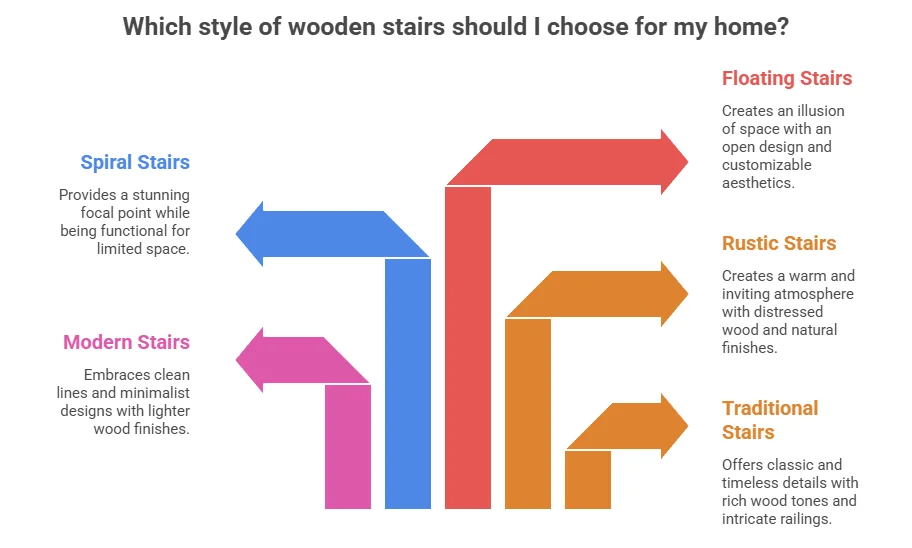
When it comes to enhancing your home or outdoor space, designing wooden stairs can be an exciting project. Wooden stairs not only serve a practical purpose but also add an aesthetic appeal to your surroundings. Understanding the various styles and aesthetics helps you make informed decisions and create a stunning look that complements your home. One of the first steps in designing wooden stairs is choosing a style that matches your existing décor. There are several popular designs to consider:
- Traditional Stairs: Characterized by classic and timeless details, traditional wooden stairs often feature rich wood tones and intricate railings.
- Modern Stairs: These stairs embrace clean lines and minimalist designs. Often utilizing lighter wood finishes, modern stairs create a sleek, contemporary vibe.
- Rustic Stairs: If you desire a warm and inviting atmosphere, rustic stairs with distressed wood and natural finishes are perfect. They fit well in country homes or cabins.
- Spiral Stairs: For those with limited space, spiral wooden stairs provide a stunning focal point while being functional. They can be designed in various styles, from modern to traditional.
- Floating Stairs: Creating an illusion of space, floating stairs have an open design and can be customized to fit any aesthetic, making them a popular choice for modern homes.
Colors also play a crucial role in the overall look of your wooden stairs. The right choice can enhance the beauty of your stairs or blend them seamlessly with your space. When selecting a color for your wooden stairs, think about:
- Natural Wood Stains: These enhance the natural grain of the wood, giving a rustic feel. Options like oak, walnut, and cherry are popular choices.
- Painted Stairs: For a bolder approach, you can consider painting your wooden stairs in vibrant colors. This technique works exceptionally well in playful or eclectic settings.
- Neutral Shades: Soft greys, whites, or beiges can create a calm and airy environment, particularly in modern or minimalist designs.
Safety and functionality are vital components in the design of wooden stairs. Ensure that your design complies with local building codes, particularly regarding the rise and run of the steps, handrail height, and load-bearing standards. This not only ensures safety but also enhances the usability of your stairs. When designing wooden stairs, the type of wood chosen impacts both aesthetics and durability. Common choices include:
- Oak: Known for its strength and durability, oak offers a beautiful grain pattern and is excellent for high-traffic areas.
- Pine: A more affordable option, pine is softer and allows for easy alterations. Though it dents more easily, its light color can brighten a space.
- Maple: This hardwood is valued for its fine grain and resistance to wear, making it an ideal choice for stunning designs.
As you finalize your design, consider the overall flow of your home. How do your wooden stairs connect different levels? Think about how they complement surrounding features such as doors, windows, and adjacent rooms.
| Type of Stairs | Aesthetic Appeal | Best For |
|---|---|---|
| Traditional | Classic details, warm tones | Colonial homes, vintage settings |
| Modern | Sleek lines, minimalist | Contemporary homes, urban spaces |
| Rustic | Natural finishes, distressed look | Cottages, countryside homes |
| Spiral | Unique design, space-saving | Tight spaces, modern aesthetics |
| Floating | Illusion of floating, open design | Modern homes, artful spaces |
Remember that wooden stairs are more than just a means to get from one level to another; they can reflect your style and taste. Investing time in the design process will yield stairs that enhance the overall beauty of your home. For more ideas and guidance on designing wooden stairs, check out Wood Magazine and HomeAdvisor. Embrace the artistry of wood while ensuring your design is practical and safe. Your wooden stairs can be a beautiful centerpiece that showcases your personal style and complements your home.
Conclusion
Building wooden stairs is a rewarding project that enhances your home’s functionality and aesthetic appeal. Following the step-by-step guide ensures a solid structure capable of withstanding daily use while providing safety and comfort. By gathering the essential tools and materials beforehand, you set yourself up for success, reducing unnecessary trips to the hardware store and keeping your project on track. Being aware of common mistakes can keep your project from turning into a costly repair job. Making sure you measure accurately and follow proper building codes is crucial.
Additionally, applying safety tips not only during construction but also for using the stairs is vital. Sturdy handrails and proper lighting can make a world of difference in preventing accidents. When it comes to design, wooden stairs offer a variety of styles and aesthetics that can complement any home decor. Whether you prefer a sleek modern look or a rustic charm, there are countless options to choose from. Experimenting with different wood types and finishes allows you to find the perfect match for your home. As you complete your wooden stairs, take pride in knowing you’ve created something both beautiful and functional.
Embrace the journey of building, using the knowledge you’ve gained to ensure your stairs reflect your style while serving their purpose well. With attention to detail and an understanding of the key aspects involved, you can confidently install wooden stairs that will stand the test of time.