Creating your wooden pergola with a swing is a fantastic way to enhance your outdoor space. This project not only adds beauty to your yard but also provides a relaxing spot for you, your family, and friends. Here’s a detailed guide to help you build a wooden pergola that includes a comfortable swing.
Gathering Your Materials
Before you begin, it’s essential to gather all necessary materials to avoid interruptions during your build. Here’s a list of what you’ll need:
- Pressure-treated lumber (4x4s, 2x6s, and 2x4s)
- A prefabricated swing or swing kit
- Wood screws (2-3 inches and 3-4 inches)
- Wood stain or sealant
- Concrete mix (for securing posts)
- Paintbrush or sprayer (for stain or sealant)
- Power saw, drill, and measuring tape
- Level and square
- Safety gear (gloves, goggles)
Planning Your Pergola Design
Before cutting any wood, plan your pergola’s dimensions and design. A standard size is 10×10 feet, but you can adjust this to fit your space. Consider how much clearance you’ll need for the swing and the shading you’d like from the top beams.
Building the Pergola Frame
Follow these steps to create the frame:
- Step 1: Mark the post locations on the ground using stakes and string. Ensure they are square.
- Step 2: Dig holes for your posts, at least 2 to 3 feet deep, and place your posts in the holes.
- Step 3: Mix your concrete and pour it into the holes to secure the posts. Level them properly before the concrete cures.
- Step 4: Once the concrete is set, attach the top beams (2x6s) across the posts to form the roof structure. Use 3-4 inch wood screws for this.
- Step 5: Create cross beams using 2x4s for additional support and aesthetics. This will give your pergola a sturdy feel.
Installing the Swing
Now that your pergola frame is up, it’s time to install the swing:
- Step 6: Choose where you want to place the swing under the pergola. The swing should have enough clearance from the sides for safety and comfort.
- Step 7: If you’re using a prefabricated swing kit, follow the manufacturer’s instructions for assembly. This often involves attaching ropes or chains to the swing frame and securing them to the structure of your pergola.
- Step 8: Ensure the swing is at a comfortable height and swings freely without obstruction.
Finishing Touches
Your pergola needs some final touches to make it truly inviting:
- Step 9: Stain or seal your wood to protect it from the elements. This will help maintain its appearance over time.
- Step 10: Decorate the area around your swing with plants, cushions, or outdoor lighting. This adds charm and personality to your new space.
Maintenance Tips
To enjoy your wooden pergola and swing for many seasons, perform regular maintenance:
- Inspect the structure every year for any signs of wear or damage.
- Reapply stain or sealant every few years to maintain protection.
- Keep the swing and surrounding area clean to prevent rust and deterioration.
Building a wooden pergola with a swing is a rewarding project that enhances your outdoor living space. Not only does it provide a comfortable seating area, but it also becomes a center for family gatherings and relaxation. For more information and resources on outdoor projects like this, you can visit HGTV or Family Handyman for detailed insights.
Choosing the Right Wood for Your Pergola Project
If you’re looking to create a beautiful wooden pergola for your outdoor space, one of the most crucial decisions you will face is choosing the right type of wood. The right wood not only affects the appearance of your pergola but also its durability and resistance to the elements. Here’s a guide to help you select the perfect wood for your pergola project.
When selecting wood for your pergola, consider these key factors:
- Durability: Wood should withstand weather conditions and pests.
- Maintenance: Some woods require more upkeep than others.
- Appearance: Different woods have distinct looks that can enhance your garden aesthetics.
- Cost: Budget can significantly influence which type of wood you choose.
Let’s explore some popular wood types to help you make an informed decision.
Cedar
Cedar is a favorite for pergolas due to its natural resistance to decay. It’s lightweight, easy to work with, and has a beautiful reddish-brown color that adds warmth to any outdoor space. Cedar can resist insects and has a pleasant aroma, making it an excellent choice for your pergola.
Redwood
Redwood is another excellent option. Known for its striking look and durability, redwood naturally resists warping and cracking. While it can be more expensive than other woods, its longevity often justifies the cost. Additionally, redwood blends beautifully with nature, enhancing the outdoor aesthetic.
Pine
Pine is a budget-friendly option that’s widely available. It’s easy to work with and can be treated to enhance its durability against water and pests. However, keep in mind that untreated pine will decay faster than cedar or redwood, so it’s important to add a protective finish if you choose this material.
Pressure-Treated Lumber
This type of wood is chemically treated to resist rot and termites, making it a durable choice. It’s often used for construction as it can handle various weather conditions. However, pressure-treated wood can be more prone to warping and often requires additional sealing, staining, or painting to improve its visual appeal.
Tropical Hardwoods
Options like ipe, mahogany, and teak offer unmatched durability and stunning visual qualities. They are incredibly resistant to weather, insects, and decay, but they come with a higher price tag. If you’re looking for a long-lasting, luxurious pergola, investing in tropical hardwoods might be worthwhile.
Composite Wood
As a synthetic option, composite wood combines wood fibers and plastic. This material offers excellent durability and requires minimal maintenance. It doesn’t warp or splinter as traditional wood does, and it comes in various colors. However, it may lack the natural beauty and feel of traditional wood.
| Wood Type | Durability | Maintenance | Cost |
|---|---|---|---|
| Cedar | High | Moderate | $$ |
| Redwood | Very High | Low | $$$ |
| Pine | Moderate | High | $ |
| Pressure-Treated Lumber | High | High | $$ |
| Tropical Hardwoods | Very High | Low | $$$$ |
| Composite Wood | Very High | Very Low | $$$ |
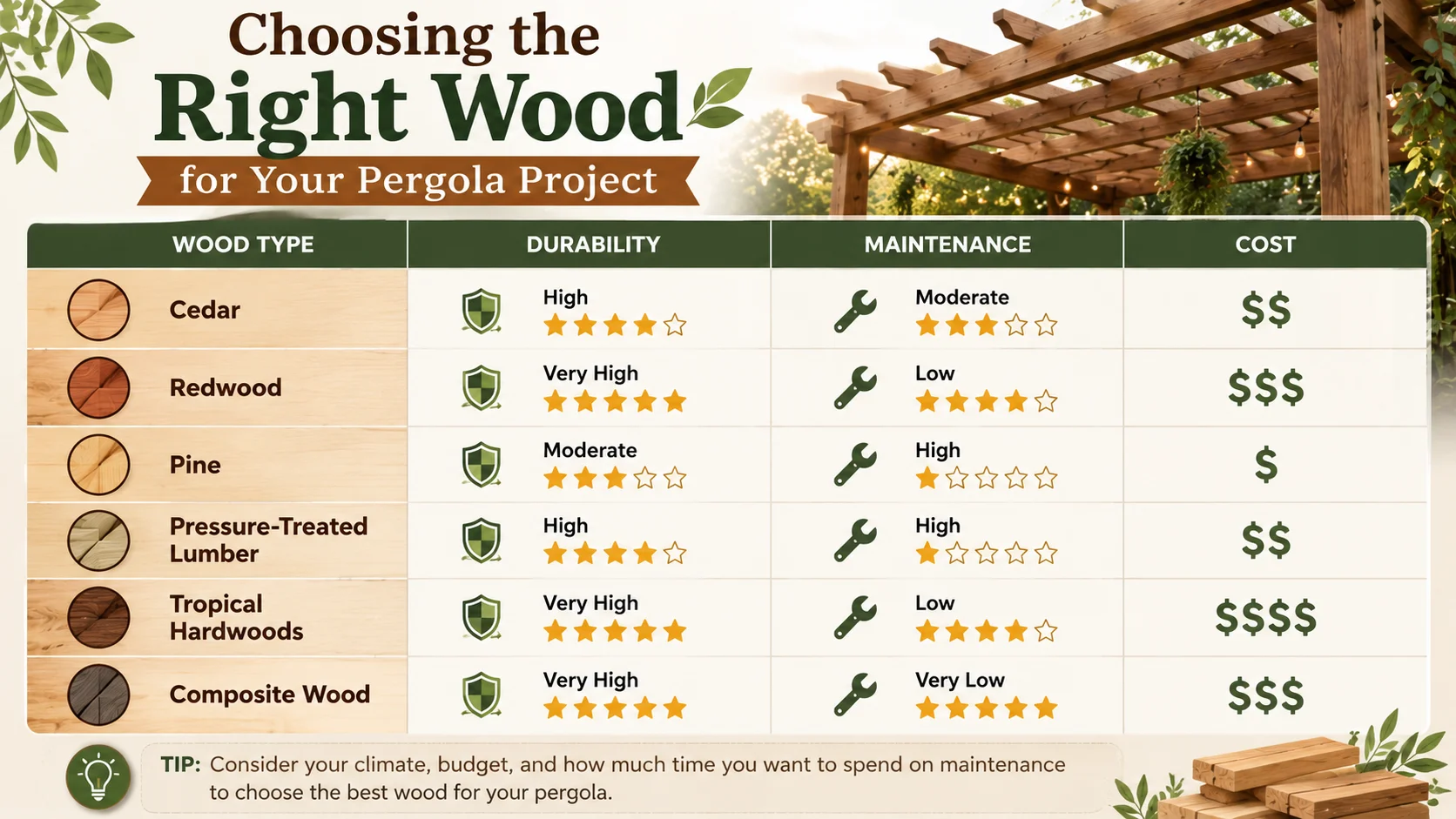
Before making your final choice, consider the climate conditions in your area. For regions with high humidity or significant rainfall, opting for woods with higher resistance to moisture can be beneficial. It’s also wise to evaluate how much time and effort you are willing to invest in maintenance over the years.
To learn more about the types of wood suitable for outdoor structures, you can visit Wood Magazine or Fine Homebuilding. These resources offer valuable information and tips on woodworking and outdoor projects.
Choosing the right type of wood for your pergola is crucial to ensure its longevity and beauty. With careful consideration of these options, you’ll be well on your way to creating the perfect outdoor retreat.
Design Ideas to Enhance Your Wooden Pergola with a Swing
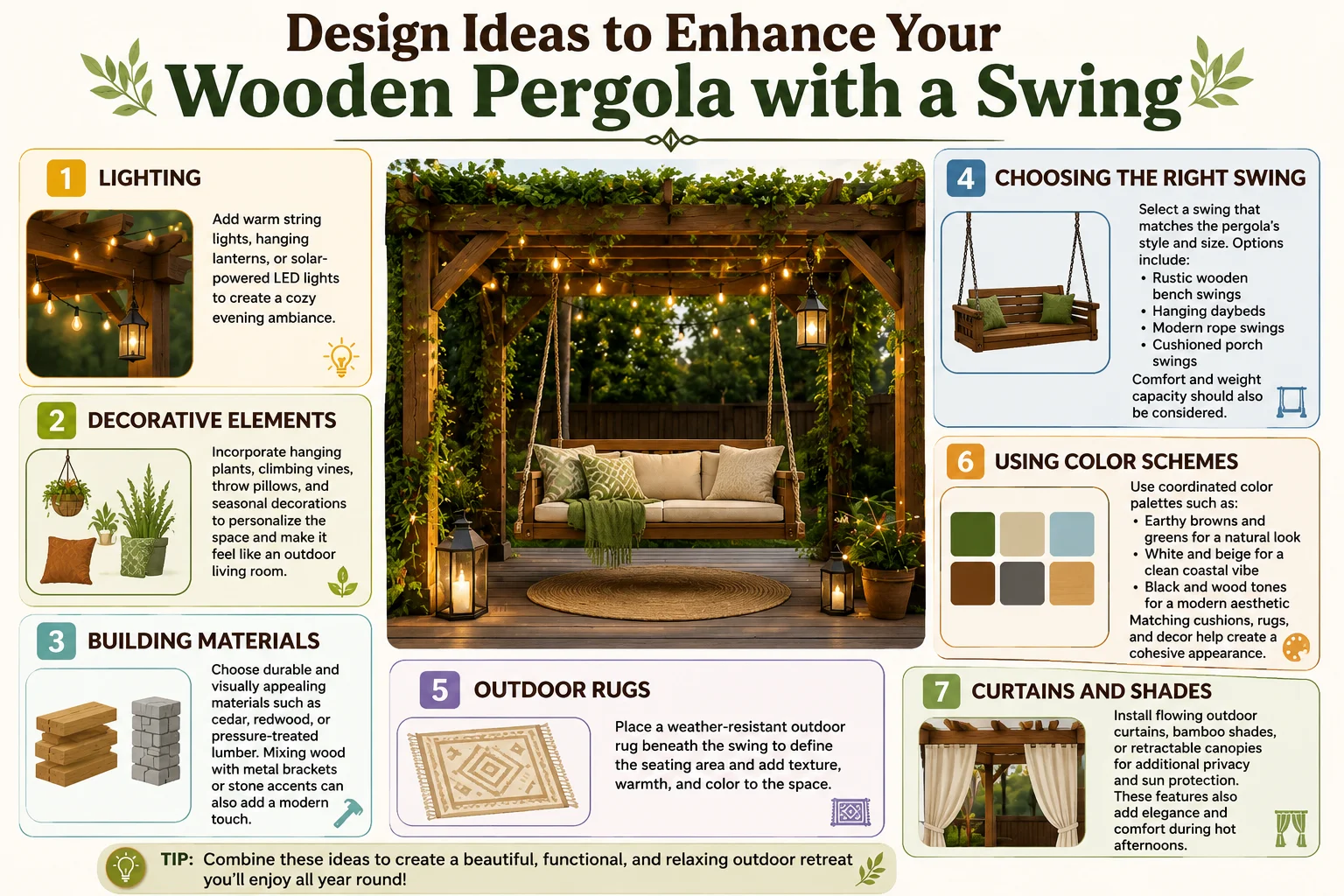
Building a wooden pergola with a swing is a delightful way to enhance your outdoor space. It provides an inviting spot for relaxation, reading, or spending quality time with family and friends. When designing this structure, think beyond just the basics. Here are some creative ideas to elevate your pergola experience.
Lighting
Adding lights to your pergola can transform the ambiance of your outdoor area. Consider the following options:
- String Lights: Drape fairy lights or large globe string lights around the beams. They create a magical atmosphere, perfect for evening gatherings.
- Lanterns: Hang decorative lanterns from the rafters. This provides both aesthetic appeal and practical lighting.
- LED Spotlights: Install LED spotlights focused on the swing for a cozy look that enhances safety during the evening.
Decorative Elements
Adding unique decorative touches can personalize your pergola and make it uniquely yours:
- Nature Accents: Incorporate climbing plants like wisteria or climbing roses. They can drape elegantly over your pergola, adding color and fragrance.
- Outdoor Fabric: Use outdoor cushions and throws on the swing to create a comfortable lounging area. Fabrics should be weather-resistant to endure the elements.
- Artwork: Hang outdoor-friendly artwork or wind chimes that enhance visual interest and auditory pleasure.
Building Materials
Choosing the right wood and treatment is crucial for longevity and aesthetics:
| Wood Type | Durability | Maintenance Level |
|---|---|---|
| Cedar | High | Low (natural resistance to decay) |
| Redwood | Very High | Low |
| Pressure-Treated Pine | Moderate | High (regular sealing or staining required) |
While cedar and redwood are high in durability and require less maintenance, pressure-treated pine can be more budget-friendly but may require extra care.
Choosing the Right Swing
The type of swing you select can greatly influence the overall look and feel of your pergola. Consider these options:
- Hammock Swing: A hammock swing brings a casual vibe and can be a fun addition for lounging.
- Classic Bench Swing: A sturdy bench swing feels traditional and can seat multiple people, making it great for entertaining.
- Single Seat Swing: Perfect for a cozy reading nook, consider adding cushioning for extra comfort.
Outdoor Rugs
Introduce outdoor rugs to add warmth and texture to your space. They can define the swing area and create a cozy hangout vibe. Select a rug that is durable and weather-resistant to maintain its beauty through various weather conditions.
Using Color Schemes
Integrate a cohesive color palette that ties in your outdoor furniture, swing, and decorative elements. Soft pastels can evoke a soothing environment, while brighter colors can energize your space. It is useful to choose colors that complement the natural surroundings.
Curtains and Shades
Adding curtains can provide privacy and protection from the sun. Use weather-resistant fabric to ensure longevity. Consider retractable options for flexibility, allowing you to open up the space when needed.
Additional Amenities
Think about adding extra features for enhanced enjoyment – a fire pit nearby can make your evenings special, while outdoor speakers can create a fun atmosphere for gatherings. Keep the flow of your space in mind to maintain practicality and openness.
To explore more ideas and resources about designing your wooden pergola with a swing, visit Wood Magazine and Houzz.
Essential Tools and Materials Needed for Construction
Building anything from scratch requires careful planning and the right tools. If you are thinking about taking on a construction project, like a wooden pergola or another DIY endeavor, you should consider the essential tools and materials needed. Being prepared will not only make your job easier but also ensure that you achieve quality results.
Basic Tools for Construction
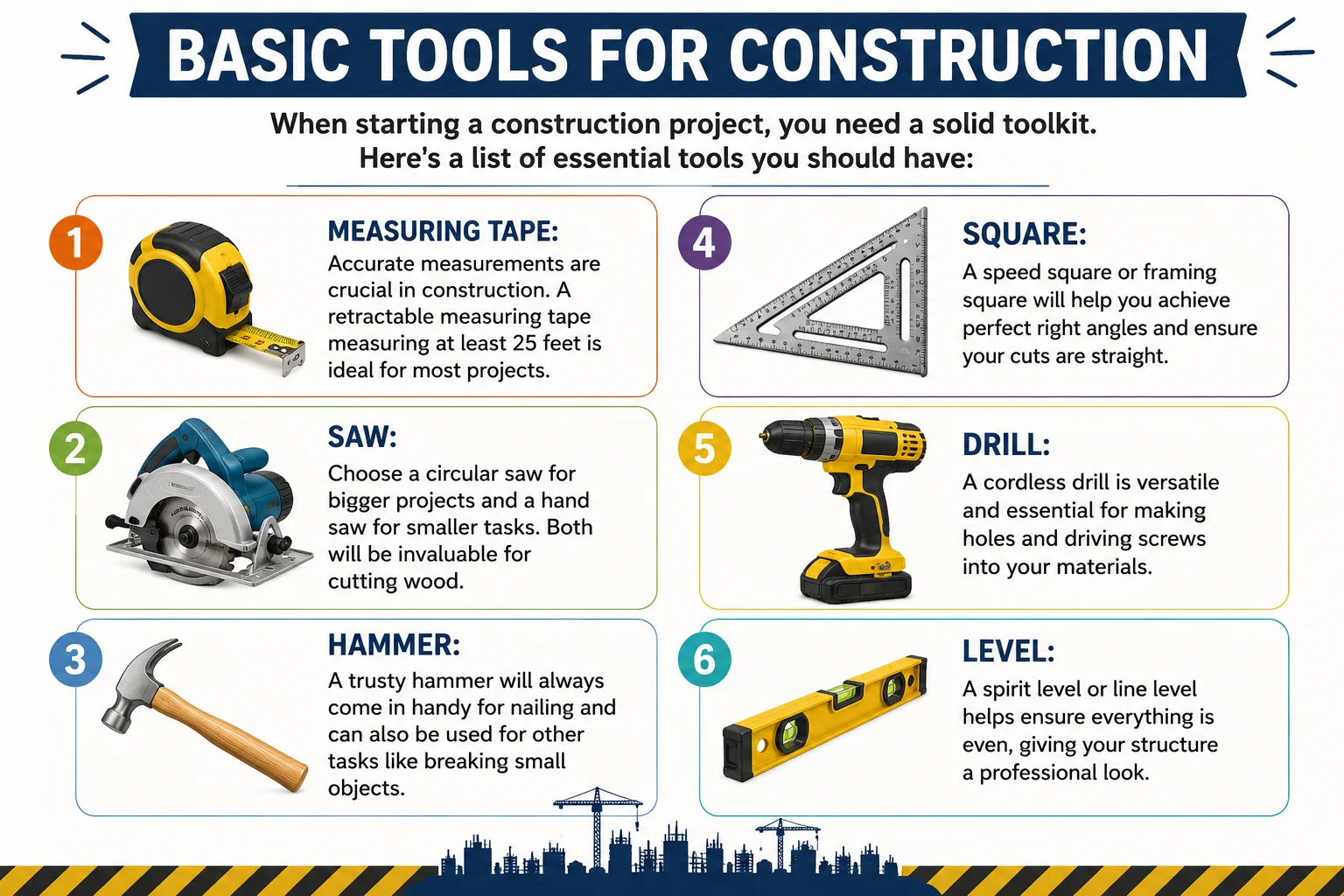
When starting a construction project, you need a solid toolkit. Here’s a list of essential tools you should have:
- Measuring Tape: Accurate measurements are crucial in construction. A retractable measuring tape measuring at least 25 feet is ideal for most projects.
- Square: A speed square or framing square will help you achieve perfect right angles and ensure your cuts are straight.
- Saw: Choose a circular saw for bigger projects and a hand saw for smaller tasks. Both will be invaluable for cutting wood.
- Drill: A cordless drill is versatile and essential for making holes and driving screws into your materials.
- Hammer: A trusty hammer will always come in handy for nailing and can also be used for other tasks like breaking small objects.
- Level: A spirit level or line level helps ensure everything is even, giving your structure a professional look.
Advanced Tools
If your project requires a bit more than the basics, consider investing in some advanced tools. These can enhance your efficiency:
- Power Sander: For a smooth finish on wooden surfaces, a power sander saves you time and effort compared to sandpaper.
- Miter Saw: Perfect for making precise angled cuts, a miter saw is essential for projects involving trim or frames.
- Impact Driver: This is great for driving screws quickly without stripping them, particularly helpful with larger projects.
Essential Materials
Beyond tools, the right materials are crucial for any construction project. Here’s a breakdown of what you’ll typically need:
- Wood: Select sturdy lumber suited for outdoor use if you’re building something like a pergola. Cedar or pressure-treated pine are popular options.
- Screws and Nails: Use galvanized screws and nails to prevent rust, especially for outdoor structures.
- Wood Glue: For extra stability, wood glue can be used in addition to screws for joints.
- Concrete Mix: If your project requires posts, a concrete mix will stabilize them in the ground.
- Sealant or Stain: Protect your wooden structure from the elements with a good quality sealant or stain.
Safety Gear
Don’t forget about safety while constructing. Here’s what you should always wear:
- Safety Glasses: Protect your eyes from dust and debris.
- Ear Protection: If you’re using loud tools, ear protection can prevent hearing damage.
- Gloves: Good quality gloves offer grip and protection from sharp objects.
- Hard Hat: A hard hat protects against falling objects if you’re working in a construction zone or on a ladder.
Where to Buy Tools and Materials
Finding the right tools and materials is essential. Here are some great places to look:
Having the right tools and materials is vital for a successful construction project. Whether you’re building a wooden pergola or a simple garden shed, investing in quality items, preparing properly, and practicing safety will help you create something that lasts. Remember that patience and care in every step you take lead to the best outcomes.
Maintenance Tips for a Long-Lasting Wooden Pergola and Swing
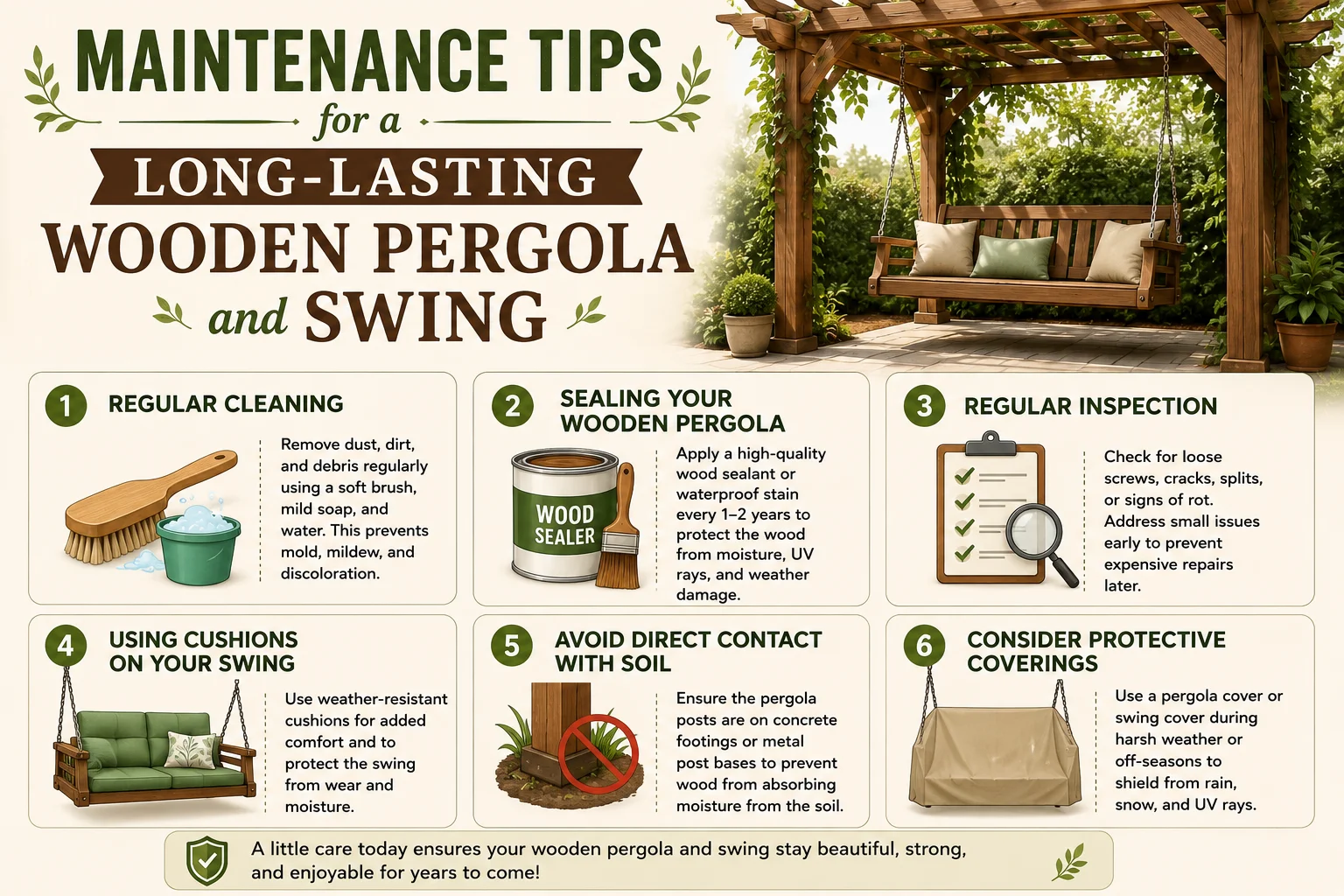
Wooden pergolas paired with swings are a delightful addition to any outdoor space. They not only enhance the beauty of your garden but also provide a cozy spot for relaxation. To ensure that your wooden pergola and swing remain in good condition for years, proper maintenance is essential. Here are some valuable tips to help you keep your outdoor sanctuary in top shape.
Regular cleaning
The first step in maintaining your wooden pergola is regular cleaning. Over time, dirt, dust, and debris can accumulate on the wood surface, leading to mold and other issues. You can clean your pergola by following these simple steps:
- Use a soft-bristle brush to remove loose debris.
- Mix mild soap with water and use a cloth to scrub the surfaces.
- Rinse with clean water and allow it to dry completely.
Consider deep cleaning your pergola at least once a year. This involves using a pressure washer set at a low psi to avoid damaging the wood. Be cautious around joints and railings, as excessive pressure can cause wood to splinter.
Sealing your wooden pergola
Sealing your wooden pergola is another critical maintenance step. A quality sealant protects your wood from moisture, UV rays, and pests. Follow these steps to apply sealant:
- Choose a high-quality wood sealant suitable for outdoor applications.
- Ensure your pergola is clean and dry before application.
- Use a brush or roller to apply the sealant evenly, following wood grain.
- Allow it to dry completely, and repeat every one to three years based on exposure.
Regular inspection
Regular inspection plays a key role in prolonging the life of your wooden pergola. Inspect for signs of damage or decay frequently. Look for:
- Cracks or splits in wood
- Loose screws or bolts
- Signs of insect infestation
If you notice any issues, address them promptly. For example, tighten any loose fittings and replace damaged boards. Catching these problems early can save you from more extensive repairs down the line.
Maintaining your swing is also essential. Like the pergola, swings are exposed to the elements and require care. Start by inspecting the swing chains or ropes for wear and tear. Replace any frayed or damaged parts to ensure safety. Additionally, you should:
- Clean the swing regularly to prevent rust.
- Apply a coat of outdoor paint or sealant on the swing structure every couple of years.
- Inspect hanging hardware monthly to ensure it is secure.
Using cushions on your swing
Using cushions on your swing can add comfort, but they can also get dirty. Be sure to wash or replace the cushions regularly. Consider using fade-resistant, weather-resistant fabrics to prolong their life as well.
Avoid direct contact with soil
Another effective way to maintain your wooden pergola and swing is to avoid direct contact with soil. Water and soil can cause the wood to rot. If possible, elevate your pergola on footings. For swings, consider using concrete bases to prevent contact with moisture.
Consider protective coverings
You might also want to consider protective coverings. When not in use, cover your swing and any exposed parts of your pergola to shield them from rain and snow. This will extend their lifespan, particularly in harsh weather conditions.
Remember the surrounding area. Keep the space around your wooden pergola tidy. Trim back any bushes or trees that might touch or shade the structure. This enhances airflow and reduces the chance of mold growth.
For more specialized advice on wooden structure maintenance, you can visit Wood Magazine. For information on outdoor swing safety and setup, check out Backyard Discovery. Always prioritize safety and proper care to enjoy your stunning wooden pergola with swing for many years.
Conclusion
Creating a wooden pergola with a swing transforms your outdoor space into a cozy retreat. Following the step-by-step guide not only makes the construction a satisfying project, but also ensures a structurally sound and visually appealing structure that can last for years. Selecting the right wood is crucial—deciding between cedar, redwood, or pressure-treated lumber contributes to the durability and aesthetic of your pergola.
As you design your pergola, consider ideas that reflect your personal style. Whether you opt for climbing vines, decorative lights, or built-in seating, these touches enhance the beauty and functionality of your pergola with swing. Don’t forget to gather essential tools and materials before starting your build, as this makes the process smoother and more enjoyable.
Once your pergola is complete, regular maintenance is key to preserving its charm. Simple steps like resealing the wood, checking for damage, and keeping the area clean will help your outdoor structure stand the test of time. By dedicating time to care for your pergola and swing, you can enjoy many pleasant moments, whether it’s reading a book, sipping coffee, or lounging with friends and family.
With careful planning and effort, your wooden pergola with swing will not only enhance your backyard but also provide a perfect spot for relaxation and enjoyment. Embrace the journey of building, and you’ll be rewarded with a remarkable addition to your outdoor space that you and your loved ones can cherish for years to come.