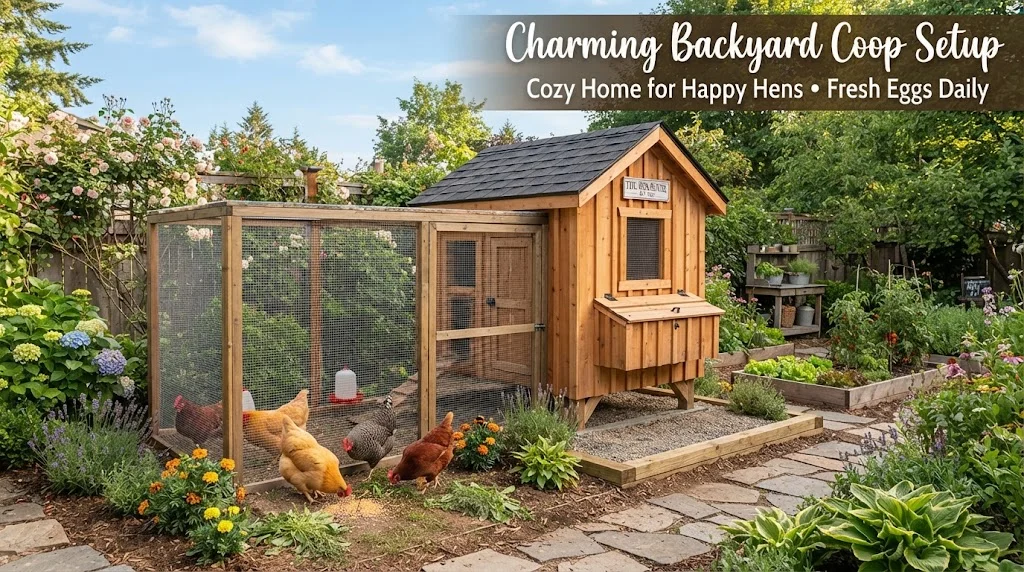
Building a Wooden Chicken Coop Design requires careful consideration of several essential features to ensure your chickens are safe, comfortable, and productive. A well-planned coop can enhance the overall poultry-keeping experience, making it crucial to focus on various design aspects.
Space Requirements
Chickens need adequate space to move around freely. A cramped coop can lead to stress and health issues. Here’s a quick guide to help you calculate the space needed:
- Small Breeds: Allow about 2-3 square feet per chicken inside the coop.
- Large Breeds: Provide around 4-5 square feet per chicken indoors.
- Outdoor Run: Aim for 8-10 square feet per chicken in the run area.
Ventilation
Proper ventilation is a must for any wooden chicken coop design. Good airflow helps prevent moisture buildup and keeps the environment healthy. Here are effective ways to ensure ventilation:
- Install windows that can be opened and closed.
- Add vents at the top of the coop to allow warm air to escape.
- Consider using mesh screens to keep predators out while allowing airflow.
Access and Security
Easy access for cleaning and egg collection is vital, as is securing your chickens from predators. Here are some suggestions:
- Design wide doors for easy entry.
- Incorporate locks that prevent raccoons and other predators from opening them.
- Use sturdy, untreated wood to build the coop, as chemicals can harm your chickens.
Roosting Bars
Chickens love to roost at night, so providing adequate roosting bars is essential. Consider the following when planning your design:
- Install roosting bars at least 2 feet off the ground.
- Space the bars 12-15 inches apart to prevent crowding.
- Use wood that is wide enough for chickens to comfortably stand on.
Nesting Boxes
Nesting boxes are where chickens lay their eggs, so these need to be part of your design:
- Each box should be about 12 inches wide and 12 inches high.
- Provide one nesting box for every 3-4 hens.
- Ensure boxes are covered to provide privacy and security for the hens.
Materials and Weather Considerations
When choosing materials, think about the climate in your area. A wooden coop should protect your chickens from harsh weather:
- Use treated wood for the base to avoid rot.
- Select durable materials that can withstand your local climate.
- Consider insulation if you live in a particularly cold region.
Flooring Options
The flooring of your coop can impact hygiene and the comfort of your chickens. Here are popular choices:
- Wooden slats allow for easy cleaning but may require more maintenance.
- The dirt floor can help with drainage but may harbor pests.
- Concrete flooring is durable and easy to clean but may be cold for chickens in winter.
Additional Features
Consider adding features that enhance chicken welfare:
- Run space with good fencing to prevent escapes.
- Access to outdoor areas with natural shade and safety from predators.
- Water containers and feeders designed to prevent contamination.
Choosing the Right Materials for Longevity and Security
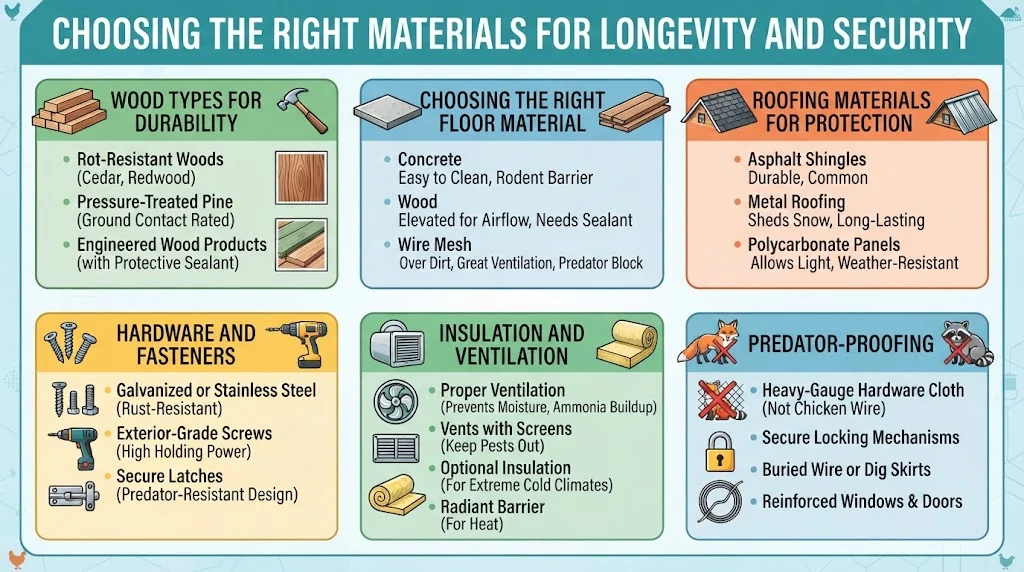
Building a wooden chicken coop is an exciting project that can provide your flock with a safe and comfortable home. However, choosing the right materials is crucial for both durability and security. This will not only ensure longevity but also protect your chickens from predators. Here are some essential materials to consider when planning your coop construction.
Wood Types for Durability
When selecting wood for your chicken coop, opting for high-quality materials is essential. Some popular options include:
- Redwood: Naturally resistant to decay and insects, redwood is a great choice for outdoor structures.
- Cedar: Cedar also resists rot and repels insects due to its aromatic oils, making it a favorite among chicken coop builders.
- Pressure-treated lumber: This type of wood is chemically treated to resist moisture and pests, but it should be used with caution, as the chemicals can be harmful to chickens.
Choosing the Right Floor Material
The flooring of your coop should withstand wear and be easy to clean. Consider the following materials:
- Wooden planks: Using solid wooden planks provides excellent insulation and is sturdy for heavy chicken activity.
- Concrete: While more permanent, concrete floors are hard to install but will last for years without rotting.
- Vinyl flooring: This waterproof option allows for easy cleaning and resists mold and mildew.
Roofing Materials for Protection
Your coop’s roof needs to protect from rain and snow while offering durability. The following options are ideal:
- Asphalt shingles: A popular choice due to their affordability and ease of installation. They provide good insulation and weatherproofing.
- Metal roofing: Durable and long-lasting, metal roofs are often resistant to extreme weather, making them excellent for any climate.
- Wood shakes: While aesthetically pleasing, wood shakes require more maintenance but can offer good insulation.
Hardware and Fasteners
All the materials in your coop need to be securely fastened. Using the right hardware is essential for longevity:
- Stainless steel screws: Rust-resistant and strong, stainless steel screws provide a long-lasting hold on your coop materials.
- Galvanized nails: These are treated to resist rust and are great for securing wooden structures.
- Hinges and latches: Invest in high-quality, rust-proof hinges and latches to ensure that the coop doors remain secure.
Insulation and Ventilation
Good insulation ensures your chickens stay comfortable in varying temperatures, while proper ventilation prevents moisture build-up and promotes airflow:
- Foam board insulation: A great option for keeping your coop warm in winter, foam board is easy to install and effective.
- Screened vents: Install screened vents to allow fresh air flow without compromising security from predators.
Predator-proofing
To ensure the safety of your chickens, build your coop with special attention to security measures:
- Hardware cloth: Unlike chicken wire, hardware cloth is a strong material that prevents predators from breaking in.
- Concrete footer: Installing a footer around the coop helps prevent digging by predators.
- Lockable doors: All entrances should have secure, lockable doors to deter any unwanted animals.
Step-by-Step Guide to Building Your Chicken Coop
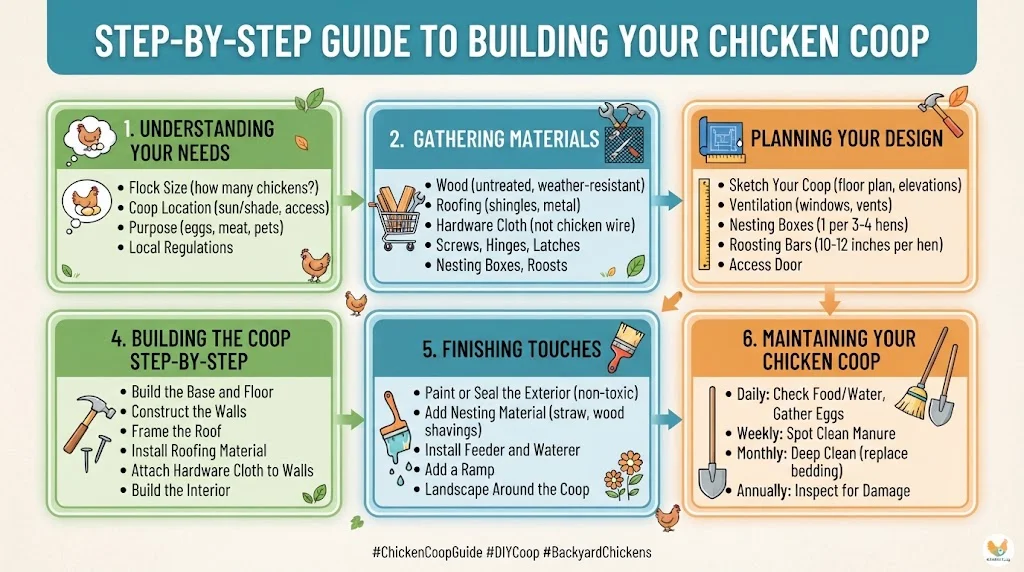
Building a chicken coop can be a rewarding experience. Not only do you get a comfortable home for your feathered friends, but you also gain a sense of accomplishment. Here is a step-by-step guide to help you create the perfect chicken coop design that suits your needs. Follow these steps and soon enough, you’ll have a beautiful coop where your chickens can thrive.
Understanding Your Needs
Before you start building, it’s important to determine what you need from your chicken coop. Consider these factors:
- How many chickens will you have?
- What kind of weather conditions does your area experience?
- Do you want to incorporate features like nesting boxes or roosting bars?
- How much space can you dedicate to the coop?
Gathering Materials
Once you’ve assessed your needs, it’s time to gather materials. Here’s a list of common materials you’ll need:
- Wooden boards (2x4s, plywood)
- Chicken wire or hardware cloth
- Plywood for walls and roof
- Nails and screws
- Hinges for doors
- Paint or wood sealer (optional)
Planning Your Design
Now that you have your materials, it’s time to sketch the layout of your coop. A well-thought-out design can save you headaches later. Consider the following design elements:
- Size: Generally, each chicken needs about 3 to 4 square feet inside the coop and 8 to 10 square feet in an outdoor run.
- Ventilation: Proper airflow is crucial for keeping your chickens cool and preventing moisture buildup.
- Nesting Boxes: Provide one nesting box for every 3-4 hens.
- Roosting Bars: These should be placed at least 2 feet off the ground for comfort.
Building the Coop Step-by-Step
Now, let’s get into the building process. Follow these steps to create your coop:
- Foundation: Start by creating a sturdy base; you can use concrete blocks or treated lumber.
- Floor: Install plywood sheets onto the foundation to create a floor. This keeps predators out and protects your flock.
- Walls: Construct walls using 2x4s and add plywood for stability. Make sure to include openings for doors and vents.
- Roof: Use a sloped roof design to let rain and snow slide off. Cover it with plywood and shingles or metal roofing.
- Doors: Install a hinged door for easy access to your chickens and cleanout access.
- Ventilation: Cut holes for vents and cover them with chicken wire to keep predators out while allowing airflow.
- Nesting Boxes: Attach boxes to the walls, ideally 12×12 inches and about 2 feet off the ground.
- Run Enclosure: Build a secure outdoor run with chicken wire or hardware cloth to keep chickens safe from predators.
Finishing Touches
After the main construction is complete, add finishing touches to make the coop more comfortable for your chickens:
- Paint the exterior for weatherproofing if desired.
- Add bedding such as straw or wood shavings inside the coop.
- Install feeding and watering stations.
- Consider adding a dust bath area for your chickens’ hygiene.
Maintaining Your Chicken Coop
Regular maintenance is key to keeping your chicken coop in tip-top shape. Here are some tips:
- Clean the coop weekly to prevent odors and pests.
- Check for damages regularly to ensure it remains secure.
- Monitor the health of your flock closely.
Common Mistakes to Avoid When Designing a Chicken Coop
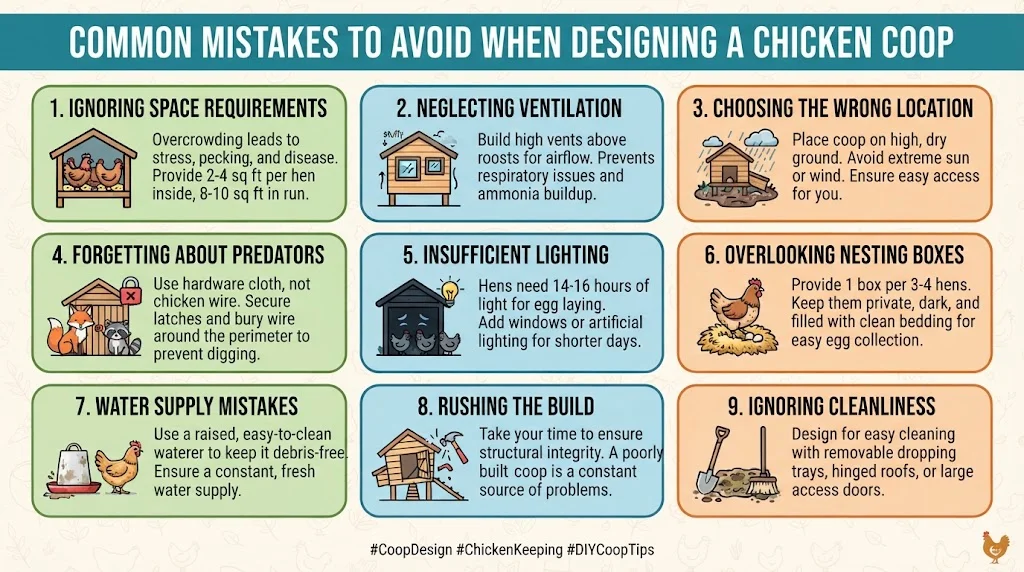
Designing a chicken coop can be an exciting project, but it’s essential to avoid common mistakes that can jeopardize the health of your chickens or the success of your coop. Here are some pitfalls to watch for when building your chicken coop design.
Ignoring Space Requirements
One of the biggest mistakes you can make is not providing enough space for your chickens. Each chicken requires a minimum of 3 square feet inside the coop and about 10 square feet in the run. Overcrowding can lead to stress, pecking, and health issues. Make sure to consider the number of chickens you plan to keep and design your coop accordingly.
Neglecting Ventilation
Good ventilation is critical for any chicken coop. Without proper airflow, moisture and ammonia can build up, leading to respiratory problems for your flock. Include vents high in the walls to allow hot air to escape while keeping your chickens safe from drafts.
Choosing the Wrong Location
Location is key when building a chicken coop. Avoid areas that are prone to flooding or heavy winds. Aim for a spot that has some shade and protection from direct sunlight, especially in warmer months. Ideally, choose a location that’s easy to access for feeding and cleaning.
Forgetting About Predators
Every chicken owner needs to consider potential predators. Diggers like raccoons and skunks can easily access your coop if it’s not secure. Furthermore, overhead threats such as hawks should also be taken into account. Make sure to:
- Use sturdy materials, such as hardware cloth instead of chicken wire.
- Secure both the windows and entrances.
- Install an underground barrier around the coop to prevent digging.
Insufficient Lighting
Chickens require around 14 hours of light for optimal laying. If your coop doesn’t allow for enough natural light, consider installing a light that mimics daylight for early mornings. Use energy-efficient LED lights if possible, as they will save you money in the long run.
Overlooking Nesting Boxes
Another frequent oversight is not providing adequate nesting boxes. Each box should be about 12” x 12” and ideally placed in a quiet part of the coop. Aim for one nesting box for every 3 to 4 hens. If your hens don’t have a safe place to lay their eggs, they may lay them anywhere, leading to lost eggs and increased stress.
Water Supply Mistakes
A steady water supply is essential for healthy chickens. Many new owners underestimate the amount of water their chickens need. Provide fresh, clean water daily, and consider a waterer that prevents tipping and contamination. Also, ensure the water source does not freeze during colder months. A heated waterer can be a wise investment in winter.
Rushing the Build
Taking your time during construction can save you headaches later. Skipping steps like proper insulation or shelving can lead to problems such as temperature control issues and cluttered spaces. Create a detailed plan before you start and double-check that all materials are suitable and safe for your chickens.
Ignoring Cleanliness
Don’t forget about cleanliness and maintenance. A dirty coop can lead to disease and pest infestations. Design your coop in a way that makes it easy to clean. For instance, ensure the floor is sloped so that waste can easily be removed. Regular cleanings should be scheduled to keep your hens healthy and happy.
In planning your chicken coop, remember to conduct thorough research and perhaps seek advice from experienced chicken keepers. Websites like Backyard Chickens offer a wealth of information, while The Poultry Site gives insights into various chicken breeds and their needs.
By keeping these common mistakes in mind and taking proactive measures, you can design a safe, functional, and pleasant environment for your chickens. The better your coop, the healthier and happier your flock will be.
Enhancing Your Chicken Coop with Smart Design Ideas

Creating a comfortable and efficient chicken coop can significantly enhance the health and productivity of your chickens. Smart design choices not only improve the living conditions for your poultry but also simplify maintenance and promote ease of use for you. Here are some innovative ideas to elevate your chicken coop design, making it both functional and appealing.
Optimize Space with Vertical Design
One of the best ways to maximize space in your chicken coop is to utilize vertical design elements. By incorporating shelves and nesting boxes that are mounted on the walls, you can save valuable floor space. Here are key suggestions:
- Nesting Boxes: Place nesting boxes at different heights to encourage hens to lay eggs comfortably while clearing the floor for movement.
- Perches: Install perches at various levels, allowing chickens to roost in a way that mimics their natural habitat.
- Feeders and Waterers: Consider hanging feeders and waterers to reduce waste and keep the coop tidy.
Ventilation is Key
Proper ventilation is crucial for maintaining a healthy environment in your chicken coop. Adequate airflow prevents excess moisture build-up and helps regulate temperature. Here are some smart ideas:
- Windows: Incorporate windows that can open and close, allowing for adjustable airflow.
- Vents: Install vents near the roof to let warm air escape and prevent overheating during hot months.
- Mesh Screens: Use mesh screens on openings to keep out predators while facilitating air circulation.
Access and Maintenance
Efficient access to your chicken coop and its components makes daily maintenance simpler. Consider these accessibility features:
- Large Doors: Install wide doors that allow you to easily enter with feed, tools, and bedding.
- Removable Droppings Boards: Add droppings boards that can slide out for quick cleaning.
- Accessible Nesting Boxes: Create a hatch on the outside of the coop to access nesting boxes without entering the enclosure.
Security Measures
Keeping your flock safe from predators should be a top priority. Here are some design ideas that enhance security:
- Heavy-Duty Wire: Use strong chicken wire or welded wire fencing to secure the coop.
- Lockable Doors: Ensure that all doors can be securely locked to prevent intrusions.
- Ground Protection: Bury the fencing a few inches into the ground to deter digging predators.
Eco-Friendly Features
Eco-friendly elements into your chicken coop design can be beneficial for your chickens as well as the environment. Here’s how:
- Solar Panels: Install solar panels to provide energy for lighting and ventilation, reducing your carbon footprint.
- Rainwater Collection: Create a system to collect rainwater for the chickens’ drinking supply, promoting sustainability.
- Composting Area: Designate a space within the coop for composting chicken waste, which can be used as nutrient-rich fertilizer for your garden.
Helpful Resources
For more ideas and plans on enhancing your chicken coop, check out these helpful resources:
- Backyard Chickens – A community of chicken enthusiasts who share tips and resources.
- Chickens for Backyards – Offers comprehensive guides on keeping chickens, from coop design to care.
By making these smart design choices, you can create a chicken coop that not only provides a safe haven for your flock but also enhances their well-being and productivity. Remember, a well-thought-out coop design leads to happier chickens and a more enjoyable experience for you!
Conclusion
Building a Wooden Chicken Coop Design can be a rewarding project that adds value to your backyard and provides a safe, comfortable environment for your chickens. By focusing on essential features such as proper ventilation, protection from predators, and easy access for cleaning, you set the foundation for a successful coop. Selecting high-quality materials not only enhances the durability of your coop but ensures the safety and well-being of your flock.
Following a clear, step-by-step guide allows you to construct your coop efficiently and avoid common pitfalls. Reflecting on the pitfalls many first-time builders encounter, such as inadequate spacing and insufficient waterproofing, ensures that you create a functional space. Remember, small oversights in design can lead to significant problems later on.
Smart design ideas can also elevate your coop from basic to extraordinary. Whether it’s installing nesting boxes or adding an outdoor run for free-range movement, these enhancements not only benefit your chickens but also make your coop more enjoyable and easier to manage.
As you embark on your chicken coop project, keep in mind the importance of thoughtful design, quality materials, and practical construction methods. With the right approach, your wooden chicken coop will thrive, providing a safe and cozy home for your feathered friends while adding charm to your property. Happy coop building!