
Creating your own Farmhouse Dining Table Plans for Beginners is an exciting project, especially if you’re a beginner. These tables embody rustic charm and offer a warm, inviting atmosphere for family gatherings and dinners with friends. When developing your Farmhouse Dining Table Plans for Beginners, certain essential features can elevate your project and ensure success. Understanding these features helps you navigate the building process easily.
Materials Selection
The first step in any woodworking project is choosing the right materials. For farmhouse dining tables, solid wood is the preferred choice for durability and aesthetics. Here are some popular wood types:
- Pine: A softwood that’s budget-friendly and easy to work with.
- Oak: A harder wood that provides strength and a beautiful grain.
- Maple: Known for its smooth finish and balance of durability.
Choosing the right type of wood influences both the appearance and longevity of your table. Consider factors like grain and color that match your decor.
Dimensions
Planning the size of your table is crucial. A standard farmhouse table typically ranges from 60 to 96 inches long and 30 to 40 inches wide. Here are some guidelines:
- For a small family, 60 inches or less is often sufficient.
- For larger gatherings, aim for 72 inches or more.
- Allow at least 24 inches of space per person for comfortable dining.
Make sure to measure your dining area before finalizing these dimensions to ensure the table fits well in your space.
Design Style
The design of your farmhouse dining table can greatly affect its functionality and visual appeal. Consider these popular styles:
- Classic Rectangular: Simple and functional, classic for any dining room.
- Round Table: Great for smaller spaces, encourages conversation.
- Trestle Table: Features a support beam and offers a rustic look.
Choosing the right design ensures both usability and complements your interior style.
Joinery Techniques
How you assemble your dining table can affect its stability and overall look. Here are some effective joinery techniques to consider:
- Pocket Hole Joinery: Easy for beginners and provides strong connections.
- Dowel Joinery: Offers sturdy joints but requires more precision.
- Mortise and Tenon: A professional-grade technique that provides long-lasting strength.
Understanding these methods will help you choose the most suitable option based on your skill level.
Finishing Touches
Adding the right finish enhances the wood’s natural beauty and offers protection against wear. Here’s what to keep in mind:
- Stains: Enhance the wood grain and give a warm tone.
- Sealants: Prevent moisture damage and scratches.
- Paint: For a bold, modern look with a rustic feel.
Selecting the right finish not only beautifies your table but also protects it for long-term use.
Crafting an Adjustable Plan
Your Farmhouse Dining Table Plans for Beginners should be flexible to accommodate any changes during the building process. Here are ways to create adjustable Farmhouse Dining Table Plans for Beginners:
- Use pencil and paper to sketch initial ideas, then refine them as you work.
- Take precise measurements before cutting to avoid waste.
- Keep a notebook of mistakes and solutions for future reference.
Tools and Materials Needed for Building Your First Table
Building your first dining table is an exciting and rewarding project. To ensure your success, you need to gather the right tools and materials. This guide will walk you through what you need to create a beautiful farmhouse dining table, perfect for beginners.
Essential Tools for Your Farmhouse Dining Table
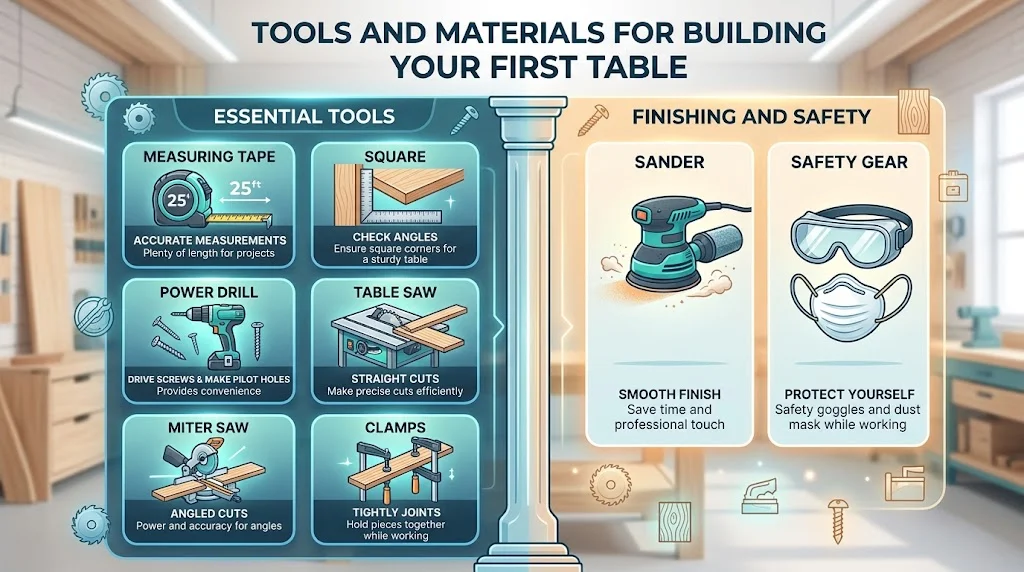
- Measuring Tape: Accurate measurements are crucial. A 25-foot measuring tape offers plenty of length for most projects.
- Square: A framing square helps you check your angles. Ensuring your corners are square will make your table sturdy.
- Power Drill: This is essential for driving screws and making pilot holes. A cordless drill can provide convenience and ease of movement.
- Table Saw: A table saw allows you to make straight cuts efficiently. While it can be an investment, it’s invaluable for projects requiring precision.
- Miter Saw: If you’re dealing with angled cuts, a miter saw will offer the power and accuracy you need.
- Clamps: These keep your pieces tightly together while you work, ensuring better joints. Consider having several clamps of varying sizes.
- Sander: For a smooth finish, an electric sander will save you time and ensure a professional touch.
- Safety Gear: Don’t forget safety goggles and a dust mask to protect yourself while working.
Necessary Materials for the Table
Having the right materials is just as important as having the right tools. Here’s a list of materials that you’ll typically need:
- Wood: Popular choices for farmhouse tables include pine, oak, or reclaimed wood. Depending on the size of your table, you might need:
- 4-6 boards for the tabletop
- 4 legs (you can purchase pre-cut or custom cut them)
- 1-2 boards for the apron (the support structure connecting the legs and the tabletop)
- Wood Glue: This adds extra strength to your joints and helps ensure your table holds together over time.
- Wood Screws: Make sure to choose screws that are long enough to secure your tabletop without going through it.
- Finish: Stain or paint will protect your table and enhance its appearance. Choose a finish that suits your style.
- Sandpaper: Various grits (e.g., 80, 120, and 220) will help you achieve a smooth finish.
Optional but Helpful Extras
- Wood Stain Applicator: A foam brush or rag makes applying stain easy and even.
- Level: A level ensures that your table sits flat, which is essential for stability.
- Router: For decorative edges, a router can add a polished touch to your piece.
Where to Find Materials and Tools
- Local hardware stores often carry most of the tools and materials you need. Consider visiting Home Depot or Lowe’s.
- If you prefer online shopping, websites like Amazon and Menards provide a wide range of options.
- For reclaimed wood, check local salvage yards or websites like Reclaimed Wood Exchange.
Building your first farmhouse dining table can be a fulfilling experience. By gathering the right tools and materials, you’re setting the foundation for a successful project. Take your time in selecting what you need, and don’t hesitate to seek help or resources that provide additional guidance. Happy building!
Step-by-Step Guide to Choosing the Right Design
Choosing the right design for your farmhouse dining table can be an exciting yet challenging task, especially for beginners. With a variety of styles, materials, and functionalities available, it’s essential to narrow down your options to find the perfect fit for your home. This guide offers valuable insights to help you make an informed decision.
Understand Your Space
Before you dive into specific designs, assess the space where the dining table will be placed. Here are some factors to consider:
- Room Size: Measure your dining area to ensure that the table fits comfortably. Leave space for chairs and easy movement.
- Style: Consider the overall decor of your kitchen or dining area. Do you want a rustic, modern, or traditional feel?
- Lighting: Examine how natural light enters the space. A well-lit area can influence the material and color choices.
Select the Material
Farmhouse dining tables come in various materials, each with its advantages:
| Material | Durability | Maintenance | Style |
|---|---|---|---|
| Wood | High | Moderate | Classic and warm |
| Metal | Very High | Low | Industrial and modern |
| Glass | Moderate | High | Elegant and chic |
| Composite | Variable | Low to Moderate | Versatile |
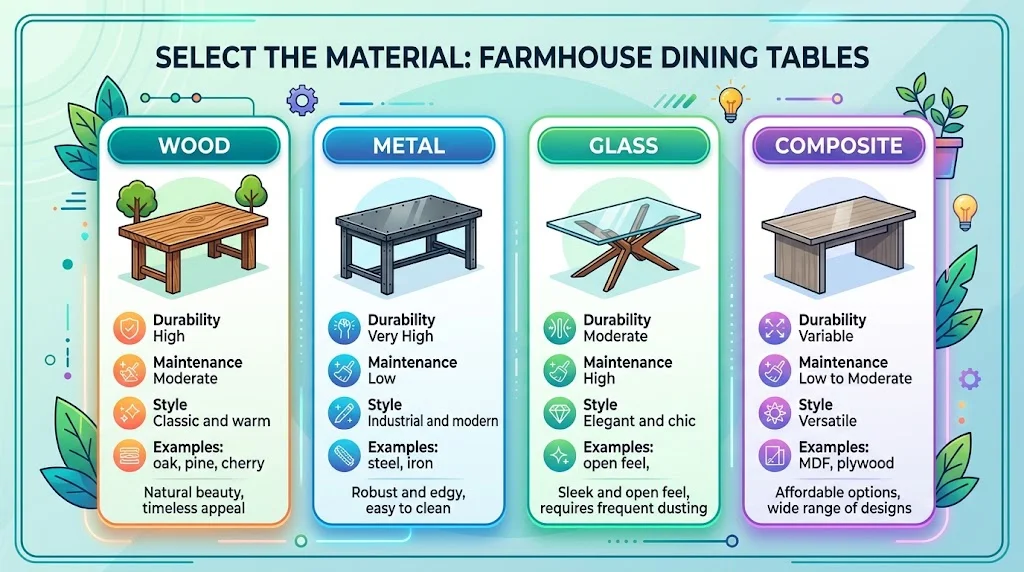
Choosing the right material is crucial, as it influences both the table’s look and performance. Wooden tables are the most popular for farmhouse styles, offering a warm, inviting atmosphere. However, metal and glass options bring a modern flair that may fit well in a contemporary farmhouse.
Determine the Shape
The shape of your dining table plays a significant role in design. You can choose among:
- Rectangular: Best for larger spaces, allowing for ample seating.
- Round: Great for small areas, promoting conversation and intimacy.
- Square: Suitable for medium spaces, providing a balance between size and seating.
- Oval: Offers soft edges while accommodating more people than a round table.
Think about your family’s needs and the number of guests you often entertain. This will guide your decision on the shape of your table.
Consider the Height
Standard dining tables are typically 28 to 30 inches high. However, there are variations:
- Counter Height: 34 to 36 inches, ideal for bar stools and casual settings.
- Pub Height: About 40 to 42 inches, perfect for a more relaxed dining experience.
Your choice should align with your seating preferences. Ensure chairs or stools you select fit comfortably with the table height.
Think About Functionality
Consider how the dining table will be used. Will it primarily serve meals, or will it also function as a workspace or gathering area? Multifunctional tables can save space and increase usability.
Explore Design Features
Unique design features can add personality to your farmhouse dining table. Here are some to think about:
- Benches: Great for maximizing seating and providing a casual feel.
- Extendable Leaves: Ideal for accommodating guests without the need for a larger table all the time.
- Storage Options: Tables with built-in drawers or shelves can help with organization.
The choices you make should reflect your individual taste and lifestyle. For more inspiration, check out Popular Mechanics for various Farmhouse Dining Table Plans for Beginners and ideas. These resources can kickstart your creativity and help you visualize different designs. By keeping these factors in mind, you can confidently choose a design that complements your farmhouse aesthetic while being functional for your needs. Enjoy the process of building or selecting your table, as it will become the heart of your home for many family meals and gatherings.
Common Mistakes to Avoid When Crafting Your Farmhouse Table
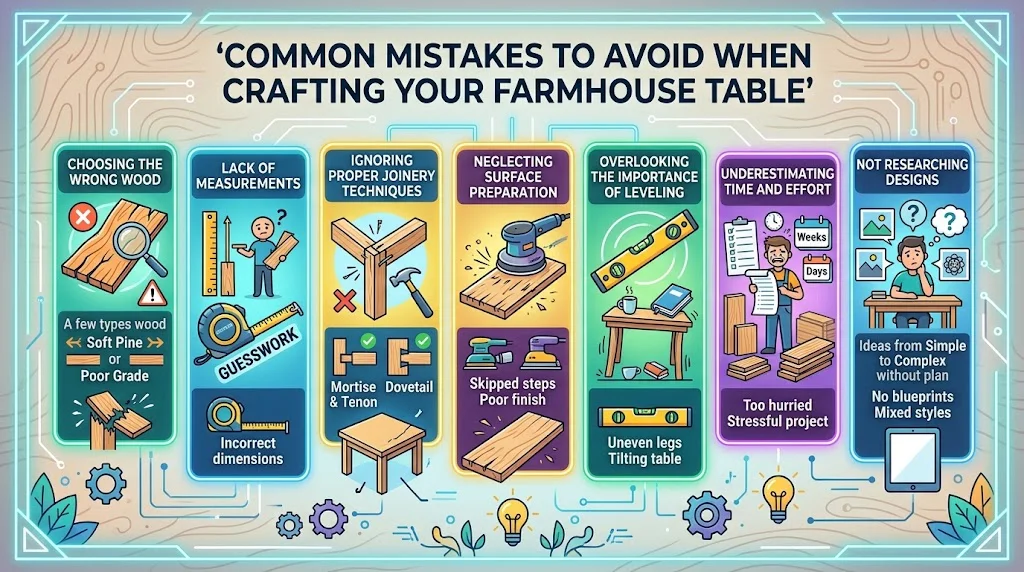
Crafting a farmhouse dining table is an exciting project that can enhance your home’s aesthetic while providing a functional centerpiece for family gatherings. However, beginners often run into common pitfalls that can turn this rewarding task into a frustrating experience. Understanding these mistakes can save you time, effort, and money, ensuring your project goes smoothly from start to finish.
Choosing the Wrong Wood
One of the first mistakes many beginners make is selecting the inappropriate type of wood. Here are some wood options you should consider:
- Pine: Affordable and easy to work with, pine is great for beginners.
- Oak: Durable and sturdy, oak adds a beautiful grain to your table.
- Maple: Hard and resistant to scratches, maple is ideal for a lasting finish.
Each wood type has its distinct characteristics. Ensure you choose one that fits your design and budget.
Lack of Measurements
Proper measurements are crucial when crafting a farmhouse dining table. Incorrect dimensions can lead to a piece that doesn’t fit well within your space. Take time to measure the following:
- Room dimensions: Ensure your table won’t overpower the entire space.
- Table height: Typical dining tables are around 28-30 inches tall.
- Legroom: Leave enough space for comfortable seating.
Always measure twice to prevent any costly errors!
Ignoring Proper Joinery Techniques
Using the right joinery methods is essential for creating a sturdy table. Beginners often skip this step, resulting in weak joints that might not hold up over time. Here are some techniques to consider:
- Butt Joints: Simple, but they require additional reinforcement.
- Mitre Joints: Great for corner connections and give a finished look.
- Mortise and Tenon: A traditional method that provides strength and stability.
Research and choose joinery that suits your skill level and desired aesthetic.
Neglecting Surface Preparation
Surface preparation is often overlooked by novices. If you fail to sand and finish your wood correctly, the final product may not look polished. Here’s what to do:
- Start with coarse sandpaper and progress to finer grits for a smooth finish.
- Consider the type of finish that suits your table best, whether it be paint, stain, or clear varnish.
- Allow each coat to dry fully before applying the next to avoid peeling or bubbling.
Ensure you dedicate ample time to this crucial step; it can make a significant difference in your table’s durability and appearance.
Overlooking the Importance of Leveling
Unlevel surfaces can cause wobbly tables, which are not only annoying but also dangerous if spills occur. To avoid this, check the following:
- Use a leveler tool during assembly to confirm each leg is even.
- Adjust legs with felt pads if you discover unevenness after your table is built.
Creating a stable surface will enhance your dining experience.
Underestimating Time and Effort
Many beginners underestimate the amount of time required for such a project. From planning and gathering materials to assembly and finishing touches, building a farmhouse dining table can take several days. Plan your schedule wisely and, if possible, set aside uninterrupted time blocks to complete different stages of the build.
Not Researching Designs
Before you begin constructing your table, take time to explore various designs. Not only does this provide inspiration, but it can also inform your choice of dimensions, style, and materials. Websites like Wood Magazine or Popular Woodworking offer a plethora of resources and plans tailored to beginners. Avoiding these common mistakes will set you on the right path towards creating a beautiful farmhouse dining table that you’ll be proud to showcase. Remember, each mistake is a learning opportunity—embrace the process and enjoy crafting!
Tips for Finishing and Maintaining Your New Table
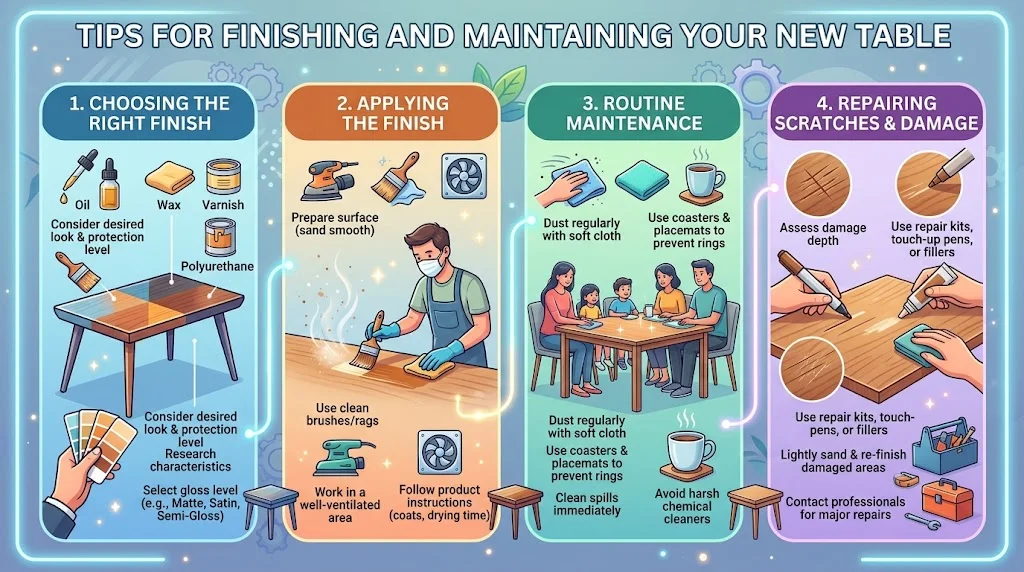
Finishing and maintaining your new farmhouse dining table is essential to ensure it lasts for years to come. With a little care, you can keep it looking beautiful and functional. Here are some tips that can help you achieve a lovely finish and maintain your table over time.
Choosing the Right Finish
When it comes to finishing your table, you have various options. Here are some popular finishes to consider:
- Stain: Staining enhances the natural grain of the wood while adding color. Look for good quality wood stains and test them on a small area first.
- Paint: If you want a pop of color or a modern look, paint can be a great choice. Choose a durable, non-toxic paint to ensure safety and longevity.
- Sealant: After staining or painting, applying a sealant is important. It protects the surface from moisture and scratches. Polyurethane or a natural oil finish like tung or linseed oil can work well.
Applying the Finish
After selecting the right finish for your farmhouse dining table, here’s how to apply it effectively:
- Prepare the Surface: Start by sanding the surface with fine-grit sandpaper to create a smooth base. Always sand in the direction of the grain.
- Clean the Dust: After sanding, wipe down the surface with a damp cloth to remove any dust particles. Let it dry completely.
- Apply the Finish: Use a brush or foam applicator to apply the finish. Work in small sections and apply thin coats. Allow each coat to dry as per the manufacturer’s instructions.
- Sand Between Coats: For the best results, lightly sand between coats with very fine sandpaper before applying the next coat.
- Final Coat: Finish with a final coat of sealant for added protection. This step is crucial for high-use surfaces like dining tables.
Routine Maintenance
Once your table is finished, maintain it properly to keep it in pristine condition. Here are some routine maintenance tips:
- Regular Cleaning: Clean your table regularly with a soft, damp cloth. Avoid harsh chemicals that can damage the finish.
- Use Coasters: Always use coasters under drinks and placemats to prevent scratches and stains from liquids.
- Monthly Polish: Consider using a beeswax or furniture polish to rejuvenate and protect the finish. Apply it sparingly and buff it out with a soft cloth.
- Avoid Direct Sunlight: Position your table away from direct sunlight to prevent fading or discoloration.
Repairing Scratches and Damage
Even with careful maintenance, accidents happen. Here are some helpful tips for repairing minor scratches and damage:
- Minor Scratches: For small scratches, apply a bit of walnut or almond oil to the affected area to help hide it. You can also use a furniture marker that matches your table.
- Deeper Scratches: For deeper scratches, you may need to sand the area lightly and reapply the finish.
- Water Stains: For water rings, mix equal parts of vinegar and olive oil, apply it to the stain, and wipe it clean. This should lift the stains without removing the finish.
When to Seek Professional Help
If your table suffers significant damage or if you wish to change its appearance drastically, it may be time to consult a professional. Experts can re-sand and refinish your table to restore it beautifully. Check DIY Network for resources and referrals. By using these tips for finishing and maintaining your farmhouse dining table, you can ensure it remains a cherished piece in your home for many seasons. Remember to take your time with the finishing process and always prioritize regular maintenance to keep your table looking great. For additional resources and information on wood finishing, you can visit Wood Magazine and Woodworker’s Source.
Conclusion
Crafting your own farmhouse dining table can be a rewarding experience that adds character and functionality to your home. By understanding the essential features of Farmhouse Dining Table Plans for Beginners, you’re well on your way to creating a piece that not only meets your needs but also complements your style. The right tools and materials are crucial, so investing in quality supplies will make the process smoother and more enjoyable.
Choosing the perfect design is an exciting step, but be sure to consider your available space and the purpose of the table. The step-by-step guide we’ve covered helps simplify this process, ensuring that you find a design that suits your home. While working on your project, keep an eye out for common mistakes. These pitfalls can save you time and frustration, allowing for a smoother building experience.
Finishing touches are equally important, as they protect your hard work and enhance the beauty of the wood. Regular maintenance will ensure the longevity of the table, allowing it to be a centerpiece for family gatherings for years to come. Remember, the joy of creating a farmhouse dining table extends beyond the final product; it lies in the time spent on the project and the memories you will share around it. Embrace the journey, make mistakes, learn, and enjoy the satisfaction of building something special with your own hands.