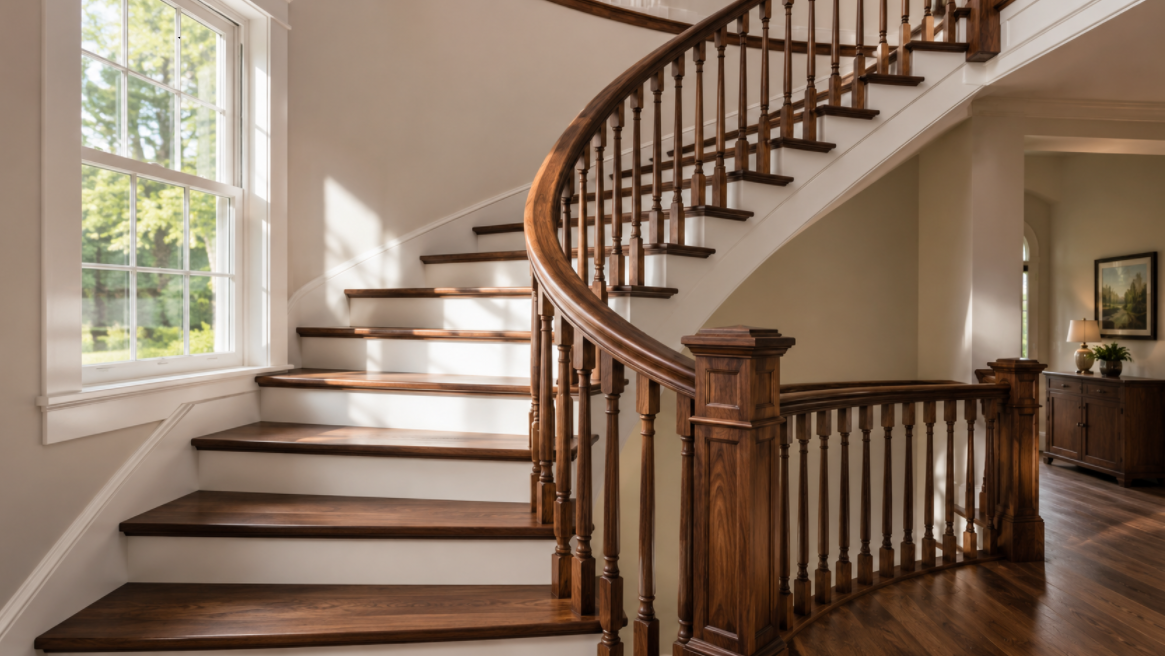
Are you looking to add a personal touch to your home? A DIY Wooden Staircase Railing Design can completely transform your space while providing safety and support. With the right design ideas, you can create a stunning railing that reflects your style and enhances the beauty of your staircase.
Rustic Charm with Reclaimed Wood
Using reclaimed wood for your staircase railing is an excellent way to bring a rustic vibe into your home. This choice not only helps the environment by recycling materials but also adds character. Here’s how to create a railing using reclaimed wood:
- Source wood from old barns or pallets.
- Sand the wood to give it a smooth finish, removing any rough edges.
- Apply a protective finish to enhance its durability.
This design is perfect for country-style homes, giving your space a warm and welcoming feel.
Modern Minimalism with Clear Acrylic
If you lean towards modern design, clear acrylic railings might be just what you need. They create an illusion of space while providing safety. Here’s a simple approach:
- Use a sturdy wooden base for support.
- Install clear acrylic panels in place of traditional balusters.
- Ensure the acrylic is at least 36 inches tall for safety purposes.
This sleek design works well in contemporary homes, allowing for light to flow freely.
Classic Elegance with Spindles
For a timeless look, consider a wooden railing with decorative spindles. This style evokes a sense of elegance and class. To execute this idea:
- Choose a high-quality wood like oak or maple.
- Create balusters that feature unique designs, such as turned or square styles.
- Finish the railing with a rich stain or paint to accentuate its beauty.
The result will be an impressive staircase that adds sophistication to any home.
Bohemian Vibe with Colorful Paint
If you want to make a bold statement, consider painting your wooden staircase railing in vibrant colors. This approach allows your personality to shine through. Here’s how to do it:
- Select a base color that complements your home’s interior.
- Choose contrasting colors for the spindles and main railing.
- Use high-quality exterior paint for durability and longer-lasting results.
This design adds a playful touch and is perfect for eclectic or artistic homes.
Vertical Slats for a Modern Look
Vertical slats can create a modern aesthetic while maintaining a sense of privacy and enclosure. Here’s a guide to constructing this type of railing:
- Choose straight, solid wood for the slats.
- Space the slats evenly for a clean, organized appearance.
- Opt for natural wood finishes for a more contemporary look.
This style is especially effective in open-plan designs, blending seamlessly with the overall layout.
Lighting into Your Design
Adding lights enhances both safety and aesthetics. You can integrate LED strips along your wooden railing for a stunning effect. Consider these steps:
- Plan your lighting design, ensuring power sources are accessible.
- Install the LED strips under the railing or within the slats.
- Choose warm white lights for a cozy atmosphere.
With this addition, your staircase becomes a stunning focal point at any time of day.
Essential Tools and Materials for Building Your Staircase Railing
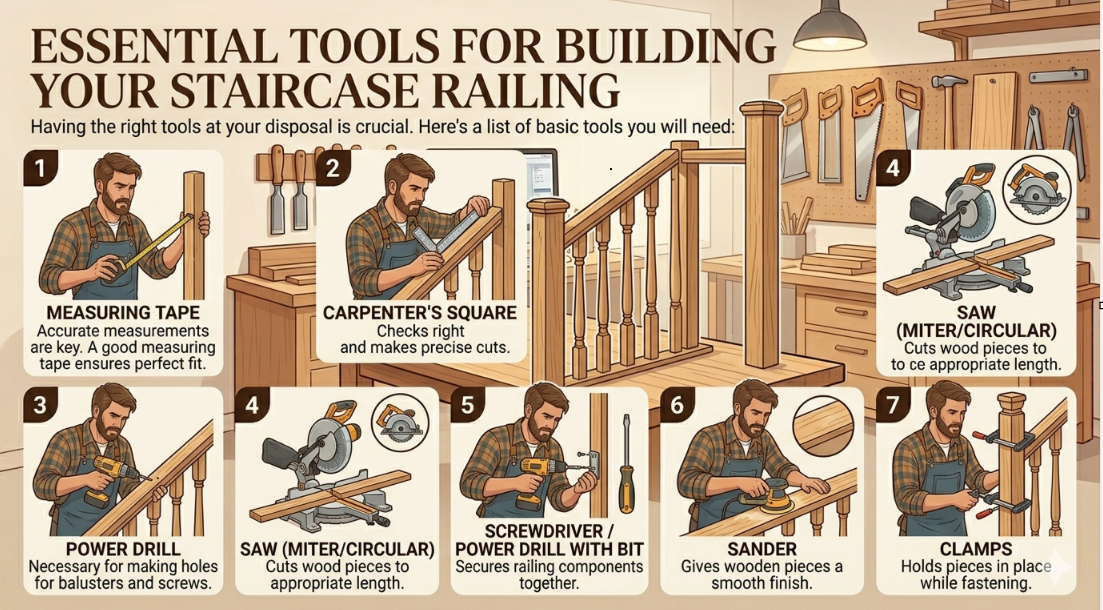
Building your staircase railing can be an exciting DIY Wooden Staircase Railing Design project that enhances the safety and aesthetic appeal of your home. To ensure that the project runs smoothly, you’ll need to gather the right tools and materials. Below, we’ve outlined the essential items you will need to make your wooden staircase railing a success.
Essential Tools for Building Your Staircase Railing
Having the right tools at your disposal is crucial. Here’s a list of basic tools you will need:
- Measuring Tape: Accurate measurements are key when constructing your railing. A good measuring tape will help you ensure everything fits perfectly.
- Carpenter’s Square: This tool will help you check right angles and make precise cuts.
- Power Drill: You will need a power drill for making holes for the balusters and screws.
- Saw: A miter saw or circular saw will be necessary for cutting wood pieces to the appropriate length.
- Screwdriver: A screwdriver, or a power drill with a screwdriver bit, will help you secure the railing components together.
- Sander: To give your wooden pieces a smooth finish, have a sander on hand.
- Clamps: These will help hold pieces in place while you fasten them.
Materials for Your Staircase Railing
Now that you have your tools ready, let’s talk about the materials you’ll need to construct your wooden staircase railing. The type of wood you choose can affect the overall look and durability of your railing. Here are common materials:
- Wood for the Top Rail: Choose sturdy hardwoods like oak, maple, or cherry. They offer durability and a beautiful finish.
- Wood for the Balusters: These can be made from softer woods like pine, which are easier to shape and cut.
- Wood for the Base Rail: Just like the top rail, select a durable wood that complements your top rail.
- Wood Glue: A strong adhesive will hold your wooden parts together.
- Screws: Choose wood screws that will securely fasten your railing pieces. Stainless steel screws are a great choice for their durability.
- Varnish or Stain: For a finished look, you can stain or varnish to protect your wood.
Safety Gear
While working on your staircase railing, safety should always be your priority. Here’s a list of safety gear you should wear:
- Safety Goggles: Protect your eyes from wood splinters and dust.
- Dust Mask: Wear a mask to avoid inhaling sawdust.
- Ear Protection: Use earplugs or earmuffs while operating loud power tools.
- Work Gloves: Protect your hands from cuts and splinters.
Tips for Choosing Quality Materials
When selecting materials for your railing, always opt for quality over quantity. Look for straight pieces of wood without knots or cracks. Before purchasing, inspect the lumber for any imperfections. Additionally, consider the style and finish of your wood. This can have a significant impact on the aesthetics of your project.
Where to Purchase Tools and Materials
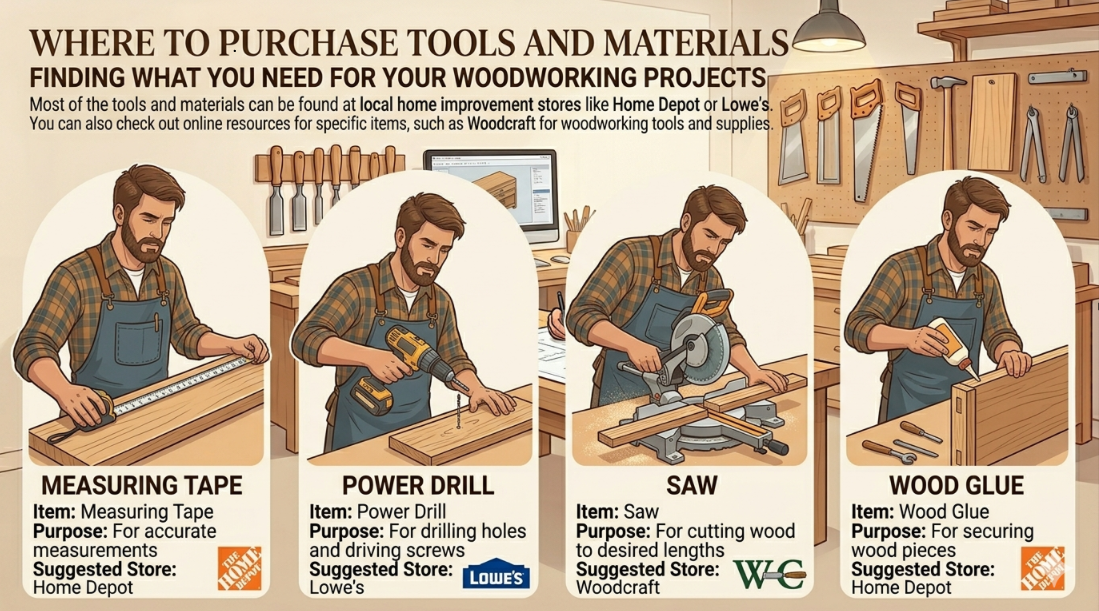
Most of the tools and materials can be found at local home improvement stores like Home Depot or Lowe’s. You can also check out online resources for specific items, such as Woodcraft for woodworking tools and supplies.
| Item | Purpose | Suggested Store |
|---|---|---|
| Measuring Tape | For accurate measurements | Home Depot |
| Power Drill | For drilling holes and driving screws | Lowe’s |
| Saw | For cutting wood to desired lengths | Woodcraft |
| Wood Glue | For securing wood pieces | Home Depot |
By gathering the essential tools and materials, you set yourself up for success in building your wooden staircase railing. Happy building!
Step-by-Step Guide to Crafting a Custom Wooden Railing
Crafting a custom wooden railing can elevate the aesthetic appeal of your home while providing safety and support. Whether it’s for your staircase, balcony, or deck, a wooden railing not only enhances the appearance but also adds a personal touch. This step-by-step guide will help you create a stunning wooden railing that suits your style and needs.
Gather Your Materials
Before starting your project, gathering all necessary materials will make the process smoother. Here’s what you’ll need:
- Wooden boards (choose from oak, pine, or cedar)
- Wood screws
- Wood glue
- Sandpaper (various grits)
- Wood stain or paint
- Sealer or finish
- Measuring tape
- Level
- Drill
- Saw (circular or miter saw)
- Safety goggles
- Work gloves
Design Your Railing
Before cutting any wood, take the time to design your railing. Consider the style of your home and the location where you will install the railing. Simple designs may include straight lines, while more intricate styles can incorporate curves or unique shapes.
Sketching your design on paper can help visualize the final outcome. Think about the following:
- The height of the railing
- The type of balusters (vertical posts between the top rail and bottom rail)
- The top rail style (flat, rounded, or decorative)
Measure and Cut the Wood
Once you have a design, the next step is to measure and cut your wood. Use the measuring tape to determine the length of your railing and the necessary cuts for the posts and balusters. Remember to account for the height of the staircase or platform.
When cutting wood, ensure you wear safety goggles and work gloves. A circular saw is ideal for straight cuts, while a miter saw is great for angled cuts. Aim for precision to prevent uneven pieces that may affect the overall appearance.
Sanding the Wood
Sanding is crucial for a polished finish. Use various grits of sandpaper to smooth out any rough edges. Start with a rough grit (about 80) and gradually move to a finer grit (up to 220) for a smooth surface. Sanding not only enhances aesthetics but also prepares the wood for staining or painting.
Assemble the Railing
Now that your pieces are cut and sanded, it’s time to assemble the railing. Lay out the top and bottom rails parallel to each other. Attach the balusters evenly spaced between the two rails.
Use wood screws and wood glue for a sturdy hold. It’s essential to ensure everything is level as you assemble. This step will determine the stability of your railing.
Finish the Wood
After assembly, it’s time for finishing. Choose a wood stain or paint that complements your home decor. Apply it evenly using a brush or cloth, following the wood grain for a natural look. Allow the stain to dry completely before applying a sealer or finish to protect your wood from moisture and wear.
Secure the Railing
You will need to secure your railing in place. If it’s for a staircase, attach it to the wall or staircase posts using brackets or wood screws. Ensure everything is tight and stable. Check again for levelness and make adjustments if necessary.
Maintenance Tips
Maintaining your wooden railing will keep it looking great for years to come. Regularly check for signs of wear and tear. Clean it with mild soap and water, and periodically apply a new coat of finish as needed.
A well-crafted wooden railing not only provides safety but also becomes a beautiful focal point in your home. If you feel a DIY project isn’t within your skills, consider visiting local resources for guidance or consult Wood Magazine for expert advice.
For additional inspiration and ideas, explore the Woodworking Tip website dedicated to woodworking projects and information.
Safety Considerations When Designing Staircase Railings
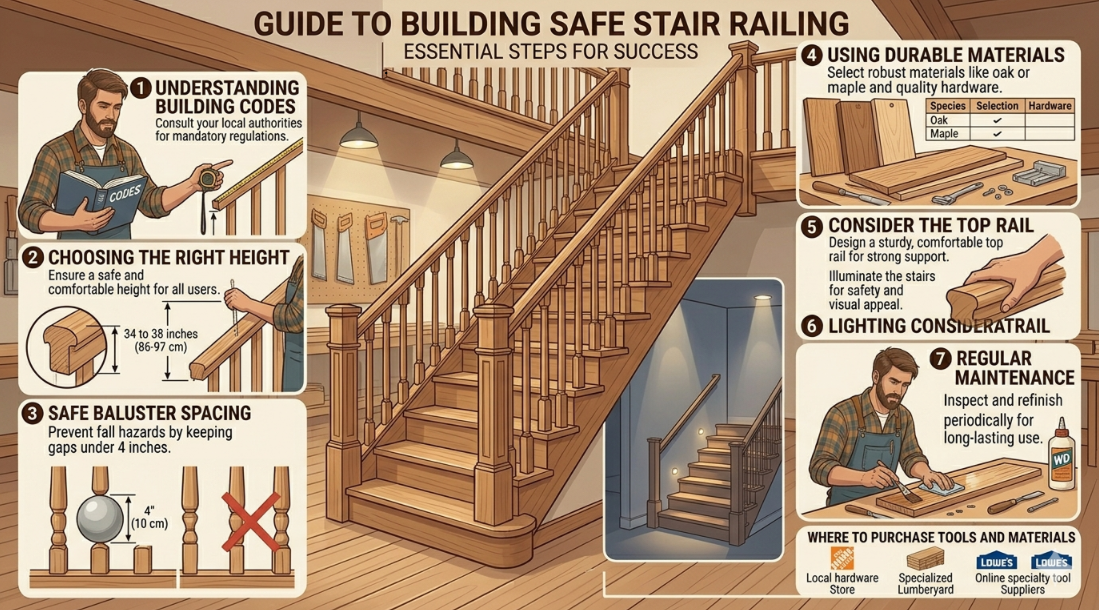
When you design a staircase railing, safety should always be your top priority. Whether you’re building a new home or updating an existing one, there are several critical factors to consider. These factors ensure that your staircase not only looks great but is also a safe place for you and your loved ones.
Understanding Building Codes
Before you start with your staircase railing design, familiarize yourself with local building codes. Most regions have specific regulations regarding staircase railings, which typically cover:
- Height of the railing
- Spacing between balusters
- Load requirements
These codes are put in place to ensure safety, so be sure to check them before proceeding. For detailed information on local codes, you can visit ICC Safe.
Choosing the Right Height
The height of your railing is one of the most important elements in ensuring safety. Generally, a railing should be between 30 to 42 inches high, depending on the type of staircase. A railing that is too low may not adequately prevent falls, while one that is too high can be uncomfortable for use. Here’s a quick reference for railing height:
| Type of Staircase | Recommended Height (inches) |
|---|---|
| Residential | 34 to 38 |
| Commercial | 42 to 48 |
Safe Baluster Spacing
Another critical safety factor is the spacing between balusters. Children can easily slip through wide gaps, leading to dangerous falls. To prevent this, ensure that the space between balusters does not exceed 4 inches. This guideline helps protect children and pets from slipping through the railing.
Using Durable Materials
Your choice of materials for the railing can greatly influence safety. Opt for sturdy materials like wood, metal, or composite that can withstand a significant amount of pressure and force. If you’re unsure, consult with a professional to determine the best materials for your specific design and environment. For example:
- Wood: Offers warmth and aesthetic appeal but must be treated against rot.
- Aluminum: Lightweight and resistant to corrosion, ideal for outdoor staircases.
- Steel: Extremely strong and safe for heavy-duty applications.
To learn more about railing materials, check resources like Woodworkers Source.
Consider the Top Rail
The top rail of your staircase railing should be designed with safety and comfort in mind. A rounded or flat top is often best, allowing people to grip it easily as they ascend or descend. Moreover, the top rail should be smooth and free of sharp edges, preventing injuries.
Lighting Considerations
Good lighting is essential for staircase safety. Ensure that the area around your stairs is well-lit, especially at night. Adding lights along the steps or illuminating the railing can help prevent trips and falls, making it easier for users to navigate the staircase safely.
Regular Maintenance
Even after your railing is built and installed, ongoing safety depends on regular maintenance. Periodically check for loose components or wear and tear. Make sure that all bolts and connections are secure. Inspections should include:
- Checking for cracked or damaged materials
- Ensuring that the railing is firmly attached
- Looking for signs of rust or corrosion
If you notice any issues, address them immediately to ensure continuous safety.
Taking the time to consider these safety features when designing your staircase railing can prevent accidents and create a functional space that’s enjoyable for everyone. For further guidance and ideas, resources like Stairway can provide inspiration while ensuring your design checks all the necessary safety boxes.
How to Personalize Your Wooden Staircase Railing for a Unique Touch
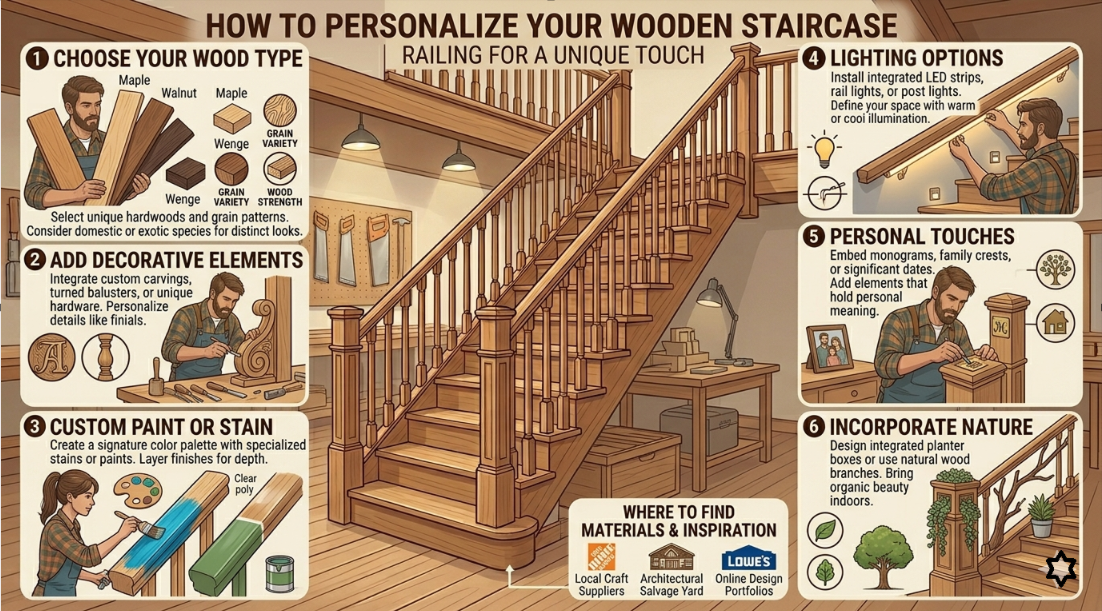
When it comes to creating a warm and inviting atmosphere in your home, a beautifully designed DIY Wooden Staircase Railing can make all the difference. Personalizing your wooden staircase railing not only enhances its aesthetic appeal but also adds a unique touch that reflects your style. Here are several ideas you can use to create a one-of-a-kind railing that meets your personal needs and tastes.
Choose Your Wood Type
The type of wood you choose for your railing will significantly impact its look and feel. Here are some popular options:
- Oak: Known for its durability and classic look, oak stands out with its prominent grain.
- Pine: A softer wood that is easy to work with and offers a warm, rustic feel.
- Maple: Offers a smooth finish and tends to be lighter in color, perfect for a modern aesthetic.
- Cherry: Darkens beautifully over time, providing a rich, elegant look.
Add Decorative Elements
Consider incorporating decorative elements into your wooden staircase railing design. Some popular choices include:
- Spindles: Replace standard straight spindles with twisted or turned designs for added flair.
- Inlays: Use contrasting wood types to create intricate designs or patterns within the railing.
- Caps: Decorative caps on top of posts can enhance the overall design, making them a focal point.
Custom Paint or Stain
Painters and woodworkers often overlook the transformative power of paint and wood stains. Whether you want a classic finish or something bold, consider these options:
- Transparent Stain: This allows the grain to show while enhancing the wood’s natural beauty.
- Opaque Paint: A bold color can make your staircase a statement piece in your home.
- Two-tone Finishes: Combining a lighter railing with a darker base can add depth and interest.
Lighting Options
Lighting into your wooden staircase railing can highlight your personal design beautifully. Here are a few ideas:
- LED Strip Lights: Installing them under the handrail provides a subtle glow while enhancing safety.
- Wall Sconces: Position these fixtures nearby to illuminate the stairway and draw attention to your railing.
Personal Touches
To really make your wooden staircase railing stand out, think about adding personal touches that represent your personality or interests:
- Engravings: Personal letters or family birthdays engraved on the posts can create a memorable touch.
- Artwork: Small, framed artworks attached alongside the railing can turn an ordinary space into a creative gallery.
Incorporate Nature
Bringing elements of nature into your design can create a fresh ambiance. Consider the following:
- Plants: Attach small planters to the railing or place them near the base for a lush, outdoor feel.
- Natural Finishes: Leaving some parts unfinished or using natural oil can highlight the wood’s authenticity.
Your wooden staircase railing doesn’t have to be just a functional element of your home. By selecting the right materials, incorporating unique details, and infusing your personal style, you can turn it into a captivating feature that draws admiration. For more detailed plans and ideas, check out Wood Magazine and DIY Network.
In addition, remember to keep maintenance in mind. Regular upkeep like cleaning and re-staining can keep your design looking fresh and beautiful for years. So whether you’re crafting a cozy nook or a lavish entryway, your personalized wooden staircase railing can truly reflect your home’s character.
Conclusion
Creating a DIY Wooden Staircase Railing Design can be an incredibly rewarding project that not only enhances the safety of your home but also adds a significant design element. With the innovative ideas discussed, you can easily find inspiration for your project, whether you prefer a contemporary look or a rustic charm. Knowing the essential tools and materials before you start allows you to gather everything you need, making the process smoother and more enjoyable.
Following the step-by-step guide laid out earlier simplifies what might seem like an overwhelming task. As you move through the steps, remember that patience and precision are key to achieving a successful outcome. Don’t forget to prioritize safety; sturdy railings are crucial not only for aesthetic appeal but also for protecting family and friends.
Personalizing your wooden railing offers a fantastic opportunity to inject your personality into your space. Whether it’s through custom paint, unique designs, or decorative elements, your staircase railing can become a standout feature that reflects your style.
Embarking on this DIY Wooden Staircase Railing Design project doesn’t just improve your home’s appeal; it also provides a chance to develop new skills and enjoy the satisfaction of creating something with your own hands. So gather your tools, unleash your creativity, and transform your staircase into a beautiful and functional part of your home. Your vision is just a project away!