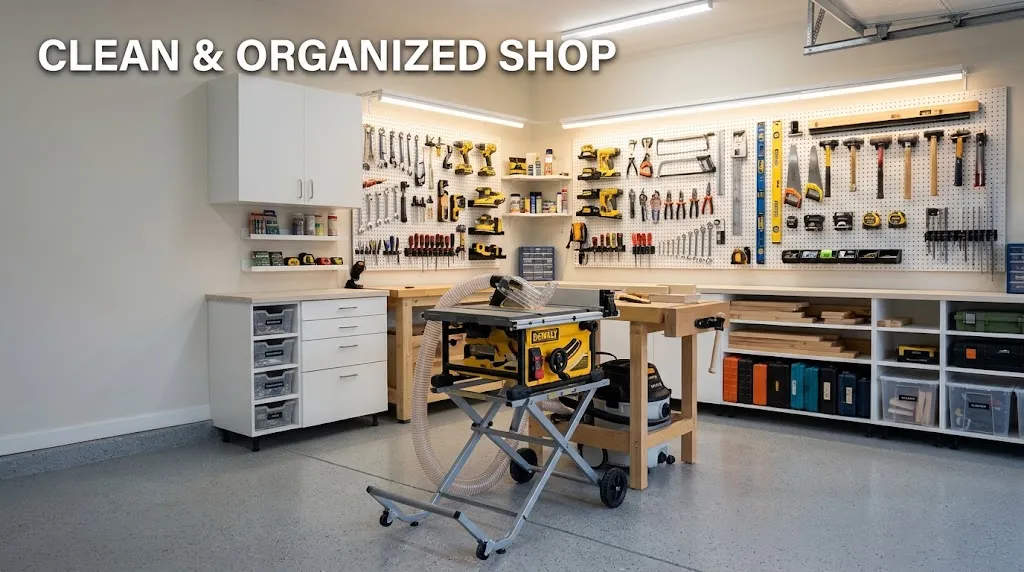
Choosing the right table saw for your small home workshop can dramatically improve your efficiency and craftsmanship. With so many options available, it’s key to focus on specific features that meet your needs. Below are some crucial factors to consider when selecting the Best Table Saw for Small Home Workshop.
Space Considerations
In a compact workshop, space is often limited. You should opt for a table saw that fits comfortably without taking over your entire workspace. Look for models labeled as compact or portable. These saws usually have smaller footprints, making them easier to store when not in use. Some options even offer collapsible or foldable designs that maximize space.
Power and Performance
Power is essential for any table saw. Saws typically come with either a direct-drive motor or a belt-drive motor. Direct-drive motors have fewer moving parts, which can make them less expensive and easier to maintain, but they often have less power compared to belt-drive motors. If you plan to cut dense materials or larger sheet goods, aim for a saw with at least 15 amps of power for optimal performance.
Blade Size and Quality
The blade size is another important factor when choosing a Best Table Saw for Small Home Workshop. Most small workshop saws come with a 10-inch blade, which is versatile enough for a range of cuts. However, you may also find smaller blades of 8 inches that can work just as effectively for less heavy-duty tasks. Ensure the saw accepts standard blades, so replacements are easy and affordable.
Safety Features
Your safety should always be a priority. Look for table saws with features such as:
- Blade Guards: These prevent accidental contact with the blade.
- Blade Brakes: These stop the blade quickly when it detects contact.
- Paddle Switches: These are easier to operate, especially in emergencies.
Choosing a table saw with solid safety features can give you peace of mind while working.
Fence System
A reliable fence system is critical for accurate cuts. A good fence should be easy to adjust and hold its position firmly. Look for saws that come with a built-in fence or allow for after-market upgrades. Having a good fence system ensures precision in your cuts, reducing the chance of mistakes and wasted materials.
Portability
If you plan on moving your table saw around, portability becomes crucial. Many small home workshop saws weigh less than 50 pounds, making them easier to transport. Some models even have wheels or locking mechanisms for added convenience. Consider these options if you need the flexibility to work in different locations.
Dust Collection
A clean workspace not only helps you see your work better but also promotes good health. Many table saws offer integrated dust collection ports, which help minimize the mess created during cuts. Look for a model that can easily connect to dust extractors or shop vacs, streamlining your cleanup process.
Warranty and Customer Support
A solid warranty can be a game-changer when selecting a Best Table Saw for Small Home Workshop. Most reputable brands will offer warranties ranging from one year to a lifetime. Ensure you check what the warranty covers, including parts and labor. Additionally, good customer service can assist you with setup, troubleshooting, and any future questions.
| Model | Amps | Blade Size | Weight | Price |
|---|---|---|---|---|
| Dewalt DWE7491RS | 15 | 10″ | 90 lbs | $599 |
| Bosch 4100-09 | 15 | 10″ | 60 lbs | $549 |
| Ryobi RTS21 | 15 | 10″ | 45 lbs | $329 |
When choosing the Best Table Saw for Small Home Workshop, consider factors such as space, power, blade quality, safety, and portability. Prioritizing these features will help you find the ideal saw, making your woodworking projects more enjoyable and efficient. For more in-depth information and reviews, visit Popular Mechanics or Wood Magazine.
Top 5 Table Saws for Small Spaces: A Comprehensive Review
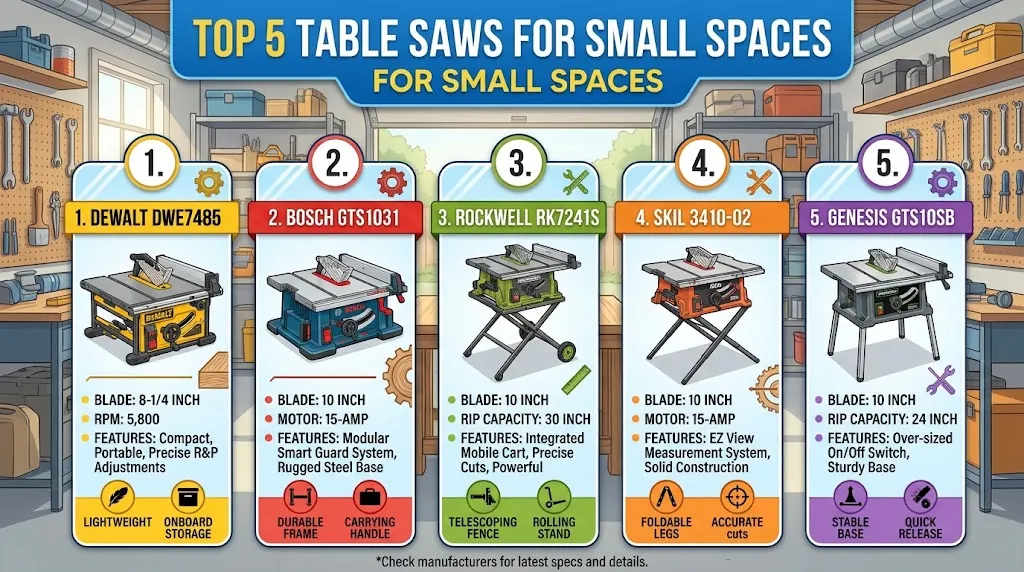
Finding the Best Table Saw for Small Home Workshop can make all the difference in your woodworking projects. With limited space, you need a saw that is both compact and versatile. Here are five excellent options to consider for your workshop.
1. DEWALT DWE7485 8-1/4 Inch Table Saw
The DEWALT DWE7485 is a powerful yet compact table saw, making it a top choice for small spaces. It offers a 5,800 RPM motor and a unique rack and pinion system for precise adjustments.
Key Features:
- Lightweight design for easy transport
- Onboard storage for accessories
- Expandable table surface for larger cuts
This saw is ideal for DIY enthusiasts looking for a reliable and user-friendly tool. You can learn more about it on the DEWALT website.
2. Bosch GTS1031 10-Inch Portable Jobsite Table Saw
The Bosch GTS1031 is known for its incredible capability in a small footprint. It features a sturdy steel frame and a robust 15-amp motor, ensuring efficient performance in a variety of applications.
Key Features:
- Easy to transport due to its compact size
- Integrated Smart Guard System for enhanced safety
- Ambidextrous design for right or left-handed use
Explore more details on the Bosch Tools website.
3. Rockwell RK7241S Table Saw
The Rockwell RK7241S features a unique sliding rail system and a powerful 15-amp motor, making it perfect for small workshops. Its innovative design allows for smoother cuts while taking up minimal space.
Key Features:
- 24-inch rip capacity for bigger projects
- Laser guide for precision cutting
- Quick-release blade guard for easy adjustments
For more information, check out the Rockwell Tools website.
4. Skil 3410-02 10-Inch Table Saw
The Skil 3410-02 is a fantastic entry-level table saw that offers great value for its price. It features a sturdy design and a reliable fence system that ensures accurate cuts for any woodworking project.
Key Features:
- Powerful 15-amp motor
- Rack and pinion fence system for easy adjustments
- Foldable legs for easy storage
Find out more by visiting the Skil website.
5. Genesis GTS10SB 10-Inch Table Saw
If you’re looking for an affordable option with solid performance, the Genesis GTS10SB should be on your list. This saw has a compact design but doesn’t skimp on power or features.
Key Features:
- Adjustable cutting height and angle
- Safety switch to prevent accidents
- Lightweight design for easier transport
Learn more about the Genesis GTS10SB on the Genesis Tools website.
Comparison Table
| Model | Motor Power | Rip Capacity | Weight |
|---|---|---|---|
| DEWALT DWE7485 | 15 amps | 24.5 inches | 54 lbs |
| Bosch GTS1031 | 15 amps | 18 inches | 39 lbs |
| Rockwell RK7241S | 15 amps | 24 inches | 50 lbs |
| Skil 3410-02 | 15 amps | 24.5 inches | 67 lbs |
| Genesis GTS10SB | 15 amps | 24 inches | 50 lbs |
Choosing the Best Table Saw for Small Home Workshop can significantly enhance your woodworking experience. Take into consideration factors such as space, portability, and your specific cutting needs when making your choice. By investing in one of the aforementioned table saws, you will be well-equipped to tackle a variety of projects with ease and precision.
Safety Tips for Using Table Saws in a Home Workshop
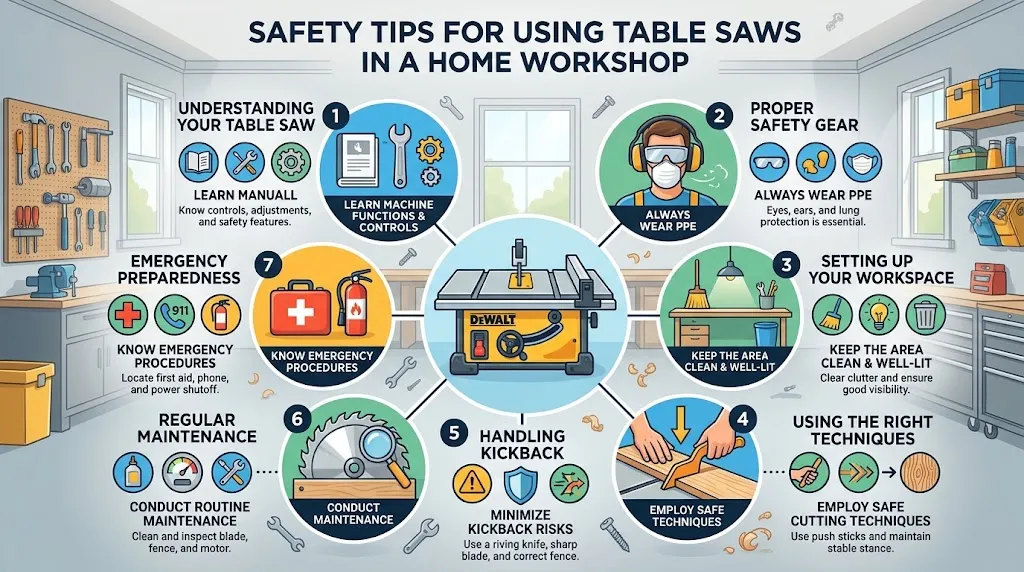
Using a table saw can be a rewarding experience, especially when working on projects in your home workshop. However, safety should always be your top priority. Here are essential tips to help you stay safe while using a table saw.
Understanding Your Table Saw
Before using your table saw, spend time familiarizing yourself with its components. Know where the on/off switch is located, the functions of the blade guard, and how to adjust the blade height and angle. Each model can vary slightly, so read your owner’s manual thoroughly. If you need more information, check out Woodworker’s Journal for tips on understanding table saw parts.
Proper Safety Gear
Always wear appropriate safety gear when operating a table saw. Key safety items include:
- Safety glasses: Protect your eyes from flying debris.
- Hearing protection: Minimize damage to your hearing from the saw’s noise.
- Dust mask: Protect your lungs from sawdust.
- Cut-resistant gloves: Use them for handling raw materials, but take them off while using the saw to prevent snagging.
Setting Up Your Workspace
Having a well-organized workspace contributes significantly to safety. Ensure your table saw is set on a stable surface. Here are additional setup tips:
- Keep the area around the saw clear of clutter, tools, and other materials.
- Ensure that the saw is at a comfortable height to avoid strain while operating.
- Consider installing adequate lighting in your workspace to improve visibility.
- Have a fire extinguisher nearby in case of emergencies.
Using the Right Techniques
When you’re ready to start cutting, adhere to the following techniques:
- Always use a push stick to guide your workpiece through the blade. This keeps your hands away from the blade and reduces the risk of accidents.
- Never reach over the blade while it’s in motion. Plan your cuts to avoid this.
- Always make sure the blade is sharp and in good condition for clean cuts, which minimizes kickback.
- Break down larger boards before cutting to reduce the risk of binding or kickback.
Handling Kickback
One of the biggest dangers when using a table saw is kickback. This occurs when the material being cut is propelled back towards you. To minimize kickback risks:
- Make sure the blade is properly aligned.
- Use the fence and miter gauge correctly; don’t cut freehand.
- Ensure the blade guard is in place and functional.
Regular Maintenance
Keep your equipment in top shape by conducting regular maintenance. A well-maintained table saw is safer and performs better. Here are a few tips:
- Clean the saw after use to remove dust and debris.
- Inspect the blade regularly for damage and replace if necessary.
- Lubricate moving parts to ensure smooth operation.
- Check power cords and plugs for frays or damages before every use.
Emergency Preparedness
Even with the best precautions, accidents can happen. Be prepared:
- Know how to turn off your saw quickly in case of an emergency.
- Keep a first-aid kit nearby to address any minor injuries immediately.
- Regularly review safety procedures and encourage everyone using the workshop to do the same.
For more detailed insights on table saw safety, consider visiting Popular Woodworking. Your safety is paramount while you enjoy woodworking and creativity in your workshop.
Essential Accessories for Small Home Workshop Table Saws
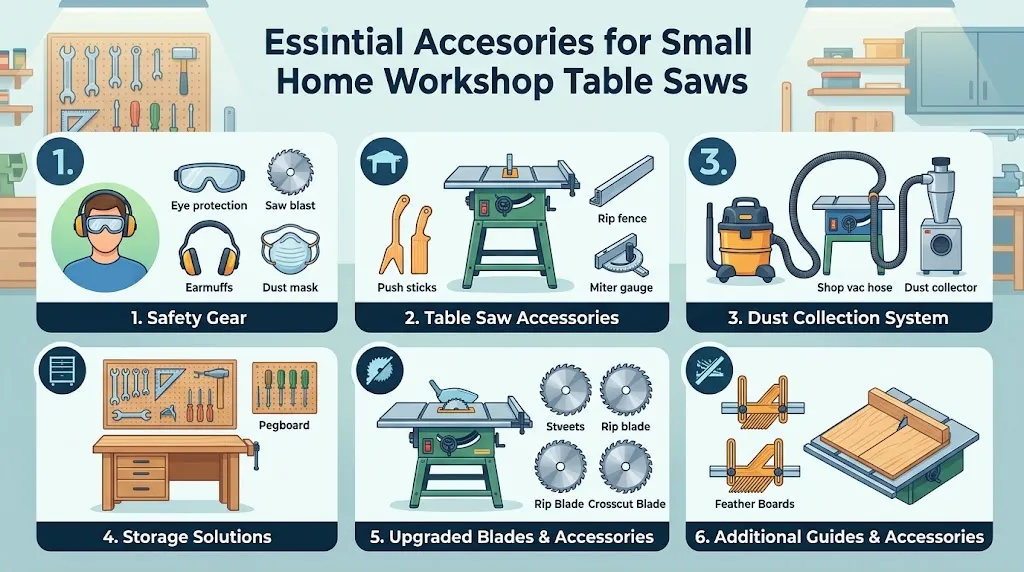
If you’re setting up a small home workshop, having the right table saw is vital. But it doesn’t stop with just the saw itself. To maximize your woodworking projects, consider investing in essential accessories that will enhance the functionality of your table saw. Each accessory serves a specific purpose, ensuring that your workflow is efficient and your projects exhibit excellent craftsmanship.
Safety Gear
Safety should always come first. When using a table saw, accidents can happen. Here are some essential safety items for your workshop:
- Safety Glasses: Protect your eyes from flying debris.
- Hearing Protection: Table saws can be loud; use earmuffs or earplugs.
- Dust Mask: Prevent inhalation of wood dust and particles.
Table Saw Accessories
Several key tools and accessories can significantly improve your table saw’s performance. Consider the following:
1. Table Saw Stand
A sturdy table saw stand can provide stability and more workspace. Look for stands that are adjustable and easy to transport if you have limited space.
2. Rip Fence
The rip fence ensures straight, accurate cuts. Many table saws come with a standard fence, but upgrading to a high-quality rip fence can enhance precision.
3. Miter Gauge
A good miter gauge allows you to make angled cuts accurately. Choose one that is easy to adjust and has clear measurements.
4. Blade Guards
Blade guards are crucial for preventing injuries. They cover the blade when not in use and can help maintain a clear line of sight while cutting.
5. Push Stick
A push stick keeps your hands at a safe distance from the blade while allowing you to guide the wood through the saw, minimizing the risk of injury.
Dust Collection System
Woodworking can create a significant amount of dust, which can be harmful and bothersome. Investing in a dust collection system or a shop vacuum with a proper attachment for your table saw is wise. This will help maintain a clean workspace and protect your health.
Storage Solutions
Efficient storage can make your small workshop more organized and functional. Consider these storage options:
- Tool Cabinets: Keep your tools organized and easy to access.
- Workbench with Storage: A workbench with drawers can save space and provide additional workspace.
- Magnetic Tool Holders: Attach tools to the walls to free up counter space.
Upgraded Blades and Accessories
Investing in high-quality blades is essential for clean cuts. Consider different types of blades for various tasks:
- Rip Blades: Designed for cutting wood along the grain.
- Crosscut Blades: Ideal for cutting across the grain.
- Combination Blades: A versatile option for various types of cuts.
Additional Guides and Accessories
Other accessories such as feather boards, crosscut sleds, and extension tables can significantly improve the accuracy and ease of your woodworking tasks. Feather boards help keep the wood pressed against the fence, ensuring straight cuts, while crosscut sleds allow for precise crosscuts. Extension tables add workspace, making it easier to handle larger pieces of wood.
Where to Buy
To find these accessories, check out reputable websites that specialize in woodworking tools: Woodcraft and Rockler offer a wide selection of table saws and essential accessories for your small home workshop.
By adding these accessories to your setup, you’ll create a versatile and safe environment for all your woodworking projects. Happy sawing!
Maximizing Space: Tips for Organizing a Small Workshop Around Your Table Saw
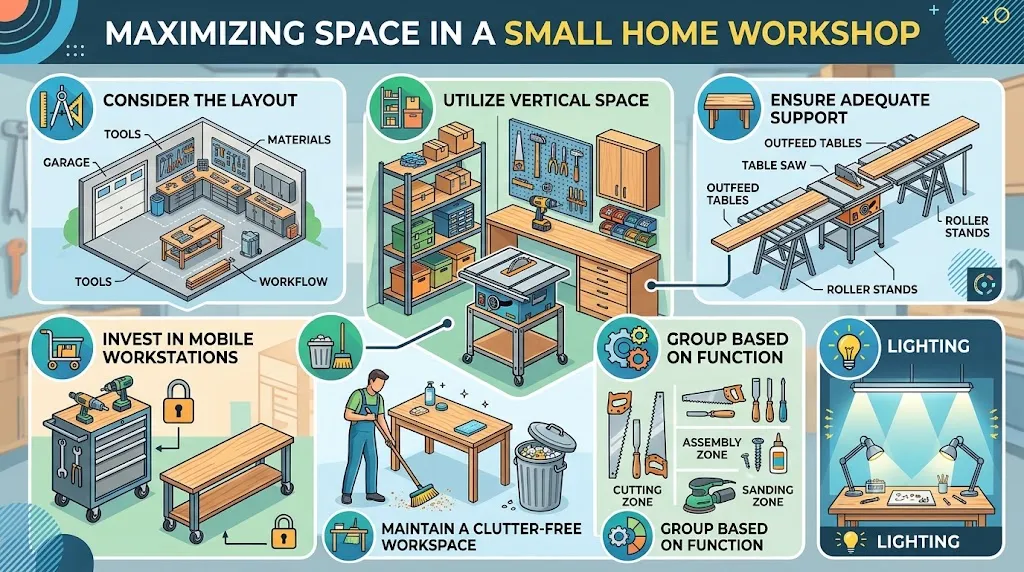
When working with a small workshop, organizing your space around essential tools like a table saw can significantly enhance your workflow and productivity. Here are some practical tips to help you make the most out of your limited space, ensuring that your table saw and surrounding area are efficient and functional.
Consider the layout
First, consider the layout of your workshop. By placing your table saw in a central location, you can optimize access to all sides of the machine. This setup allows you to move materials in and out easily and provides plenty of room for rip cuts and crosscuts.
Utilize vertical space
Next, utilize vertical space. Shelves and wall-mounted storage can keep your tools and supplies out of the way but within easy reach. Installing a pegboard on the wall near your table saw is a great way to organize hand tools and accessories. You can hang clamps, chisels, and measuring tools, which will free up valuable workbench space.
Ensuring adequate support
Another essential aspect of working in a small workshop is ensuring your table saw has adequate support for larger projects. You can create outfeed tables to catch materials as they come off the saw. These tables can be made from lightweight materials and can even be foldable to save space when not in use.
Investing in mobile workstations
Consider investing in mobile workstations. A sturdy cart can hold your table saw but also provide additional storage for accessories and materials. Plus, with wheels, you can move the cart out of the way when it’s not in use. Organizations like Wood Magazine offer tutorials on building custom carts that suit your specific needs.
Maintaining a clutter-free workspace
Maintaining a clutter-free workspace is crucial. Regularly assess what tools and materials you need and eliminate anything that doesn’t contribute to your workflow. You can create a system for storing scrap wood, whether it’s designated boxes or bins labeled by size, thickness, or type of wood. This keeps your workshop organized and prevents unnecessary pile-ups around your table saw.
Grouping based on their function
If you often use multiple tools, consider grouping them based on their function. For instance, keep all your cutting tools near the table saw. This way, you won’t waste time searching for the right tool, allowing you to focus on your projects. Clearly marked storage for each group can make this process even smoother.
Lighting
Additionally, lighting plays an essential role in a small workshop. Good lighting ensures safety and precision when using your table saw. Use bright LED lights to create a well-illuminated workspace that reduces shadows and allows you to see your work clearly.
Here’s a quick checklist to effectively organize your small workshop:
- Evaluate the Layout: Position the table saw centrally for easy access.
- Use Vertical Storage: Utilize pegboards and shelves to keep tools off the workbench.
- Create Outfeed Support: Design lightweight, foldable tables for larger projects.
- Invest in Mobile Workstations: Use carts for flexibility and additional storage.
- Keep it Clutter-Free: Regularly purge unused tools and materials.
- Group Tools by Function: Organize tools based on their usage for easier access.
- Enhance Lighting: Install bright lights to improve visibility.
For more advanced readers, consider incorporating storage solutions tailored specifically for your workflow. For instance, you can build drawers or cabinets that fit under your workspace to maximize every square inch. This customized storage can store tools, safety equipment, and wood, ensuring everything is within arm’s reach.
Maintain your tools regularly. A well-maintained table saw not only performs better but also keeps your workspace safe and efficient. Ensure your blade is sharp, and your machine is clean. Even minor maintenance can lead to significant improvements in your workspace function and safety.
Working with a small workshop doesn’t mean you have to sacrifice efficiency. By strategically organizing your space around your table saw and implementing some of these tips, you’re well on your way to creating a functional and enjoyable workspace. For additional resources, check out Woodworker’s Source, where you’ll find expert advice and tools for maximizing your workshop potential.
Conclusion
Selecting the Best Table Saw for Small Home Workshop can transform your woodworking projects into streamlined tasks. By understanding the essential features, such as the saw’s size, stability, and cutting capacity, you can choose a tool that fits your specific needs while ensuring safety during operation. Our reviews of the top five table saws for small spaces highlighted some outstanding options tailored for both novice and seasoned woodworkers, ensuring you can find the perfect fit for your workspace.
Safety is paramount, especially in a limited area where maneuvering can be tricky. Implementing safety protocols, such as wearing protective gear and practicing proper cutting techniques, will help create a secure environment. Remember that the right accessories can enhance your table saw’s performance and increase your workshop’s efficiency. Items like rip fences, miter gauges, and push sticks are essential allies when working with wood.
Organizing your small workshop effectively around your table saw can amplify your productivity. Remember to keep frequently used tools and materials within reach, and utilize vertical space to minimize clutter. By taking these steps, you not only create a more enjoyable working atmosphere but also ensure that your future projects are more efficient and enjoyable.
Ultimately, your investment in a quality table saw tailored to your space and skills will yield impressive results in your woodworking endeavors. Embrace the creativity that comes with having the right tools and a well-organized workshop, and watch your skills flourish.