Choose the Right Whetstone
Selecting the right whetstone is crucial. Here are the types you might consider:
- Oil Stones: Require oil for lubrication and are durable.
- Water Stones: Use water as a lubricant and cut quickly but may wear down faster.
- Diamond Stones: Provide a flat surface and last longer, perfect for rough work.
For beginners, a medium grit whetstone (around 1000 to 2000 grit) is a good starting point for sharpening. If your chisels are seriously dull, consider using a coarse grit (around 400-600) before moving to the finer grit.
Prepare Your Workspace
Having a clean and organized workspace can make this process smoother. Ensure your whetstone is flat and free from debris. If you’re using a water stone, soak it in water for about 10-15 minutes or until bubbles cease to rise. If you’re using an oil stone, apply a few drops of honing oil.
Sharpening Technique
The technique you use while sharpening is essential. Follow these steps:
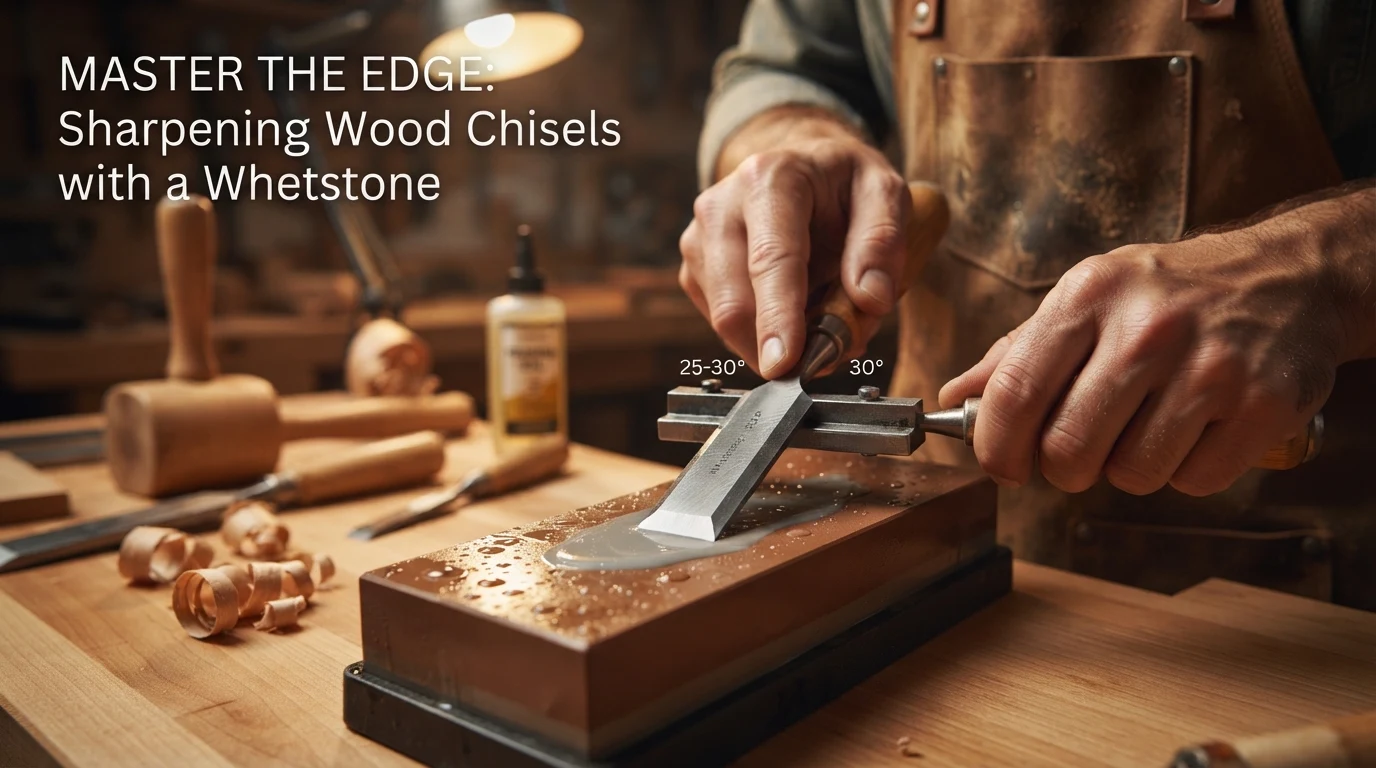
- Set Your Angle: Hold your chisel at about a 25-30 degree angle against the stone. This angle allows for a fine edge while maintaining durability.
- Apply Pressure: Start with the heel of the chisel on the stone and apply moderate pressure. Move the chisel in a sweeping motion across the whetstone.
- Make Full Passes: Move the chisel from heel to tip, covering the entire blade. Repeat this process about 5-10 times.
- Check for Burr: After sharpening, feel for a slight burr on the opposite side of the edge. This indicates that you’ve achieved a sharp edge.
- Invert and Refine: Flip the chisel over and repeat the sharpening process lightly, using less pressure to refine the edge.
Testing Your Chisel
Once you finish sharpening, it’s time to test your chisel. You can do this by trying to shave a piece of wood or cutting into soft pine. A properly sharpened chisel will cut easily and leave a clean edge.
Maintaining Your Whetstone
To ensure longevity of your whetstone, clean it after each use. Use a flat brush and some water or oil, as applicable. Keeping it flat is also important, so consider using a stone flattening tool regularly.
Tips for Consistent Results
Here are a few tips to help you master your chiseling skills:
- Practice consistently; sharpening gets easier over time.
- Use a jig if you struggle to maintain the correct angle while sharpening.
- Always check for a consistent edge visually after each sharpening session.
Essential Tools for Maintaining Your Woodworking Equipment
When you invest time and money into woodworking, keeping your tools in top condition is vital. Essential tools for maintaining woodworking equipment can make a huge difference in the longevity and efficiency of your gear. Below is a list of crucial items that every woodworker should consider having in their workshop.
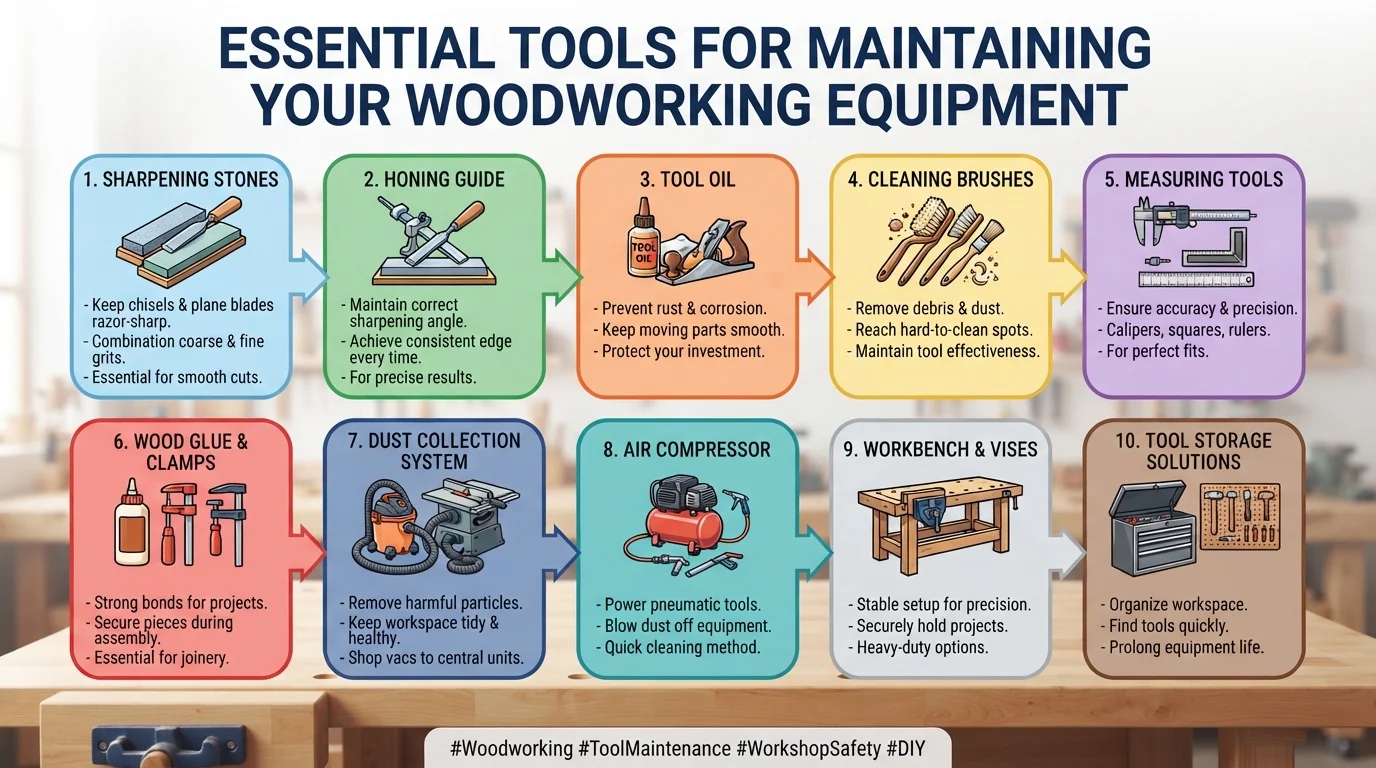
- Sharpening Stones: Sharp tools are crucial for smooth cuts and clean finishes. A quality sharpening stone can help you keep your chisels and plane blades razor-sharp. Look for a combination stone that offers both coarse and fine grits to handle every sharpening need. The Woodcraft Sharpening Stones are a solid investment.
- Honing Guide: A honing guide helps maintain the correct angle while sharpening your tools. This ensures that you achieve a consistent edge every time. This is especially useful for chisels and plane blades. A reliable honing guide will pay off in better performance. Check out the Lee Valley Honing Guide for a great addition to your toolkit.
- Tool Oil: Regular maintenance involves oiling your tools to prevent rust and keep them functioning smoothly. Applying a light coat of mineral oil or specialized tool oil can help protect your investments. Ensure the tools are clean before applying oil to maximize effectiveness.
- Cleaning Brushes: Debris and dust can build up on your tools, impacting their effectiveness. A set of cleaning brushes in various sizes allows you to reach hard-to-clean spots effectively. Look for brushes with stiff bristles that won’t damage your tools. The Woodworker’s Source Cleaning Brush is a versatile option.
- Measuring Tools: Accuracy is key in woodworking. Having a set of reliable measuring tools like calipers, squares, and rulers will ensure your pieces fit together as they should. A digital caliper can provide precise measurements that are easy to read.
- Wood Glue and Clamps: In addition to sharp tools, having the right adhesives and clamps is essential for woodworking projects. Quality wood glue ensures strong bonds, while clamps hold your pieces securely while assembly dries. The Harbor Freight Clamps offers a variety to meet your needs.
- Dust Collection System: Cleansing your workspace helps maintain not only your tools but also your health. A proper dust collection system removes harmful particles and keeps your area tidy. There are many options available, including shop vacuums and larger dust collection units for more extensive setups.
- Air Compressor: An air compressor is versatile in woodworking maintenance. It can power pneumatic tools and can also be used to blow dust off your equipment, providing a quick and effective cleaning method. Explore Northern Tool’s Air Compressor Section for reliable options.
- Workbench and Vises: Your setup is as important as your tools. A stable workbench ensures precision and stability while working. A strong vise can hold your projects securely, allowing you to work safely. Look for heavy-duty options that resist wear.
- Tool Storage Solutions: Maintaining an organized workspace helps you find the tools you need when you need them. Invest in tool chests or wall-mounted organizers to keep everything in its designated spot. This increases efficiency and prolongs the life of your equipment.
By having these essential tools on hand, you can ensure that your woodworking equipment stays in optimal condition. Regular maintenance not only enhances performance but also makes your woodworking projects more enjoyable. For further tips and resources, consider visiting websites like Wood Magazine and Fine Woodworking.
Common Mistakes to Avoid When Sharpening Chisels
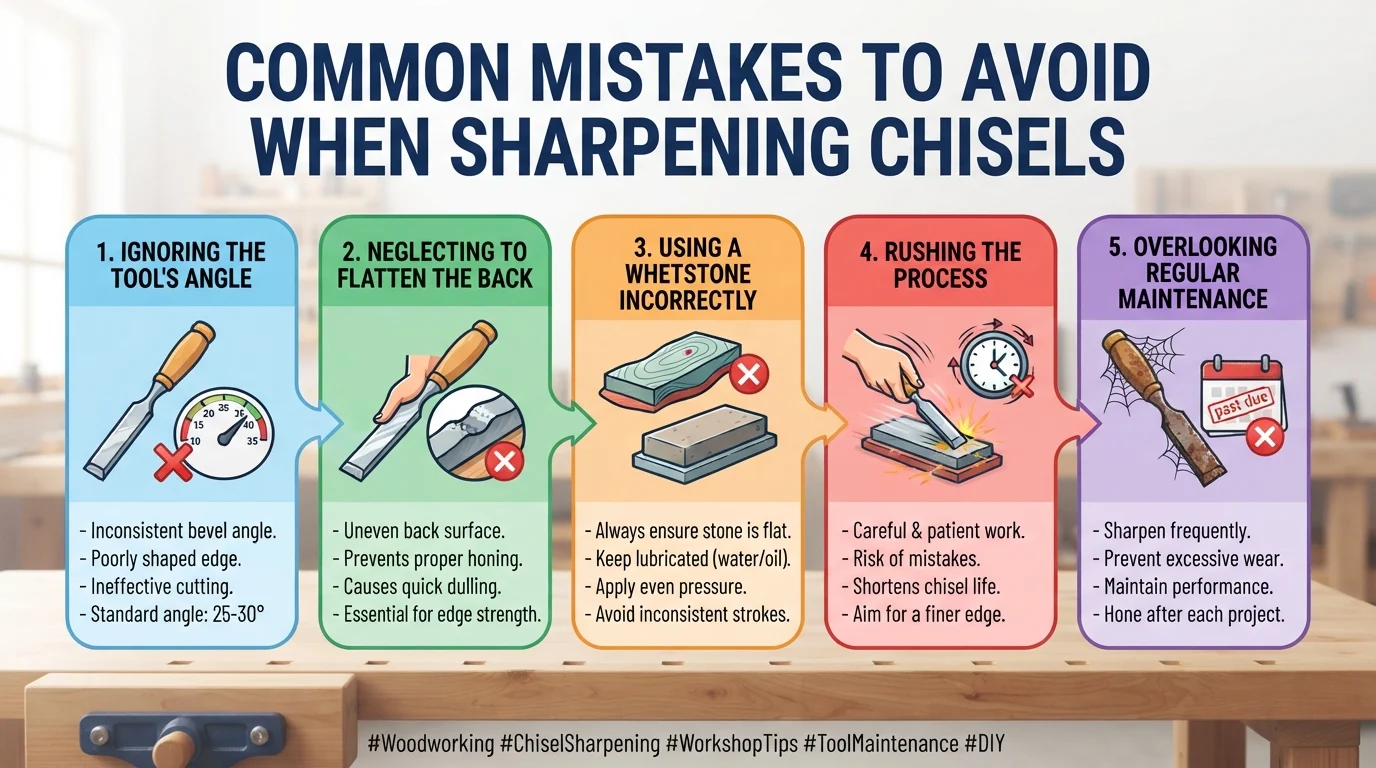
When it comes to sharpening chisels, beginners often make several common mistakes that can hinder their efforts. Avoiding these missteps will not only save you time but will greatly improve the performance of your woodworking tools. Here are some pitfalls to steer clear of:
Ignoring the Tool’s Angle
One of the most crucial elements of sharpening chisels is maintaining the correct angle. Many woodworkers do not pay enough attention to this detail. The standard bevel angle for a chisel is typically between 25 to 30 degrees. Sharpening at the wrong angle can lead to a poorly shaped edge, resulting in ineffective cutting performance.
Neglecting to Flatten the Back
It is vital to have a flat back on your chisel. Many users overlook this step, assuming it isn’t necessary. A flat back is essential for honing the cutting edge effectively. Failing to flatten it can lead to an uneven surface, causing your chisel to lose its sharpness quickly. Regularly check that the back is flat by testing it against a known flat surface.
Using a Whetstone Incorrectly
Utilizing a whetstone correctly is essential for achieving a sharp edge. Here are key points to remember:
- Always ensure the whetstone is flat. A warped stone can lead to an uneven sharpening process.
- Keep the stone lubricated with water or oil, as needed, to reduce friction.
- Apply even pressure throughout the sharpening process, using a consistent stroke.
Rushing the Process
Sharpening your chisels should be done carefully and patiently. Rushing through the sharpening process can lead to mistakes, decreasing the life of your chisel. Take your time to ensure you gradually sharpen each side, allowing for a finer edge. A few extra minutes spent sharpening now can save you hours of struggle later.
Overlooking Regular Maintenance
It’s important to regularly sharpen your chisels rather than waiting until they are completely dull. By sharpening them frequently, you maintain their performance and prevent excessive wear. Regular maintenance can also save you from spending extra time on extensive sharpening sessions. Additionally, consider honing your chisels after each major project for optimal results.
Failing to Test the Edge
After sharpening, it’s common to forget to test the chisel edge. Running the chisel over a piece of scrap wood can help you assess its sharpness. You should expect clean, straight cuts without much pressure. If the chisel isn’t performing well, revisit your sharpening technique.
Choosing the Wrong Whetstone Grit
Not all whetstones are created equal. There are various grits available, which correspond to different sharpening needs. Using a coarse grit for a fine finish can lead to an overly aggressive surface, whereas a fine grit may not be sufficient for reshaping. It is essential to select the right grit for your purpose:
- Coarse Grit (1000 and lower) – Ideal for reshaping the chisel edge.
- Medium Grit (2000) – Great for refining the edge.
- Fine Grit (3000 and above) – Best for polishing and honing the edge.
By avoiding these common mistakes when sharpening chisels, you can ensure that your woodworking tools remain effective and durable. For further information and resources, you can visit Wood Magazine or Woodworking Network for expert insights and tips.
Tools for Effective Chisel Sharpening
Utilizing the right tools can greatly enhance your sharpening efforts. Here are some key tools you might consider incorporating into your routine:
| Tool | Function |
|---|---|
| Whetstone | Main tool for sharpening the chisel edge. |
| Flattening Stone | Used to ensure your whetstone is flat and effective. |
| Strop | Used for honing the edge to a fine finish after sharpening. |
Understanding the Whetstone Grit Levels and Their Uses
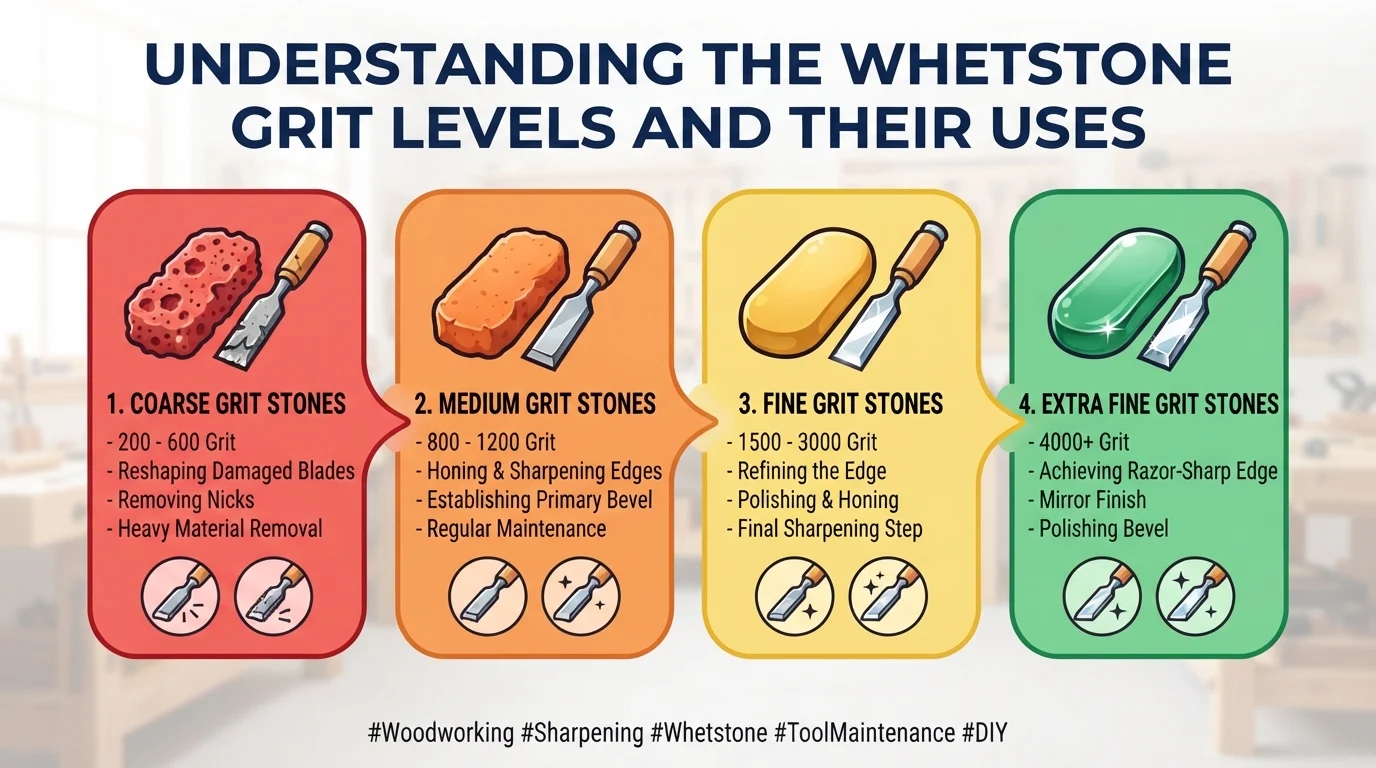
When it comes to sharpening your wood chisels, understanding whetstone grit levels is key to achieving a sharp and precise edge. Whetstones, or sharpening stones, come in various grit levels, each serving a specific purpose in the sharpening process.
The grit level of a whetstone refers to the size of the abrasive particles embedded in the stone. Grit levels can range from coarse to fine, making it crucial to select the right stone based on the condition and requirements of your chisels.
Coarse Grit Stones
Coarse grit stones typically range from 200 to 600 grit. These are designed for heavy material removal and are excellent for reshaping damaged or dull blades. If your chisels have nicks or rough edges, a coarse grit stone is the best choice.
- 200 grit: Great for restoring very dull or damaged chisels.
- 400 grit: Ideal for removing minor nicks and shaping edges.
- 600 grit: Good for a preliminary round of sharpening before moving to finer stones.
Medium Grit Stones
Medium grit whetstones generally range from 800 to 1200 grit. These stones are perfect for honing and sharpening edges that are already in reasonable condition. They provide a good balance between refining the edge and maintaining the shape.
- 800 grit: Suitable for regular maintenance of chisels that do not have significant damage.
- 1000 grit: A well-rounded option for frequent sharpening tasks.
- 1200 grit: For chisels that require fine tuning before moving to finer stones.
Fine Grit Stones
Fine grit stones range from 1500 to 3000 grit. These are primarily used for honing the final edge and achieving a sharp, polished finish. If your chisels are already sharp and you want to refine their edge, a fine grit stone is essential.
- 1500 grit: Usually sufficient for a smooth finish on sharpened chisels.
- 2000 grit: Offers superior edge refinement and is perfect for final honing.
- 3000 grit: Best suited for achieving a razor-sharp edge and a mirror finish.
Extra Fine Grit Stones
For those looking to achieve an exceptionally sharp edge, extra fine grit stones with a rating of 4000 grit and above are available. These stones are often used for honing tools after initial sharpening. They help polish the blade, ensuring that it cuts smoothly and effortlessly.
- 4000 grit: A great starting point for reaching an ultra-sharp edge.
- 6000 to 8000 grit: Perfect for fine-tuning the edge to professional standards, particularly for woodworking enthusiasts.
How to Choose the Right Grit
Selecting the appropriate whetstone grit depends primarily on the condition of your chisels:
- If your chisels are severely dull or nicked, start with a coarse grit stone.
- Once the edge has been reset, move to a medium grit stone for sharpening.
- For final honing and polishing, utilize a fine grit stone.
Remember, it’s crucial to keep your edges sharp and well-maintained. Regular sharpening using the correct whetstone not only prolongs the life of your tools but also enhances the quality of your woodworking projects.
For more in-depth information on whetstone usage and techniques, consider visiting resources such as Woodcraft or Lee Valley Tools.
Understanding the different grit levels and their uses in sharpening wood chisels with a whetstone can elevate your woodworking skills and improve the precision of your work. Armed with the right knowledge and tools, you can keep your chisels in excellent shape, ready for any task.
The Benefits of Regular Chisel Maintenance for Woodworkers

Woodworking is an art that requires precision and care, and one of the most crucial tools for any woodworker is the chisel. However, keeping your chisels in top condition often takes a backseat amid the hustle of crafting stunning pieces. Regular maintenance of your chisels provides numerous benefits that can greatly enhance your woodworking experience.
Enhanced Efficiency
A sharp chisel cuts smoothly through wood, making your work faster and more efficient. When you maintain your chisels regularly, you prevent the dulling that can lead to unnecessary strain during cutting tasks. Sharp chisels require less force, which allows you to exert greater control over your cuts.
Improved Precision
When it comes to woodworking, precision is key. Dull chisels can slip and cause errant cuts, which might ruin your workpiece. By routinely sharpening your chisels, you’ll ensure that every cut is clean and precise. This is especially important when performing intricate tasks such as joinery or detailed carving.
Safer Work Environment
Believe it or not, dull tools can be more dangerous than sharp ones. When you struggle to push a dull chisel through a piece of wood, there’s a higher chance of slipping and injuring yourself. In contrast, a well-maintained chisel allows for smoother and safer operation. Safety should always be a priority in woodworking.
Increased Tool Longevity
Regular maintenance not only improves the performance of your chisels but also extends their lifespan. When you sharpen your chisels, you’re not only removing dull edges but also preventing rust and other damage caused by neglect. Proper care means you won’t have to replace your tools as frequently, saving you money in the long run.
Cost-Effective Practice
- Buying new chisels can be expensive.
- Investing time in sharpening and maintaining existing tools is far more economical.
- Regular maintenance enhances tool quality, ensuring longevity and dependability.
Better Quality Finish
The finish of your woodworking project is heavily influenced by the quality of your tools. A well-maintained chisel will leave cleaner edges and smoother surfaces, enhancing the overall appearance of your project. This can be particularly important for visible joints and finishes where aesthetics matter most.
Boosts Creative Confidence
When you know that your tools are in top shape, it boosts your confidence as a woodworker. You can focus more on your creative process rather than worrying about your tools failing or producing subpar results. This confidence leads to a more enjoyable woodworking experience, allowing you to experiment and innovate.
Regular Maintenance Tips
To reap the benefits of chisels, consider these regular maintenance tips:
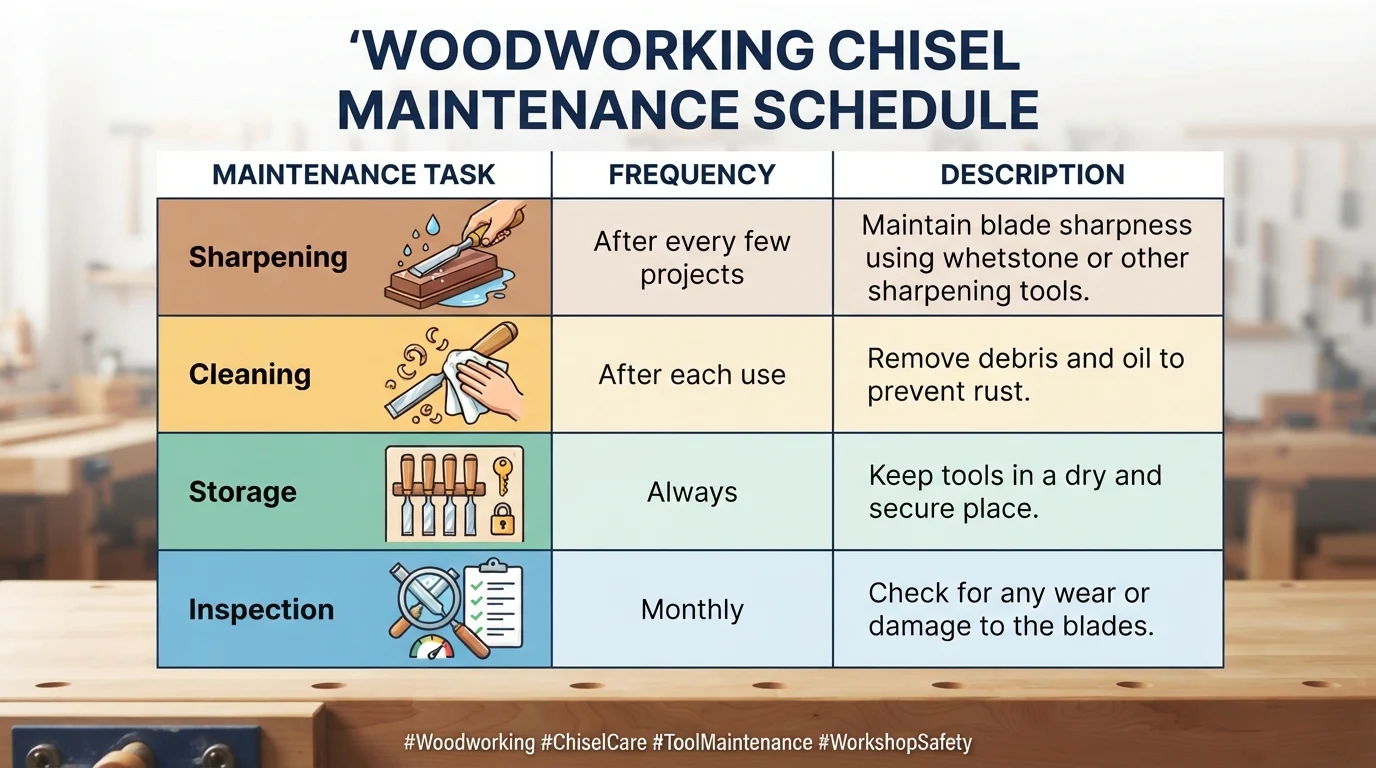
- Sharpening: Use a whetstone or sharpening tool regularly to keep edges sharp.
- Cleaning: Wipe down your chisels after each use to prevent rust and debris buildup.
- Storage: Store chisels in a protective case or holder to avoid damage.
- Inspection: Regularly check for chips or cracks in the blade.
These websites offer valuable insights, tips, and techniques that can elevate your woodworking skills.
| Maintenance Task | Frequency | Description |
|---|---|---|
| Sharpening | After every few projects | Maintain blade sharpness using whetstone or other sharpening tools. |
| Cleaning | After each use | Remove debris and oil to prevent rust. |
| Storage | Always | Keep tools in a dry and secure place. |
| Inspection | Monthly | Check for any wear or damage to the blades. |
Investing time in regular chisel maintenance will undoubtedly pay off in many ways. With enhanced efficiency, improved precision, and a safer work environment, you’ll not only enjoy woodworking but also see your skills flourish. Remember, a well-cared-for tool is one that will serve you well in your woodworking journey.
Helpful Resources
For those eager to learn more about chisel maintenance and woodworking techniques, consider visiting Popular Woodworking or Wood Magazine.
Conclusion
Sharpening wood chisels with a whetstone is a skill that every woodworker should master. By understanding the different grit levels of your whetstone, you can achieve a sharp edge tailored to your woodworking needs. It’s essential to use the right tools for your chisel maintenance, as proper equipment helps ensure that your chisels stay in top condition. Regularly honing your chisels not only enhances your work’s precision but also prolongs the lifespan of your tools.
Avoiding common mistakes—like applying too much pressure or neglecting to maintain the correct angle—will elevate your sharpening game and lead to better results. Remember, each stroke counts, and quality rather than speed should be your goal. The little things matter; even a few minutes dedicated to proper maintenance can make a significant difference in the performance of your chisels.
Moreover, the benefits of regular maintenance go beyond sharpened edges. It promotes safety, encourages better craftsmanship, and can ultimately save you money by reducing the need for tool replacements. By investing time into learning the art of sharpening with whetstone, you’re not just enhancing your tools; you’re improving the quality of your projects and enjoying a more fulfilling woodworking experience. Embrace this practice, and watch as your craftsmanship flourishes alongside your sharpened chisels. Every project will benefit from the sharpness and precision that come from a well-maintained tool!