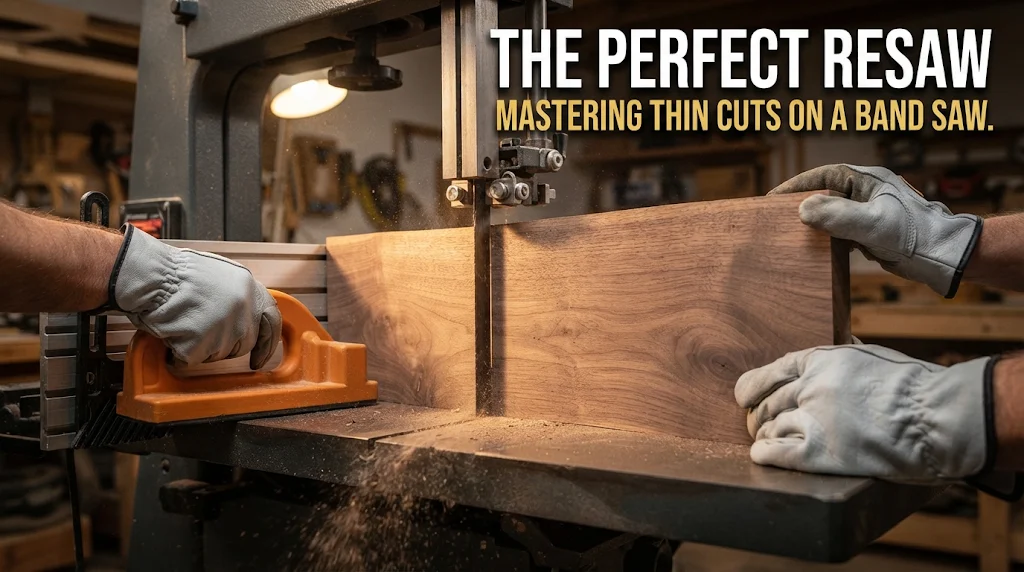
When it comes to woodworking, having the right tools can make all the difference, especially when selecting the Best Band Saw for Resawing Lumber. Resawing involves cutting thick lumber into thinner boards, and a band saw is a powerful tool that can help you achieve this efficiently. Here are the key features to consider when shopping for a band saw that will excel in resawing tasks.
Power and Motor Size
The power of the motor is crucial in determining how well a band saw can handle resawing tasks. Look for a saw with at least a 1.5 HP motor; this provides the necessary strength to cut through thick lumber without bogging down. If you anticipate working with hardwoods or larger logs, a motor closer to 2 HP or more may be beneficial.
Blade Width and Type
The blade is perhaps the most vital component of a band saw for resawing. A wider blade (at least 3/8 inch to 1 inch) is ideal for making straight cuts on thicker pieces of lumber. Consider these key points regarding blade type:
- Skip Tooth Blades: These are great for cutting green wood and allow for better chip removal.
- Hook Tooth Blades: Best for harder woods and thicker sections, providing a smoother finish.
- Regular Tooth Blades: Suitable for general use and good for most softwoods.
Throat Capacity
The throat capacity is the distance from the blade to the vertical support, which determines how wide the lumber can be that you’re cutting. A band saw with a throat capacity of at least 12 inches will give you the flexibility needed for most resawing projects. However, if you work with larger pieces, consider models with a broader capacity.
Table Size and Stability
A larger, stable table offers more support while you’re resawing lumber. Look for tables that are at least 16 inches wide and 24 inches deep. An adjustable table helps with angle cuts and provides additional safety. A well-crafted table will also reduce vibrations, making your cutting smoother and more precise.
Height Adjustment and Tracking
Good height adjustment features allow you to easily change the blade’s position based on the thickness of the lumber being resawn. Additionally, ensure the band saw offers precise blade tracking options, which keeps the blade aligned during cuts. A well-aligned blade is crucial for reducing drift and delivering accurate results.
Durability and Build Quality
Investing in a band saw with a robust construction will pay off in the long run. Look for models made from heavy-duty materials like cast iron or steel. A durable frame will reduce vibration and improve longevity, ensuring that the saw can withstand regular use.
Safety Features
Safety should always be a priority when operating any power tool. A band saw with features like blade guards, emergency shut-off switches, and a proper tensioning system will enhance user safety. Additionally, consider models that offer an automatic braking system, which can quickly halt the blade in emergency situations.
Dust Collection System
Resawing lumber can create a significant amount of sawdust. A band saw equipped with a dust collection system will help maintain a clean workspace and improve visibility during cuts. Look for models that have built-in vacuum ports, making it easier to connect a dust extractor.
Brand Recommendations
Some of the top brands recognized for their excellence in producing band saws suitable for resawing include:
| Brand | Key Features |
|---|---|
| Jet Tools | Variable speed, powerful motors, excellent durability |
| Grizzly | Wide throat capacity, good blade selection, strong build |
| Rikon | Great for beginners, efficient dust collection, reliable |
Ultimately, selecting the Best Band Saw for Resawing Lumber depends on your individual needs and budget. Evaluate your woodworking projects to determine which features align best with how you plan to use your band saw. For detailed product reviews and comparisons, you can visit Woodworker’s Journal. For buying options, check out Amazon for various models and user feedback.
Top Band Saw Models for Resawing: A Comprehensive Review
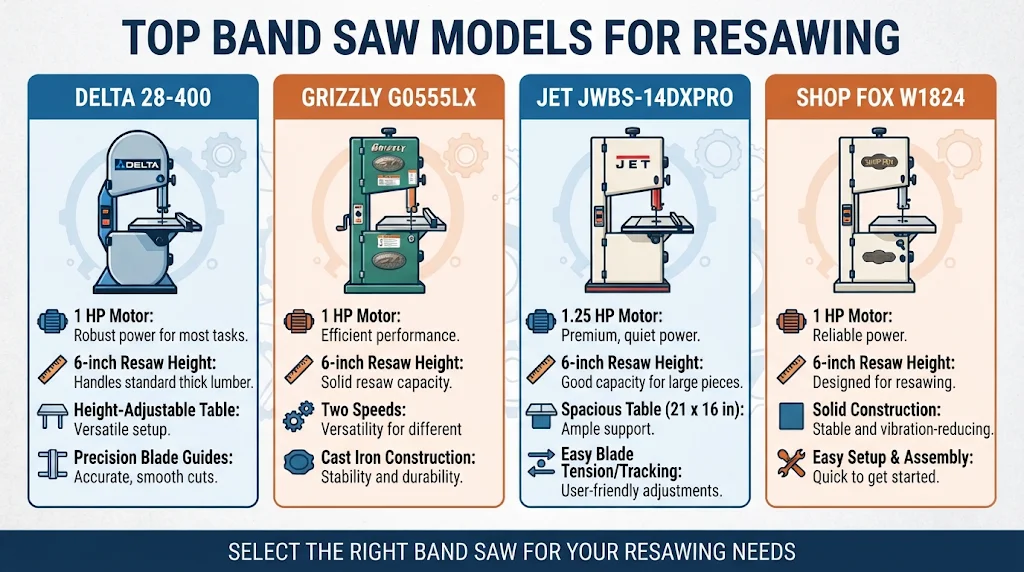
When it comes to woodworking, choosing the Best Band Saw for Resawing Lumber can make a significant difference in your projects. Resawing allows you to cut thick lumber into thinner pieces, which enhances your material usage and creates unique designs. With so many options on the market, it’s essential to understand what features to look for in a band saw. Let’s explore some top models that stand out for their performance and reliability.
Delta 28-400 14-Inch Band Saw
The Delta 28-400 is known for its robust design and powerful 1 HP motor. This band saw features a height-adjustable table and a large cutting capacity of up to 6 inches. Users appreciate the smooth operation and the quality of the blade guide system, which ensures precise cuts. It also integrates a built-in work light for enhanced visibility.
Grizzly G0555LX 14-Inch Band Saw
This model from Grizzly offers an impressive blend of performance and affordability. The 1 HP motor drives a sturdy blade, allowing it to handle tough resawing tasks effectively. The G0555LX boasts cast iron wheels and a two-speed drive, providing versatility for different cutting needs. With an adjustable blade guide, users can achieve accuracy with ease.
Jet JWBS-14DXPRO 14-Inch Deluxe Pro Band Saw
The Jet JWBS-14DXPRO is a premium choice that doesn’t disappoint. Its 1.25 HP motor is not only powerful but also quiet. The saw has a spacious table, measuring 21 x 16 inches, which is perfect for larger pieces of lumber. The unique setup allows for easy adjustments to the blade, ensuring that you maintain precision throughout the cutting process. The integrated performance features make it ideal for both hobbyists and professionals alike.
Shop Fox W1824 14-Inch Band Saw
The Shop Fox W1824 is designed with resawing in mind. Its 1 HP motor provides ample power, while the blade offers a maximum width of 3/4 inch. Users find the easy assembly and solid construction make it a breeze to get started. Additionally, it features a resawing height of 6 inches, which accommodates various lumber thicknesses, making this saw a versatile tool for any workshop.
Specifications Table
| Model | Motor Power | Cutting Capacity | Table Size | Weight |
|---|---|---|---|---|
| Delta 28-400 | 1 HP | 6 inches | 20 x 20 inches | 180 lbs |
| Grizzly G0555LX | 1 HP | 6 inches | 14 x 14 inches | 150 lbs |
| Jet JWBS-14DXPRO | 1.25 HP | 6 inches | 21 x 16 inches | 215 lbs |
| Shop Fox W1824 | 1 HP | 6 inches | 14 x 14 inches | 160 lbs |
When choosing the Best Band Saw for Resawing Lumber, consider your specific needs. Each of these models has strengths that cater to different types of woodworking projects. For example, if you frequently work with larger lumber, the Jet JWBS-14DXPRO might be the perfect fit. Alternatively, if you are budget-conscious, consider the Grizzly G0555LX, which delivers great value.
Regardless of your choice, investing in a quality band saw will pay dividends in the quality and efficiency of your woodworking. For further information, you may want to visit Wood Magazine or Popular Woodworking for more tips and tricks related to band saws and resawing techniques.
Whether you’re a seasoned pro or a beginner, understanding your options is critical. By selecting the right band saw, you’ll greatly enhance your woodworking capabilities, allowing you to create stunning pieces from resawn lumber.
Techniques for Efficient Resawing with a Band Saw
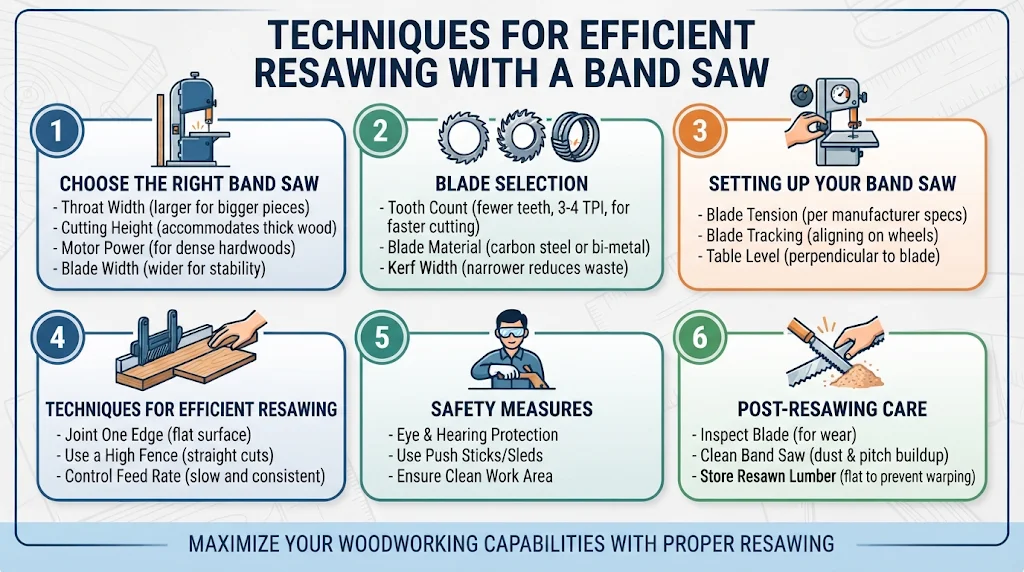
Resawing lumber with a band saw is a technique that can elevate your woodworking projects by allowing you to cut thick boards into thinner pieces. Achieving precision, efficiency, and safety in resawing requires understanding the right techniques. Whether you’re a seasoned woodworker or just starting, these tips will help you become proficient in resawing with a band saw.
Choose the Right Band Saw
The first step in efficient resawing is selecting the Best Band Saw for Resawing Lumber your needs. Look for these key features:
- Throat Width: A wider throat allows you to work with larger pieces of lumber.
- Cutting Height: Ensure the band saw can accommodate the thickness of wood you intend to resaw.
- Motor Power: For dense hardwoods, a powerful motor will provide better performance.
- Blade Width: Use a wider blade for resawing to maintain stability and minimize drift.
Some recommended models include the Grizzly G0457 14″ Bandsaw and the Rikon 10-324 14″ Bandsaw.
Blade Selection
Choosing the right blade is critical for effective resawing. Here are some considerations:
- Tooth Count: Select a blade with fewer teeth (3-4 teeth per inch) for faster cutting.
- Blade Material: Carbon steel blades are great for general use, but bi-metal blades offer durability for tougher woods.
- Kerf Width: A narrow kerf blade reduces waste and allows for thinner cuts.
Setting Up Your Band Saw
Proper setup is crucial for smooth resawing. Follow these steps:
- Ensure the blade is properly tensioned according to the manufacturer’s specifications.
- Align the blade with the guide bearings for optimal tracking.
- Adjust the table to make sure it’s level with the blade.
Techniques for Efficient Resawing
Using the right techniques will enhance your efficiency and accuracy. Here are some effective methods:
- Joint One Edge: Before resawing, joint one edge of your lumber to provide a flat surface, ensuring stability during cuts.
- Use a Fence: Using a high-quality fence will help you achieve straight cuts.
- Feed Rate: Control your feed rate; feed the wood slowly to prevent binding and ensure a smooth cut. A consistent speed will yield better results.
Safety Measures
Safety should always be a priority when using a band saw. Follow these guidelines:
- Wear appropriate safety gear: including eye protection and hearing protection.
- Keep hands away: from the blade by using push sticks or sleds.
- Ensure the work area: is clean and free of distractions.
Post-Resawing Care
Once you finish resawing, it’s essential to maintain your equipment and the quality of your cut:
- Inspect the blade: for wear or damage and replace it as needed.
- Clean the band saw: to prevent buildup of dust and pitch.
- Store your resawn lumber: flat to avoid warping.
By mastering these techniques, you can improve your resawing process and produce high-quality lumber pieces for your projects. For additional resources and guidance on woodworking techniques, consider visiting Woodworker’s Journal or Popular Woodworking.
Common Mistakes to Avoid When Resawing Lumber
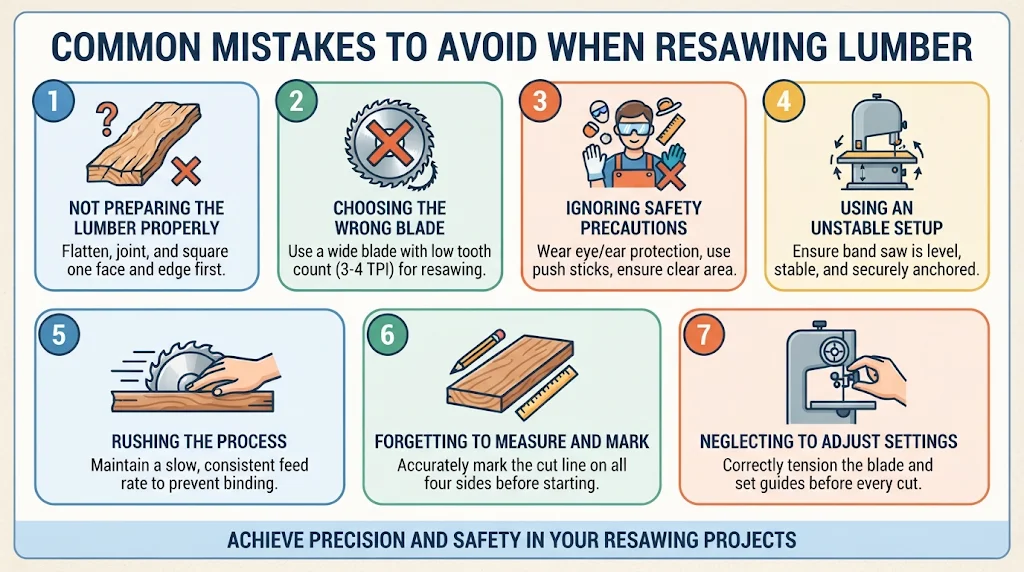
Resawing lumber can be a rewarding experience, allowing woodworkers to transform thick planks into thinner, more versatile pieces. However, it can also be fraught with pitfalls. Here are some common mistakes people make when resawing lumber, and how you can avoid them to ensure your project is successful.
Not Preparing the Lumber Properly
One of the biggest mistakes you can make is neglecting to prepare the lumber properly before resawing. Wood should be straight, dry, and free of defects. Check for warps or bends and use a jointer to flatten one side of the board. This creates a solid base for your resawing process.
Choosing the Wrong Blade for Your Band Saw
Your band saw blade is crucial for a successful resaw. Many opt for generic blades, but this can lead to poor results. Here are some things to consider:
- Tooth Count: A lower tooth count (around 4-6 teeth per inch) works best for resawing thick lumber, as it facilitates better chip removal.
- Blade Width: Choose a blade width that suits the thickness of the lumber. Wider blades enable straighter cuts but can be harder to maneuver around curves.
For more information about blade selection, check out Wood Magazine.
Ignoring Safety Precautions
Safety should always be your first priority when working with power tools. Common safety mistakes include:
- Not wearing proper eye protection to guard against flying debris.
- Failing to use push sticks or push blocks to keep hands safe from the blade.
- Not ensuring the workspace is clear of clutter and other hazards.
Using an Unstable Setup
Your band saw should be set up on a stable surface to ensure accurate cuts. If it wobbles or shifts during operation, it can lead to uneven cuts and potential accidents. Make sure your band saw is level and anchored securely. You can read more about proper setup at LumberJocks.
Rushing the Process
Tempting as it may be to speed things up, rushing results in mistakes. Resawing requires patience and focus. Take your time to measure and adjust the blade tension correctly. Good practices include:
- Adjusting the feed rate according to the type of wood and thickness.
- Constantly monitoring the blade during the process to prevent overheating and damage.
Forgetting to Measure and Mark
Before making cuts, always take the time to measure and mark your lumber accurately. Many people overlook this step, leading to costly mistakes. Use a square and measuring tape to ensure your lines are straight and precise. For accuracy, consider using a marking knife instead of a pencil.
Neglecting to Adjust the Band Saw Settings
Different types of lumber require different band saw adjustments. Common settings to consider include:
| Setting | Recommended Adjustment |
|---|---|
| Blade Tension | Adjust according to the manufacturer’s recommendation for optimal cutting. |
| Blade Guides | Set the guides as close to the blade as possible without contacting it. |
| Cut Speed | Adjust based on the wood’s density and moisture content. |
Maintaining Your Band Saw for Optimal Resawing Performance
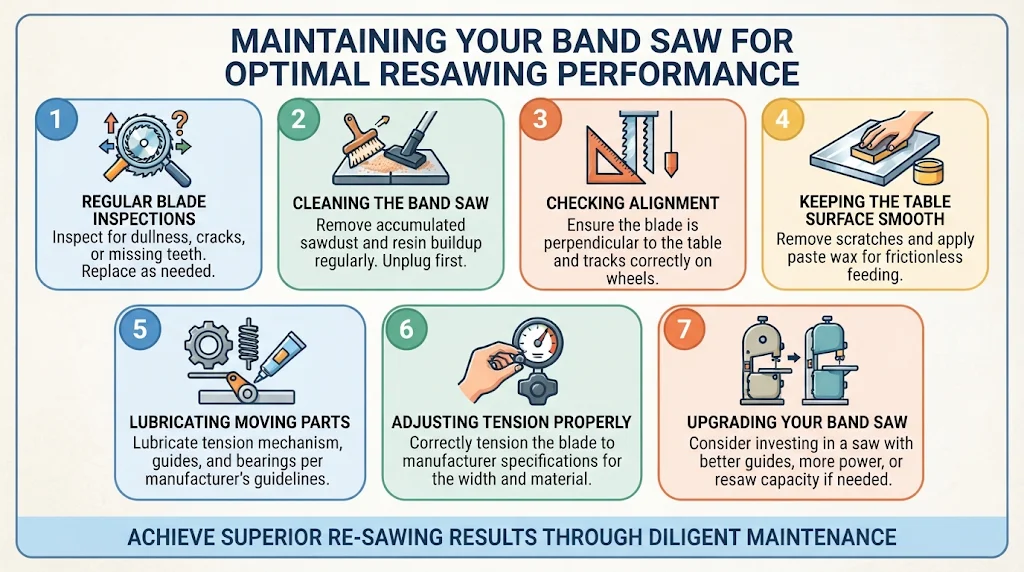
Maintaining your band saw is essential for achieving optimal resawing performance. Regular care not only enhances the quality of the cuts but also extends the lifespan of your machine. Here are some vital steps you can take to keep your band saw in peak condition.
Regular Blade Inspections
The blade is the heart of your band saw. Regularly inspect it for wear and tear, including dullness, cracks, or missing teeth. A dull blade can cause strain on the motor and produce uneven cuts. Replace or sharpen the blade as necessary to ensure clean and precise cuts.
Cleaning the Band Saw
Keeping your band saw clean is crucial for optimal performance. Sawdust and resin buildup can affect operation. Follow these basic cleaning steps:
- Unplug the band saw before cleaning.
- Use a brush or compressed air to remove sawdust from the table and blade.
- Wipe down the body of the saw with a damp cloth.
- Lubricate moving parts as recommended by the manufacturer.
Checking Alignment
Proper alignment ensures that your blade runs true and prevents binding, which can lead to blade damage or motor strain. You can check alignment by performing the following steps:
- Use a square to check that the blade is perpendicular to the table.
- Adjust the blade guides and bearings to ensure they support the blade correctly.
- Test the saw by making a few cuts and observe for any deviations or wastage of material.
Keeping the Table Surface Smooth
A smooth table surface allows your lumber to glide effortlessly as you resaw. To maintain it:
- Inspect the table for scratches and dents.
- Sand the surface lightly with fine-grit sandpaper if necessary.
- Apply a coat of paste wax to keep it slick and easy to clean.
Lubricating Moving Parts
Regular lubrication of moving parts is key to a well-functioning band saw. Consult your manufacturer’s guidelines for specific lubrication intervals. Common areas to lubricate include:
- Blade tensioning mechanism
- Guides and bearings
- Drive wheels
Adjusting Tension Properly
Blade tension significantly affects resawing performance. If the blade is too loose, it can flex, leading to inaccurate cuts. Conversely, a blade that’s too tight can wear out prematurely. Here’s how to adjust tension:
- Check the gauge, if available, on your band saw.
- Flick the blade with your finger; it should give a low, even pitch sound.
- Make small adjustments to the tension control knob to achieve the correct tension.
Upgrading Your Band Saw
If you notice persistent issues, it may be time to invest in an upgrade. When considering the Best Band Saw for Resawing Lumber, look for features that enhance performance:
- Variable speed settings for versatile cutting speeds.
- A larger table surface for accommodating bigger pieces of lumber.
- High-quality blades designed specifically for resawing.
Resources for Further Information
For more in-depth guidelines on band saw maintenance, visit:
By following these maintenance tips, you will ensure your band saw operates smoothly and effectively, allowing for superior resawing results every time. Remember that a little care goes a long way in getting the most out of your investment.
Conclusion
Finding the Best Band Saw for Resawing Lumber can elevate your woodworking projects significantly. By focusing on key features such as motor power, cutting capacity, and blade quality, you can select a model that meets your specific needs. We’ve explored top band saw models, offering insights into their strengths and applications, which can help you make an informed decision.
Efficient resawing techniques play a crucial role in maximizing the capabilities of your band saw. Whether you’re slicing thick boards into thinner sheets or creating unique shapes, using proper methods ensures you achieve clean cuts every time. Additionally, being aware of common mistakes, such as improper blade tension or inadequate feeding speed, helps you avoid pitfalls that can lead to frustration or wasted material.
Maintenance is another critical aspect that can’t be overlooked. Regularly checking blade alignment, cleanliness, and tension will keep your band saw functioning at its best. By caring for your equipment, you enhance its lifespan and performance, allowing for greater efficiency in your projects.
As you dive into the world of resawing, remember that having the right tools and techniques is essential to your success. Investing time in selecting a quality band saw and honing your skills will pay off in beautifully crafted pieces that showcase your craftsmanship. Embrace the process, learn from your experiences, and soon you’ll be turning rough lumber into stunning, finished products with ease.