
As a beginner woodworker, selecting the Best Wood Router for Beginner Woodworkers can feel overwhelming, especially with so many options available. A wood router is essential for shaping edges, hollowing out areas, and creating decorative designs on your woodworking projects. Understanding the features that cater to your needs is crucial to make an informed decision.
Key Features to Consider
When choosing the Best Wood Router for Beginner Woodworkers, look for these features:
- Type of Router: There are two main types of wood routers: fixed base and plunge routers. Fixed base routers are stable and great for edge work, while plunge routers allow you to lower the bit into the wood, making them suitable for more complex cuts.
- Power: The router’s motor power is measured in amps. A motor with at least 1.5 to 2.5 horsepower is ideal for most beginner projects, providing sufficient power to cut through different types of wood.
- Variable Speed Settings: A variable speed router allows you to adjust the speed of the bit, which is essential for different materials and applications. Slower speeds are ideal for larger bits and softer woods, while faster speeds work better for smaller bits and harder woods.
- Ease of Use: Features like quick-release levers for changing bits and an ergonomic design make the router user-friendly. As a beginner, you want a tool that feels comfortable and intuitive to use.
- Safety Features: Look for routers with built-in safety features like motor locks and blade guards to protect you from accidents while working.
Top Recommendations for Beginners
Based on the key features mentioned, here are some of the Best Wood Router for Beginner Woodworkers:
| Router Model | Type | Motor Power | Speed Settings | Price |
|---|---|---|---|---|
| DEWALT DWP611 | Fixed Base | 1.25 HP | 16,000 – 27,000 RPM | $119 |
| Bosch 1617EVSPK | Plunge/Fixed Base | 2.25 HP | 8,000 – 25,000 RPM | $209 |
| Ryobi R1631K | Fixed Base | 1.5 HP | 25,000 RPM | $89 |
| Porter-Cable 6930 | Plunge | 2.25 HP | 8,000 – 21,000 RPM | $179 |
Additional Tips for Beginners
As you start your woodworking journey, here are some additional tips to keep in mind:
- Practice: Before diving into your project, practice your cuts on scrap wood. This helps you get familiar with your router and its settings.
- Read the Manual: Familiarize yourself with the user manual provided with your router. It contains vital information about safety procedures and operating the tool effectively.
- Use the Right Bits: The choice of router bits can significantly affect the finish and outcome of your work. Invest in a variety of bits for different projects and techniques.
- Join a Community: Engaging with other woodworkers through forums or local classes can provide valuable insights and tips. Websites like Woodworking Talk and Wood Forum are great places to start.
- Safety First: Always wear safety goggles and a dust mask when operating the router to protect your eyes and lungs from debris.
Choosing the Best Wood Router for Beginner Woodworkers is a significant step towards honing your crafting skills. By focusing on essential features and investing in a quality router, you’re setting the stage for success in your woodworking projects.
Essential Features to Look for in a Beginner-Friendly Wood Router
When choosing the Best Wood Router for Beginner Woodworkers, it’s essential to focus on the features that make your woodworking experience both enjoyable and productive. A good wood router can be instrumental in helping you create beautiful projects, from furniture to intricate designs. Below are some key features you should consider when selecting a beginner-friendly wood router.
Power and Variable Speed
The power of the router is vital, especially for beginners looking to explore various woodworking techniques. A motor with at least 1.5 to 2.5 horsepower will provide the strength needed for different routing tasks. Additionally, a variable speed control allows you to adjust the RPM according to the type of material and bit you are using. Slower speeds are great for hardwoods, while faster speeds work well with softwoods.
Ease of Use
For beginner woodworkers, a user-friendly design is crucial. Look for routers that have easy-to-read controls and accessible features. These may include:
- Soft start: This feature helps you start the router slowly to prevent sudden jolts.
- Comfort grip: Handles with rubber grips provide better comfort during extended use.
- Lightweight design: A lighter unit makes it easier to maneuver and control while you work.
Base Type
The type of base on your wood router can significantly affect your woodworking projects. Smooth, even motion is essential for clean cuts. Here are two common base types to consider:
- Fixed Base: This type maintains a consistent bit depth and is ideal for simpler jobs.
- Plunge Base: Perfect for more complex tasks, a plunge base allows you to adjust the depth of cut while working.
Bit Compatibility
Make sure the wood router you choose is compatible with a wide range of router bits. Beginner woodworkers often experiment with various bit types, from straight bits to decorative edge bits. A router that accepts both 1/4-inch and 1/2-inch shank bits will offer you great versatility in your projects.
Safety Features
Your safety should always be a priority when working with tools. The Best Wood Router for Beginner Woodworkers come with various safety features to help minimize risks, such as:
- Overload protection: This shuts down the router if it becomes too hot or overworked.
- Spindle lock: Facilitates easier and safer bit changes.
- Dust collection: Effective dust collection mitigates mess and enhances visibility during work.
Budget-Friendly Options
As a beginner, it’s important to find a wood router that fits your budget while still providing high functionality. You don’t have to break the bank for a quality router, with many reliable models available at competitive prices. Below is a comparison of popular models that are great for beginners.
Warranty and Support
Check the warranty and customer support options available with the wood router. A good warranty indicates that the manufacturer stands by its product. Seek brands that offer at least a one-year warranty and responsive customer service to help you with any issues that may arise as you start your woodworking journey.
By focusing on these essential features, you can find the Best Wood Router for Beginner Woodworkers. Investing in the right equipment will lead to better performance and greater enjoyment in your woodworking projects. If you’re looking for more in-depth reviews and comparisons, check out Wood Magazine and Popular Woodworking.
Top 5 Wood Routers Recommended for New Woodworking Enthusiasts
Embarking on a woodworking journey can be an exciting and fulfilling endeavor. As a beginner, choosing the right tools to kick-start your projects is crucial. One of the most versatile tools in any woodworker’s toolkit is the wood router. This powerful device can shape edges, hollow out areas, and create intricate designs. To help you find the Best Wood Router for Beginner Woodworkers, we’ve compiled a list of five top-rated options that are perfect for novices.
When selecting a wood router, consider factors such as ease of use, versatility, power, and budget. Below, we present five routers that stand out in these categories, ensuring you find the right fit for your woodworking projects.
| Router Model | Power | Speed Control | Weight | Price |
|---|---|---|---|---|
| Ryobi P601 One+ 18V | 18V | Variable | 5 lbs | $$ |
| DeWalt DW618B | 2-1/4 HP | Variable | 9.1 lbs | $$$ |
| Porter-Cable 892LRK | 1-3/4 HP | Variable | 8.5 lbs | $$ |
| Bosch 1617EVSPK | 2-1/4 HP | Variable | 10 lbs | $$$ |
| Hitachi M12VC | 2-1/4 HP | Variable | 8.5 lbs | $$ |
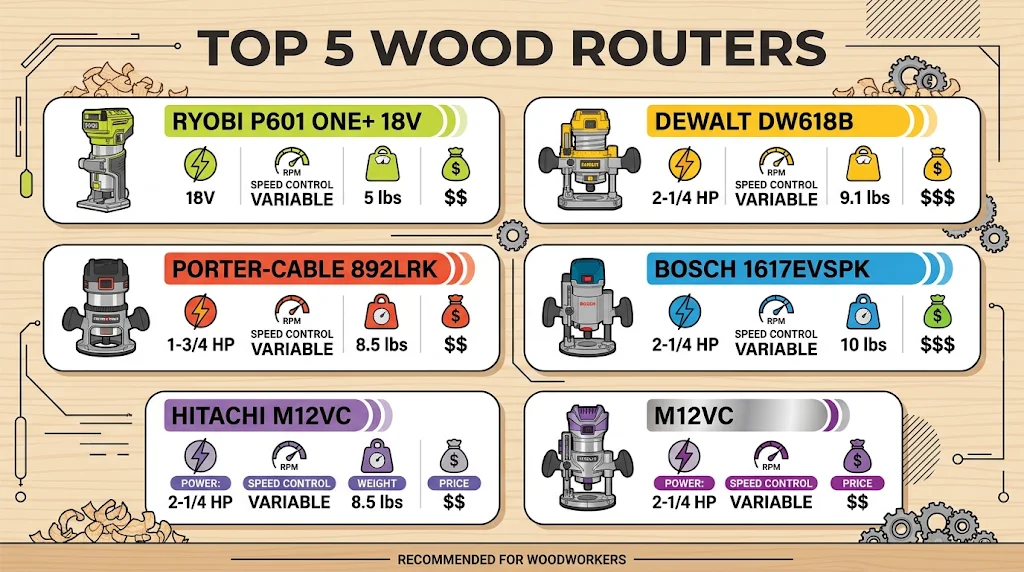
1. Ryobi P601 One+ 18V
The Ryobi P601 is a lightweight and budget-friendly router powered by an 18V battery. It’s designed for easy handling, making it a great choice for beginners. Its variable speed control lets you adjust the speed for different tasks. With the One+ system, you can use the same battery for multiple Ryobi tools.
2. DeWalt DW618B
This router features powerful 2-1/4 HP performance, making it suitable for heavy-duty tasks. The DW618B includes an excellent plunge base for added versatility. Its design is user-friendly, offering easy depth adjustments that beginners will appreciate when starting out on their projects.
3. Porter-Cable 892LRK
The Porter-Cable model is known for its smooth and precise performance. With its 1-3/4 HP motor, it’s suitable for a variety of applications. This router kit includes both fixed and plunge bases, which allows for greater flexibility when tackling different woodworking tasks.
4. Bosch 1617EVSPK
Bosch routers are widely respected in the woodworking community, and the 1617EVSPK is no exception. It combines powerful performance with user-friendly features, like easy-to-read depth scales. This router is an excellent choice for those who want to grow their skills as it offers great stability and durability.
5. Hitachi M12VC
The M12VC model stands out for its effective variable speed control, allowing you to customize the speed according to your project needs. It’s compact, making it easy to maneuver, which is particularly beneficial for beginners who are still building their comfort with power tools.
When selecting the Best Wood Router for Beginner Woodworkers, it’s essential to keep your woodworking ambitions in mind. Whether you’re planning to create decorative edges, engrave details, or hollow out wood, there’s a router here to meet those needs. By choosing one of these highly recommended wood routers, you’ll set yourself on a solid path to becoming a skilled woodworker.
For further information on wood routers and other woodworking tools, you can visit Woodworkers Source for detailed insights and reviews.
Common Mistakes Beginners Make When Using a Wood Router
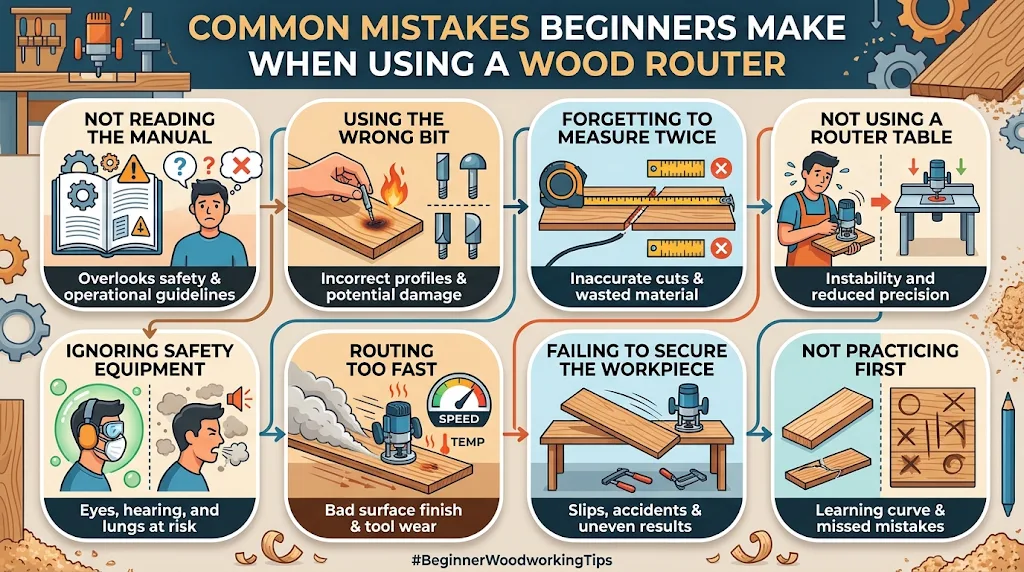
Using a wood router can open up a world of creativity for beginner woodworkers. However, many novices tend to make some common mistakes that could hinder their projects. Understanding these pitfalls can lead to a smoother woodworking experience and better results. Here are some key mistakes that many beginners make when using a wood router.
Not Reading the Manual
One of the first mistakes is neglecting to read the manual that comes with the wood router. Each model may have unique features and safety instructions. Taking a few moments to understand these guidelines can significantly improve your safety and the efficiency of your work.
Using the Wrong Bit
Choosing the appropriate router bit is crucial for successful routing. Beginners often pick a bit based on appearance rather than function. Make sure to select a router bit that matches the job at hand. Here are some common types of router bits:
- Straight bits for hollows and grooves
- Round-over bits for smooth edges
- Chamfer bits for angled edges
Using the right bit can enhance the outcome of your projects. For more information on router bits, check out Wood Magazine.
Forgetting to Measure Twice
The mantra “measure twice, cut once” applies to routing as well. Beginners often just eyeball their measurements, leading to mistakes. Always take the time to double-check your measurements to avoid wasted materials and frustration.
Not Using a Router Table
Many beginners attempt to use the router freehand without realizing the benefits of a router table. A router table provides stability and precision, allowing you to focus on your design instead of balancing the router. It can also minimize the risk of injury as the workpiece stays stationary. Consider investing in a quality router table if you plan to do extensive routing.
Ignoring Safety Equipment
Safety should always be a priority. New woodworkers might overlook the importance of protective gear. When using a router, make sure to wear:
- Safety goggles to protect your eyes
- A dust mask to avoid inhaling wood particles
- Hearing protection as routers can be quite loud
Routing Too Fast
Another common oversight is operating the router at too high of a speed. Beginners often rush through the process, resulting in poor cut quality and potential damage to both the material and the router. It’s advisable to start with a slower speed and gradually increase it as you gain confidence and skill.
Failing to Secure the Workpiece
It’s vital to secure your wood when routing. A shifting workpiece can lead to unsafe situations and uneven cuts. Always use clamps or a vise to hold your material firmly in place. This ensures better control and accuracy.
Not Practicing First
Forgetting to practice can lead to fumbles. Before starting on your actual project, set aside some scrap wood to practice your techniques. This allows you to familiarize yourself with the router’s controls and how different bits affect the wood.
Choosing the right equipment enhances your experience. For more reviews and information on the best beginner routers, visit Popular Woodworking.
Safety Tips Every Beginner Woodworker Should Know When Using a Router
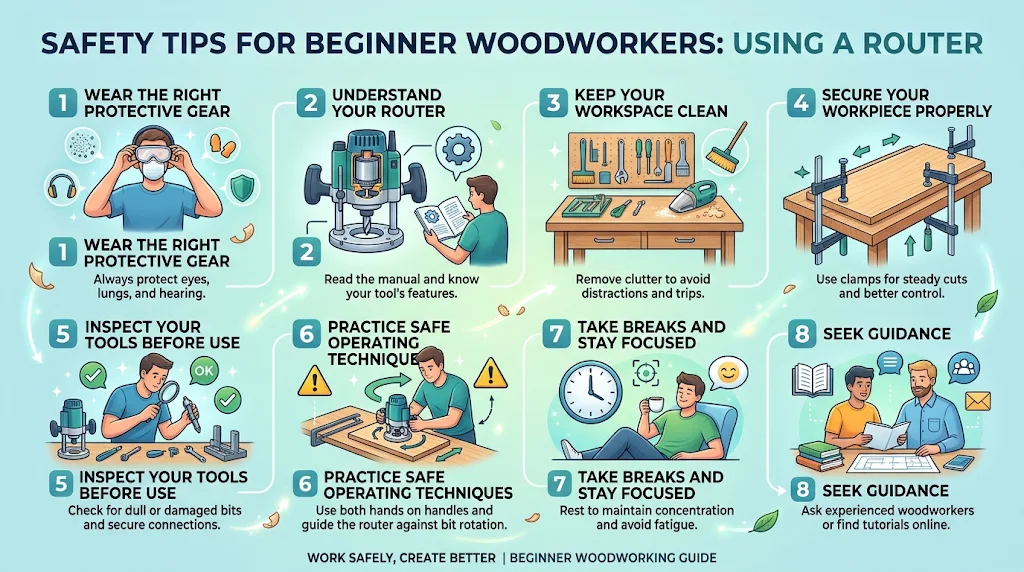
Using a wood router can be a rewarding experience, especially for beginner woodworkers. However, it’s crucial to prioritize safety while mastering this powerful tool. Below are essential safety tips to ensure a safe woodworking environment.
Wear the Right Protective Gear
One of the first steps to staying safe while using a router is wearing proper protective gear. Your safety gear should include:
- Safety goggles: These help protect your eyes from wood shavings and dust.
- Hearing protection: Routers can be loud, so use earplugs or noise-cancelling headphones.
- Dust mask: Protect your lungs from fine dust particles that may be created during routing.
- Gloves: Use well-fitting gloves to keep your hands safe, but avoid overly loose ones that could get caught in the router.
Understand Your Router
Before you even plug in your router, take the time to read the manual that comes with it. This guide will cover:
- The parts of the router and their functions
- Proper use and adjustments
- Maintenance guidelines
- Warnings and precautions
Understanding how your specific wood router operates can prevent accidents caused by user error. Also, familiarize yourself with different types of router bits and their best uses.
Keep Your Workspace Clean
A tidy workspace is vital for safe woodworking. Here are some tips on maintaining cleanliness:
- Remove any clutter from your workbench to avoid distractions.
- Use a vacuum or broom to regularly clean up sawdust and wood shavings.
- Ensure your router’s cord is clear of obstacles to prevent tripping.
Secure Your Workpiece Properly
Keeping your workpiece steady is often overlooked but is an essential safety measure. Here’s how to secure it effectively:
- Utilize clamps to hold the wood firmly in place.
- Employ a router table for added stability if you’re making intricate cuts.
- Always route against the direction of the bit rotation for greater control.
Inspect Your Tools Before Use
Before starting any project, inspect your router and bits for damage:
- Check for dull bits, which can cause the router to bind.
- Look for cracks or wear on the motor housing.
- Ensure all connections are secure and that the power cord is in good condition.
Practice Safe Operating Techniques
Using safe operating techniques is critical. Here’s how you can enhance your safety:
- Keep your hands at least 6 inches away from the rotating bit.
- Never reach under the router while it is running.
- Always lock the router switch when not in use to prevent accidental startup.
Take Breaks and Stay Focused
It’s easy to lose concentration when working on a project for a long time. Make sure to take periodic breaks to refresh your mind. When you return to work, focus entirely on the task at hand. Avoid distractions from phones or conversations that could divert your attention.
Seek Guidance
If you’re unsure about any aspect of using your router, don’t hesitate to ask for help. Engaging with more experienced woodworkers can provide you with valuable insights. Consider industries or online resources like Wood Magazine or Woodworker’s Source Blog for tutorials and safety information.
Conclusion
Finding the Best Wood Router for Beginner Woodworkers is a journey that can set you on a path to mastering the craft. As you dive into this world, consider the essential features that make a router user-friendly. Look for options that are lightweight, have variable speed settings, and come with comprehensive instruction manuals. The models highlighted in our top five list provide fantastic choices that cater to the needs of new woodworking enthusiasts.
As you embark on your woodworking projects, remember the common mistakes that many beginners encounter. By being aware of these pitfalls, you can save time, resources, and frustration. Practicing patience and taking the time to learn with your router will lead to better results and more enjoyable experiences.
Safety is paramount in woodworking, especially when using a router. Always prioritize protective gear such as safety glasses and ear protection. Ensure your workspace is organized and free from distractions. Proper handling of the router will not only prevent accidents but also enhance your skill and confidence.
The woodworking journey is filled with challenges, but with the right tools and knowledge, you can create beautiful projects. Embrace the process, continue learning, and remember that every expert was once a beginner. With dedication and practice, you will not only enhance your skills but also gain a deeper appreciation for the art of woodworking. So, set up your workspace, choose your router wisely, and let your creativity flow!