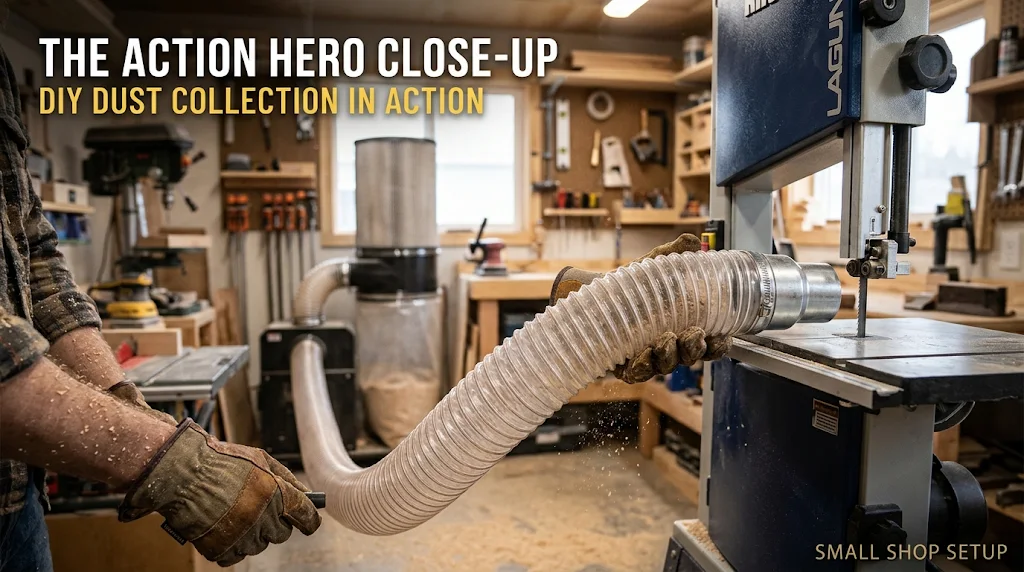
Creating a DIY Dust Collection System for Small Shop is essential for maintaining a clean and safe workspace. Dust can be hazardous and affect your health, so investing time in building an effective collection system will enhance your woodworking or crafting experience. Below are some key components and tips to consider when embarking on this project.
Understanding Dust Collection Needs
Before diving in, it’s vital to assess your workshop’s needs. Identify the types of tools you use and the kind of dust they produce. Common tools that create significant dust include table saws, routers, and sanders. Recognizing the source of dust will guide you in designing a system tailored to your shop.
Essential Components for a Dust Collection System
To build an efficient DIY Dust Collection System for Small Shop, you’ll need several essential components:
- Dust Collector: The heart of your system, a dust collector can be a shop vacuum or a more powerful dedicated unit. Shop vacuums are portable and typically suitable for smaller dust-producing tools.
- Hoses: Flexible hoses are crucial for connecting your dust collector to various tools. They come in different diameters, with 2.5 inches being the most common for home workshops.
- Blast Gates: These handy devices allow you to control airflow and direct it to the tool currently in use. Using blast gates can enhance collection efficiency and reduce wear on your dust collector.
- Dust Collection Bags or Filters: Choose high-quality bags or filters that can trap fine dust particles. Some collectors have built-in filters, while others require separate bags that can easily be replaced.
- Mounting and Support Structures: Consider how you will mount your system. Wall brackets or ceiling supports help keep hoses out of the way, allowing for easy access to your tools.
Basic Setup Steps
Once you have your materials, follow these simple steps to set up your DIY Dust Collection System for Small Shop:
- Plan the layout: Sketch a simple diagram of your shop. Determine the optimal placement for your dust collector and where the hoses will run.
- Install the dust collector: Position the collector in an accessible area. Ensure it has enough space for airflow and maintenance.
- Connect hoses: Attach flexible hoses to the dust collector and then to your tools. Ensure a snug fit to prevent air leaks.
- Add blast gates: Place blast gates to easily toggle between connected machines, enhancing airflow control.
- Test the system: Run your dust collector and check for leaks or inefficiencies. Adjust as needed to optimize performance.
Maintenance Tips for Longevity
To keep your DIY Dust Collection System running smoothly, routine maintenance is key:
- Inspect hoses: Check for tears or blockages frequently. Replace any damaged sections to maintain airflow.
- Clean filters: Over time, filters can become clogged. Refer to your manufacturer’s instructions on how to clean or replace them effectively.
- Monitor dust levels: Keep an eye on your dust collection bags or containers. Empty them regularly to prevent overflow and maintain optimal performance.
Common Mistakes to Avoid When Setting Up Your Dust Collection System
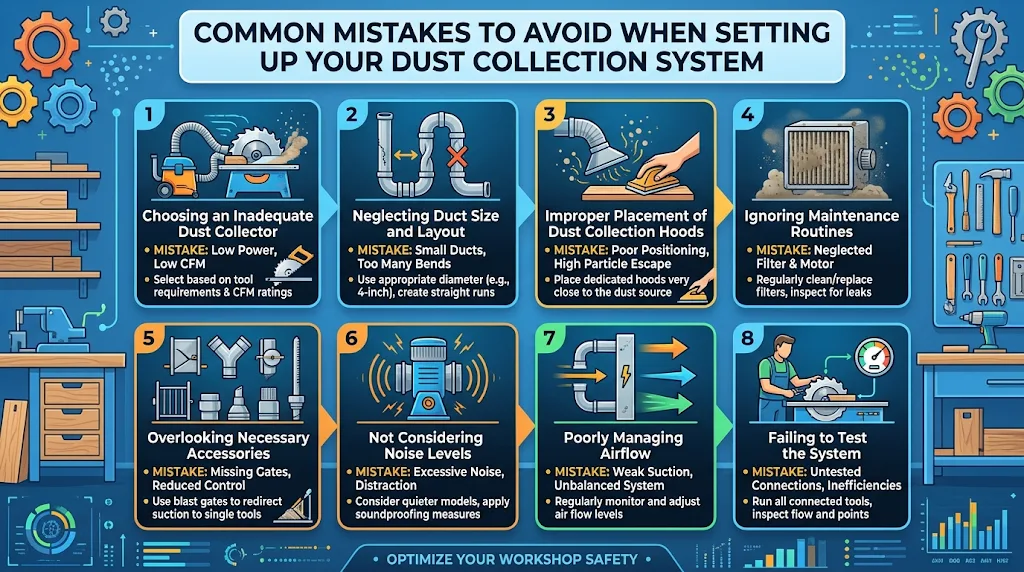
Setting up a dust collection system in your small shop is an essential task that can greatly enhance air quality and improve your workspace efficiency. However, many makers tend to overlook key aspects when designing their systems. Recognizing these common mistakes can help you create a more effective and efficient DIY Dust Collection System for Small Shop.
Choosing an Inadequate Dust Collector
One of the most crucial steps in establishing your DIY Dust Collection System for Small Shop is selecting the right dust collector. Many people opt for smaller models that may not provide sufficient power for their specific tools. Ensure that the collector you choose has the proper cubic feet per minute (CFM) rating to handle all your equipment. For example, a planer requires a higher CFM than a sander, so consider your tools before making a decision. Familiarize yourself with the Wood Magazine guide for more insight.
Neglecting Duct Size and Layout
The size and layout of your ducts play a significant role in your DIY Dust Collection System for Small Shop efficacy. Using ducts that are too small can restrict airflow, leading to inefficient dust removal. Aim for a duct diameter of at least 4 inches for home shops. A well-planned layout minimizes bends and turns, allowing for smooth airflow. Design the system with straight runs whenever possible to maintain optimal performance.
Improper Placement of Dust Collection Hoods
Another frequent mistake is not placing the dust collection hoods adequately. Each tool should have a dedicated hood located as close as possible to the source of dust. This setup maximizes suction and minimizes airborne particles. Take time to customize your hoods based on the specific requirements of each tool. Ensure the hood captures the dust effectively without obstructing workflow.
Ignoring Maintenance Routines
- Cleansing Filters: Not cleaning or replacing filters can lead to reduced suction power. Regularly check and clean your filters to maintain optimal performance.
- Inspecting Ducts: Visually inspect ducts for clogs or leaks. A leaking duct wastes energy and decreases the system’s efficiency.
- Motor Maintenance: Dust can accumulate in the motor area. Keep this clean to ensure longevity and proper functioning.
Overlooking Necessary Accessories
Many shop owners underestimate the importance of accessories. Items such as blast gates, wyes, and reducers can significantly enhance your DIY Dust Collection System for Small Shop efficiency. Blast gates control airflow to specific tools, allowing you to divert suction where needed. Using reducers will help connect different-sized ducts and maintain airflow without significant losses.
Not Considering Noise Levels
Dust collectors can be quite noisy, which can detract from a peaceful working environment. Many overlook this factor in their setup. Consider placing your dust collector in a separate location or implementing soundproofing measures to minimize noise in your workspace. You can also look for quieter models if noise is a significant concern.
Poorly Managing Airflow
Effective airflow management is paramount for your DIY Dust Collection System for Small Shop. An unbalanced system can serve as a breeding ground for dust and pollutants. Use an air flow meter to check the system’s performance regularly. Adjust the duct size and layouts if you notice imbalances. This monitoring will help you ensure solid performance and a healthier workspace.
Failing to Test the System
After installation, many forget to test their DIY Dust Collection System for Small Shop thoroughly. Run all machines connected to the system and observe airflow through the ducts. Make direct observations to see if any changes are necessary or if there are weak points in the system. Taking the time to test your system can save you time and frustration in the long run.
By avoiding these common mistakes, you can create an efficient DIY Dust Collection System for Small Shop that keeps your small shop clean and safe. For a more comprehensive understanding of dust collection setups, explore resources at Lee Valley for tools and materials that suit your needs.
The Benefits of a Dust Collection System in Keeping Your Workshop Clean

In any workshop, whether it’s a small garage setup or a larger professional space, keeping your environment clean and safe is a top priority. Dust and debris can accumulate quickly, leading to potential health hazards and a generally unpleasant working environment. Implementing a DIY Dust Collection System for Small Shop can drastically improve the cleanliness of your space while enhancing your overall productivity. Below are some of the significant benefits of having a dust collection system in your workshop.
Significant Health Improvements
One of the foremost advantages of a DIY Dust Collection System for Small Shop is the improvement in health. Wood dust, sawdust, and other fine particles can be harmful when inhaled. Prolonged exposure can cause respiratory issues and other health complications. A dust collection system effectively captures these particles at the source, minimizing your exposure and promoting a healthier workspace.
Enhanced Visibility and Work Quality
Working in a clean space not only boosts your mood but also increases focus. Dust and clutter can distract you and lead to mistakes. By maintaining a tidy environment, you can keep your attention on your projects. A DIY Dust Collection System for Small Shop ensures that dust isn’t settling on your tools and materials. This can lead to better quality work, preventing any contamination on your finished products.
Longer Tool Life
Dust is not just a nuisance; it can damage your tools over time. Fine dust particles can infiltrate moving parts and lead to wear and tear. A reliable DIY Dust Collection System for Small Shop will extend the life of your equipment by keeping them free from harmful particles. Regular maintenance of your tools will also become easier, saving you time and money in the long run.
Improved Air Quality
Workshops can often become musty, especially if dust particles linger in the air. A quality DIY Dust Collection System for Small Shop significantly enhances the air quality by filtering out harmful particles. Cleaner air contributes to a more comfortable working environment. This is particularly beneficial if you spend long hours in your workshop or have allergies. The cleaner air allows you to focus and work effectively.
Cost-Effectiveness
Investing in a DIY Dust Collection System for Small Shop may seem expensive initially, but the long-term benefits outweigh the costs. Over time, you’ll save money on tool maintenance, health-related issues, and even cleanup time. Here’s a quick breakdown of cost-related benefits:
| Benefit | Potential Savings |
|---|---|
| Reduced tool wear and repair costs | $100 – $500 annually |
| Lower health care costs | $200 – $1,000 annually |
| Less time spent cleaning | 20% increase in productivity |
Easy Installation and Adaptability
Many modern dust collection systems are designed for easy installation, even in small workshops. They can often be adapted to your existing tools without extensive modifications. Portable units make it simple to move the system around, allowing you to collect dust where you need it most. Many DIY enthusiasts have successfully created their own DIY Dust Collection System for Small Shop tailored specifically for their needs.
Increased Workshop Safety
Dust can make floors slippery and create fire hazards, especially in woodworking shops. By implementing a DIY Dust Collection System for Small Shop, you significantly reduce these risks. Safer environments lead to fewer accidents, keeping you and anyone else in your workshop secure.
Investing in a DIY Dust Collection System for Small Shop is essential for maintaining a clean, safe, and efficient workshop. Not only does it protect your health, but it also preserves your tools and enhances the overall quality of your projects. If you’re looking to explore more about how dust collection systems work and their variations, we recommend visiting Wood Magazine for in-depth guides and more information.
Make your workshop a place you love to work in. Embrace a DIY Dust Collection System, and watch how it transforms your crafting experience.
How to Optimize Your Dust Collection System for Maximum Efficiency
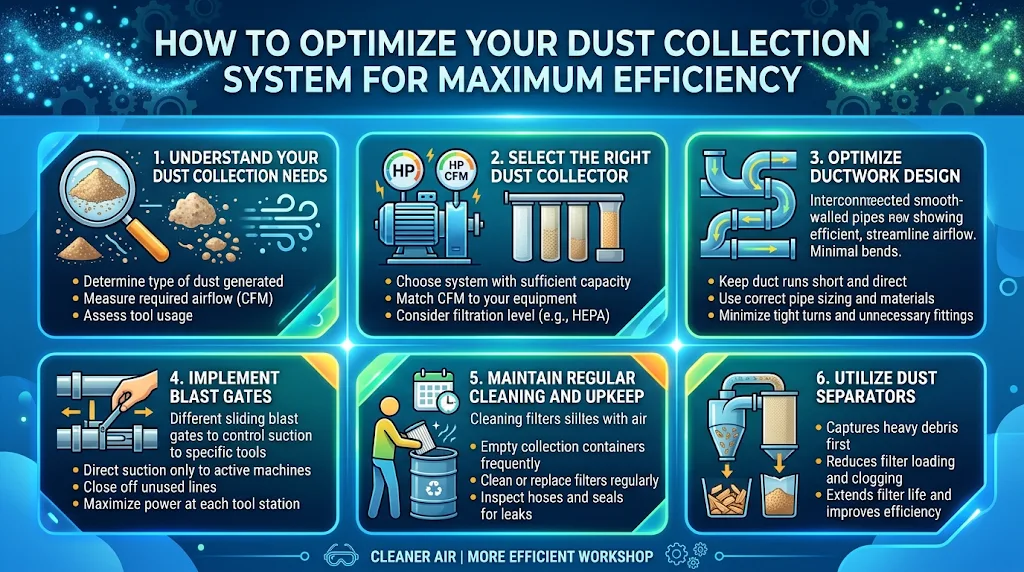
Having an efficient DIY Dust Collection System is more than just a health precaution; it also contributes to the longevity of your tools and improves the overall quality of your work. You want your dust collection system to be effective and economical, so let’s explore some strategies that will help you optimize it for maximum efficiency.
Understand Your Dust Collection Needs
Before diving into the optimization process, identify the types of tools and materials you will be using. This can help you create a targeted dust collection strategy. Here are a few considerations:
- Type of Tools: Different tools create different amounts of dust. For example, a table saw will produce heavier sawdust, while a sander may generate fine particulate matter.
- Volume of Use: How often do you use each tool? High-frequency tools require more robust dust collection solutions.
- Shop Size: The size of your workshop will dictate how powerful your dust collector needs to be.
Select the Right Dust Collector
Choosing the right dust collector is crucial for optimizing your DIY Dust Collection System. There are various options available:
- Shop Vacuums: Ideal for small, portable setups, especially if you’re on a budget.
- Bag Collectors: Good for woodworkers who need an affordable solution for larger setups.
- Cyclone Collectors: Excellent for serious woodworkers; they separate fine dust from larger particles, making them very efficient.
Make sure to match the collector’s CFM (Cubic Feet per Minute) rating to the tools you plan to use. A higher CFM means better suction and dust collection.
Optimize Ductwork Design
The layout of your ductwork can significantly impact the effectiveness of your DIY Dust Collection System for Small Shop. Here are some tips for designing an efficient duct system:
- Avoid Elbows: Try to minimize the number of elbows and turns in your ductwork, as they can decrease airflow.
- Use Larger Ducts: Opt for ducts that are at least 4 to 6 inches in diameter for optimal airflow.
- Maintain Short Run Lengths: Keep duct runs as short as possible to avoid loss of suction.
Implement Blast Gates
Blast gates allow you to control airflow to individual tools. By shutting off the airflow to unused tools, you increase the efficiency of your DIY Dust Collection System for Small Shop. Here’s how to install them:
- Choose gates that match your duct size.
- Install them close to each tool connected to your dust system.
- Use manual or electronic options based on your preference and budget.
Maintain Regular Cleaning and Upkeep
Regular maintenance of your DIY Dust Collection System will ensure it operates at peak performance. Here’s a maintenance checklist:
- Clean Filters: Check and clean the filters monthly to maintain suction power.
- Inspect Ducts: Look for blockages or leaks every few months.
- Empty Dust Bags: Empty containers regularly to avoid overflow and maintain airflow.
Utilize Dust Separators
Dust separators can be a worthwhile addition to your DIY Dust Collection System. They help to catch larger debris before it reaches the main dust collector. This can extend the life of your dust collector and improve overall efficiency. Here’s how they work:
- They use cyclone action to separate dust and chips.
- They can be homemade or purchased as standalone units.
- Install them upstream, right before your dust collector.
By implementing these strategies, you can significantly enhance the efficiency of your DIY Dust Collection System for Small Shop. Each step contributes to a safer work environment and helps maintain the performance of your tools.
Budget-Friendly Materials and Solutions for Your Small Shop Dust Collection Project
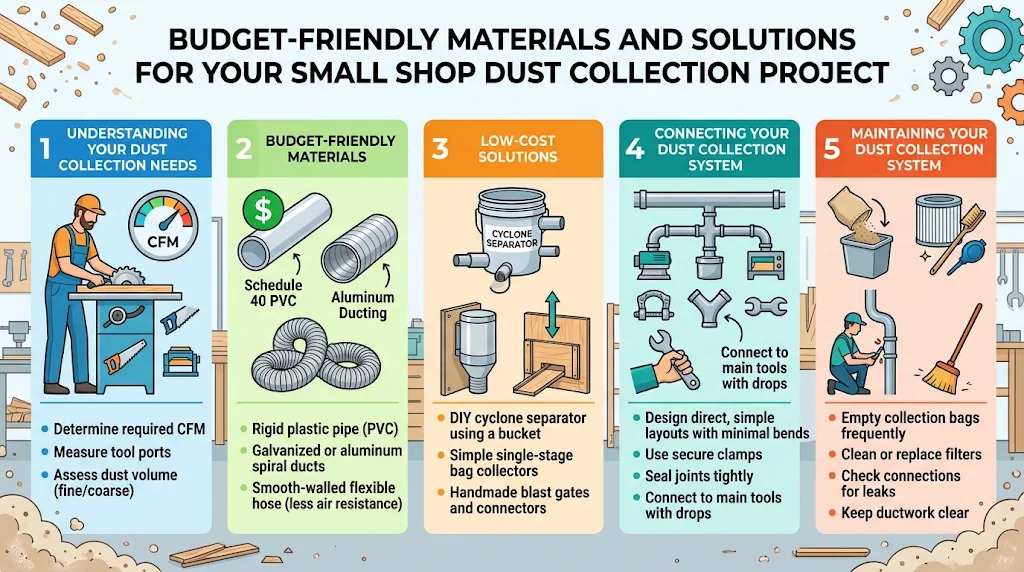
If you’re a DIY enthusiast looking to build an effective DIY Dust Collection System, you’re in luck! Creating a budget-friendly dust collection system can keep your workspace clean and improve your overall health. Here are some cost-effective materials and solutions to help you get started.
Understanding Your Dust Collection Needs
Before investing in equipment, assess the types of tools you have and the amount of dust they generate. Common sources of dust in a small shop include:
- Table saws
- Sanders
- Router tables
- Planers
By identifying your main sources, you can design a system tailored to your needs without overspending.
Budget-Friendly Materials
When it comes to building your DIY Dust Collection System for Small Shop, you don’t have to break the bank. Here are some affordable materials you might consider:
| Material | Approximate Cost | Benefits |
|---|---|---|
| PVC Pipe | $0.80-$1.50 per foot | Lightweight, low cost, and easy to work with. |
| Flexible Ducting | $4-$8 per 10 feet | Easy to install and adjust, makes connecting machines simple. |
| Shop Vacuum | $50-$150 | Good for smaller projects and can be used for multiple tasks. |
Low-Cost Solutions
Implementing a simple DIY Dust Collection System can be done with a few basic components. Here are some solutions to consider:
- Repurposed Equipment: Use an old shop vacuum you may already own. By adding a custom-built separator, you can significantly reduce the dust reaching the vacuum filter, enhancing its lifespan.
- DIY Separator: Construct your own separator using a 5-gallon bucket and a cyclone lid. This will allow heavier debris to fall into the bucket while keeping finer dust in the vacuum.
- Filter Upgrade: Upgrade your shop vacuum filter with a HEPA filter. This will trap smaller particles, improving air quality in your shop.
Connecting Your Dust Collection System
Connecting your tools to the DIY Dust Collection System can be straightforward. Here are some tips:
- Use adapters to fit your tools to a standard hose or ducting.
- Ensure all joints are sealed tightly to prevent leaks.
- Minimize the number of curves in your ducting to maintain airflow.
Maintaining Your Dust Collection System
A well-maintained DIY Dust Collection System is essential for efficiency. Regularly check your hoses and filters for clogs or damage. Replace worn-out parts promptly to keep your system effective.
Resources for Further Information
If you’re looking for more in-depth tutorials and resources, check out the following:
Building a DIY Dust Collection System for Small Shop on a budget is not only doable but also rewarding. With these materials and strategies, you can create an efficient and effective dust collection solution that meets your shop’s needs.
Conclusion
Creating a DIY Dust Collection System not only elevates your workspace’s cleanliness but also enhances your overall woodworking experience. By carefully selecting the essential components—like dust collectors, ducts, and filters—you ensure that the system operates efficiently and effectively. Remember to avoid common pitfalls, such as underestimating airflow needs or using inadequate materials, to maximize the system’s performance.
Investing time and resources in a DIY Dust Collection System offers numerous benefits. A clean workshop promotes safety and health by minimizing the risk of respiratory issues and fire hazards, while also increasing productivity. You’ll find that with a well-designed system, the time you spend cleaning is reduced, allowing you to focus more on your projects.
When optimizing your DIY Dust Collection System setup, consider factors like layout, airflow, and regular maintenance. Ensuring your ducts are properly sized and free of obstructions will significantly enhance the system’s effectiveness. Furthermore, by employing budget-friendly materials like PVC piping or repurposing existing items, you can build an efficient system without breaking the bank.
Embarking on this project not only transforms your workspace but also cultivates a sense of pride in your craft. By taking these steps to ensure a clean and organized shop, you pave the way for a more enjoyable and productive woodworking experience. Dive into your DIY Dust Collection System project, and enjoy the satisfaction of working in a clean, efficient environment tailored to your needs.