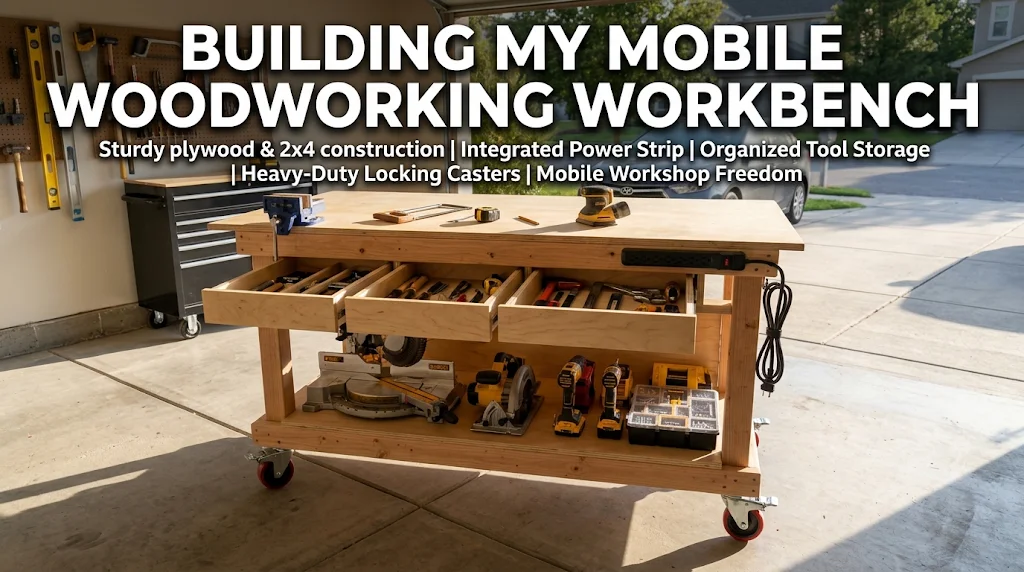
Creating a mobile woodworking workbench can elevate your projects and bring efficiency to your workspace. A practical setup allows you to take your tools on the go, maximizing both the functionality and comfort of your woodworking experience. Here’s a comprehensive guide on building your very own Mobile Woodworking Workbench, highlighting essential features and design tips that will make your work easier and more enjoyable.
Key Features of a Mobile Woodworking Workbench
When you’re designing your mobile workbench, consider the following essential features:
- Portability: The ability to easily move your workbench is crucial. Look for sturdy wheels that can lock in place to ensure stability while you work.
- Surface Size: A large, flat surface area is necessary for accommodating various projects. Ideally, aim for at least 60 inches by 30 inches.
- Height Adjustment: An adjustable height feature allows you to customize your workspace based on your projects and your comfort.
- Storage Solutions: Incorporate drawers and shelves for tool and material storage. Using bins can also help keep everything organized.
- Clamping Capability: Integrated vices or clamp tracks provide options for securing materials during projects and can enhance precision and safety.
Design Tips for Your Workbench
Once you understand the essential features, it’s time to think about design. Here are some tips to guide you:
1. Choose the Right Materials
Your choice of materials will heavily influence the durability and weight of your workbench. Consider using:
- Plywood: Ideal for the bench top due to its strength and stability.
- 2x4s: Perfect for the frame, providing structural support without excess weight.
- Melamine: A popular choice for smooth surfaces that are easy to clean.
2. Assemble a Stable Base
A stable base is vital in preventing wobbling, especially when working with power tools. Use a sturdy rectangular frame as the foundation of your workbench. Ensure the legs are made from solid wood and have a wider base for better balance.
3. Plan for Electrical Needs
If you frequently use power tools, consider integrating electrical outlets into your workbench. Installing these within easy reach will minimize the amount of extension cords needed and keep your workspace organized. Always follow safety guidelines when working with electrical components.
4. Incorporate Versatile Accessories
Adding accessories like tool racks, magnetic strips for small tools, and even a small work light can assist greatly. These small improvements can enhance your woodworking experience significantly. Position these accessories in a way that doesn’t crowd your workspace.
Building Instructions
Ready to build? Here’s a step-by-step guide to get you started:
- Measure and Cut: Cut your plywood to create the bench top and legs according to your design dimensions.
- Build the Frame: Assemble the 2x4s into a rectangular frame, using wood screws for durability.
- Attach Legs: Secure the legs to the corners of your frame, ensuring they are straight and stable.
- Add the Surface: Attach the plywood top to the frame using screws, making sure it’s flush with the edges.
- Finish Up: Sand down surfaces, and apply a finish if desired. Install any features like wheels, handles, or electrical outlets.
Your Mobile Workbench in Use
A mobile woodworking workbench not only adapts to your workspace but also enhances your creativity. Whether you’re working on indoor projects or doing outdoor woodworking, the portability and design of your bench will make your tasks easier. For more inspiration and ideas on woodworking, check out Popular Woodworking or visit The Wood Whisperer.
Choosing the Right Materials for Your Mobile Workbench

When you decide to build a mobile woodworking workbench, selecting the right materials is crucial for its durability and functionality. Your choice will affect not only how the workbench looks but also how well it performs for various woodworking projects. Let’s explore the key materials to consider, their benefits, and how to choose the best ones for your needs.
Types of Wood
Wood is often the first choice when building a workbench due to its versatility and availability. Here are some types of wood you might consider:
- Pine: Affordable and readily available, pine is a great choice for beginners. It’s easy to work with but can dent and scratch easily.
- Maple: Known for its hardness, maple is less prone to damage than softer woods. It provides a smooth surface that is excellent for woodworking tasks.
- Birch: This wood has a fine grain and is quite strong. Birch is a popular choice for cabinets and furniture, making it a good option for workbench surfaces.
- Multiplex or Plywood: High-quality plywood is often used for workbench tops due to its strength and stability. It is less expensive than solid wood and can be equally durable.
Work Surface Materials
The work surface is one of the most critical components of your mobile woodworking workbench. Consider the following:
- Hardwood Laminate: Offers a durable and scratch-resistant surface that maintains its appearance over time.
- MDF (Medium-Density Fiberboard): Provides a smooth, flat surface that is excellent for precision work, but be cautious with moisture.
- Steel Sheet: Adding a steel top can give you extra durability and make cleanup easier, especially when working with messy materials.
- Butcher Block: Offers a sturdy surface for heavy-duty work and has a classic woodworking aesthetic.
Frame Materials
The frame of your workbench is where stability and strength come into play. Consider using:
- Wooden Frames: A wooden frame can add to the aesthetic and be quite robust if constructed properly.
- Metal Frames: Steel or aluminum frames provide maximum strength and durability, making them ideal for heavy-duty applications.
Fasteners and Connectors
Choosing the right fasteners is equally important to ensure that your workbench remains stable and intact:
- Screws: Use wood screws for joining wooden parts and ensure they are long enough to provide a strong grip.
- Nails: While they are less strong than screws, nails can still be effective for certain applications.
- Brackets: Metal brackets help reinforce joints, providing additional support where needed.
Finishing Touches
Once you have selected your materials, don’t forget about the finishing touches. A good finish is essential to protect your workbench from moisture and wear. Here are some options:
- Varnish: Provides a tough, protective layer while enhancing the wood’s appearance.
- Polyurethane: Offers excellent moisture resistance and durability.
- Oil Finishes: Enhance the natural beauty of wood and are easy to apply.
Budget Considerations
Before you purchase materials, consider your budget. High-quality materials may cost more upfront but can save you money in the long run by providing durability and less frequent repairs. Here’s a basic outline of estimated costs:
| Material Type | Estimated Cost (per unit) |
|---|---|
| Pine Wood | $2 – $4 |
| Maple Wood | $5 – $10 |
| Steel Frame | $50 – $100 |
| Polyurethane Finish | $10 – $20 |
Selecting the right materials for your mobile woodworking workbench is vital for creating a workspace conducive to high-quality craftsmanship. By understanding the options available in wood types, surface materials, frame materials, fasteners, and finishes, you can build a workbench that suits your needs and enhances your woodworking projects.
Must-Have Tools for Woodworking on the Go
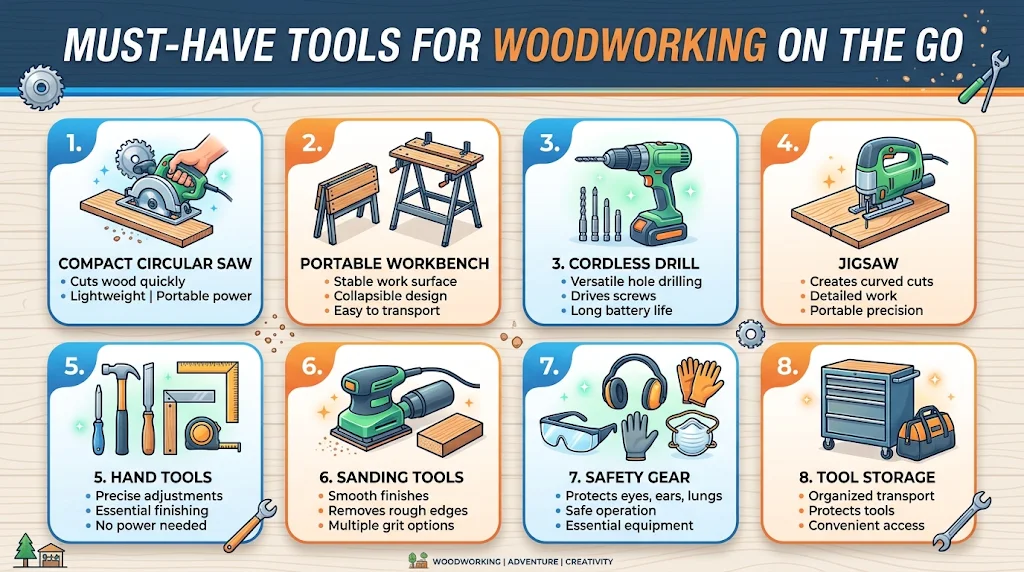
Woodworking can be a fulfilling hobby or profession, but when you’re on the go, you need tools that are both portable and effective. Whether you’re heading to a job site or just working in a smaller space, certain tools can make a significant difference. Here are the essential tools that every mobile woodworker should have in their arsenal.
1. Compact Circular Saw
A compact circular saw is a must-have for anyone working with wood while on the go. Unlike a full-sized saw, a compact version is lightweight and easy to transport. It allows you to make straight cuts with ease, saving time and energy.
2. Portable Workbench
A sturdy and foldable workbench can provide you with a reliable surface to work on. There are many options available that are lightweight yet durable enough to support various woodworking tasks. Look for models that have clamping capabilities to secure your materials.
3. Cordless Drill
Having a cordless drill enables you to drill and drive screws without being tethered to an outlet. This flexibility is invaluable for mobile woodworking. Choose a drill with multiple speed settings and a good battery life to maximize efficiency.
4. Jigsaw
A jigsaw is perfect for making intricate cuts, curves, and patterns. It’s compact and easy to handle, making it an excellent choice for mobile projects. Jigsaws can cut through various materials, including wood, metal, and plastic, ensuring versatility.
5. Hand Tools
While power tools are fantastic, you can’t overlook the importance of hand tools. Here are some essential hand tools for woodworking on the go:
- Chisels: A set of chisels allows for detailed work and is easily portable.
- Saw: A traditional hand saw can be useful for quick cuts when you don’t want to set up power tools.
- Measuring Tape: Accurate measurements are crucial in woodworking, so a compact measuring tape is essential.
- Square: A carpenter’s square helps ensure that your cuts are straight and your angles are accurate.
6. Sanding Tools
Sanding is a critical part of woodworking. Invest in a portable random orbit sander or hand sanding blocks. These tools can help you achieve a smooth finish on your pieces, even when working away from your usual setup.
7. Safety Gear
When working with tools, safety should always be your priority. Be sure to include the following in your mobile woodworking kit:
- Safety Glasses: Protect your eyes from dust and debris.
- Ear Protection: Power tools can be loud, so earplugs or earmuffs are necessary.
- Dust Mask: A mask will protect you from inhaling dust particles, especially when sanding.
8. Tool Storage
To keep your workspace organized, invest in a sturdy tool bag or toolbox. Look for one with multiple compartments to easily access your tools. Proper storage can help minimize the time spent searching for items, allowing you to focus on your projects.
Tips for Optimizing Space and Functionality in a Mobile Workbench

Creating a mobile woodworking workbench is an exciting venture that allows you to take your crafting skills on the go. However, to maximize your productivity, it’s essential to prioritize both space and functionality. Here are some effective strategies and tips to help you design a workbench that meets your needs while keeping things organized and efficient.
Choose the Right Size
The first step in optimizing space is determining the right size for your mobile workbench. Think about where you plan to use it and the materials you often work with:
- Work Area: Ensure the bench fits comfortably in your workspace, including any additional equipment you may have.
- Material Size: Consider the dimensions of the materials you typically use. Your workbench should accommodate these dimensions without feeling cramped.
- Mobility: Ensure it’s easy to transport without being overly cumbersome.
Utilize Vertical Space
One of the best ways to save space is by utilizing vertical storage options. Here are a few ideas:
- Shelving Units: Install shelves above your workbench for easy access to tools and materials.
- Hooks and Pegboards: Use hooks or pegboards to hang tools. This keeps them off the work surface and readily available.
- Magnetic Strips: Use magnetic strips to hold metal tools in a visible location.
Incorporate Multi-Functional Features
Adding multi-functional features to your mobile workbench can significantly enhance its usability. Here are some features to consider:
- Drop-leaf Design: A drop-leaf extension can provide additional workspace when needed while keeping your bench compact.
- Built-In Storage Compartments: Create compartments or drawers to store essential tools and materials, reducing clutter.
- Foldable Legs: Consider incorporating foldable legs that you can tuck away when the workbench isn’t in use.
Prioritize Ergonomics
Comfort is key when working on your mobile woodworking workbench. Here’s how to ensure your workspace is ergonomic:
- Adjustable Height: Create a workbench with adjustable height features to accommodate varying tasks and your own comfort.
- Proper Tool Placement: Keep frequently used tools within easy reach to minimize strain.
- Comfortable Accessories: Use padded mats or supportive stools when working for extended periods.
Material Selection Matters
Your choice of materials for the workbench can directly impact its durability and functionality:
- Wood Types: Opt for hardwoods like maple or birch for a solid surface that withstands heavy use.
- Surface Finish: Apply a finish that allows for easy clean-up and minimizes damage from spills.
- Wheels: Use durable wheels that can lock in place to stabilize the workbench during use.
Plan for Power Access
Power access into your design can streamline your workflow. Here’s what you should do:
- Built-In Outlets: Install power outlets directly into the workbench for easy access to power tools.
- Extension Cords: Keep extension cords neatly organized to prevent tangling and tripping hazards.
Safety Guidelines for Woodworking with a Portable Workbench
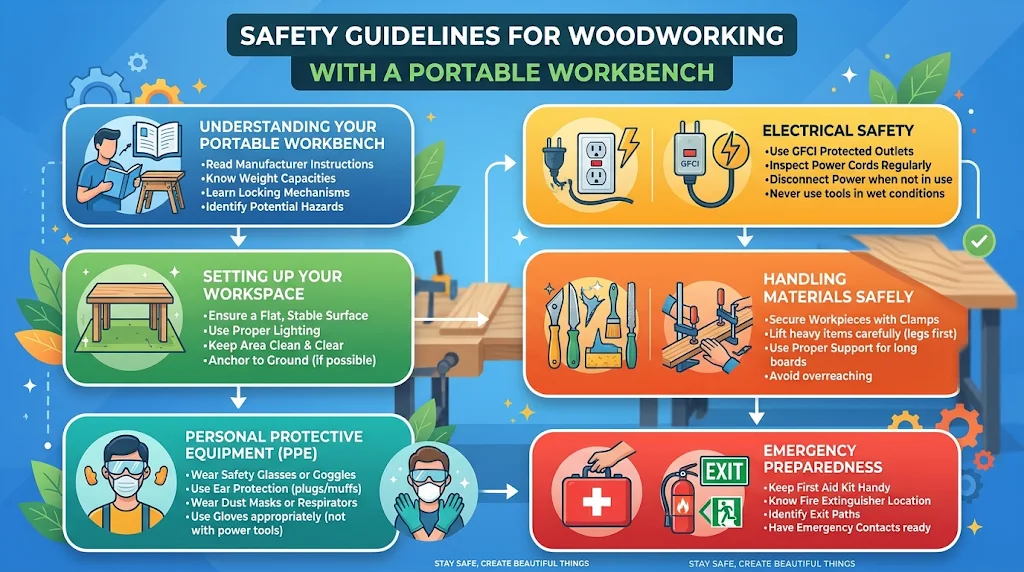
Woodworking can be a fulfilling hobby or profession, offering an opportunity to create beautiful pieces of furniture or unique crafts. However, safety should always be your top priority, especially when using a portable workbench. A portable workbench provides flexibility and convenience, but with that flexibility comes the need for vigilance in ensuring a safe working environment. Here are some essential safety guidelines to keep in mind when woodworking with a portable workbench.
Understanding Your Portable Workbench
Before diving into any project, it’s crucial to familiarize yourself with your portable workbench. Each model may have different features and specifications. Refer to the manufacturer’s instructions and specifications for safe use. A solid understanding of your workbench can help prevent accidents.
Setting Up Your Workspace
Creating a safe and organized workspace is vital for efficient woodworking. Follow these suggestions:
- Choose the Right Location: Make sure you work in a well-lit area, and ensure that the surface beneath your workbench is stable and even.
- Clear the Area: Keep your workspace free from clutter, tools, and any other distractions that could cause accidents.
- Secure Your Workbench: Ensure that your portable workbench is securely locked in place and stable before starting any project.
Personal Protective Equipment (PPE)
Wearing the right safety gear is essential to ensure your safety. Make sure you are equipped with:
- Safety Glasses: Protect your eyes from dust, debris, and flying particles.
- Ear Protection: Use earplugs or earmuffs to protect your hearing from loud tools.
- Respirators or Masks: Prevent inhalation of sawdust and fumes by wearing appropriate masks.
- Gloves: Use durable gloves to protect your hands from injuries while handling tools, but avoid loose gloves that could get caught in machinery.
Tool Safety and Maintenance
Your tools are your lifeline in woodworking, so it’s essential to keep them in great condition. Here are some tips to ensure tool safety:
- Regular Inspections: Routinely check your tools for any signs of damage or wear. Replace or repair damaged equipment immediately.
- Use Tools Properly: Always follow the manufacturer’s instructions regarding each tool’s use. Avoid using tools for unintended purposes.
- Keep Tools Sharp: Dull tools can be more dangerous than sharp ones, as they require more force and can slip.
Electrical Safety
If you’re using electrical tools, be mindful of these precautions:
- Check Cords: Always inspect cords for any fraying or damage before plugging in. A damaged cord can lead to electrical shock.
- Disconnect Tools: Unplug tools when they are not in use, and before changing blades or bits.
- Use Ground Fault Circuit Interrupters (GFCIs): Consider using GFCIs on electrical outlets to prevent electrical accidents, especially in wet areas.
Handling Materials Safely
When working with wood and other materials, consider these safety tips:
- Use Proper Techniques: Employ proper lifting techniques to avoid injuries when handling heavy or awkward materials.
- Secure Your Workpieces: Always use clamps or vises to hold your work securely in place while cutting or sanding.
- Be Aware of Dust: Wood dust can be harmful. Make sure you have dust extraction systems in place or wear a mask when sanding or cutting.
Emergency Preparedness
No one likes to think about accidents, but preparing for them can make all the difference. Ensure you have:
- First Aid Kit: Keep a fully stocked first aid kit within reach.
- Emergency Contacts: Have a list of emergency contacts readily available, including local emergency services.
- Knowledge of Basic First Aid: Familiarize yourself with basic first aid practices to handle minor injuries effectively.
Practicing safety while woodworking with a portable workbench may seem tedious, but it’s an essential step that contributes to a more enjoyable and productive experience. For further tips and resources on woodworking safety, you can visit sites like Woodworking Network or Wood Magazine.
Conclusion
Creating a mobile woodworking workbench is a rewarding project that can drastically enhance your woodworking experience. By considering essential features and design tips, you can build a versatile workbench tailored to your specific needs. Selecting the right materials not only ensures durability but also keeps your workbench lightweight and easy to transport.
Equipping your mobile workbench with must-have tools allows you to tackle projects anywhere your creativity leads you. You can optimize space and functionality by incorporating storage solutions, such as drawers or hooks, making your workspace efficient and organized. Remember, a well-structured workbench can save you time and improve productivity, enabling you to focus on your craft.
Prioritizing safety is vital when working with a portable workbench. Make sure to follow guidelines to protect yourself and those around you. Securing your materials properly and using appropriate personal protective equipment can prevent accidents and ensure a safe woodworking environment.
Building a mobile woodworking workbench doesn’t just provide a practical solution; it also inspires creativity and fosters skill development. Whether you are a beginner or a seasoned woodworker, this project can deepen your appreciation for woodworking while accommodating your need for portability. Embrace the journey of crafting your mobile workbench, and enjoy the flexibility it brings to your woodworking adventures. Happy building!