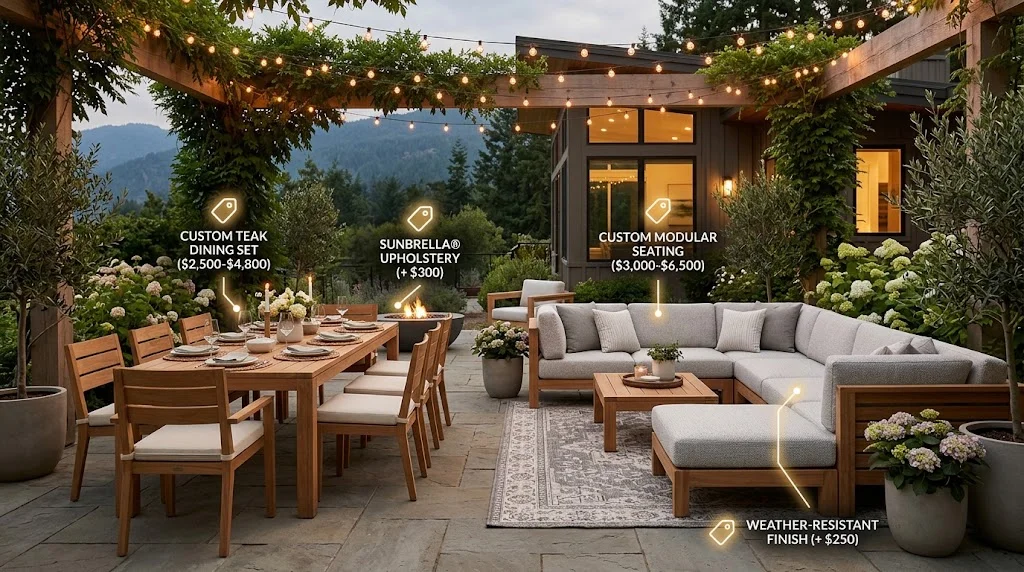
Creating an outdoor oasis with custom furniture is a rewarding experience that can transform any space into a perfect retreat. However, understanding the pricing structure for custom outdoor furniture can be overwhelming. This Custom Furniture Pricing Guide for Outdoor Use will break down the key factors that influence pricing, helping you make informed decisions for your outdoor setup.
Materials Matter
When it comes to pricing custom outdoor furniture, the materials used play a significant role. Outdoor furniture needs to withstand the elements, so consider the following materials:
- Teak: Known for its durability and resistance to moisture, teak is a popular choice. Prices can range from $1,500 to $3,000 for a dining set, depending on design and size.
- Aluminum: Lightweight and rust-resistant, you might spend between $500 and $1,500 on aluminum pieces.
- Wicker: Synthetic wicker furniture provides a stylish and weather-resistant option. Expect costs between $800 and $2,000 for a seating group.
- Wood: Hardwoods such as eucalyptus are often more budget-friendly, but prices can vary dramatically based on the type (ranging from $600 to $1,800 for benches and tables).
Customization Choices
Customized features can significantly affect pricing. Here are several elements that may influence your overall costs:
- Size: Larger furniture typically incurs higher costs due to the increased material and labor needed.
- Design: Intricate designs or custom shapes can lead to higher prices. Simple, minimalist designs often cost less.
- Upholstery: The type of fabric and the complexity of the cushions can also impact prices. High-performance outdoor fabrics can add $100 to $500.
- Finishes: Specialty finishes and treatments to enhance weather resistance may add another $200 to $600.
Craftsmanship and Labor
The quality of craftsmanship is an essential factor to consider. Higher-end manufacturers often invest in skilled artisans, ensuring that every piece meets stringent quality standards. This can result in prices ranging from:
| Type of Craftsmanship | Price Range |
|---|---|
| Mass-Produced | $200 – $500 |
| Custom Handmade | $600 – $3,000 |
Where to Buy Custom Outdoor Furniture
Finding the right vendor can also affect prices. Here are a few reputable websites that specialize in custom outdoor furniture:
Budgeting for Your Project
To help you manage your costs, create a budget tailored to your specific needs. Here’s a simple structure to follow:
- Determine essential pieces: sofas, dining tables, chairs, etc.
- Choose your materials and finishes based on durability and style.
- Account for delivery and installation fees.
- Consider care and maintenance costs for upkeep.
Understanding Seasonal Discounts
Many retailers offer discounts during off-seasons, usually at the end of summer or beginning of fall. This can be an excellent opportunity to consider purchasing custom furniture at a discounted rate. Keep an eye out for sales events, clearance items, and promotional offers that can save you significantly.
Factors Influencing the Cost of Outdoor Custom Furniture
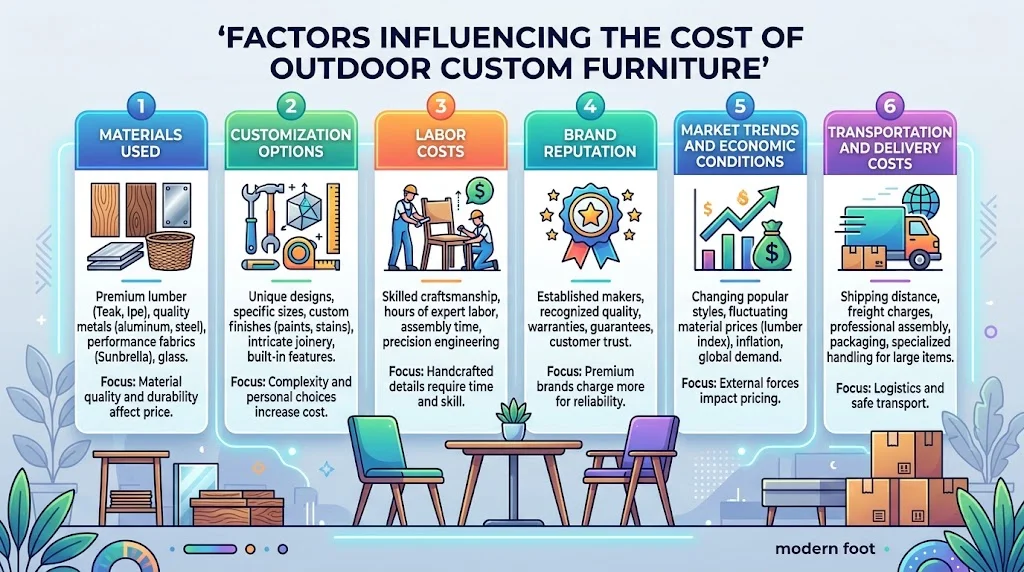
When shopping for outdoor custom furniture, understanding the factors that influence pricing can help you make informed decisions. Various elements come into play that can significantly affect the cost. Here’s a breakdown of those factors to guide you in your purchase.
Materials Used
One of the most significant factors affecting the price of outdoor custom furniture is the materials chosen for its construction. Different materials offer various benefits, durability, and aesthetics:
- Teak Wood: Considered premium, teak is known for its longevity and resistance to weather. It often commands a higher price.
- Aluminum: Lightweight and rust-resistant, aluminum furniture tends to be more affordable than wood. However, its durability depends on the thickness of the material.
- Wicker: Synthetic wicker is popular for modern outdoor settings. It usually costs less than solid wood but varies based on craftsmanship and brand.
- Steel: Durable and sturdy, steel can provide a sleek look but may require additional care against rust, impacting pricing based on quality.
Customization Options
The level of customization significantly influences the cost. Options range from minor adjustments to complete custom designs:
- Size: Furniture that requires unusual dimensions or extra-large pieces will typically increase the overall price.
- Design Details: Intricate designs like carvings or custom shapes will contribute to higher labor costs.
- Upholstery: Selecting high-end fabrics can increase costs. Outdoor fabrics designed to withstand the elements are often more expensive but worthwhile for longevity.
- Color and Finish: Special finishes or colors may necessitate additional treatments, further increasing costs.
Labor Costs
Labor costs vary based on the craftsmanship and expertise required. If you’re commissioning bespoke furniture, skilled artisans or manufacturers may charge higher rates. Additionally,:
- Location: Labor costs can fluctuate depending on geographic location, with urban areas often experiencing higher prices compared to rural settings.
- Complexity: Complex designs that require significant skill can lead to increased labor charges. The time invested directly affects pricing.
Brand Reputation
The reputation of the furniture brand also affects pricing. Well-established brands that have a history of quality workmanship and materials may charge more, as they often provide warranties and customer support. Here are some points to consider:
- Warranty: Established brands typically offer warranties, adding value but also increasing the initial cost.
- Reputation: Brands known for their durability and style can often demand a premium.
- Reviews: Researching customer feedback can help justify the higher costs of reputable brands.
Market Trends and Economic Conditions
External economic conditions can influence furniture pricing. Factors like supply chain disruptions, material shortages, or inflation can lead to higher prices. Staying informed about market trends can provide insight into potential price fluctuations. Here are some aspects to monitor:
- Trends: Popular styles can drive demand, causing prices to rise.
- Supply Chain: Any disruptions in material sourcing can lead to shortages and increased costs.
- Seasonality: Outdoor furniture prices may rise in spring and summer when demand peaks.
Transportation and Delivery Costs
Transportation costs can factor into the overall price. Consider these elements related to shipping:
- Distance: Greater distances can increase shipping charges, especially for large furniture pieces.
- Delivery Options: White-glove delivery services that offer set-up and assembly will generally cost more.
- Freight Charges: For bulk orders or heavy items, freight charges may apply, impacting total costs.
Comparing Materials: What Affects Outdoor Furniture Pricing?
When shopping for outdoor furniture, the materials used play a significant role in determining the pricing. Various factors come into play when comparing outdoor furniture materials, each affecting the overall cost. Let’s explore these materials and how they influence pricing, ensuring you make informed choices for your outdoor spaces.
Types of Materials
- Wood – An ever-popular option for outdoor furniture, wood offers natural beauty and durability. However, the type of wood heavily influences the cost. Hardwoods like teak and mahogany are more expensive than softwoods like pine or fir but offer more durability and resistance to the elements.
- Metal – Aluminum and steel are common metals used in outdoor furniture. Aluminum is lightweight and resistant to rust, making it a cost-effective choice. In contrast, wrought iron or stainless steel offers sturdiness and style but comes at a higher price.
- Plastic – Outdoor furniture made from high-density polyethylene (HDPE) is popular for its affordability and maintenance-free nature. While less expensive initially, it might not offer the longevity of other materials.
- Fabric – Many outdoor seating options use fabric materials treated for weather resistance. The type of fabric and its UV protection levels can sway prices, with premium materials costing more.
Factors Impacting Pricing
Several key factors affect outdoor furniture pricing:
- Durability – Higher-priced furniture typically showcases better durability. For instance, teak wood can last decades with proper care, whereas cheaper woods may need replacement every few years.
- Maintenance Requirements – Some materials require more upkeep than others. Furniture made from hardwood may need regular oiling, while metal options might need rust protection. This ongoing maintenance can influence the overall cost in the long run.
- Design Complexity – Intricate designs and custom features can add significantly to the price. For instance, beautifully crafted custom furniture will undoubtedly cost more than standard, mass-produced options.
- Brand Reputation – Renowned brands often command higher prices due to their quality guarantees and customer service. Investing in well-established brands can be worthwhile for peace of mind and longevity.
- Environmental Considerations – Sustainable options made from reclaimed or eco-friendly materials tend to be pricier but are gaining popularity as consumers become more environmentally conscious.
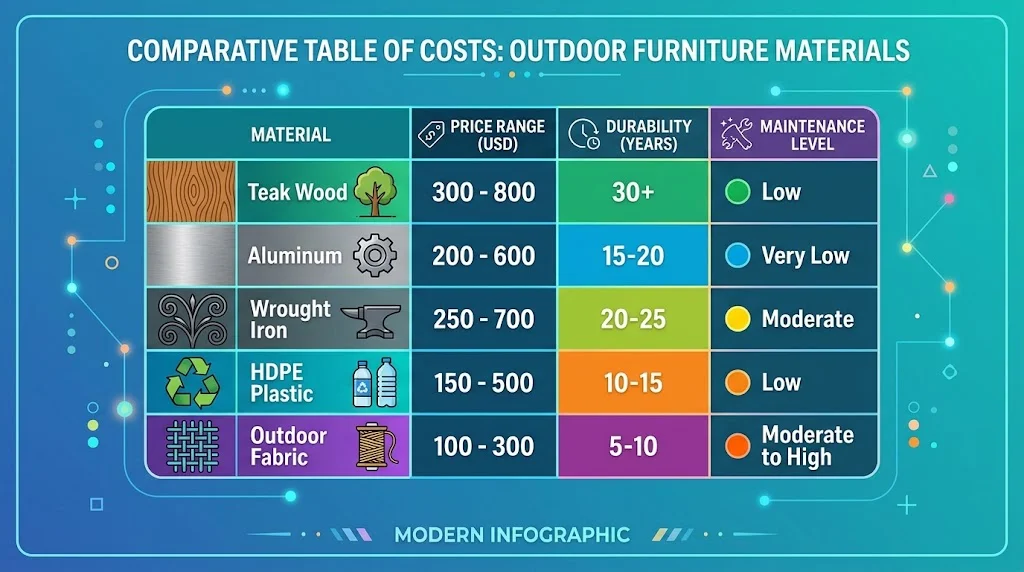
Comparative Table of Costs
| Material | Price Range (USD) | Durability (Years) | Maintenance Level |
|---|---|---|---|
| Teak Wood | $300 – $800 | 30+ | Low |
| Aluminum | $200 – $600 | 15-20 | Very Low |
| Wrought Iron | $250 – $700 | 20-25 | Moderate |
| HDPE Plastic | $150 – $500 | 10-15 | Low |
| Outdoor Fabric | $100 – $300 | 5-10 | Moderate to High |
Understanding Your Needs
When choosing outdoor furniture, consider your specific needs and preferences. Budget, aesthetic appeal, and how much time you’re willing to spend on maintenance will all factor into your decision. Remember that the upfront cost is only part of the story; you should also take into account the longevity of the material.
For more detailed insights on outdoor furniture options and pricing, websites such as Home Depot and Made provide extensive resources and pricing guides.
By understanding the relationship between materials and pricing, you can select outdoor furniture that not only fits your budget but also serves you well for years to come. Whether investing in luxurious teak wood or practical HDPE plastic, your choice should reflect your style and needs.
Tips for Budgeting Your Outdoor Furniture Customization
When customizing your outdoor furniture, it’s essential to keep your budget in check. Here are some tips to help you effectively budget and make informed decisions on your custom furniture project. By following these guidelines, you can create a beautiful outdoor space without overspending.
1. Determine Your Needs
The first step in budgeting for customized outdoor furniture is to identify your needs. Ask yourself:
- How much space do you have?
- What type of furniture do you want? (e.g., tables, chairs, loungers)
- What style suits your existing outdoor décor?
By clearly defining what you need, you can avoid unnecessary expenses and focus your budget on essential pieces.
2. Research Material Options
Quality is crucial when it comes to outdoor furniture. However, not all materials come at the same price. Here are popular outdoor materials and their characteristics:
| Material | Durability | Price Range |
|---|---|---|
| Teak | Highly durable, resistant to water and insects | High ($$$) |
| Aluminum | Lightweight, rust-resistant, good for all weather | Moderate ($$) |
| Wood | Varies with type, often requires maintenance | Varies ($-$$$) |
| Wicker | Stylish but can wear over time if not treated | Moderate ($$) |
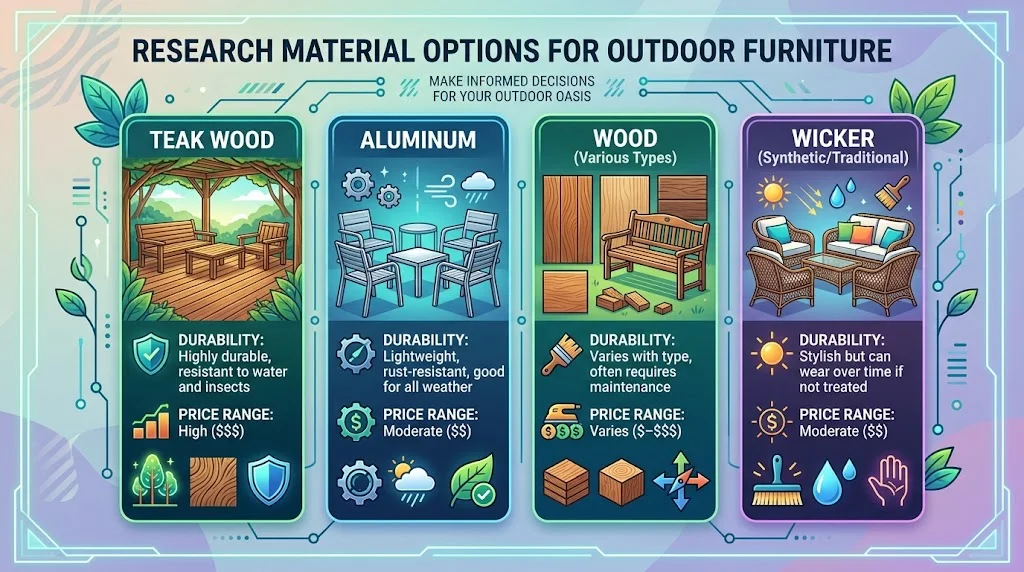
Understanding the material options allows you to choose something that fits your budget while ensuring longevity.
3. Set a Realistic Budget
Create a budget that includes not just the cost of furniture, but also any additional expenses. Consider these factors:
- Customization fees
- Delivery costs
- Assembly or maintenance services
Setting a comprehensive budget can prevent unexpected costs from sneaking up on you.
4. Explore Customization Choices
Customization is a great way to make your furniture unique, but it can quickly become expensive. Here’s how to manage costs:
- Choose simpler designs that require less labor.
- Select standard dimensions rather than custom sizes.
- Opt for fewer custom features.
These strategies can help you achieve desired aesthetics without straining your wallet.
5. Consider Seasonal Sales and Discounts
Outdoor furniture often goes on sale during certain seasons. Keep an eye out for:
- End-of-summer sales
- Holiday promotions
- Clearance events
Timing your purchase can significantly affect your overall budget and allow you to invest more in quality customization.
6. Get Multiple Quotes
Always seek multiple quotes from different suppliers or custom furniture makers. Comparing these estimates gives you leverage in negotiations and helps you identify reasonable pricing. Make sure to ask what factors influence the quote to understand the variations fully.
7. Factor in Maintenance Costs
Custom outdoor furniture may require upkeep. Investigate how much it will cost to maintain your chosen materials over time, including treatments or covers to protect them from the elements. This ongoing expense should be added to your overall budget to avoid future surprises.
With these tips, you can create a stunning outdoor space with custom furniture that fits your budget. Remember, investing in quality outdoor furniture enhances your lifestyle while providing a place for relaxation and enjoyment.
For more information on outdoor furniture customization and pricing, you can visit Furniture.com or IKEA. These sites offer helpful insights into trends and pricing in the outdoor furniture industry.
Understanding the Value: Is Custom Outdoor Furniture Worth the Investment?
Investing in custom outdoor furniture can significantly enhance the enjoyment and functionality of your outdoor spaces. Unlike mass-produced options, custom pieces are tailored to your specific needs and preferences, providing both aesthetic appeal and practical benefits. Let’s delve deeper into why custom outdoor furniture is a valuable investment.
When considering custom outdoor furniture, several factors come into play. Here are some key aspects that underline its value:
- Quality and Durability: Custom outdoor furniture is typically made from high-quality materials that are designed to withstand the elements. The durability of these pieces means they can last for years, saving you money in the long run.
- Personalization: With custom options, you can choose everything from design and color to materials. This means your furniture will match your outdoor decor perfectly and will reflect your personal style.
- Comfort: Tailored furniture can be designed specifically for your comfort. You can select the dimensions, shapes, and cushioning that suit your preferences and enhance your outdoor experience.
- Space Optimization: If you have a unique outdoor space or specific measurements, custom furniture can be designed to fit these areas perfectly. This optimizes the use of your space and enhances its functionality.
- Sustainability: Many custom furniture makers prioritize environmentally friendly materials. Investing in customized sustainable pieces can contribute positively to the environment.
When evaluating if custom outdoor furniture is worth the investment, consider the following economic factors:
| Factor | Custom Outdoor Furniture | Mass-Produced Furniture |
|---|---|---|
| Initial Cost | Higher | Lower |
| Longevity | 10-20 years | 3-7 years |
| Resale Value | High | Low |
| Maintenance Needs | Low | High |
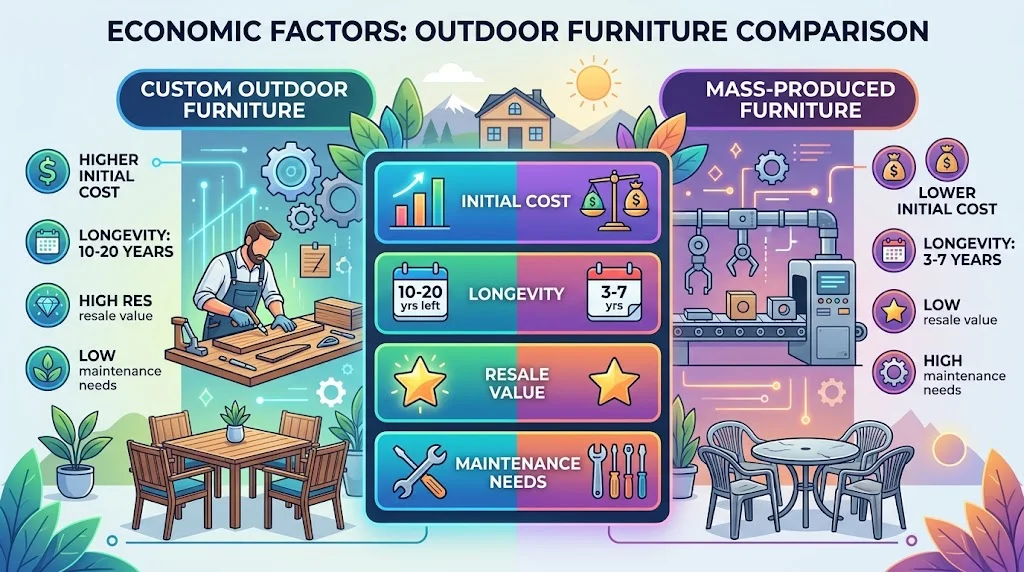
While the upfront cost of custom outdoor furniture may be higher, the benefits often outweigh the initial expense. You’re not just buying furniture; you’re investing in a lifestyle. High-quality materials are designed to endure the harsh outdoor conditions, reducing the need for replacement and repair over time.
Resale value
Another point of consideration is resale value. Custom outdoor furniture generally retains its worth better than mass-produced options. This is especially beneficial if you ever decide to sell your home. Well-crafted, stylish pieces can attract buyers and increase your property’s market value.
Emotional investment
Moreover, think about the emotional investment. Custom pieces often hold sentimental value. They may be designed for specific occasions, family gatherings, or even to commemorate a special event. Having furniture that tells a story adds to its value in a way that mass-produced items cannot.
Set a budget
Before making a decision, it’s advisable to set a budget and assess your outdoor space. Measure your area accurately, and consider how you want to utilize the space—whether for entertaining, dining, or simply relaxing.
Reputable manufacturers
To ensure you make the best choice for custom outdoor furniture, seek out reputable manufacturers. Websites such as Custom Outdoor Furniture provide valuable resources and options tailored for outdoor use. Check their reviews and client testimonials to gauge their quality and service.
Individual needs
Ultimately, the decision to invest in custom outdoor furniture boils down to your individual needs, lifestyle, and how much you value quality over cost. Whether you choose custom or store-bought furniture, focus on what aligns with your aesthetic and functional requirements.
Custom outdoor furniture can undoubtedly be worth the investment for those who wish to enhance their outdoor experience. By providing quality, customization, and value retention, it truly stands out as a favorable choice for enhancing your outdoor living space.
Conclusion
Navigating the world of custom outdoor furniture can seem daunting, but with a clear understanding of pricing and factors that influence costs, you can make informed decisions. Whether it’s the choice of materials, design intricacies, or craftsmanship, knowing how they impact pricing helps you budget effectively.
Outdoor furniture can vary significantly depending on these elements, so it’s essential to compare options that not only fit your style but also your budget.
To keep costs manageable, consider prioritizing your needs and exploring various materials. For instance, high-quality teak or weather-resistant metals may have a higher upfront cost but can provide greater longevity, ultimately offering value over time.
While investing in custom pieces may seem like a hefty expense at first glance, the value lies in the tailor-made design that enhances your outdoor space and meets your personal style. Custom furniture allows you to create unique solutions that mass-produced items often cannot achieve. The right outdoor furniture not only elevates the aesthetic of your area but also enhances your outdoor living experience, making it a worthwhile investment for years to come.
By following this Custom Furniture Pricing Guide for Outdoor Use and recognizing the various factors at play, you can embark on your outdoor furniture journey with confidence. Remember, the goal is to create a space that feels authentically yours while enjoying the comfort and functionality that custom designs provide.