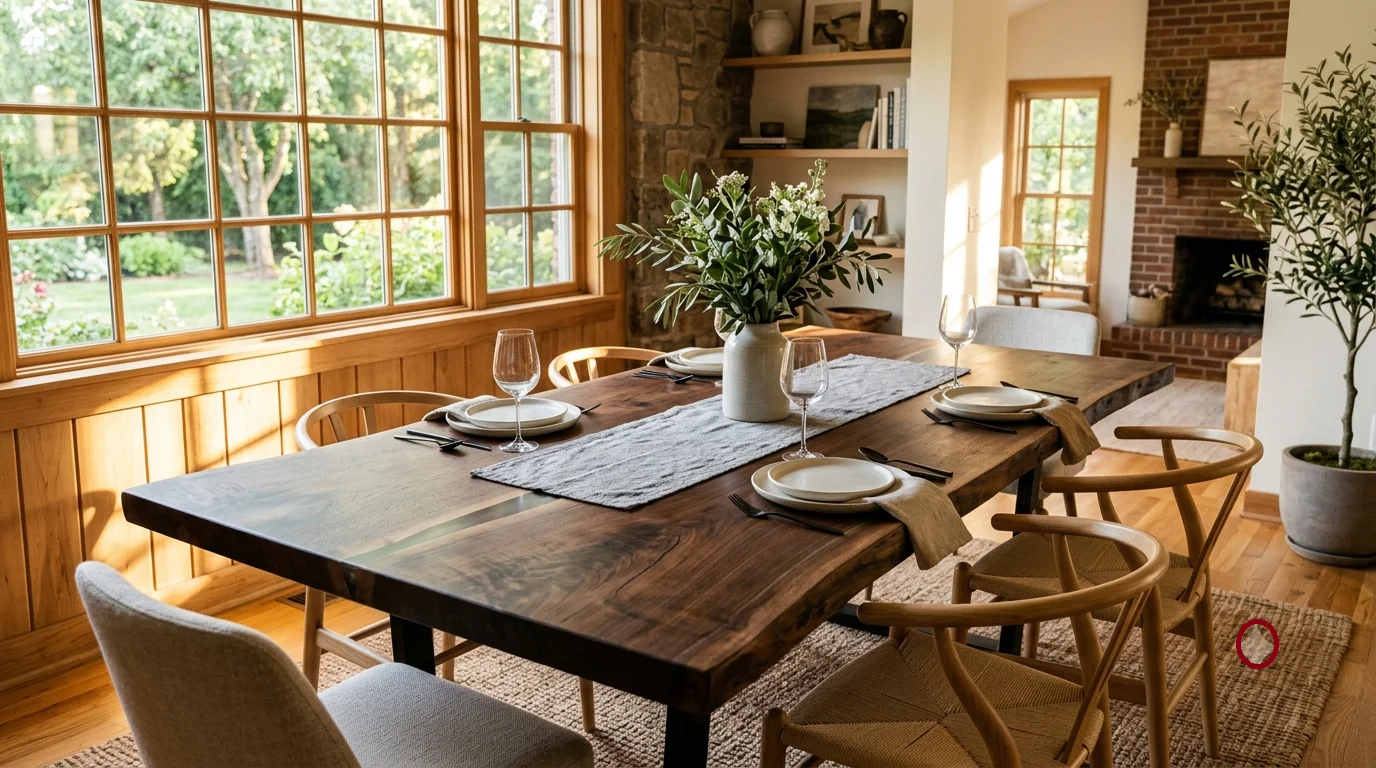
Creating a stunning live edge dining table is a rewarding project that can elevate your home’s decor and provide a unique focal point for gatherings. With the right materials, tools, and a step-by-step approach, you can build a beautiful table that showcases the natural beauty of wood. This guide will walk you through the process, including selecting materials and providing free plans to help you craft your own masterpiece.
Understanding Live Edge Design
Before diving into the project, it’s essential to understand what a live edge table is. This style features the natural edge of the wood, showcasing the original shape and character of the tree. These tables often have unique features such as knots, cracks, and grain patterns, making each piece one-of-a-kind.
What You Will Need
Gathering your materials and tools is a crucial first step. Here’s what you’ll need:
- Wood Slab: Choose a slab of hardwood like oak, walnut, or cherry. This will be the top of your table.
- Table Legs: You can use pre-made legs or create custom ones from lumber.
- Saw: A table saw or circular saw is ideal for cutting your wood.
- Sander: A hand sander or orbital sander will help achieve a smooth finish.
- Wood Glue: Use high-quality wood glue for bonding pieces.
- Finish: Choose a stain or sealant to protect and enhance your table’s appearance.
Step-by-Step Crafting Process
Follow these steps to create your live edge dining table:
Select Your Wood Slab
Start by choosing a wood slab that speaks to you. Look for unique features like knots or a natural curve. Ensure it’s properly dried to prevent warping after building. You can find slabs at local lumber yards or online marketplaces.
Design Your Table
Sketch your table design. Consider the size and shape that will suit your dining area. Typical dining tables range from 60 to 72 inches in length. To help you visualize, you can use free design tools available online, such as Wood Magazine.
Cut the Wood to Size
Using your saw, carefully cut the wood slab to your desired dimensions. Maintain a steady hand to ensure clean edges. If you’re using multiple pieces, ensure they fit well together.
Sanding the Surface
Once your slab is cut, it’s time to sand it smooth. Begin with a coarse grit, like 80, and gradually move to a finer grit, such as 220. This process will highlight the unique grain of the wood.
Assembly
If you’re using multiple pieces for the top, apply wood glue between them and clamp them together until they dry. If you’re working with a single slab, skip this step.
Attaching the Legs
Now, attach the table legs to the underside of the slab. If using pre-made legs, follow the manufacturer’s instructions. Ensure everything is level and secure for stability.
Finishing Touches
Apply a stain or sealant to protect your table from moisture and scratches. This will enhance the wood’s beauty and prolong its life. Allow the finish to dry completely before using the table.
Finding Free Plans
Crafting a live edge dining table can be made easier with free plans that guide you through the process. Websites like Woodworker’s Source and Ana White offer downloadable plans that you can customize according to your preferences.
Tips for Success
- Take your time during the sanding process for the best finish.
- Always ensure safety measures are in place while using power tools.
- Experiment with different stains to find the look that matches your decor.
Creating your own live edge dining table not only provides a functional piece of furniture but also allows you to connect with nature and add a personal touch to your home. With the right approach, your table can be a source of pride and a centerpiece for family gatherings.
Understanding the Benefits of Live Edge Furniture in Home Decor
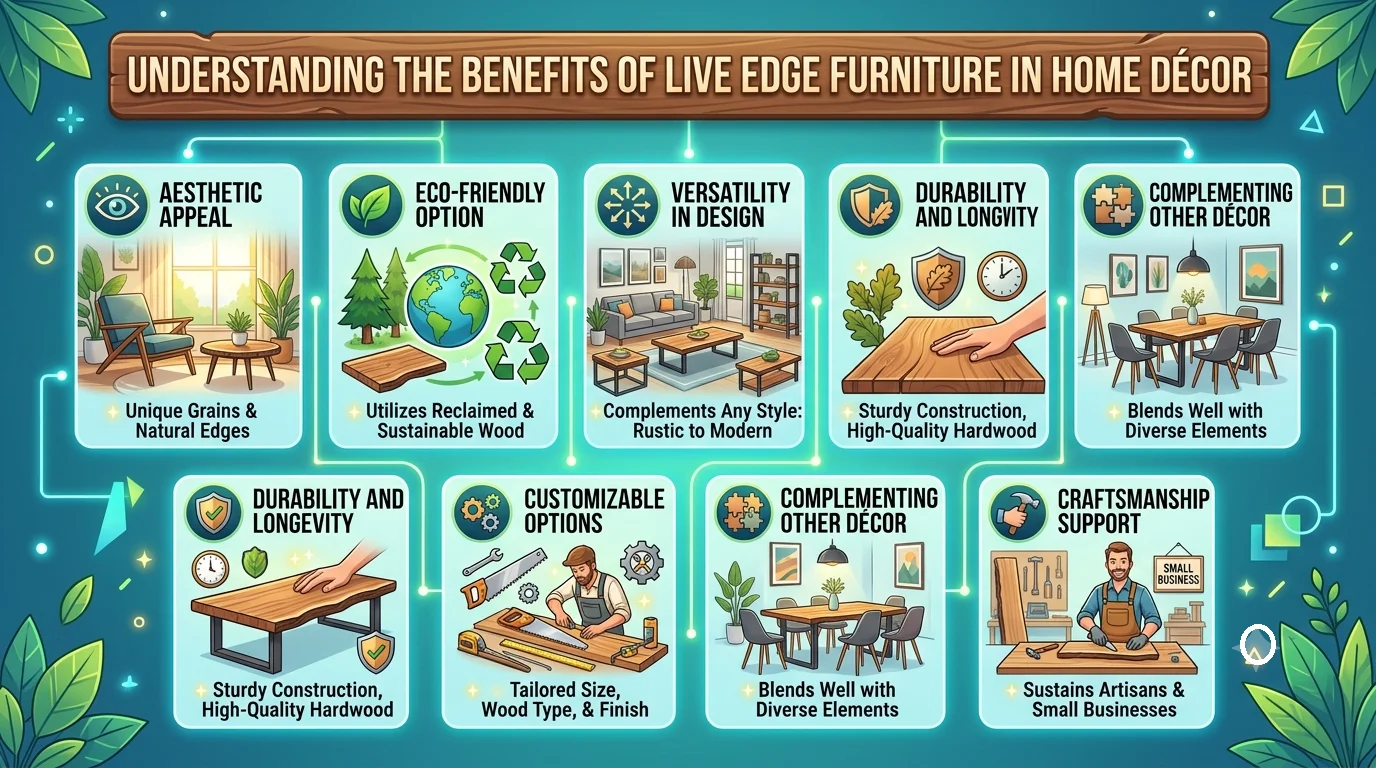
Live edge furniture has become a popular choice in home decor for many reasons. This unique style offers a blend of natural beauty and modern design, making it appealing to a wide range of tastes. Whether you’re redecorating your living room or updating your dining area, live edge furniture can elevate your space. Below are some of the key benefits of incorporating live edge pieces into your home.
Aesthetic Appeal
One of the primary reasons people choose live edge furniture is its stunning visual appeal. Unlike traditional furniture, live edge pieces maintain the natural edge of the wood, showcasing its unique grains and knots. This not only adds character but also creates a sense of warmth and authenticity. Each piece is one-of-a-kind, providing your home with a distinctive aesthetic that highlights the beauty of nature.
Eco-Friendly Option
In a world increasingly focused on sustainability, live edge furniture often comes from reclaimed or responsibly sourced wood. By choosing these pieces, you can contribute to environmental preservation. Many artisans utilize fallen trees or logging byproducts rather than cutting down healthy trees, minimizing their ecological footprint. This makes live edge furniture an excellent choice for conscious consumers.
Versatility in Design
Live edge furniture fits seamlessly into various design styles. Whether your home boasts a rustic charm or a sleek modern look, live edge pieces can complement it beautifully. These versatile items can be used in:
- Living Rooms
- Dining Rooms
- Offices
- Outdoor Spaces
From a stunning live edge dining table to a cozy coffee table, these pieces enhance any room’s ambiance.
Durability and Longevity
High-quality live edge furniture is often made from solid hardwood, ensuring that it can withstand years of use. Unlike mass-produced items, these furnishings are typically handcrafted with attention to detail, maximizing their durability. Properly cared for, live edge pieces can remain beautiful and functional for a lifetime, making them a wise investment for your home.
Customizable Options
Another significant advantage of live edge furniture is the ability to customize. Many artisans offer options for size, finish, and wood types, allowing you to tailor pieces to fit your specific needs and aesthetic preferences. This level of customization ensures that your live edge furniture not only fits perfectly in your space but also resonates with your personal style.
Complementing Other Decor
Live edge furniture pairs beautifully with a variety of materials and decor styles. Here are a few ways it can blend with other elements:
- Metal Accents: Combining live edge wood with metal legs or accents adds an industrial touch.
- Textiles: Soft textiles like wool or cotton cushion the wood’s hard surface, creating contrast and warmth.
- Natural Elements: Pairing live edge pieces with plants, stone, or other organic materials enhances the natural feel of your space.
Local Craftsmanship Support
Purchasing live edge furniture often means supporting local artisans and businesses. Many craftsmen are passionate about their work and take pride in creating beautiful, functional pieces. This not only helps sustain local economies but also means you’re receiving a unique product made with care and skill. Supporting craftsmanship fosters community and allows you to own a piece of art rather than just furniture.
Live edge furniture is a fantastic addition to any home. Its unique beauty, sustainability, and ability to fit seamlessly into various styles make it a desirable choice for those looking to enhance their decor. When you’re ready to explore live edge options, consider visiting sites like Woodworkers Source or LiveAuctioneers, which offer a range of products to suit your taste and needs.
By choosing live edge furniture, you can bring the beauty of the outdoors into your home while supporting sustainable practices and local artisans. Its one-of-a-kind nature ensures that your home decor will always feel personal and inviting.
Essential Tools and Materials for Building a Live Edge Dining Table
Building a live edge dining table is an exciting project that blends artistry and functionality. To make your creation process smooth and rewarding, having the right tools and materials is crucial. Below is a breakdown of the essential tools and materials you will need to get started on crafting your very own live edge dining table.
Essential Tools for Your Project
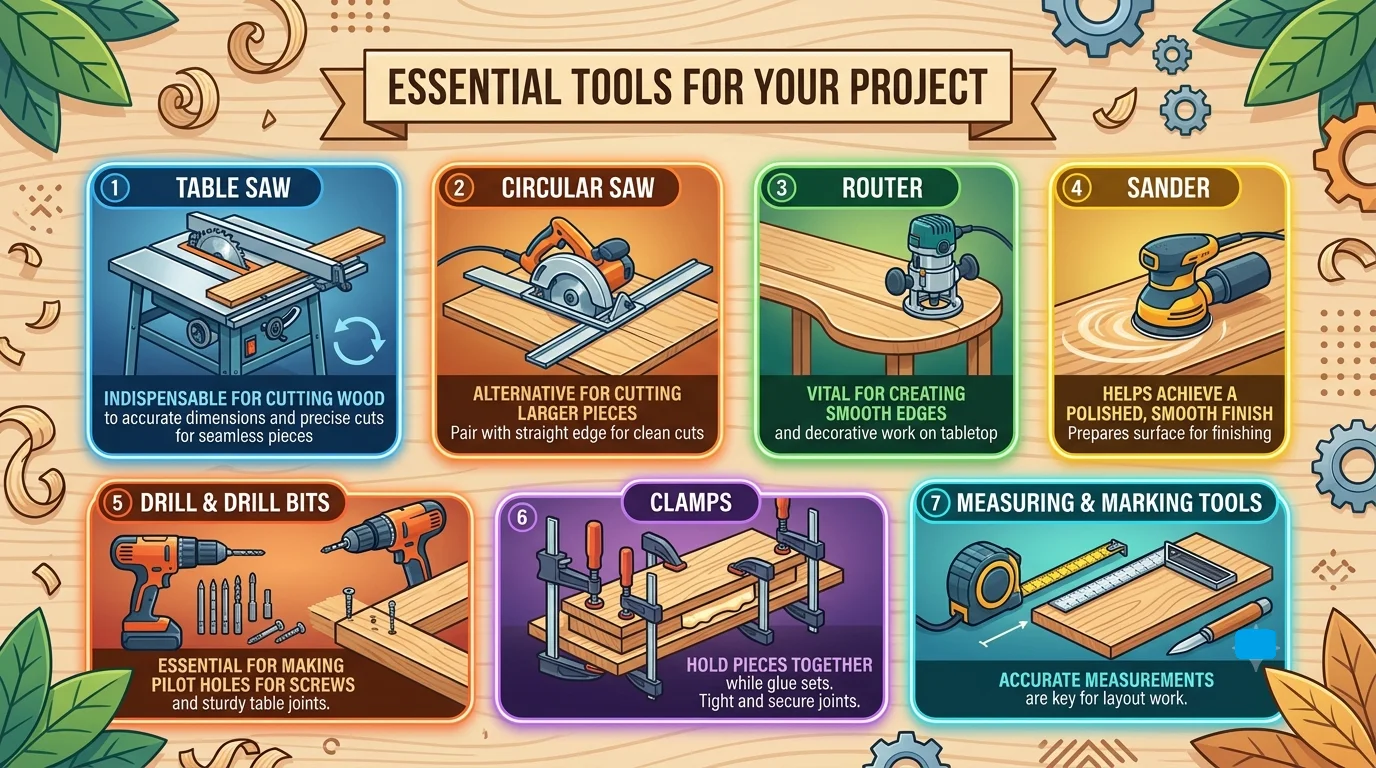
- Table Saw: A table saw is indispensable for cutting your wood to the desired dimensions accurately. It allows for precise cuts, ensuring your table pieces fit together seamlessly.
- Circular Saw: If you do not have a table saw, a circular saw can be an excellent alternative for cutting down larger pieces of wood. Pair it with a straight edge for clean cuts.
- Router: A router is vital for creating smooth edges on your table. It can also do decorative work on the tabletop’s surface, adding a personal touch to your project.
- Sander: Whether using a belt sander or an orbital sander, having a sander helps achieve a polished, smooth finish on your wood. This step prepares your tabletop for finishing.
- Drill and Drill Bits: A drill is essential for making pilot holes for screws, ensuring your table joints are sturdy and strong.
- Clamps: Invest in several robust clamps to hold your pieces together while glue sets. This ensures that your joints are tight and secure.
- Measuring and Marking Tools: Accurate measurements are key in woodworking. Use a tape measure, carpenter’s square, and a marking knife for precise layout work.
Necessary Materials
- Live Edge Wood Slabs: The centerpiece of your dining table is the live edge wood slab. Choose wood types such as walnut, oak, or maple for durability and aesthetic appeal. Shop local hardwood suppliers or online stores like Wood Magazine for quality slabs.
- Epoxy Resin (Optional): If your wood slab has cracks or voids, consider using epoxy resin to fill these areas. This adds strength and can also create a beautiful design element.
- Wood Glue: A strong wood glue is essential for securing your joints. Look for high-quality polyurethane or PVA wood glues for strong bonds.
- Finishing Products: Choose your finish wisely, as it will protect the wood and enhance its natural beauty. Options include polyurethane, varnish, or penetrating oils.
- Legs/Support Structure: Depending on your design, you can purchase pre-made table legs or build your own. Metal hairpin legs or a solid wood trestle can complement the live edge aesthetic.
Safety Gear
It’s essential to prioritize safety while working on your live edge dining table. Make sure to have the following safety gear on hand:
- Safety Glasses: Protect your eyes from sawdust and debris.
- Earmuffs or Earplugs: Protect your hearing while using power tools.
- Dust Mask: Sanding creates dust, which can harm your lungs. A mask keeps you safe from inhaling particles.
- Work Gloves: Protect your hands from sharp tools and rough edges.
Planning Your Build
Before diving into the project, it’s beneficial to take the time to plan your build. Create a sketch of your live edge dining table including measurements and details on how you want the final product to look. Consider the height, width, and overall style of the table. You can find free plans and tutorials online to guide you through the process. Websites like Ana White offer a range of free DIY plans that are useful for both beginners and experienced woodworkers.
Tips for Success
- Start with high-quality materials; your table will be more durable and visually appealing.
- Don’t rush the sanding or finishing process. A smooth surface leads to a better final appearance.
- Test any finish on a scrap piece of wood before applying it to your main tabletop to ensure the desired look.
- Include wood conditioner before applying stain or finish for an even appearance.
Building a live edge dining table is not just about the destination; it’s about enjoying the journey of creating something uniquely yours. With the right tools and materials, you’re well on your way to crafting a stunning centerpiece for your dining room. Happy woodworking!
Tips for Finishing and Maintaining Your Live Edge Dining Table
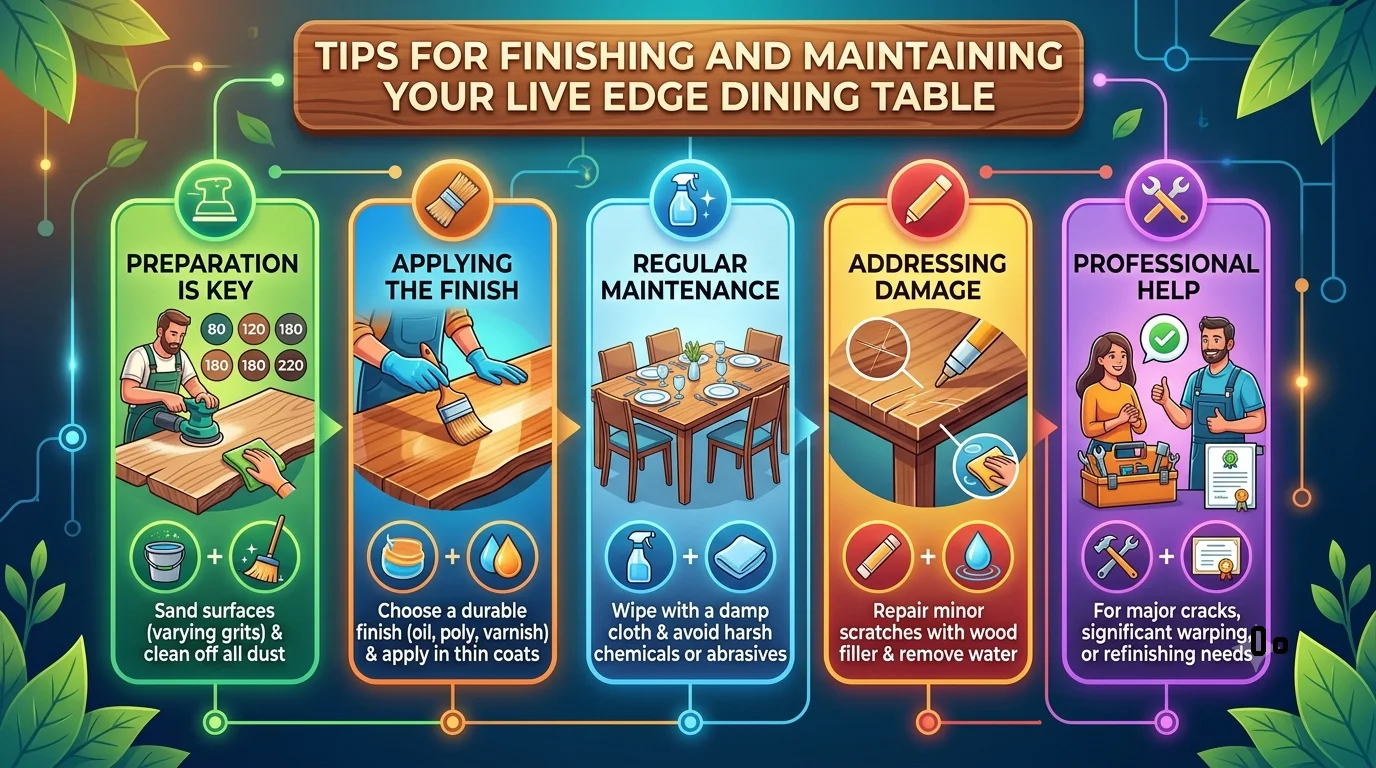
Live edge dining tables are beautiful and unique pieces that can elevate the aesthetics of your home. However, they require specific finishing and maintenance techniques to keep them looking their best. Here are some effective tips to help you finish and maintain your live edge dining table.
Choosing the Right Finish
When it comes to finishing your live edge dining table, selecting the right product is crucial. Here are a few types you can consider:
- Oil Finishes: Products like tung oil or Danish oil can enhance the natural beauty of the wood. They penetrate deeply, providing great protection while giving a warm, hand-rubbed look.
- Polyurethane: This is a more durable option. It comes in oil-based and water-based versions. While oil-based options give a richer color, water-based finishes dry faster and have less odor.
- Lacquer: For a high-gloss finish, lacquer can be used, but it requires careful application to avoid runs and drips.
Preparation is Key
Properly preparing your table before applying any finish is vital. Start with sanding the surface using progressively finer grits, from coarse to fine, ensuring a smooth finish. Pay extra attention to the edges where natural live edges may have rough patches.
Be sure to clean off all dust generated from sanding before applying your finish. A clean tack cloth or a damp rag works great for this task.
Applying the Finish
When applying the finish, follow these best practices to achieve the best results:
- Use a Brush or Cloth: For oil and polyurethane, you can use a paintbrush or a lint-free cloth. Make sure to apply the finish along the grain of the wood.
- Multiple Coats: Applying multiple thin coats rather than a single thick coat will provide better protection and a more even surface. Allow each coat to dry completely before applying the next one.
- Final Buffing: After the last coat has dried, gently buff the surface with a fine 0000 steel wool to achieve a soft sheen.
Regular Maintenance
To maintain the beauty and durability of your live edge dining table, regular upkeep is necessary. Here are some maintenance tips to follow:
- Cleaning: Wipe the surface with a damp cloth regularly. Avoid harsh chemicals or abrasives that can damage the finish.
- Reapplication of Finish: Depending on usage, consider reapplying your chosen finish every year or two to keep the wood nourished and protected.
- Humidity Control: Wood expands and contracts with changes in temperature and humidity. Keeping your home’s humidity levels stable helps prevent warping or cracking.
Addressing Damage
No matter how careful you are, scratches or damage can occur. Address these issues promptly to prevent further problems.
- Minor Scratches: Use a wood filler or wax stick that matches the color of your table to fill in scratches. Lightly sand the area and reapply finish if necessary.
- Water Damage: If white spots appear from water rings, try buffing the area with a mixture of equal parts vinegar and olive oil, followed by a reapplication of finish.
Professional Help
Sometimes, the damage might be beyond a DIY fix. In such cases, consult a professional for refinishing or repairs. Their expertise can restore your live edge dining table to its original glory.
For further resources on maintaining your live edge dining table, consider visiting Wood Magazine for information on finishes, or check out Rockler for wood care tips.
Creative Design Ideas for Customizing Your Live Edge Dining Table
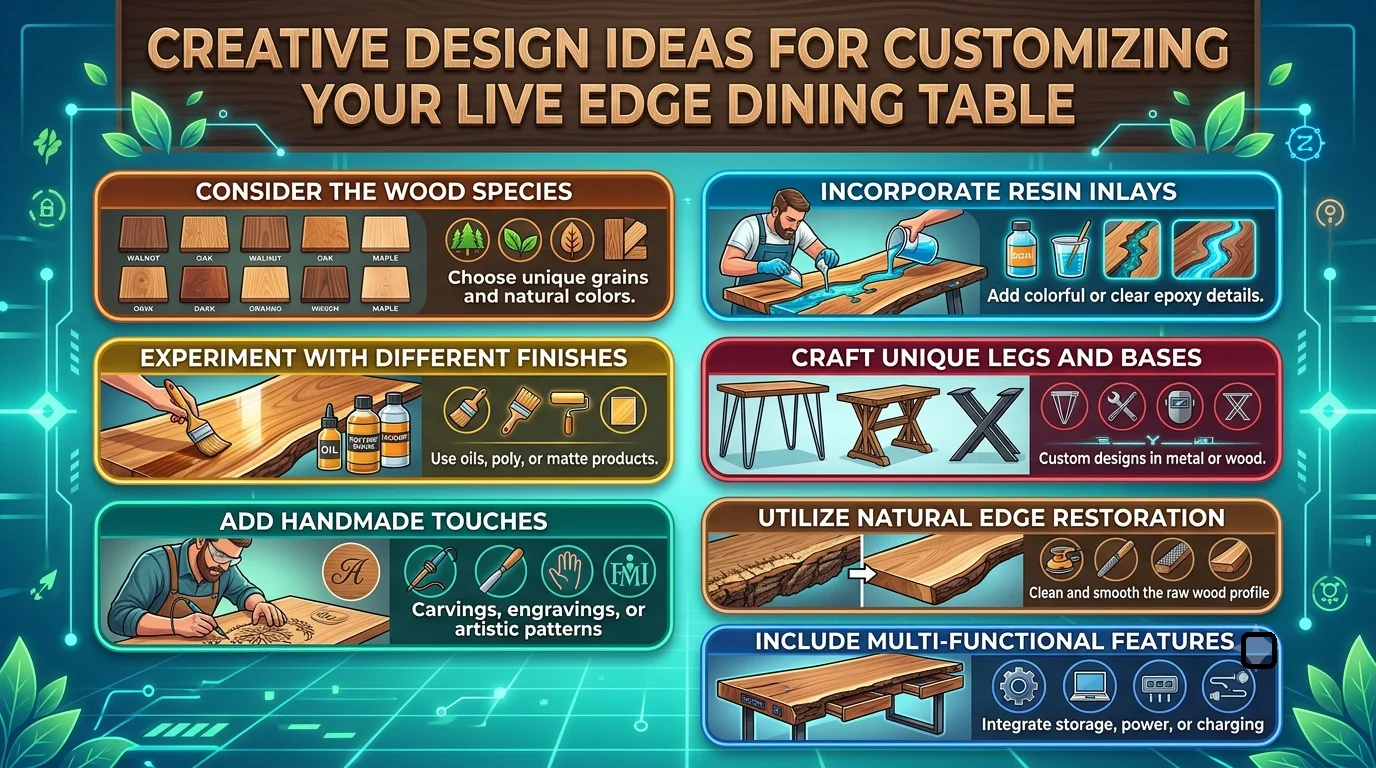
Creating a live edge dining table is a unique way to bring the beauty of nature indoors. Not only does it provide a stunning centerpiece for your dining area, but customizing it allows you to truly make it your own. Here are some creative design ideas to inspire your customization journey.
Consider the Wood Species
The type of wood you select for your live edge dining table can dramatically affect its appearance and feel. Different species come with their own unique grains and colors. Here are a few popular options:
- Walnut: Rich in color, walnut offers a deep, luxurious look that is hard to resist.
- Oak: Known for its durability and traditional appeal, oak can be finished in various stains.
- Maple: Light-colored and clean, maple suits modern aesthetics beautifully.
- Cherry: With a warm tone that deepens over time, cherry wood adds character.
Incorporate Resin Inlays
Adding resin inlays to your live edge dining table can introduce eye-catching colors and patterns. This technique involves filling the natural voids in the wood with epoxy resin. You can choose clear resin for a minimalist look or colored resin for a bold statement. Look into tutorials on Resin Obsession for detailed guidance.
Experiment with Different Finishes
The finish you choose for your table not only protects it but also enhances its natural beauty. Here are some finishes to consider:
- Matte Finish: Provides a natural look, emphasizing the wood’s texture and grain.
- Satin Finish: Offers a slight sheen, making it easier to clean while still looking rustic.
- High-Gloss Finish: Creates a striking surface that showcases the wood’s color in vibrant ways.
Craft Unique Legs and Bases
The legs of your dining table can either blend in or stand out. Here’s how you can create unique table legs:
- Hairpin Legs: These modern legs are slender and add an industrial touch.
- Pedestal Base: A single base can give your table a contemporary flair without obstructing legroom.
- Farmhouse Style Legs: Chunky, turned legs enhance a rustic aesthetic.
Add Handmade Touches
To personalize your table further, consider adding handmade elements. Here are some ideas:
- Engraving: You can engrave a family name or special date into the wood.
- Inlay Designs: Consider adding geometric patterns or artistic shapes with various woods.
- Custom Table Runner: Create a bespoke table runner that complements the wood and adds texture.
Utilize Natural Edge Restoration
Maintaining the natural edge of the wood can help preserve its organic charm. Consider using techniques that enhance the wood grain without altering its natural look. Research tips on preserving live edges at Wood Magazine.
Include Multi-Functional Features
Your live edge dining table can serve more than just a dining purpose. Here are some multi-functional ideas:
- Built-in Storage: Add drawers or shelves under the tabletop for extra storage space.
- Foldable Extensions: Implement a design that allows the table to extend for larger gatherings.
- Integrated Lighting: Consider adding LED strips to highlight the natural beauty of the wood.
By blending creativity with practical design, your live edge dining table will not only be a piece of furniture but a work of art that reflects your personal style. For more ideas and inspiration for building your custom dining table, you can visit DIY Network. Happy crafting!
Conclusion
Creating your own live edge dining table allows you to blend craftsmanship with personal style, making it a standout piece in your home. Throughout this guide, you’ve learned not just the practical steps to construct your table, but also the unique benefits that live edge furniture brings to your decor. The natural beauty of raw wood, with its organic lines and knots, adds character and warmth to any space, transforming a simple dining area into a focal point for family gatherings and entertaining.
Equipping yourself with the right tools and materials is essential for a successful build. From quality wood to effective finishes, the right choices can dramatically impact the final appearance and longevity of your table. We’ve also explored tips for finishing and maintaining your creation, ensuring that it remains a cherished piece for years to come. Regular care can keep its surfaces looking pristine and protect the natural beauty of the wood.
The creative design ideas allow you to customize your dining table to reflect your personality and style. Whether you prefer a rustic look with a live edge that highlights the wood’s natural curves or a sleek, modern finish with clean lines, the possibilities are endless. This project isn’t just about construction; it’s about crafting a piece of art that tells a story—your story.
By embracing the journey of building your own live edge dining table, you’ve not only crafted a functional piece of furniture but also created a lifelong memory that adds rich value to your home atmosphere. Happy building!