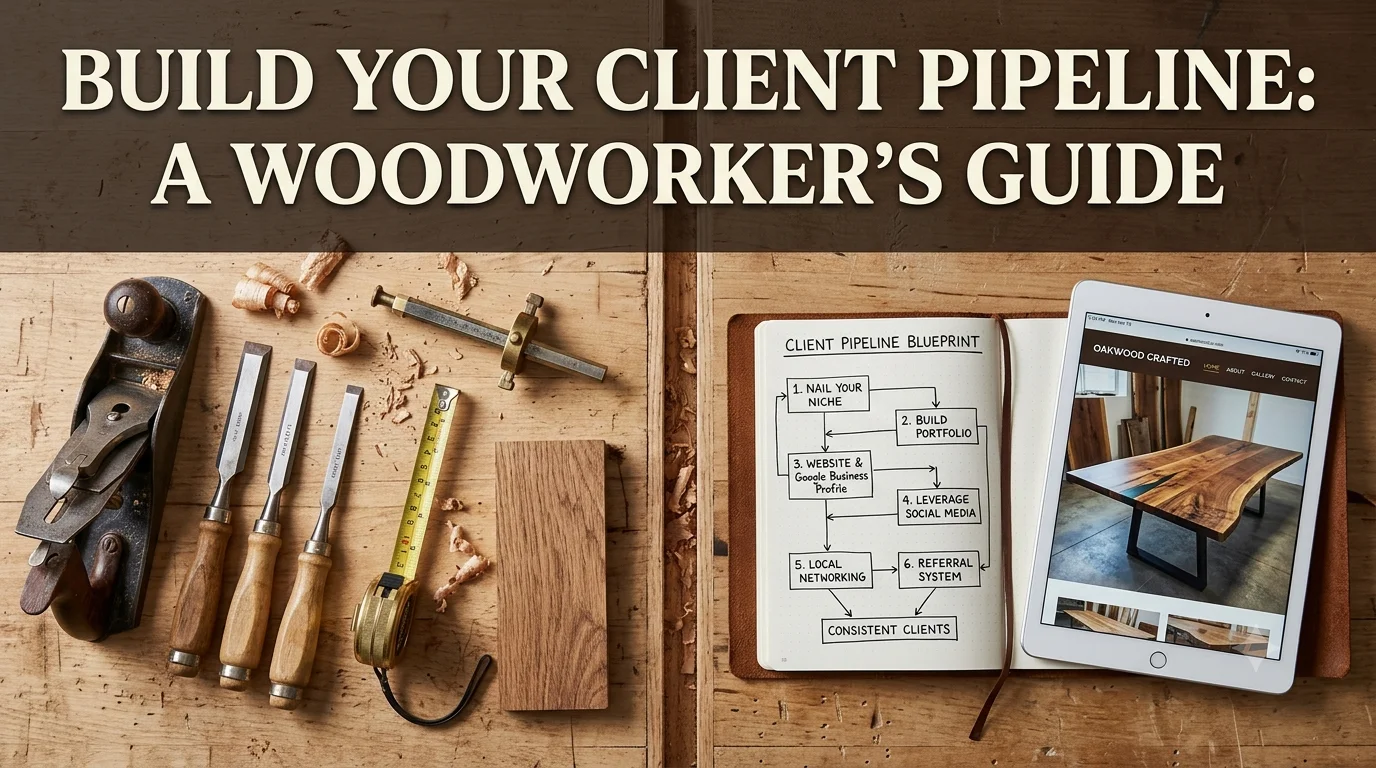
Why Most Woodworkers Struggle to Find Clients
Before we get into the “how,” it’s worth understanding the “why.” Most talented woodworkers stay stuck at the same revenue level for years, and it’s almost never because their work isn’t good enough. It’s because of a handful of predictable, fixable mistakes:
- They wait for word-of-mouth instead of engineering it. Referrals are powerful, but leaving them to chance is like leaving your finish to dry in a dusty room — you’re just hoping for the best.
- They have no visible online presence. If someone Googles “custom furniture maker near me” and you don’t show up, you’ve lost the client before you ever had a chance to compete.
- They undersell their story. People don’t just buy a table. They buy the story of the craftsman who made it, the wood he sourced, and the care he put into every joint.
- They treat marketing as a one-time task instead of an ongoing, low-maintenance habit built into their weekly routine.
The good news? Every one of these problems has a straightforward fix. Let’s start building.
Step 1: Nail Your Niche (Stop Trying to Build Everything for Everyone)
The fastest way to get lost in a crowded market is to describe yourself as “a woodworker who builds anything.” Generic positioning creates generic results. Instead, pick a lane:
- Live-edge dining tables
- Custom kitchen cabinetry
- Heirloom-quality rocking chairs
- Small-batch cutting boards and home decor
- High-end built-in shelving for luxury homes
When you specialize, you become the obvious choice for that specific type of project, and you can charge premium rates because you’re perceived as an expert, not a generalist. Specialization also makes every other marketing step in this tutorial easier — your photos, your website copy, your social posts, and your ads all become sharper and more persuasive when they’re aimed at one clear audience.
Action step: Write down the one type of project you want to become known for in your city or region. Everything else in this guide will build on that decision.
Step 2: Build a Portfolio That Sells Itself
Your portfolio is your silent salesperson. It works 24 hours a day, even while you’re asleep in the shop’s back office. But a portfolio full of blurry phone photos taken in bad lighting won’t convert browsers into buyers.
How to Photograph Your Work Like a Pro (Without a Pro Camera)
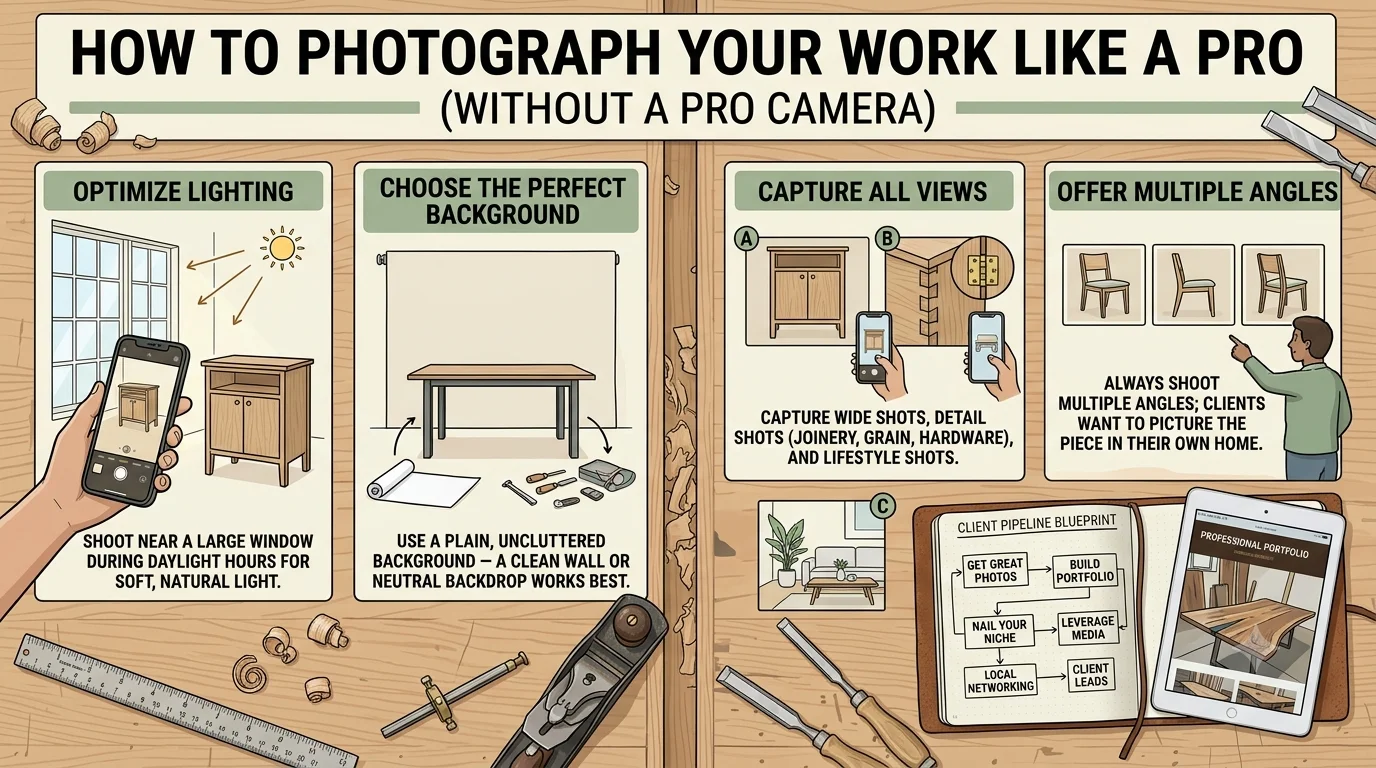
- Shoot near a large window during daylight hours for soft, natural light.
- Use a plain, uncluttered background — a clean wall or neutral backdrop works best.
- Capture wide shots (the whole piece), detail shots (joinery, grain, hardware), and lifestyle shots (the piece in a finished room, if possible).
- Always shoot multiple angles; clients want to picture the piece in their own home.
Document the Process, Not Just the Finished Product
People pay more for craftsmanship they can see. Take photos or short video clips of:
- Raw lumber selection
- Sanding and joinery in progress
- Finishing steps like staining or oiling
- The final reveal
This “behind-the-scenes” content becomes gold for your social media and website later, and it builds trust because clients can see the labor and skill behind the price tag.
Action step: Pick your five best past projects (or build two or three portfolio pieces specifically to showcase your niche) and photograph them properly this week.
Step 3: Build a Simple, High-Converting Website
You don’t need a flashy, expensive website. You need a clean, fast, mobile-friendly site that answers three questions immediately: What do you make? Who is it for? How do I contact you?
Essential Pages Every Woodworking Website Needs
- Homepage — A strong headline, a hero image of your best work, and a clear call-to-action button (“Request a Quote” or “Book a Consultation”).
- Portfolio/Gallery — Organized by category (tables, cabinetry, custom builds, etc.).
- About Page — Your story, your process, your values. People buy from people, not faceless companies.
- Services & Pricing Guide — Even a rough price range builds trust and filters out tire-kickers.
- Contact Page — A simple form, your phone number, email, and service area.
If you want a fast, no-code way to launch, platforms like Squarespace, Wix, and WordPress.com all offer woodworking-friendly templates you can have live in a weekend.
Don’t Skip Google Business Profile
This is one of the highest-ROI, completely free things you can do this week. A Google Business Profile puts your shop on Google Maps, lets clients leave reviews, and shows up when someone searches “custom woodworker near me.” Fill it out completely: photos, service area, hours, and category (“Furniture Maker” or “Cabinet Maker”).
Action step: Claim your free Google Business Profile today, even before your website is finished. It takes fifteen minutes and starts working immediately.
Step 4: Leverage Social Media the Smart Way
You don’t need to become a full-time influencer. You need consistency and a few content pillars you can rotate through every week.
The Four Content Pillars for Woodworkers
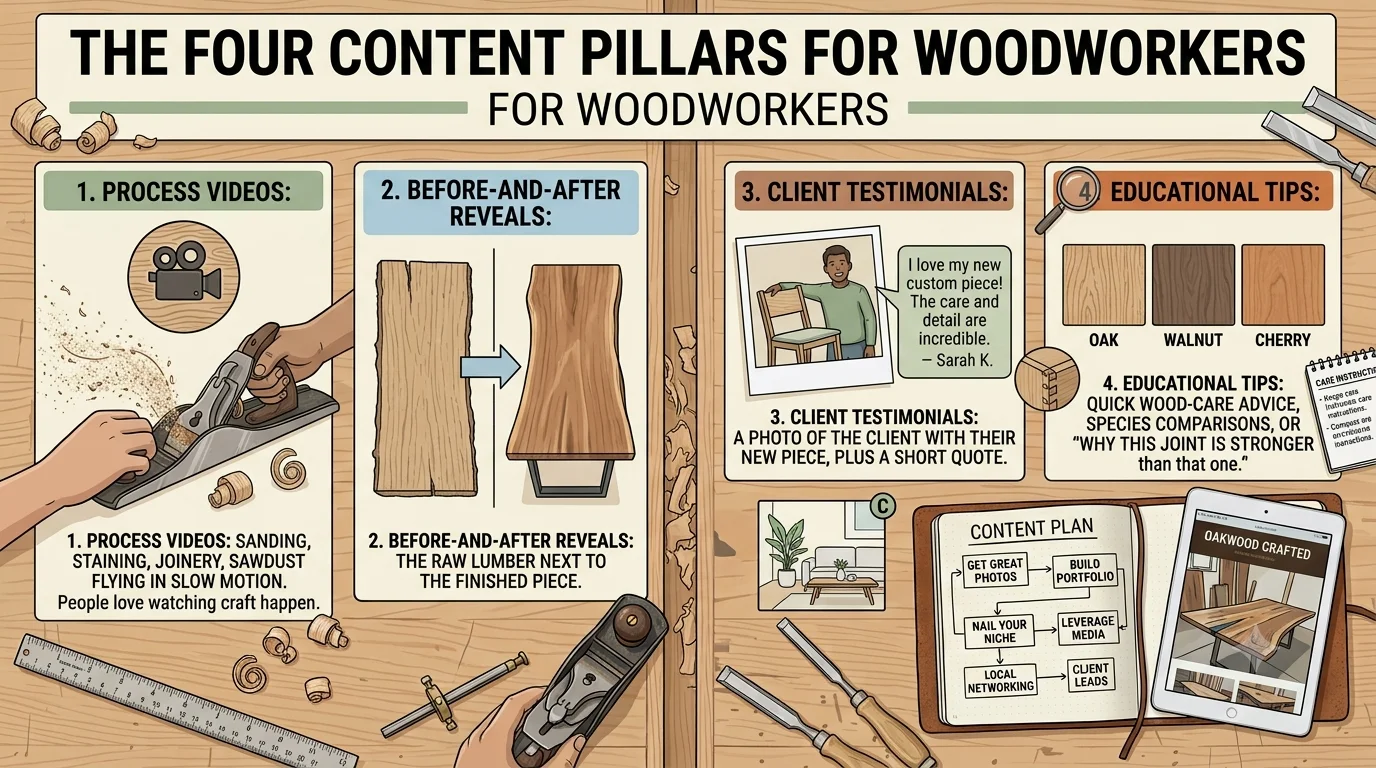
- Process videos — sanding, staining, joinery, sawdust flying in slow motion. People love watching craft happen.
- Before-and-after reveals — the raw lumber next to the finished piece.
- Client testimonials — a photo of the client with their new piece, plus a short quote about their experience.
- Educational tips — quick wood-care advice, species comparisons, or “why this joint is stronger than that one.” This builds authority and keeps people engaged even when they’re not ready to buy yet.
Where to Post
- Instagram — Best for visual storytelling, Reels, and reaching design-minded audiences.
- Pinterest — An underrated goldmine for woodworkers. People searching “custom dining table ideas” on Pinterest are often close to hiring someone.
- Facebook — Great for local community groups and Facebook Marketplace visibility.
- TikTok — If you enjoy short-form video, the algorithm rewards satisfying process clips heavily, and woodworking content performs exceptionally well there.
Action step: Commit to posting three times a week for the next 30 days. Consistency beats perfection every time.
Step 5: Get Found on the Platforms Where Clients Are Already Searching
Not every client finds craftsmen through Instagram. Many are actively searching directories and marketplaces built specifically for hiring local pros. Listing your business here puts you directly in front of people who are ready to buy.
- Etsy — Perfect for smaller custom pieces, decor, and made-to-order items with nationwide shipping potential.
- Thumbtack — Clients post project requests and you can send quotes directly.
- Angi (formerly Angie’s List) — Strong for home-improvement-adjacent woodworking like built-ins and cabinetry.
- Houzz — Ideal if you want to connect with interior designers, architects, and renovation clients.
- Nextdoor — A hyper-local platform where neighbors literally ask “does anyone know a good woodworker?” Be the answer.
Action step: Pick two platforms from this list that best match your niche and complete your profile fully, including photos and pricing ranges, this week.
Step 6: Network Where Your Ideal Clients Already Gather
Some of the best woodworking clients never search online at all — they get referred by someone they already trust. That’s why building relationships with complementary professionals is one of the highest-leverage things you can do.
Build Relationships With:
- Interior designers — They constantly need custom furniture makers for client projects and often take a referral fee or markup, which is well worth it for consistent, high-budget work.
- Real estate agents — Especially those who stage luxury homes or work with clients doing renovations.
- General contractors — For built-ins, custom trim, or cabinetry on larger remodel projects.
- Architects — Particularly for high-end custom builds and unique commissioned pieces.
- Local home decor and furniture stores — Some will happily display a piece of yours on consignment or refer overflow custom work to you.
Attend local home and garden shows, chamber of commerce mixers, or trade association meetups. Bring business cards and, if possible, a small sample piece people can touch — nothing sells craftsmanship like a physical object in someone’s hands.
Action step: Make a list of five local professionals in complementary industries and reach out to introduce yourself this month.
Step 7: Turn Every Client Into a Referral Machine
Referrals are the cheapest, highest-converting form of marketing that exists, because trust is already built in. But you can’t just hope they happen — you need a system.
The Simple Referral System
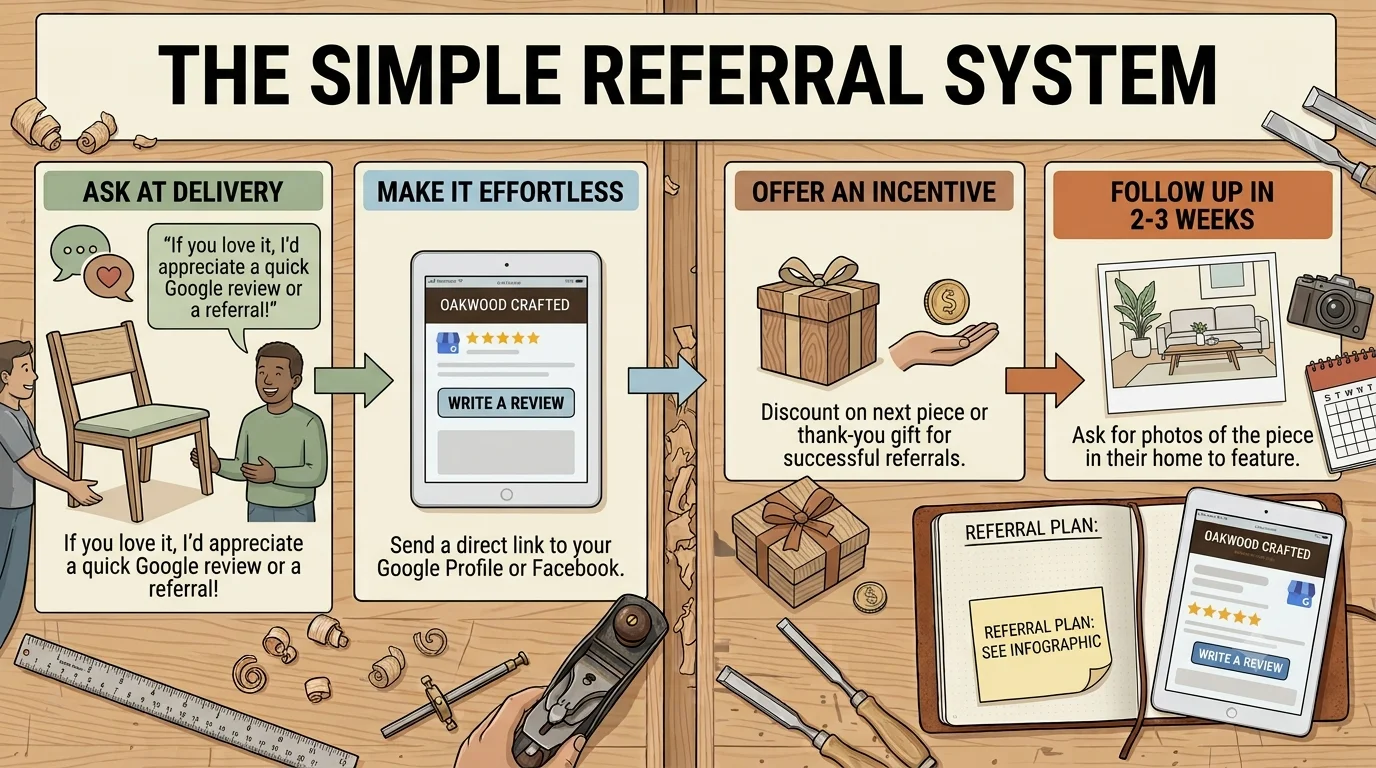
- Ask at the moment of delivery, when the client’s excitement is at its peak. A simple, “If you love it, I’d really appreciate a quick Google review or a referral to a friend” works wonders.
- Make leaving a review effortless. Send a direct link to your Google Business Profile or Facebook page rather than asking people to search for you.
- Offer a small referral incentive, like a discount on their next piece or a small thank-you gift, for every referral that turns into a paying client.
- Follow up two to three weeks later with a photo request: “Would you mind sending a picture of the piece in your home? I’d love to feature it.” This gives you fresh content and often prompts another organic mention to their friends.
Action step: Create a short, friendly script you’ll use every single time you deliver a finished project, and stick to it consistently.
Step 8: Use Targeted Ads to Accelerate Growth (Optional but Powerful)
Once your organic presence is solid, small paid ad budgets can dramatically speed up client acquisition, especially for higher-ticket custom work.
Where to Start
- Facebook and Instagram Ads — Target by location, interests (home renovation, interior design, luxury home decor), and even lookalike audiences based on past customers.
- Google Ads — Bid on high-intent keywords like “custom furniture maker [your city]” so you appear right when someone is actively searching.
Start small — even $10-$20 a day can generate meaningful leads when targeted correctly. Always link ads directly to a specific landing page (like your portfolio or a “get a quote” form) rather than just your homepage, so you can track what’s actually working.
Action step: If you have $150–$300 to test with, run a two-week local Facebook/Instagram ad campaign promoting your best portfolio piece with a clear call-to-action.
Step 9: Offer Smaller “Trust-Building” Projects
Big custom furniture commissions can feel intimidating to first-time clients who’ve never worked with a custom woodworker before. Bridge that gap by offering smaller, lower-risk entry points:
- Custom cutting boards or charcuterie boards
- Small floating shelves
- Picture frames or mirror frames
- Simple side tables or stools
These smaller pieces let new clients experience your quality and communication style at a lower price point. Many of them will come back later for a larger commission — dining tables, cabinetry, or built-ins — once trust is established.
Action step: Design one or two “gateway” products you can offer as an easy first purchase for new clients.
Step 10: Stay Top of Mind With an Email List
Not every visitor to your website or social page is ready to buy today. Some need six months, a new house, or a renovation project before they’re ready to commission a piece. An email list keeps you in front of them until that moment arrives.
- Offer a simple incentive to join, like “Get our free wood care guide” or “See our latest projects first.”
- Send a short monthly update featuring your latest finished piece, a client story, or a quick woodworking tip.
- Keep it visual — photos and short videos perform far better than long blocks of text.
Free tools like Mailchimp or MailerLite make this easy to set up in an afternoon, even with zero technical experience.
Action step: Add a simple email signup form to your website and social media bio this week.
Bonus: Price With Confidence So Clients Take You Seriously
Underpricing doesn’t just hurt your income — it signals low value and attracts the wrong kind of client. When you present clear pricing ranges, a professional quote process, and confident communication, you position yourself as the expert, not a hobbyist looking for side work. Consider a simple three-tier pricing structure (good/better/best) for common project types so clients can self-select the option that fits their budget without endless back-and-forth.
Common Mistakes to Avoid Along the Way
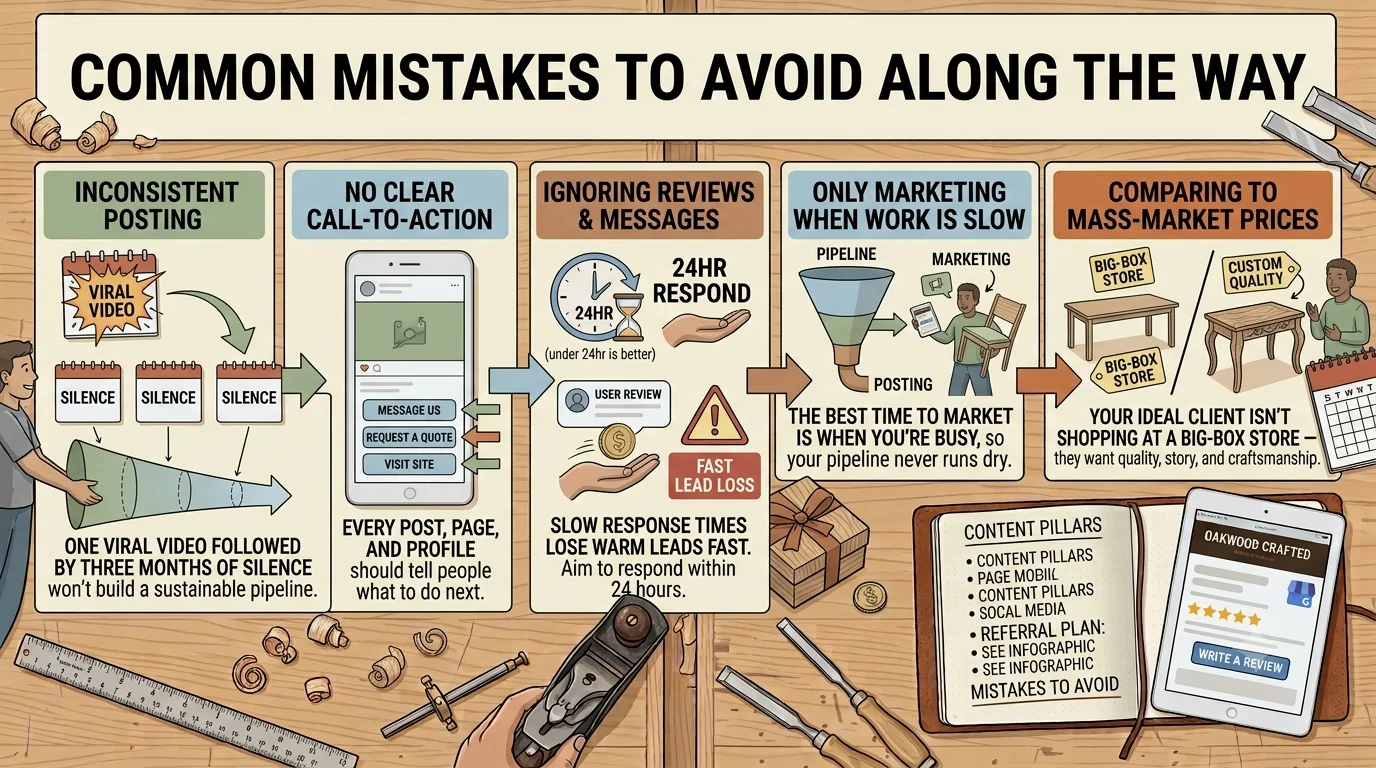
- Inconsistent posting. One viral video followed by three months of silence won’t build a sustainable pipeline.
- No clear call-to-action. Every post, page, and profile should tell people exactly what to do next: message you, request a quote, or visit your site.
- Ignoring reviews and messages. Slow response times lose warm leads fast. Aim to respond within 24 hours.
- Only marketing when work is slow. The best time to market is when you’re busy, so your pipeline never runs dry.
- Comparing yourself to mass-market furniture prices. Your ideal client isn’t shopping at a big-box store — they want quality, story, and craftsmanship, and they’re willing to pay for it.
A Quick Case Study: From Empty Calendar to Fully Booked
Imagine two woodworkers, both equally skilled, both running one-person shops out of their garage. Woodworker A waits for the phone to ring, relies purely on word-of-mouth, and only updates his Facebook page when he remembers to. Woodworker B follows the exact system in this tutorial: a focused niche (heirloom dining tables), a clean website with a real portfolio, an active Google Business Profile, weekly Instagram Reels showing the build process, and a simple referral script used at every delivery.
Six months later, Woodworker A is still hoping the phone rings. Woodworker B has a three-month waitlist, is charging 20% more per project because demand has increased, and gets at least one qualified lead per week without spending a dollar on ads. The difference isn’t skill. It’s the system. That’s the entire point of this tutorial — talent builds the product, but a system builds the business around it.
This doesn’t mean you need to implement everything overnight. Most successful woodworking businesses are built one habit at a time. Pick the two or three steps above that feel most doable this month, get them running consistently, and then layer in the next set of tactics once those become second nature.
Frequently Asked Questions About Getting Woodworking Clients
How long does it take to start getting consistent clients?
Most woodworkers who commit to a full marketing system — website, Google Business Profile, social media, and a referral process — start seeing consistent inbound interest within 60 to 90 days. Paid ads can shorten this timeline, but organic trust-building tends to produce longer-lasting, higher-quality clients.
Do I really need a website if I’m active on social media?
Yes. Social media platforms are rented land — algorithms change, accounts get suspended, and trends shift overnight. Your website is the one asset you fully own and control. It’s also where serious buyers go to evaluate your credibility before reaching out, especially for larger commissions.
What if I don’t have many finished projects to photograph yet?
Start by documenting everything from this point forward, no matter how small. Build two or three portfolio pieces specifically designed to showcase your chosen niche if you need to. Even a handful of strong, well-photographed pieces will outperform a large gallery of poorly lit, inconsistent images.
Should I focus on Instagram or Pinterest first?
If your goal is building relationships and community trust, start with Instagram. If your goal is capturing people actively searching for design ideas and ready to hire, don’t overlook Pinterest — it often converts better for high-ticket furniture and custom builds because users are already in a planning and buying mindset.
How much should I spend on advertising when I’m just starting out?
You don’t need a large budget to start. A modest, well-targeted local campaign can generate meaningful leads, especially when paired with a strong portfolio and clear call-to-action. Focus on testing one platform and one audience at a time so you can clearly see what’s working before scaling your spend.
What’s the single highest-impact thing I can do this week?
If you only do one thing from this entire tutorial, claim and fully complete your Google Business Profile. It’s free, it takes fifteen minutes, and it puts you directly in front of people actively searching for a woodworker in your area right now.
Your Next Move
Getting woodworking clients isn’t about luck, and it isn’t about being the most talented craftsman in your city. It’s about visibility, consistency, and trust — three things you can absolutely build with the steps in this tutorial. Start small: pick one action step from each section, put it on your calendar this week, and build your marketing habit the same way you built your woodworking skills — one deliberate cut at a time.
Your shop is ready. Your craftsmanship speaks for itself. Now it’s time to make sure the right people are listening.