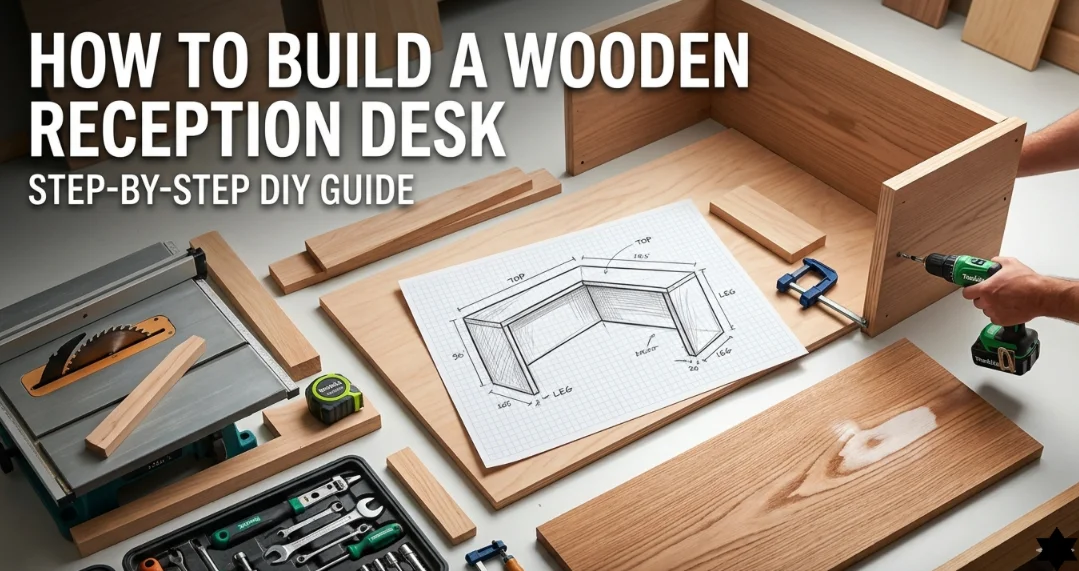
Building A Wooden Reception Desk can be a rewarding project that enhances both the functionality and aesthetic of your office space. Whether you’re a seasoned DIYer or just starting, this step-by-step guide will help you through the process. Gather your tools, and let’s get started!
Materials You’ll Need
- High-quality wood (like oak or pine)
- Wood screws
- Wood glue
- Wood stain or paint
- Sandpaper (various grits)
- Wood finish or sealant
- Measuring tape
- Circular saw or hand saw
- Drill
- Screwdriver
- Paintbrush or roller
Step 1: Planning Your Design
The first step to How to Build A Wooden Reception Desk is planning. Consider the space you have available and the purpose of the desk. Here are some factors to think about:
- Dimensions: Measure the area where you’ll place the desk.
- Style: Decide if you want a modern, rustic, or traditional look.
- Features: Determine if you need storage or space for equipment.
Sketch your design on paper to visualize how your desk will look.
Step 2: Cutting the Wood
Once your design is ready, it’s time to cut the wood. Using a circular saw or hand saw, follow these guidelines:
- Cut the top to the desired width and length.
- Cut the legs equally to ensure stability.
- Make the side panels, if needed, for additional support and a finished look.
Step 3: Sanding the Wood
After cutting, it’s crucial to sand the wood. This process will smooth the surfaces and edges. Start with coarser sandpaper, then move to finer grit until the wood feels smooth to the touch. Don’t forget to wear a mask to avoid dust inhalation.
Step 4: Assembling the Desk
Now, it’s assembly time! Follow these steps carefully:
- Lay the top of the desk upside down on the ground.
- Attach the legs using wood screws and wood glue for extra strength.
- If you have side panels, attach them to the legs.
Make sure everything is square and tight. Use clamps to hold parts together while the glue dries.
Step 5: Finishing Touches
Once the desk is assembled and the glue is dry, you can apply your choice of wood stain or paint. This step allows you to customize the color to match your office. Remember to apply a wood finish or sealant after the stain has dried. This will protect your desk from scratches and spills.
Step 6: Installing Hardware (Optional)
If you want drawers or shelves, now’s the time to install them. Choose hinges, handles, and other hardware that match your desk’s style.
Maintaining Your Reception Desk
To keep your wooden reception desk looking great, follow these maintenance tips:
- Regularly dust the desk with a soft cloth.
- Clean spills immediately to avoid stains.
- Reapply wood finish or polish as needed.
Building A Wooden Reception Desk is a straightforward project that can greatly enhance your workspace. By following these steps, you can create a beautiful and functional piece tailored just for your needs.
Essential Tools and Materials for Your Reception Desk Project
How to Build A Wooden Reception Desk can be a rewarding project that adds a personal touch to your workspace. To ensure your success, having the right tools and materials is crucial. This guide will help you understand what you need to get started on your reception desk project.
Essential Tools for Constructing a Wooden Reception Desk
Gathering the right tools makes the construction process smoother and more efficient. Here’s a list of essential tools you’ll need:
- Table Saw: A table saw is vital for cutting large pieces of wood into manageable sizes.
- Miter Saw: This tool is perfect for making precise angle cuts, especially for corners.
- Drill/Driver: A cordless drill will help you drill holes and drive screws into place with ease.
- Sander: An orbital sander will give your desk a smooth finish and easy cleanup of any rough edges.
- Level: To ensure your desk is perfectly balanced, a level is essential.
- Tape Measure: Accurate measurements are crucial for fitting parts together seamlessly.
- Clamps: Clamps will hold pieces in place as the adhesive sets, ensuring strong bonds.
- Safety Gear: Don’t forget protective eyewear, gloves, and a dust mask to keep you safe while you work.
Materials Needed for Your Reception Desk
Choosing the right materials is as important as having the right tools. Here’s a breakdown of the materials you will require for building a wooden reception desk:
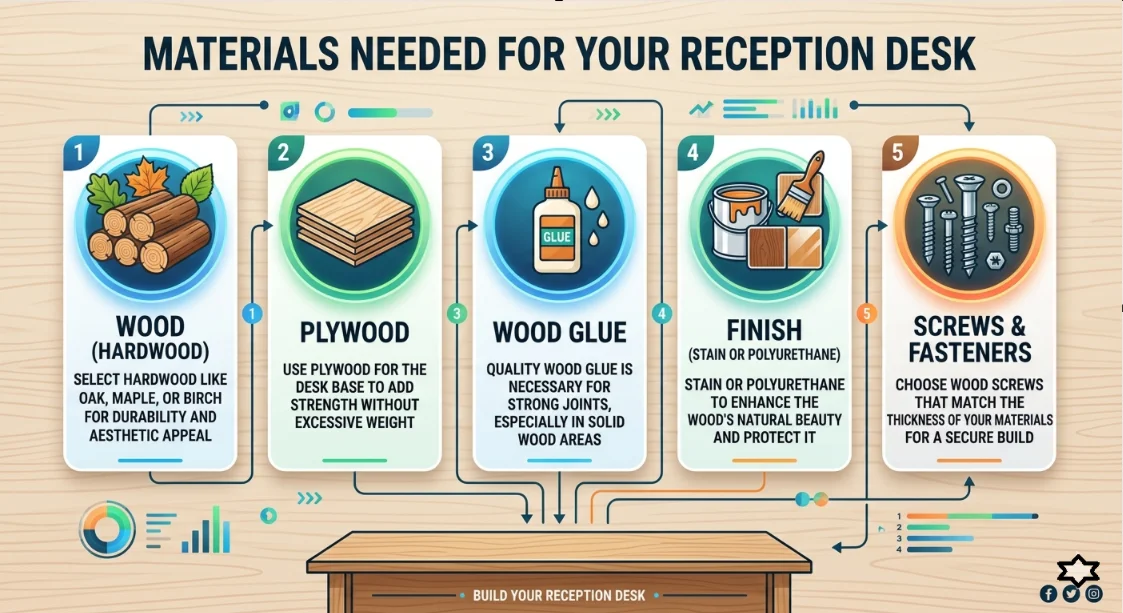
| Material | Description |
|---|---|
| Wood: | Select hardwood like oak, maple, or birch for durability and aesthetic appeal. |
| Plywood: | Use plywood for the desk base to add strength without excessive weight. |
| Wood Glue: | Quality wood glue is necessary for strong joints, especially in solid wood areas. |
| Finish: | Stain or polyurethane to enhance the wood’s natural beauty and protect it. |
| Screws and Fasteners: | Choose wood screws that match the thickness of your materials for a secure build. |
Where to Source Your Supplies
Finding high-quality materials and tools is essential for any woodworking project. Here are some trusted suppliers:
- Home Depot – A well-known home improvement store offering a vast selection of tools and materials.
- Lowe’s – Another home improvement staple where you can find everything from wood to hardware.
- Rockler – Specializing in woodworking tools and materials, Rockler is a great resource for hobbyists.
- Woodcraft – Offers a wide variety of wood and supplies along with helpful woodworking tips.
Tips for a Successful Construction
As you embark on your reception desk project, keep the following tips in mind:
- Plan your design and measurements carefully before you start cutting any materials.
- Work in a well-ventilated area, especially when using adhesives and finishes.
- Take your time sanding and finishing; attention to detail will enhance the final product.
- If you’re unsure about a procedure, don’t hesitate to look up how-to videos or guides for clarity.
By familiarizing yourself with essential tools and materials, along with sourcing them from trusted suppliers, your reception desk project will be off to a great start. Remember, this isn’t just a desk; it’s a reflection of your business. Make it remarkable!
Design Ideas and Styles for Custom Wooden Reception Desks
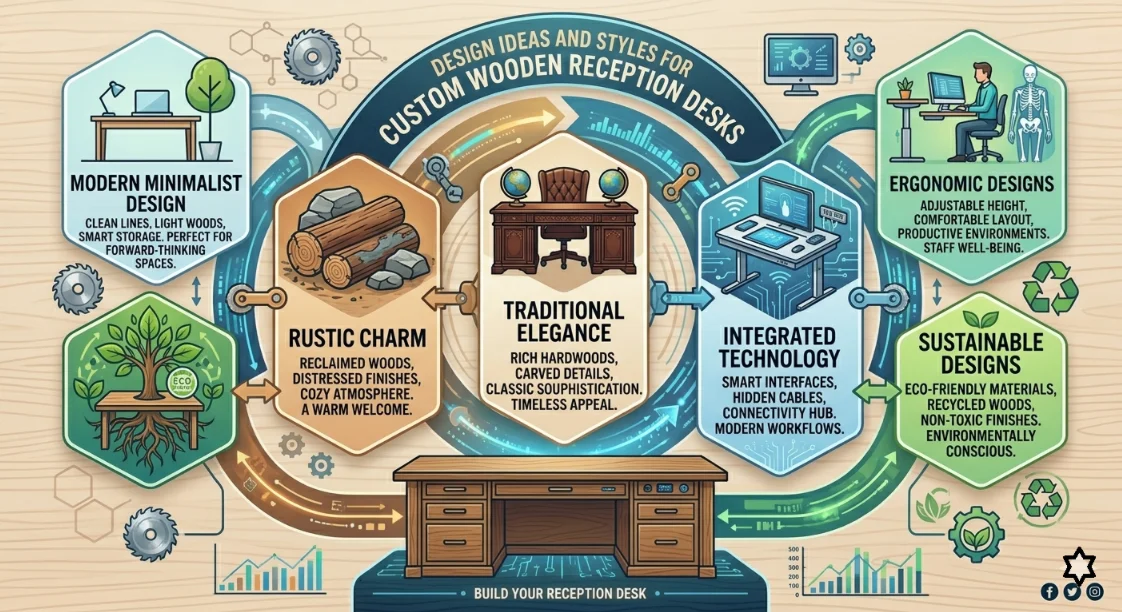
A custom wooden reception desk serves not just as a table but as a centerpiece that reflects your brand’s identity. When thinking about design ideas and styles for your custom wooden reception desk, consider your brand’s overall theme, the space available, and the functionality required. Here are some fascinating styles and ideas to inspire your design.
Modern Minimalist Design
If you prefer sleek lines and uncluttered aesthetics, a modern minimalist design is ideal. This style emphasizes simplicity and functionality.
- Materials: Use high-quality plywood or solid wood with a smooth finish.
- Color Scheme: Stick to neutral colors like whites, grays, and blacks to maintain a contemporary vibe.
- Design Elements: Incorporate clever storage options hidden within the desk to keep the surface clear.
Rustic Charm
A rustic wooden reception desk can add warmth and a welcoming vibe to your office. This design is perfect for businesses wanting to evoke a cozy feel.
- Materials: Reclaimed wood or distressed finishes can enhance the rustic look.
- Color Scheme: Earthy tones like browns and greens work well.
- Design Elements: Consider adding metal accents to give it a slightly industrial touch.
Traditional Elegance
For a feel of classic sophistication, a traditional wooden reception desk can make a strong statement. This style is often elaborate and ornate.
- Materials: Use rich woods like mahogany or cherry for a luxurious appearance.
- Color Scheme: Dark, warm colors will lend an antique feel to the desk.
- Design Elements: Add intricate carvings or moldings to enhance the traditional aesthetic.
Ergonomic Designs
Functionality is key when creating a reception desk. An ergonomic design not only looks good but is also practical for staff and visitors. Here are some suggestions:
- Height Adjustments: Consider desks that can be adjusted for standing or sitting, promoting comfort.
- Ease of Access: Ensure that all necessary tools and devices are within reach.
- Open Spaces: Leave enough space for visitors to interact comfortably.
Integrated Technology
With the rise of digital interactions, integrating technology into your reception desk can enhance efficiency. Think about:
- Built-in Charging Stations: Include USB ports for quick device charging for visitors.
- Touchscreen Interfaces: This allows guests to check-in or access information independently.
- Wireless Networking: Make your desk equipped with Wi-Fi to keep everyone connected.
Sustainable Designs
In today’s eco-friendly climate, creating a reception desk from sustainable materials can enhance your brand’s image. Here’s what to consider:
- Materials: Use reclaimed wood or sustainable hardwoods to reduce your environmental footprint.
- Eco-friendly Finishes: Opt for non-toxic stains and varnishes.
- Design Elements: Combine metal and wood for a modern yet sustainable look.
When designing your wooden reception desk, it’s essential to not only consider aesthetics but also the message you want to convey through your front office. Researching the latest trends, incorporating functional elements, and ensuring the design matches your brand identity will help create a welcoming environment for visitors.
For more information and inspiration on wooden reception desk designs, consider visiting these helpful resources:
With the right design ideas and consideration of your specific needs, you can create a stunning wooden reception desk that impressively represents your business while providing functionality and comfort for everyone.
Common Mistakes to Avoid When Building a Reception Desk

Building A Wooden Reception Desk can be a rewarding project, but it’s easy to make mistakes that could lead to frustration and a less than perfect end product. Here are some common mistakes to watch out for to ensure your desk is both functional and aesthetically pleasing.
Rushing the Planning Phase
One of the most significant mistakes people make is jumping into the building process without a solid plan. Before you even think about cutting wood, take the time to sketch out your design. Consider the following:
- Dimensions: Measure the space where the desk will go to determine how large it can be.
- Functionality: Will you need shelves, drawers, or cable management features?
- Design: Think about the style that fits your reception area, whether it’s modern, traditional, or something in between.
Ignoring Material Quality
Choosing the wrong type of wood can lead to a desk that doesn’t hold up over time. Opt for quality hardwoods like oak, maple, or cherry, which are durable and have a pleasing appearance. Avoid low-quality plywood, as it can warp or become damaged more easily. For more information and tips on materials, visit Family Handyman.
Overlooking Ergonomics
Your reception desk must be a comfortable space for both staff and clients. A common mistake is not considering the height and layout. Ensure that the desk is a suitable height for standing and sitting. Generally, the surface height should be between 28-30 inches for seated work and 42-46 inches for standing.
Neglecting to Create Storage Solutions
Another pitfall is not planning for enough storage. A reception desk should provide easy access to essential items, like pens, paper, and files. When designing your desk, think about incorporating:
- Drawers for confidential materials.
- Shelves for extra supplies or display items.
- Cable management to keep electronics organized.
Not Considering Assembly Techniques
To ensure your desk stands the test of time, pay close attention to how you assemble it. Using inadequate fasteners or skipping wood glue can lead to wobbling or breaking. Make sure to learn about proper joinery techniques such as:
- Mortise and tenon joints for strong connections.
- Dowel joints for alignment.
- Wood screws for durability.
Forgetting About Finishing Touches
The finish on your desk is vital, not just for looks but for protection against wear and tear. Many people forget this step or rush through it, which can lead to disappointing results. It’s essential to:
- Select the right stain or paint to match your decor.
- Apply a sealant to protect against scratches and spills.
- Sand the surface thoroughly for a smooth finish.
Skipping Safety Precautions
Safety should always be a priority when working with power tools and sharp objects. Ensure you wear appropriate safety gear, like gloves and goggles. Additionally, make sure your workspace is clear and organized to avoid accidents.
Underestimating the Time Required
Many builders underestimate the time it takes to build a quality reception desk. Factor in design time, shopping for materials, and potential mistakes that may occur. Allocate sufficient time not only to build but also to finish the desk correctly. A rushed project might compromise quality and function.
By avoiding these common mistakes, you’ll be well on your way to creating a beautiful, functional wooden reception desk that meets your needs. Proper planning, high-quality materials, ergonomic design, adequate storage solutions, and safety measures are all critical components to keep in mind as you embark on this project.
Maintenance Tips for Keeping Your Wooden Reception Desk in Top Shape

Maintaining a wooden reception desk is essential for keeping it looking pristine and functional. A well-cared-for desk not only enhances your office’s aesthetics but also ensures durability. Here are some effective maintenance tips to keep your wooden reception desk in top shape.
Regular Cleaning
Cleaning your wooden reception desk should be a regular part of your office maintenance routine. Use a soft, lint-free cloth to dust the surface. For deeper cleaning, follow these steps:
- Mix a few drops of mild dish soap with warm water.
- Dampen a cloth with the soapy water but ensure it’s not soaking wet.
- Wipe the desk gently to remove any dirt or grime.
- Rinse the cloth with clean water and wipe again to remove soap residue.
- Dry the surface immediately with a clean cloth to prevent moisture damage.
Use the Right Cleaning Products
It’s vital to choose cleaning products that are compatible with wood. Avoid harsh chemicals that can damage the finish. Instead, consider these options:
- Wood-specific cleaners: These are designed to clean without harming the wood.
- Natural oils: Products like lemon oil or mineral oil can help condition and shine the surface.
Always test a small area first to ensure compatibility with your desk’s finish.
Protecting the Surface
Your wooden reception desk can be easily scratched or dented, which affects its appearance. Here are some ways to protect it:
- Coasters and Mats: Use coasters under drinks and mats for frequently used areas to minimize wear from daily use.
- Avoid Direct Sunlight: Keep the reception desk out of direct sunlight to prevent fading and heat damage. Consider using blinds or curtains if sunlight is unavoidable.
- Exercise Care with Equipment: Desk accessories, like computers or printers, should be placed on pads to distribute weight evenly and avoid harm.
Caring for the Finish
Over time, the finish on your wooden desk may wear down. Regular maintenance can help retain its shine:
- Waxing: Apply a thin layer of quality furniture wax every few months. This provides a protective layer while enhancing the wood’s natural beauty.
- Refinishing: If the desk shows significant wear, consider refinishing it. This can rejuvenate the wood and restore its original luster.
Humidity and Temperature Control
Wood is sensitive to environmental changes. Here’s how to maintain the ideal conditions:
- Keep Indoor Humidity Balanced: Use a humidifier or dehumidifier to maintain a stable humidity level. Ideally, aim for 30% to 50%. This prevents cracking or warping.
- Avoid Extreme Temperatures: Keep your desk away from heating vents or air conditioning units, as sudden temperature changes can cause the wood to expand or contract.
Routine Inspections
Regularly inspect your wooden reception desk for signs of damage:
- Check for scratches, water rings, or any signs of wear.
- Address any issues as soon as they arise to prevent further damage.
Conclusion
Creating a wooden reception desk can be a rewarding project that adds a personal touch to your office space. By following the step-by-step guide, you can confidently build a desk that not only meets your functional needs but also reflects your style. Choosing the right tools and materials forms the foundation of your desk, ensuring durability and beauty. As you explore design ideas, consider how different styles can blend with your existing decor, enhancing the overall ambiance of the reception area.
However, it’s important to be mindful of potential pitfalls. By knowing common mistakes to avoid, such as improper measurements and inadequate finishes, you can save time and effort while achieving professional results. Once your desk is complete, regular maintenance will keep it looking great for years. Simple tasks like cleaning, oiling, and checking for wear can ensure your desk remains both functional and aesthetically pleasing.
How to Build A Wooden Reception Desk is not just about crafting furniture; it’s an opportunity to express creativity and personal style. By following the guidance in this article, you will create a welcoming environment for clients and visitors alike, setting a positive tone for every interaction. Whether you’re a seasoned DIY enthusiast or new to woodworking, this project can transform your space and serve as a testament to your craftsmanship. So gather your materials, bring your vision to life, and enjoy the satisfaction of creating something uniquely yours.